
What to Check Before Buying Buffet Warmer Equipment
Before investing in buffet warmer equipment, buyers should evaluate food safety, temperature control, energy efficiency, and compatibility with existing professional kitchen equipment. Whether you manage restaurant kitchen planning, compare commercial refrigeration equipment, or optimize a heated display cabinet setup, understanding the right specifications helps reduce costs and improve service quality. This guide outlines the key factors to check before making a smart purchase.
Buffet warmer equipment sits at the intersection of food safety, service speed, presentation, and operating cost. For restaurants, hotels, catering operators, and institutional kitchens, a poor equipment choice can lead to uneven holding temperatures, product waste, higher utility bills, and maintenance interruptions during peak service windows.
For technical evaluators and business decision-makers, the buying process should go beyond appearance or initial price. The right assessment includes heating method, pan capacity, thermostat accuracy, material grade, workflow fit, cleaning access, and long-term support. In commercial kitchens where 2 to 4 service cycles may happen daily, small specification gaps quickly become operational problems.
Start with Food Safety and Temperature Holding Performance
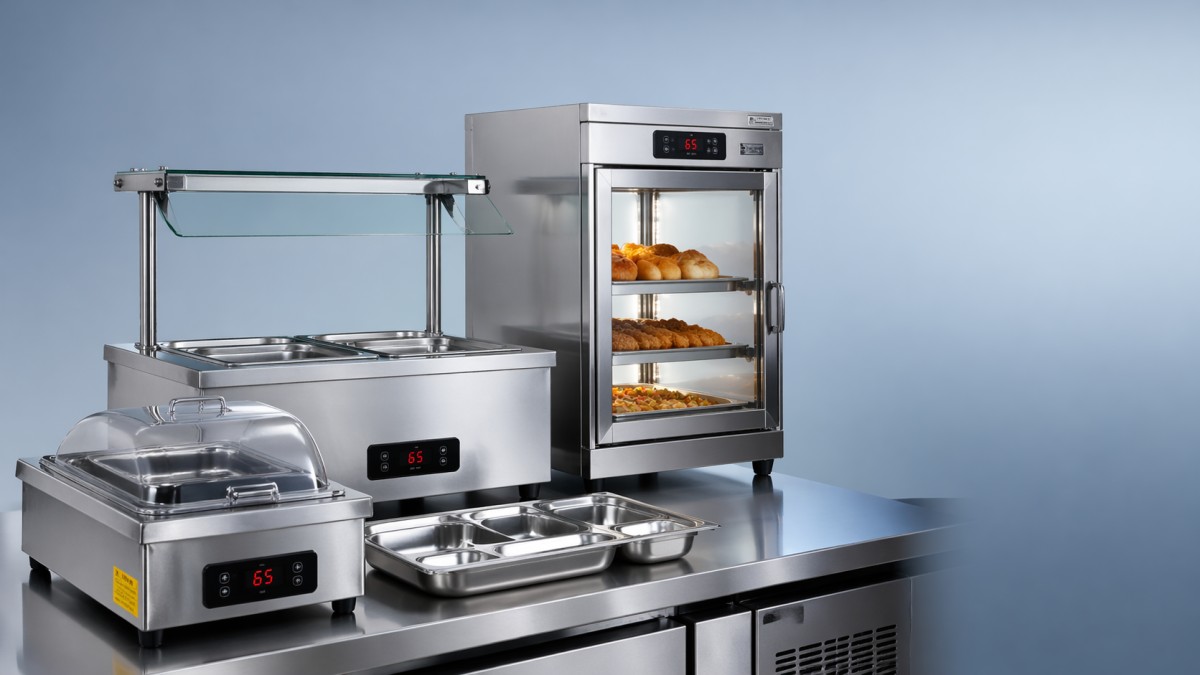
The first checkpoint when buying buffet warmer equipment is whether it can maintain safe hot-holding conditions consistently. In most commercial foodservice settings, hot food should generally be held at or above 60°C / 140°F after cooking, depending on local code requirements. Equipment that struggles to stay within a stable range may compromise both compliance and product quality.
Temperature uniformity matters just as much as the maximum setting on the control panel. A unit may show a high thermostat value but still create cold spots near the corners or along the outer pan edges. This is especially important for sauces, cooked vegetables, rice, and proteins that remain on display for 1 to 3 hours during buffet or banqueting service.
Operators should also check recovery time. If lids are opened frequently every 3 to 5 minutes, or if trays are replaced during busy periods, the warmer should recover target temperature quickly. Slow recovery increases food risk and affects texture, especially in high-turnover environments such as hotel breakfast service and cafeteria lines.
Core food safety checks before purchase
- Verify the working temperature range, such as 30°C to 90°C or 86°F to 194°F, and confirm the recommended holding range for your menu mix.
- Ask whether heat distribution has been tested across full pan, half pan, and partial-load conditions.
- Check if the unit supports wet heat, dry heat, or both, since different foods lose moisture at different rates.
- Review thermometer access or digital display visibility so staff can verify conditions without opening covers too often.
The table below shows how common heating methods affect food safety, product quality, and daily use. This comparison helps buyers match buffet warmer equipment to actual menu requirements rather than relying on a one-size-fits-all choice.
In practical terms, wet heat usually offers better moisture retention for long buffet service, while dry heat may suit crisp products with shorter holding times. Buyers should align equipment with the menu mix, average refill interval, and whether food is held for 30 minutes, 90 minutes, or more.
A common buying mistake
A frequent mistake is selecting equipment based only on total tray count. Capacity matters, but if the warmer cannot maintain stable temperature across all loaded pans, extra slots do not add value. For high-volume service, consistent holding performance is often more important than simply fitting 1 or 2 additional pans.
Match Capacity, Layout, and Utility Requirements to the Operating Environment
Buffet warmer equipment must fit the kitchen or serving layout physically and operationally. Buyers should measure not only the installation footprint, but also lid clearance, staff movement space, service-side access, and tray replacement flow. A unit that saves 15 cm of counter space can still disrupt service if doors, covers, or drawers open into key traffic paths.
Capacity planning should be based on customer volume and menu rotation, not guesswork. A small hotel breakfast line may need 3 to 4 full-size pan positions, while a banquet or canteen setup may require 6 to 8. In some cases, two smaller modular units provide better flexibility than one oversized warmer, especially when menus change by daypart.
Utility requirements also affect the final decision. Check voltage, phase, wattage, plug type, and whether the site supports the electrical load alongside other commercial kitchen equipment. For example, adding a 2.5 kW to 4.5 kW warmer station to an already busy line without load review can trigger nuisance trips or limit expansion plans.
Questions to ask during site evaluation
- How many guests are typically served per hour during peak periods?
- Will food be held in full-size pans, fractional pans, or plated portions?
- Is the unit placed in back-of-house prep, self-service buffet, or attended service?
- Does the existing circuit support the added load with a 10% to 20% safety margin?
The following table gives a practical planning framework for selecting buffet warmer equipment by service environment. It helps compare space, throughput, and utility needs in a structured way.
This comparison shows why specification decisions should be linked to service style. A warmer designed for a fixed cafeteria line may be too bulky for event catering, while a portable unit may not handle 6-hour continuous operation. Fit-for-purpose selection reduces rework and protects equipment investment over 3 to 7 years of expected use.
Compatibility with adjacent equipment
Compatibility is often overlooked. Buffet warmers may need to sit beside refrigerated counters, prep tables, or heated display cabinet systems. Poor spacing can create heat transfer issues, restrict cleaning, or interfere with ventilation. Buyers should confirm installation clearances, access for cables or plumbing, and operator reach zones before issuing a purchase order.
Check Build Quality, Cleaning Access, and Maintenance Demands
Durability is a major cost factor in buffet warmer equipment, especially in kitchens running 6 or 7 days per week. Stainless steel construction, reinforced corners, smooth welds, and corrosion-resistant heating components all influence equipment lifespan. In high-moisture foodservice environments, weak seams and poor finishing can show wear within 12 to 18 months.
Cleaning access should be treated as a performance requirement, not just a hygiene preference. Crumbs, grease, condensate, and food spills accumulate around pan supports, drains, gaskets, and control edges. If staff need 20 minutes to disassemble one unit for daily cleaning, labor cost rises quickly across multiple stations.
Maintenance questions should be raised before purchase, not after installation. Ask whether replacement thermostats, heating elements, knobs, seals, and indicator lights are standard parts with short lead times. A low-cost warmer can become expensive if one failed control switch takes 3 to 5 weeks to replace during a busy season.
What technical evaluators should inspect
- Material grade for contact and exterior surfaces, especially where acidic or salty foods are common.
- Drain valve design, water pan removal, and whether corners are rounded for faster wipe-down.
- Protection of electrical components from steam, splash, and cleaning chemicals.
- Availability of service manuals, spare parts lists, and recommended preventive maintenance intervals every 3, 6, or 12 months.
The table below highlights common build and maintenance checkpoints that affect real ownership cost. It is useful for comparing offers from different suppliers on more than purchase price alone.
A strong unit should support quick sanitation, simple inspection, and predictable upkeep. For many operators, paying slightly more upfront for easier cleaning and more serviceable components lowers total ownership cost over 24 to 60 months.
Operational impact of poor maintenance design
When maintenance design is weak, operators often improvise with delayed cleaning, partial repairs, or inconsistent temperature settings. That can affect food quality, customer satisfaction, and staff confidence. For business decision-makers, this is a hidden cost that rarely appears in the initial quotation but shows up in labor and downtime later.
Evaluate Energy Efficiency, Controls, and Long-Term Operating Cost
Energy consumption should be reviewed alongside output and holding stability. Buffet warmer equipment may operate for 4 to 12 hours per day depending on the business model. Over that period, insulation quality, thermostat cycling, standby mode, and lid design all influence utility use. A unit with better heat retention may cost more upfront but reduce operating expense month after month.
Control design affects both efficiency and usability. Analog controls may be sufficient for simple lines, but digital controls often provide better visibility and tighter setpoint management. Some buyers prefer clear temperature displays, overheat indicators, or separate zone controls when holding different food types at the same station.
The true cost of ownership should include more than equipment price. Consider electricity use, water usage for wet heat, cleaning labor, spare parts, installation adjustments, and service visits. Over 36 months, a warmer with lower daily energy use and fewer failures may deliver stronger value than a cheaper unit with unstable performance.
A practical cost review checklist
- Compare rated power input in kW and estimate operating hours per day.
- Check whether the unit offers separate heat zones for partial-load service.
- Review insulation design to reduce heat loss in open service areas.
- Estimate preventive maintenance frequency and likely replacement parts over 1 to 3 years.
Why smart controls can matter
In modern kitchen equipment planning, even simple digital features can improve consistency. Temperature readouts, timed alerts, and more precise control can help operators react faster when food turnover changes unexpectedly. For multi-location chains or central standards programs, standardized control settings also reduce training variation across sites.
That said, more features are not always better. If the buffet warmer equipment will be used by rotating staff with limited training time, a clear and rugged interface may outperform a complex touchscreen. Buyers should balance control sophistication with the actual skill level and workflow of the operating team.
For procurement teams, a useful benchmark is to compare expected service life, annual maintenance burden, and average daily run time side by side. Even a 10% to 15% energy difference can become meaningful when multiple warmers are installed across a hotel, canteen, or chain restaurant network.
Review Supplier Support, Installation Planning, and Common Buying Mistakes
A buffet warmer is not just a product purchase; it is part of a working foodservice system. Supplier responsiveness, installation guidance, documentation quality, and after-sales support influence how quickly the equipment delivers value. For imported or cross-border kitchen equipment, confirm manuals, parts channels, and communication procedures before finalizing the order.
Installation planning should include delivery access, countertop readiness, utility checks, commissioning, and operator training. In many projects, a realistic lead time can range from 2 to 6 weeks depending on stock status, customization, and shipping distance. Buyers should also plan a basic acceptance checklist rather than relying on a visual inspection alone.
Common mistakes include buying oversized equipment for a limited menu, overlooking utility load, choosing difficult-to-clean designs, and ignoring service coverage. Another frequent issue is failing to test the warmer under realistic food pans and actual service conditions. Empty-unit demonstrations rarely reveal full operational behavior.
Recommended pre-purchase process
- Define your menu profile, holding duration, and peak service volume.
- Confirm dimensions, voltage, power, and compatibility with surrounding commercial kitchen equipment.
- Request cleaning, maintenance, and spare parts information in writing.
- Review warranty terms, service response expectations, and installation responsibilities.
- If possible, test performance with representative food products for at least 30 to 60 minutes.
FAQ: questions buyers often ask
How do I know what size warmer to buy?
Start with peak guest count per hour, number of menu items, and refill frequency. If you serve 80 to 120 guests in a breakfast period, 3 to 5 pans may be enough. For higher-volume service with multiple hot entrees, 5 to 8 pans may be more realistic.
Is wet heat always better than dry heat?
Not always. Wet heat is usually better for moisture retention during longer holding periods, while dry heat may suit crisp or short-hold items. The best choice depends on whether your food stays on display for 20 minutes, 2 hours, or longer.
What should technical teams inspect on delivery day?
Check electrical rating, dimensions, pan fit, thermostat function, indicator lights, drainage parts, finish quality, and heat-up behavior. A basic functional test should be completed before the unit enters daily production use.
How important is after-sales support?
It is critical, especially when the warmer is used daily. Even simple equipment benefits from accessible spare parts and responsive support. A short service delay of 3 to 7 days may be manageable; longer uncertainty can disrupt buffet operations and increase rental or replacement cost.
Choosing buffet warmer equipment requires a practical review of food safety, temperature consistency, capacity, layout fit, build quality, energy use, and supplier support. Buyers who evaluate these factors carefully are more likely to achieve stable service, lower waste, easier cleaning, and better long-term value across restaurant, hotel, catering, and institutional kitchen operations.
If you are comparing options for a new project or replacing aging units in an existing line, now is the right time to assess your operating needs in detail. Contact us to discuss product specifications, request a tailored equipment recommendation, or learn more about integrated kitchen solutions for professional foodservice environments.
Popular Tags
Kitchen Industry Research Team
Dedicated to analyzing emerging trends and technological shifts in the global hospitality and foodservice infrastructure sector.
Industry Insights
Join 15,000+ industry professionals. Get the latest market trends and tech news delivered weekly.
No spam. Unsubscribe anytime.
Contact With us
Contact:
Anne Yin (Ceramics Dinnerware/Glassware)
Lucky Zhai(Flatware)