
Restaurant Kitchen Equipment for Catering Needs Different Priorities
Choosing restaurant kitchen equipment for catering means balancing speed, mobility, hygiene, and storage in ways a fixed commercial restaurant kitchen does not. From restaurant kitchen layout planning to restaurant kitchen storage, stainless steel restaurant kitchen surfaces, and reliable restaurant kitchen appliances, every detail affects service efficiency. This guide explains the different priorities that shape restaurant kitchen equipment for catering decisions.
Why catering kitchen equipment follows different rules than a fixed restaurant
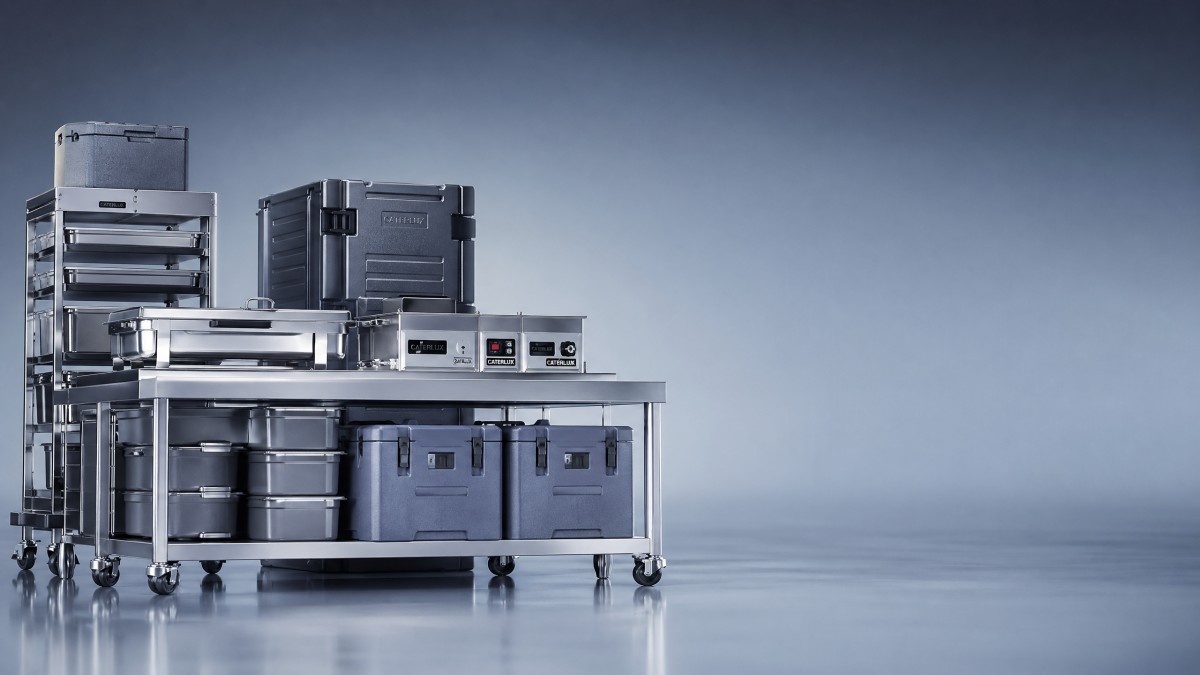
A restaurant kitchen designed for daily in-house service usually works around stable utilities, fixed prep zones, and predictable storage. Catering operations face a different reality. Equipment may need to move between venues, operate in temporary setups, and handle short service peaks of 50, 100, or 300 guests within narrow time windows. That changes how buyers should evaluate restaurant kitchen equipment.
For operators, the biggest pressure points are setup speed, workflow continuity, cleaning efficiency, and transport safety. For procurement teams, the challenge is selecting equipment that supports multiple event formats without overinvesting in oversized units. For decision-makers, the question is whether the equipment package improves labor efficiency, food safety control, and service consistency over a 2–5 year planning cycle.
In the wider kitchen equipment industry, automation, intelligent controls, and energy-efficient systems are increasingly important. However, in catering, not every smart feature matters equally. A connected oven may be useful, but if it is too heavy for transport or difficult to clean between same-day jobs, it may not fit the operational model. Practicality often ranks above feature density.
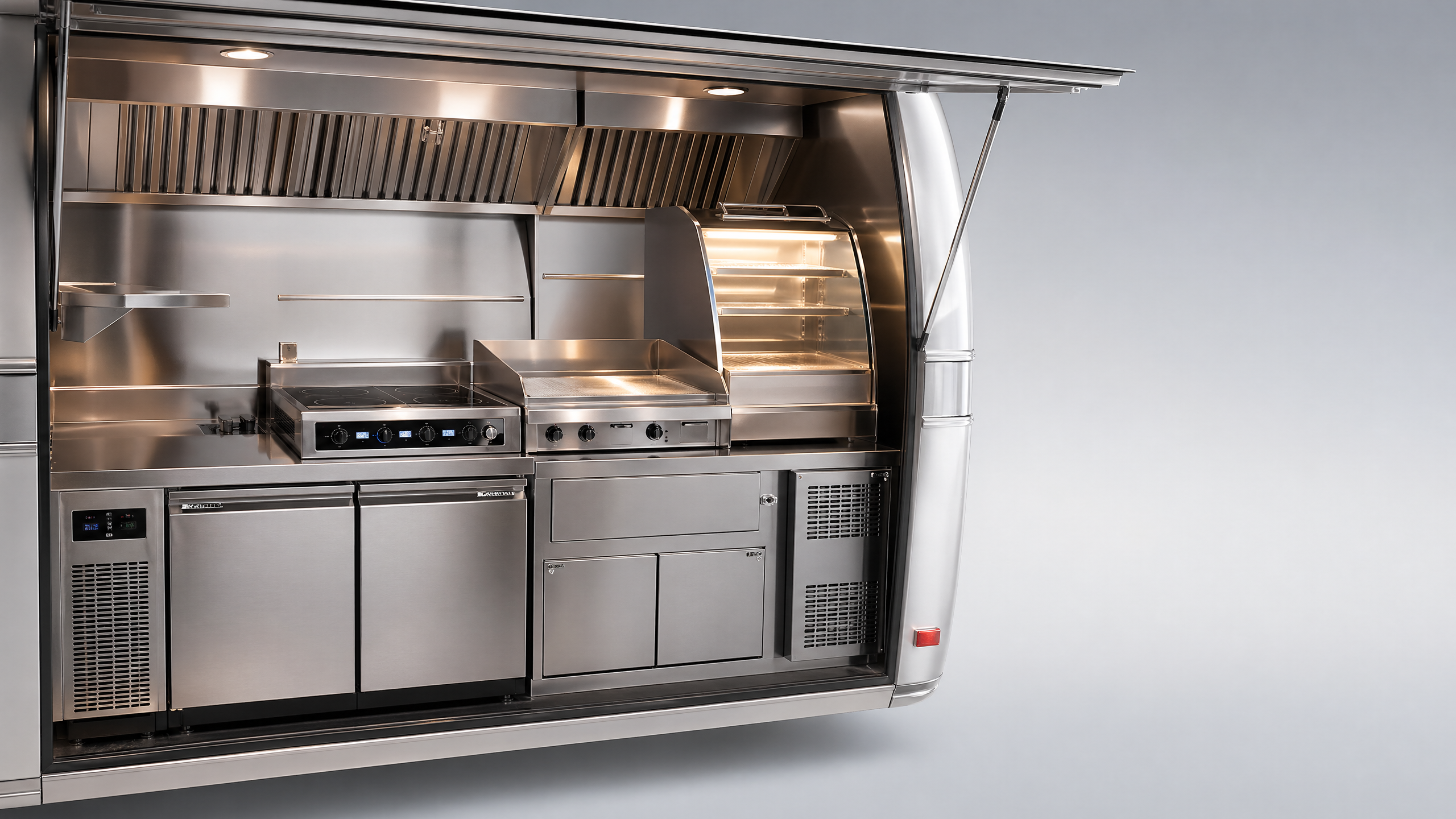
That is why catering buyers should judge restaurant kitchen appliances by use case rather than by showroom appearance. Stainless steel restaurant kitchen benches, compact hot holding units, modular prep stations, and stackable storage systems often deliver stronger real-world value than large fixed-line cooking suites intended for permanent installations.
The four operating pressures that reshape priorities
- Mobility: equipment must pass through loading areas, elevators, narrow doors, or temporary service corridors without excessive disassembly.
- Time compression: many catering teams work within 1–3 hour setup windows and need fast startup, stable temperature recovery, and simple shutdown procedures.
- Variable utilities: some venues offer full electric capacity and water supply, while others require low-draw solutions, insulated holding, or partially self-contained systems.
- Storage turnover: equipment may be used, cleaned, packed, stored, and redeployed several times per week, so durability and stackability affect total operating cost.
These pressures explain why restaurant kitchen layout planning for catering needs a modular mindset. The goal is not only to cook well, but to deploy, serve, recover, and reset with minimal friction. In many catering businesses, the best layout is one that can be repeated across 3–4 event types with only minor equipment changes.
Which equipment matters most in catering scenarios?
The ideal catering setup depends on menu complexity, batch size, transport distance, and venue conditions. A buffet service for 80 guests needs a different equipment mix than plated service for 180 guests or corporate drop-off catering with multiple stops. Instead of buying by category alone, procurement teams should match restaurant kitchen equipment to workflow stages: prep, cooking, hot holding, cold holding, transport, service, and post-event cleaning.
The table below compares common priorities between fixed restaurant kitchens and catering-oriented restaurant kitchen equipment. This helps information researchers and purchasing teams quickly identify where specifications should change.
The comparison shows that catering places stronger emphasis on modularity, transport readiness, and cleaning speed. Restaurant kitchen appliances used in catering should also support fast recovery after door openings, repeated handling, and mixed venue conditions. These operational details often matter more than headline power ratings alone.
Priority equipment by workflow stage
During prep, buyers should focus on durable stainless steel restaurant kitchen surfaces, compact refrigerated prep support, and cutting or holding tools that can be sanitized quickly. During cooking and finishing, the key factors are throughput, temperature control, and whether equipment can support batch production in 30–90 minute waves.
For transport and service, the most valuable assets are often not the largest cooking units but the most dependable holding and distribution systems. Hot cabinets, insulated carriers, mobile shelving, and organized restaurant kitchen storage reduce food quality loss and labor confusion during high-pressure service windows.
Post-event cleanup is another overlooked stage. If equipment has exposed joints, hard-to-remove trays, or uneven surfaces, labor time rises quickly. In businesses handling 4–6 events per week, sanitation time becomes a major cost driver. That is why easy-clean design is not a secondary feature in catering; it is a purchasing requirement.
Typical equipment groups for event-based foodservice
- Prep and assembly: stainless steel worktables, ingredient bins, shelving, compact mixers, slicers, and sealed containers.
- Cooking and finishing: ovens, griddles, fryers, induction units, or combination systems selected according to menu and venue power limits.
- Holding and transport: hot boxes, cold carriers, insulated pans, mobile racks, and protected loading carts.
- Service support: bain-marie units, display stations, beverage systems, and temporary plating lines designed for fast replenishment.
How to evaluate restaurant kitchen equipment for procurement and operations
Procurement decisions should not start with product catalogs alone. A stronger method is to evaluate equipment across a practical matrix: output requirement, mobility, hygiene, utility compatibility, maintenance complexity, and storage footprint. This is especially useful for multi-site catering businesses, hotels with banquet divisions, and central kitchen operators serving events and retail channels at the same time.
A useful first step is to define 3 service bands: small events, medium events, and high-volume functions. For example, a small mobile package may support 30–80 covers, a medium setup 80–200 covers, and a larger coordinated system 200+ covers. These are planning ranges rather than rigid standards, but they help prevent underbuying or overbuying.
The table below gives a practical procurement checklist for restaurant kitchen equipment in catering. It brings together selection, operations, and long-term management concerns in one view.
This checklist helps buyers compare proposals on operational value rather than purchase price alone. In many cases, a slightly higher upfront cost can reduce cleaning time, event setup labor, or emergency replacement needs over the next 12–24 months.
Five checks before approving a purchase order
- Map the menu to the production method. Not every menu requires heavy cooking equipment; some need stronger holding and assembly support.
- Confirm actual venue conditions. Measure access routes, loading times, and available utilities across at least 3 common event locations.
- Review sanitation workflow. Estimate whether the equipment can be cleaned, dried, and repacked within the team’s turnaround window.
- Evaluate spare parts and service access. For critical units, ask about common replacement items and expected maintenance intervals.
- Check storage density. Restaurant kitchen storage efficiency affects warehouse cost, truck space, and readiness for peak weeks.
For enterprise buyers, standardization is also important. Using compatible restaurant kitchen appliances across several teams can simplify training, spare parts stocking, and cleaning procedures. This becomes more valuable as operations scale from local events to regional or cross-city catering networks.
What about compliance, cost, and implementation risk?
Catering equipment must support food safety, safe handling, and practical maintenance. While specific certification requirements vary by market, buyers usually need to consider food-contact material suitability, electrical safety, cleaning access, and local installation rules. Stainless steel restaurant kitchen construction remains widely preferred because it supports hygiene, durability, and easier visual inspection.
Cost control should be based on total operating impact. A lower-cost unit may look attractive at quotation stage, but if it consumes more labor during loading, takes 20–30 minutes longer to clean, or requires replacement after one busy season, the savings may disappear. Procurement teams should compare purchase price, maintenance exposure, utility demand, and expected use frequency together.
Implementation risk often comes from mismatch rather than product failure. Oversized equipment can slow transport. Underpowered units can disrupt service recovery. Poorly designed restaurant kitchen layout planning can create cross-traffic between hot food, cold storage, and dish return. A 4-step deployment review before rollout can reduce these issues significantly.
A practical 4-step rollout process
- Step 1: Define operating profile, including guest count range, menu type, event frequency, and venue variability over the next 6–12 months.
- Step 2: Match equipment to workflow, separating prep, cook, hold, transport, service, and cleaning functions rather than buying by category only.
- Step 3: Validate logistics, including truck fit, loading path, utility limits, and storage conditions at the base kitchen or warehouse.
- Step 4: Train operators on startup, shutdown, cleaning, and inspection so equipment performance stays stable during repeated deployments.
Common mistakes that create avoidable cost
One common mistake is buying equipment designed for static restaurant production and then forcing it into mobile catering use. Another is focusing too heavily on cooking output while neglecting transport, holding, and restaurant kitchen storage. In catering, food quality can drop during the gap between production and service, so holding performance deserves equal attention.
A third mistake is ignoring operator workload. If a unit requires complex setup, difficult cleaning, or frequent manual adjustments, the equipment may look capable on paper but underperform in the field. Simpler restaurant kitchen appliances often produce better service consistency when teams rotate across multiple events or venues.
Finally, some buyers overlook future expansion. If the business plans to move from small drop-off catering to banquet, hotel, or central kitchen support, modular restaurant kitchen equipment can provide a smoother upgrade path than isolated one-off purchases. This is where integrated kitchen systems and digital management tools can begin to add value.
FAQ and next steps for selecting catering-focused restaurant kitchen equipment
Buyers, operators, and decision-makers usually ask the same core questions before moving ahead. The answers below summarize the most important points and help narrow the equipment shortlist faster.
How is catering equipment different from standard commercial restaurant kitchen equipment?
The main differences are mobility, faster setup, easier sanitation, and stronger transport compatibility. Standard commercial kitchen equipment often assumes permanent utilities and stable layout. Catering-oriented restaurant kitchen equipment must perform across changing venues, shorter service windows, and repeated packing cycles.
Which specification matters most: power, size, or storage?
There is no single answer. For high-output cooking, power and recovery time matter. For mobile teams, footprint and access dimensions may matter more. For companies handling several events per week, restaurant kitchen storage and cleaning time can become equally important. The best buying decision usually balances 3 core metrics: throughput, deployability, and hygiene efficiency.
What is a reasonable planning timeline for procurement and implementation?
For standard configurations, internal evaluation may take 1–2 weeks, while broader comparison and deployment planning can take 2–4 weeks depending on project complexity. If layout coordination, utility checks, or customized stainless steel restaurant kitchen components are involved, the review process often needs additional time for drawings and workflow confirmation.
How can buyers reduce risk when comparing suppliers?
Ask suppliers to confirm key parameters clearly: dimensions, power range, material details, cleaning structure, delivery scope, spare parts availability, and any relevant compliance documentation. It is also useful to discuss application scenarios directly, such as buffet service, banquet finishing, central kitchen support, or transport-heavy event operations.
Why choose a supplier with broader kitchen equipment capability?
Catering projects rarely depend on one product alone. They usually need a coordinated solution covering restaurant kitchen layout planning, restaurant kitchen appliances, stainless steel restaurant kitchen work areas, storage, and workflow optimization. A supplier familiar with commercial kitchen equipment, food processing support, and integrated kitchen systems can help reduce mismatch across these linked decisions.
If you are reviewing restaurant kitchen equipment for catering, contact us to discuss the exact parameters that affect your project: guest volume range, menu process, venue conditions, required materials, delivery timeline, storage limits, and certification expectations. We can help you compare configuration options, confirm practical specifications, assess customization needs, and support quotation discussions with clearer operational logic.
- commercial kitchen equipment
- kitchen appliances
- catering equipment
- cooking equipment
- central kitchen
- kitchen design
- restaurant kitchen
- Griddle
- Slicer
- Mixer
- Stainless Steel Worktable
- kitchen equipment
- restaurant kitchen equipment
- catering kitchen equipment
- restaurant kitchen design
- stainless steel restaurant kitchen
- modular restaurant kitchen
- restaurant kitchen layout planning
- restaurant kitchen equipment for catering
- commercial restaurant kitchen
- restaurant kitchen layout
- restaurant kitchen appliances
- restaurant kitchen storage
Popular Tags
Kitchen Industry Research Team
Dedicated to analyzing emerging trends and technological shifts in the global hospitality and foodservice infrastructure sector.
Industry Insights
Join 15,000+ industry professionals. Get the latest market trends and tech news delivered weekly.
No spam. Unsubscribe anytime.
Contact With us
Contact:
Anne Yin (Ceramics Dinnerware/Glassware)
Lucky Zhai(Flatware)