
Restaurant Kitchen Sink Problems That Lead to Health Violations
In any commercial kitchen, sink problems are rarely “small maintenance issues.” They are often early warning signs of sanitation failures that inspectors notice immediately and staff feel every day through slower prep, cross-contamination risks, foul odors, standing water, and rushed cleaning routines. If a restaurant kitchen sink is poorly designed, improperly used, or badly maintained, it can directly contribute to health violations, food safety incidents, and unnecessary downtime.
For operators and kitchen staff, the core issue is practical: can sinks support safe handwashing, food prep, warewashing, and drainage without creating contamination risks? For buyers and decision-makers, the bigger question is whether the current sink setup, cleaning process, and equipment quality are adequate for compliance, efficiency, and long-term cost control. In many cases, repeated sink-related violations are not caused by one isolated mistake, but by a mismatch between workflow, restaurant kitchen organization, cleaning discipline, and equipment selection.
This article explains the most common restaurant kitchen sink problems that lead to health violations, why inspectors focus on them, and how restaurants can reduce risk through better layout, cleaning standards, maintenance, and stainless steel restaurant kitchen equipment choices. Whether you are researching compliance risks, managing daily operations, evaluating a new build, or sourcing replacement equipment, understanding these sink-related failure points can help you make better decisions before they become expensive problems.
Why inspectors pay close attention to restaurant kitchen sinks
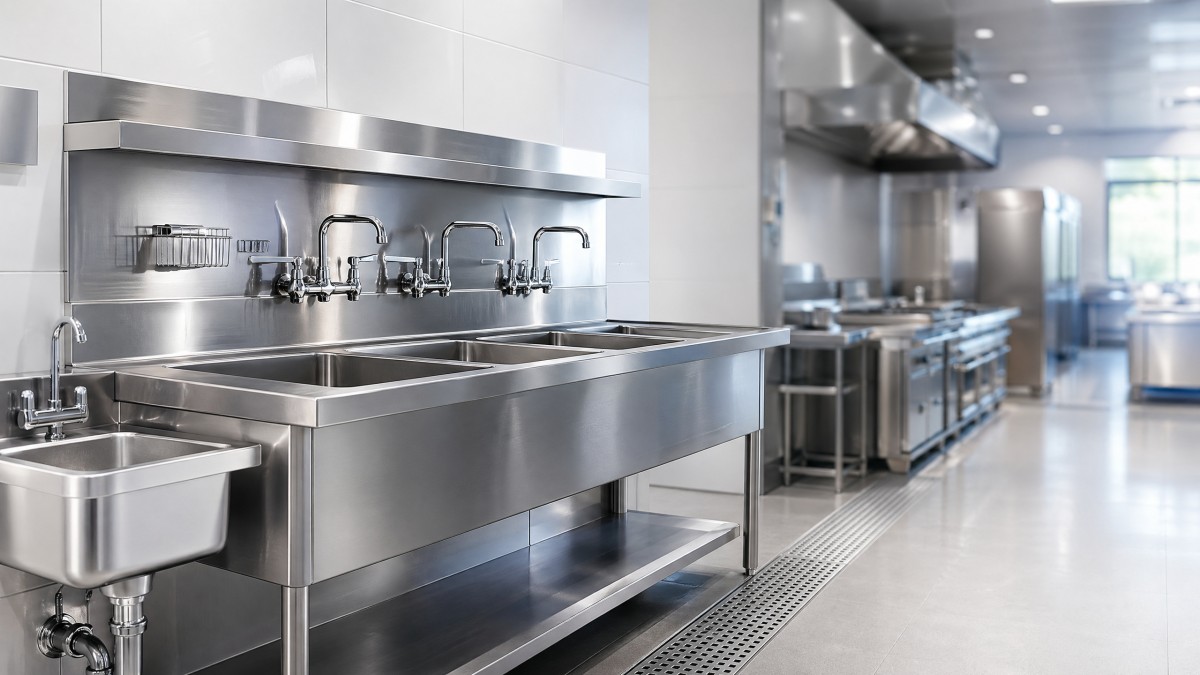
Health inspectors treat sinks as critical control points because they sit at the intersection of hygiene, food handling, employee behavior, and wastewater management. A sink is not just a fixture. It is part of the food safety system. Hand sinks support employee hygiene, prep sinks affect produce washing and thawing practices, mop sinks influence janitorial sanitation, and warewashing sinks determine whether utensils and cookware are cleaned and sanitized correctly.
When one of these stations is blocked, dirty, improperly used, or poorly located, the kitchen often compensates in unsafe ways. Employees may wash hands in food prep sinks, dump waste into handwashing stations, rinse wiping cloths where produce is handled, or stack dirty utensils where sanitizer contact is incomplete. These workarounds are common in busy kitchens, especially when workflow is cramped or the equipment setup does not match volume.
Inspectors also view sink conditions as visible indicators of the restaurant’s broader management discipline. Grease buildup, scale, leaks, splash contamination, slow drains, missing soap dispensers, and damaged sink seams suggest that restaurant kitchen cleaning and maintenance may be inconsistent elsewhere too. In other words, sink violations are often treated as symptoms of deeper operational weaknesses, not just isolated housekeeping issues.
The sink problems most likely to trigger health violations
One of the most common issues is improper sink separation and use. Commercial kitchens typically need dedicated stations for handwashing, food preparation, warewashing, and janitorial tasks. When those boundaries blur, contamination risk rises immediately. For example, a prep sink used for thawing raw meat and later for washing vegetables without proper cleaning can lead to a serious violation. The same applies when employees dump beverages, mop water, or food scraps into the wrong sink.
Another frequent problem is blocked access. A hand sink may technically exist, but if it is surrounded by storage bins, sheet pans, ingredient containers, or trash cans, staff are less likely to use it consistently. During an inspection, a blocked or inconvenient sink can be cited because it prevents proper handwashing at the moment it is needed. This is where restaurant kitchen organization directly affects compliance. Poor placement and clutter turn a compliant fixture into a nonfunctional one.
Drainage failures also create major sanitation concerns. Slow drains, standing water, backflow, and floor pooling can spread bacteria, attract pests, and create slip hazards. In severe cases, wastewater can contaminate surrounding prep or storage areas. Drainage issues are often linked to grease accumulation, poor pipe sizing, lack of preventive maintenance, or sink systems that are underspecified for the kitchen’s production volume.
Insufficient cleaning and sanitizer control are equally risky. Sinks develop biofilm, limescale, grease residue, and food particle buildup faster than many operators realize. If restaurant kitchen cleaning schedules are vague or rushed, the sink may look acceptable at a glance while still harboring contamination. Warewashing sinks are especially vulnerable when detergent concentration, sanitizer strength, water temperature, and contact time are not consistently monitored.
Physical damage to the sink itself can trigger inspection concerns as well. Cracked seals, corroded fittings, pitted surfaces, separated backsplashes, and damaged drainboards make effective sanitation difficult. Stainless steel restaurant kitchen equipment is preferred for good reason, but even stainless units become noncompliant if welds fail, corners trap debris, or surfaces are no longer smooth and cleanable. An old sink may still function mechanically while already failing hygienically.
How poor sink conditions affect daily operations beyond inspections
Health violations are only part of the cost. Sink-related problems also slow production and reduce kitchen efficiency. When drains clog or basins are occupied by the wrong tasks, staff wait, improvise, or move work to unsuitable areas. That creates bottlenecks during prep, service, and cleanup. In high-volume restaurants, even a few minutes of delay at a warewashing or prep sink can ripple through the entire shift.
Poor sink setup also affects labor behavior. Staff tend to follow the path of least resistance. If the hand sink is inconvenient, soap is missing, or the prep sink is too small for the actual workload, employees may skip steps or combine tasks in ways that increase risk. Management may believe the issue is training, but in many kitchens the real barrier is equipment design and workflow fit. Compliance becomes much easier when the sink system supports the work naturally.
There is also a cost to brand reputation and staff morale. Persistent odors, wet floors, recurring backups, and visibly dirty sink areas create a poor working environment and weaken confidence in kitchen standards. If employees see sanitation corners being cut around sinks, they may assume that other food safety rules are flexible as well. That mindset is dangerous because it normalizes risk.
What operators and managers should check first
If a restaurant is experiencing recurring sink-related issues, the first step is not always replacing equipment. Start by checking whether each sink has a clearly defined purpose and whether employees understand it. Labeling, training, and line-of-sight supervision often reveal misuse patterns quickly. A hand sink used for utensil rinsing or a prep sink used as overflow storage usually indicates process drift that management has tolerated over time.
Next, evaluate accessibility and workflow. Ask simple questions: Can staff reach the hand sink without crossing a busy prep line? Is the warewashing sink large enough for actual cookware volume? Is there enough drainboard space to separate dirty and clean items? Are nearby shelves, carts, and bins forcing staff to use sinks as temporary storage? These practical observations often explain why violations happen even when the kitchen appears adequately equipped on paper.
Then assess cleaning and maintenance discipline. Daily sink cleaning should be task-specific, not generic. Hand sinks need soap, paper towels, and splash zone cleaning. Prep sinks need cleaning between food categories. Warewashing sinks need concentration checks and residue control. Drain lines, strainers, faucet aerators, and undersink plumbing need scheduled inspection. If the kitchen only reacts when a sink smells bad or clogs, the system is already too reactive.
Finally, inspect the physical condition of the unit. Look for hard-to-clean seams, loose joints, rust spots, water stains that suggest hidden leaks, and evidence of repeated repairs. If the sink no longer supports effective sanitation, replacement may be more economical than ongoing patchwork maintenance. This is especially true in older kitchens where equipment has been adapted repeatedly rather than properly upgraded.
How better equipment selection reduces compliance risk
For procurement teams and decision-makers, sink-related health risks should be treated as an equipment planning issue as much as an operations issue. The right commercial sink is not simply a matter of dimensions. It must match menu complexity, labor patterns, cleaning volume, local code requirements, and kitchen layout. A low-cost sink that lacks the right basin depth, drainboard configuration, or material finish can create years of avoidable sanitation and workflow problems.
Stainless steel restaurant kitchen equipment remains the best standard for most commercial applications because it is durable, corrosion-resistant, and easier to sanitize when properly fabricated. However, quality varies. Operators should pay attention to gauge thickness, weld quality, coved corners, backsplash integration, leg stability, and how easily the sink can be cleaned underneath and behind. A sink that looks acceptable in a catalog may perform poorly in a wet, high-traffic, grease-heavy environment.
Buyers should also think in terms of system design. Do you need separate hand sinks closer to line stations? Would a larger pre-rinse and warewashing area reduce dish pileup? Is a dedicated food prep sink necessary to avoid crossover with thawing or rinsing tasks? Should the sink area include better shelving, splash protection, and drainage support? These are operational questions with direct compliance consequences.
Energy efficiency and smart kitchen planning matter too, but they should not overshadow sanitation fundamentals. Digital kitchen management tools can help schedule cleaning, log sanitizer checks, and track maintenance. Still, technology works best when the physical sink setup is already correct. No software can compensate for a sink that is undersized, inaccessible, or impossible to clean properly.
Practical prevention steps for staff, supervisors, and owners
The most effective prevention strategy is to combine clear sink usage rules with visible daily execution. Every sink should have a designated function, and that function should be obvious to staff. Hand sinks should never become dump stations. Prep sinks should be cleaned and sanitized between tasks. Warewashing sinks should follow a repeatable wash-rinse-sanitize process. Mop sinks should stay separate from food and utensil areas. Simplicity and consistency reduce mistakes under pressure.
Supervisors should build sink checks into opening, shift-change, and closing routines. These checks should include drainage speed, availability of soap and towels, cleanliness of basins and faucets, floor dryness, odor presence, and whether the area is being blocked by restaurant kitchen storage. When sink checks become part of normal operational discipline, small issues are fixed before they become inspection findings or emergency repairs.
Training should focus on real scenarios rather than only general rules. Staff need to know what to do when a sink is temporarily unavailable, how to report slow drains early, why standing water is a contamination risk, and how improper sink use can affect inspection scores and customer safety. This is especially important in kitchens with high staff turnover, multilingual teams, or multiple shifts.
Owners and managers should also review whether recurring sink problems reflect broader underinvestment. If the same clogs, leaks, or sanitation failures keep returning, the business may need layout improvements, better-quality commercial kitchen equipment, or a more preventive maintenance contract. Repeated labor workarounds are expensive. In many cases, the cost of a properly specified sink system is lower than the accumulated cost of violations, wasted labor, emergency plumbing, and interrupted service.
When a sink problem signals a larger kitchen design issue
Sometimes the sink is not the real problem. It is the place where a larger design flaw becomes visible. A prep sink that is always overloaded may indicate insufficient prep capacity for the menu. A hand sink that is never used may be too far from the action. Constant floor pooling may reflect bad slope, poor drain placement, or dishroom congestion. Frequent misuse of one sink for multiple tasks often means the kitchen workflow was never designed around actual service patterns.
This matters for remodels, new openings, and expansion planning. Decision-makers should use sink-related pain points as data. Where do backups occur? Where do staff skip handwashing most often? Which stations create cross-traffic? Which sinks are difficult to clean thoroughly? Answers to these questions can guide better restaurant kitchen organization and smarter capital investment.
For growing operators, integrated kitchen planning is especially valuable. Sink placement should align with prep zones, cold storage, hot line flow, dish return paths, and janitorial access. The goal is not simply to pass inspection, but to create a kitchen where safe behavior is the easiest behavior. That is the point where compliance, efficiency, and equipment ROI begin to reinforce each other.
Conclusion
Restaurant kitchen sink problems lead to health violations when they undermine handwashing, food separation, warewashing, drainage, and cleaning consistency. The most serious risks usually come from misuse, poor access, clogged drains, inadequate sanitation routines, and worn or poorly selected equipment. Inspectors notice these issues quickly because they reveal both immediate contamination hazards and deeper management weaknesses.
For kitchen staff and operators, the priority is disciplined daily use and cleaning. For purchasers and business leaders, the priority is choosing sink systems that match real workflow, support restaurant kitchen cleaning, and hold up under commercial conditions. Better stainless steel restaurant kitchen equipment, stronger maintenance habits, and smarter restaurant kitchen organization can prevent many of the violations that begin around the sink.
In short, if sink problems keep showing up in your kitchen, do not treat them as minor annoyances. They are often one of the clearest signs that food safety, storage, drainage, and workflow need attention. Fixing them early protects compliance, improves efficiency, and supports a safer kitchen operation overall.
Popular Tags
Kitchen Industry Research Team
Dedicated to analyzing emerging trends and technological shifts in the global hospitality and foodservice infrastructure sector.
Industry Insights
Join 15,000+ industry professionals. Get the latest market trends and tech news delivered weekly.
No spam. Unsubscribe anytime.
Contact With us
Contact:
Anne Yin (Ceramics Dinnerware/Glassware)
Lucky Zhai(Flatware)