
What to Check Before Ordering a Bakery Worktable
Choosing the right Bakery Worktable can directly affect workflow, hygiene, and long-term operating costs in any baking operation. Before placing an order, buyers should look beyond size and price to evaluate material quality, load capacity, workspace design, and cleaning convenience. This guide highlights the key factors procurement teams need to review to ensure the worktable matches production needs, safety standards, and budget expectations.
For procurement teams serving bakeries, hotels, central kitchens, and food processing sites, a Bakery Worktable is not a basic furniture item. It is a production asset that affects dough handling, preparation speed, cross-contamination control, staff comfort, and replacement cost over a period of 3 to 10 years. A poor selection can create bottlenecks in shaping, weighing, decorating, packaging, or tray staging.
In commercial kitchen equipment purchasing, the best decision usually comes from matching the table to output volume, room layout, cleaning routines, and future expansion. Buyers should verify specifications carefully, compare supplier responses, and confirm whether the worktable fits the real demands of a professional baking line rather than only a catalog image.
Define the Production Scenario Before Comparing Offers
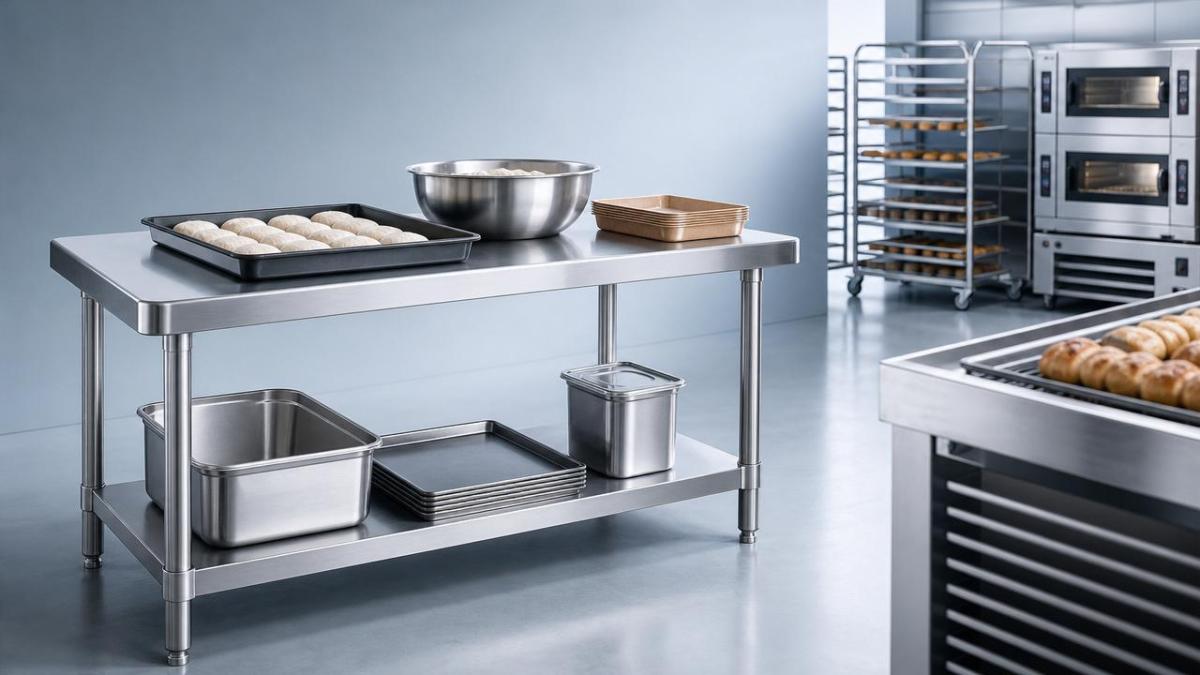
The first step in ordering a Bakery Worktable is to define where and how it will be used. A table for dough preparation in a high-output bread line has different requirements from one used for pastry finishing, ingredient staging, or packaging. Procurement mistakes often happen when one specification is expected to serve 4 or 5 functions at once.
Before asking for quotations, buyers should document at least 6 points: process stage, operator count per shift, average batch size, required tools on the table, cleaning frequency, and nearby equipment. Even a 200 mm error in table depth can affect aisle access, tray movement, and staff safety in a compact bakery production room.
Match the Worktable to the Task
Bakery workstations are not all the same. Dough mixing support areas often need reinforced tops and higher load ratings. Laminating and pastry handling may require a smoother surface and more uninterrupted length. Packaging zones may benefit from undershelves, drawers, or casters for easier movement between 2 adjacent process stations.
- Preparation tables for scaling, mixing support, and ingredient staging
- Dough handling tables for kneading, rounding, and resting support
- Finishing tables for decorating, filling, and final assembly
- Packing tables for boxing, labeling, and order sorting
Measure Space With Working Clearance, Not Just Footprint
A Bakery Worktable may fit the room on paper but still fail in daily use. Buyers should account for worker movement zones, tray cart turning radius, door swing, and cleaning access. In many production kitchens, leaving 800 to 1200 mm of operating clearance around the table is more practical than checking the table dimensions alone.
Height also matters. Common working heights are around 850 to 900 mm, but the best level depends on the process. Precision decorating can require a slightly different ergonomic height than heavy dough work. If a team works in 2 shifts, incorrect height can contribute to repetitive strain and lower throughput over time.
Quick planning checklist
- Measure the installation area and surrounding clearance.
- Identify whether the table supports one task or multiple tasks.
- Estimate daily output such as trays per hour or batches per shift.
- Confirm whether storage, backsplash, or mobility is needed.
- Review utility proximity if the table sits near mixers, ovens, or wash zones.
Check Material Quality, Structure, and Load Capacity
Material quality is one of the most important criteria when evaluating a Bakery Worktable. In commercial kitchen environments, stainless steel is widely used because it supports hygiene, corrosion resistance, and easier washdown. However, not all stainless steel tables perform equally under flour dust, moisture, temperature variation, and repeated impact from trays or small equipment.
Buyers should ask about top thickness, leg diameter, reinforcement design, weld quality, and weight capacity. A table may look similar in photos yet behave very differently when loaded with 80 to 200 kg of dough tubs, ingredient bins, or countertop machines. Long-term durability often depends on structural details rather than appearance.
What to verify in the specification sheet
The table below outlines practical checkpoints procurement teams can use when reviewing a Bakery Worktable quotation. These points help compare offers beyond initial price and reduce the risk of ordering a unit that bends, wobbles, or becomes difficult to sanitize after several months of use.
The key takeaway is that a Bakery Worktable should be selected by duty level, not appearance alone. In many B2B kitchen equipment projects, paying slightly more for a stronger frame and better grade material reduces repair, replacement, and hygiene risk over the next 24 to 60 months.
Stainless steel grade and bakery environment
If the table is used in a dry preparation zone with limited water exposure, one stainless option may be acceptable. If it is placed close to sinks, proofing areas, washdown zones, or humid production rooms, a higher corrosion-resistant material is often the safer choice. Buyers should ask suppliers to explain suitability based on environment instead of relying on a generic claim.
Surface finish is another detail worth checking. A smoother finish can improve cleaning efficiency and reduce flour buildup in micro-scratches. Edges, joints, and corners should be cleanly processed, because poorly finished seams can trap residue and increase sanitation labor by several minutes per cleaning cycle.
Evaluate Workspace Design, Hygiene, and Cleaning Practicality
A Bakery Worktable should support efficient movement and easy sanitation across an entire shift. Procurement teams often focus on dimensions and miss workflow details such as backsplash height, undershelf spacing, edge profile, caster locking, and whether the table allows quick sweep-down between batches. These details influence labor use every day.
For bakeries handling cream, fillings, chocolate, fruit, or allergen-controlled ingredients, cleanability is not optional. Tables that are hard to wipe, hard to move, or hard to inspect can slow sanitation procedures and create avoidable food safety concerns. Even a 10-minute delay repeated 3 times per day becomes a noticeable labor cost over a year.
Design features that affect usability
- Backsplash for wall-side use to reduce spills behind the table
- Undershelf for storing trays, bins, or small tools without blocking feet space
- Rounded or safer edge finishing for operator comfort
- Adjustable feet for uneven floors within a few millimeters
- Lockable casters when mobility is needed for cleaning or layout changes
Not every feature is suitable for every bakery. For example, mobile tables are useful in multi-use production rooms, but fixed-leg tables may offer better stability for dough-intensive work. Procurement teams should rank features in 3 categories: essential, useful, and optional, so the request for quotation stays focused and comparable.
Compare design options by operating need
The comparison below can help buyers choose a Bakery Worktable configuration that fits production and cleaning priorities instead of selecting features one by one without a clear operating logic.
This comparison shows that the right Bakery Worktable depends on process flow and sanitation routine. Procurement teams should avoid selecting a feature-rich model if half of the features increase cost without improving daily use. Practicality and cleaning speed usually matter more than unnecessary add-ons.
Cleaning-related questions to ask suppliers
- Are welds fully finished or left with hard-to-clean gaps?
- Can the undershelf be removed or cleaned easily in place?
- Do casters and foot sections trap flour or grease?
- Is the surface suitable for frequent wipe-downs during 2 or 3 shifts?
- Are there exposed fasteners in food contact or splash areas?
Review Supplier Capability, Lead Time, and After-Sales Support
Even a well-specified Bakery Worktable can become a poor purchase if supplier execution is weak. For international and domestic sourcing alike, procurement teams should assess quotation clarity, packaging standards, production lead time, spare part availability, and responsiveness to technical questions. A low unit cost may be offset by delays, transit damage, or inconsistent finishing.
Typical lead times may range from 7 to 15 days for standard units and 3 to 6 weeks for custom sizes or reinforced designs, depending on season, volume, and destination. Buyers should also confirm whether the supplier can support repeated orders with the same dimensions and finish quality, especially for chain bakery rollouts or central kitchen projects.
Questions that reduce purchasing risk
- Can the supplier provide a detailed drawing with length, depth, height, and shelf position?
- What is the declared load rating for the top and the undershelf separately?
- How is the table packed for export or warehouse transfer?
- Is assembly required, and what tools or time are typically needed?
- How are defects handled if leg alignment or weld finish fails on arrival?
A reliable supplier should answer these points directly and consistently. Procurement teams should be cautious if the quotation lists only overall dimensions and price but omits top thickness, material grade, or reinforcement details. In commercial kitchen equipment sourcing, missing information usually leads to slower approval cycles and higher risk after delivery.
Consider total cost over the service life
The purchase price of a Bakery Worktable is only one part of the cost equation. Buyers should also consider cleaning labor, replacement cycle, operational downtime, and the cost of modifying a table that does not fit the bakery line. A unit that lasts 5 to 8 years with stable performance may be more economical than a cheaper table replaced after 18 to 24 months.
If the table will support heavy production, it is sensible to request a sample evaluation, factory photos, or a video demonstration of the structure. This is especially useful when comparing multiple overseas suppliers from major kitchen equipment manufacturing regions, where visible product similarity can hide significant differences in reinforcement and finish quality.
Common Buying Mistakes and a Better Approval Process
Many bakery equipment buyers repeat the same avoidable mistakes. They order based on catalog dimensions only, ignore cleaning access, approve the lowest quote without confirming load rating, or fail to involve operations staff before purchase. These issues can delay installation and create rework costs within the first 30 days of use.
Frequent mistakes
- Choosing a Bakery Worktable that is too deep for aisle movement
- Using light-duty construction in heavy dough environments
- Adding casters where fixed stability is actually required
- Ignoring floor unevenness and adjustment needs
- Failing to verify whether the table supports sanitation routines
A practical 5-step approval workflow
- Collect process requirements from production, QA, and facility teams.
- Lock the dimensions and workflow position on a layout drawing.
- Compare 2 to 3 quotations using the same specification template.
- Review structure, material, and cleaning details before PO issuance.
- Inspect the delivered unit against the approved specification on arrival.
This process helps procurement teams move from reactive buying to controlled purchasing. In fast-growing bakeries and foodservice operations, standardized review steps can reduce ordering errors, improve vendor comparison, and support more consistent kitchen equipment performance across multiple sites.
A well-chosen Bakery Worktable supports production efficiency, hygiene control, operator comfort, and better asset life. The most effective purchase decision comes from evaluating 4 core areas: application fit, structural quality, cleanability, and supplier reliability. When these factors are reviewed together, buyers are more likely to secure a table that performs well in real bakery conditions rather than only on a quotation sheet.
If you are comparing bakery preparation tables for a commercial kitchen, hotel bakery, central kitchen, or food processing project, now is the right time to request a detailed specification review. Contact us to discuss dimensions, load requirements, material options, and custom configurations, and get a solution matched to your production needs and purchasing goals.
Popular Tags
Kitchen Industry Research Team
Dedicated to analyzing emerging trends and technological shifts in the global hospitality and foodservice infrastructure sector.
Industry Insights
Join 15,000+ industry professionals. Get the latest market trends and tech news delivered weekly.
No spam. Unsubscribe anytime.

Contact With us
Contact:
Anne Yin (Ceramics Dinnerware/Glassware)
Lucky Zhai(Flatware)