
What Sets a Reliable Restaurant Kitchen Equipment Manufacturer Apart
Choosing the right restaurant kitchen equipment manufacturer can directly impact efficiency, hygiene, and long-term operating costs. From restaurant kitchen stainless steel solutions to commercial restaurant kitchen design, a dependable partner delivers consistent quality, clear restaurant kitchen equipment specifications, and support for restaurant kitchen organization, storage, and cleaning needs. This article explores the key factors that set a trusted restaurant kitchen equipment supplier apart.
Why does manufacturer reliability matter beyond the initial purchase?
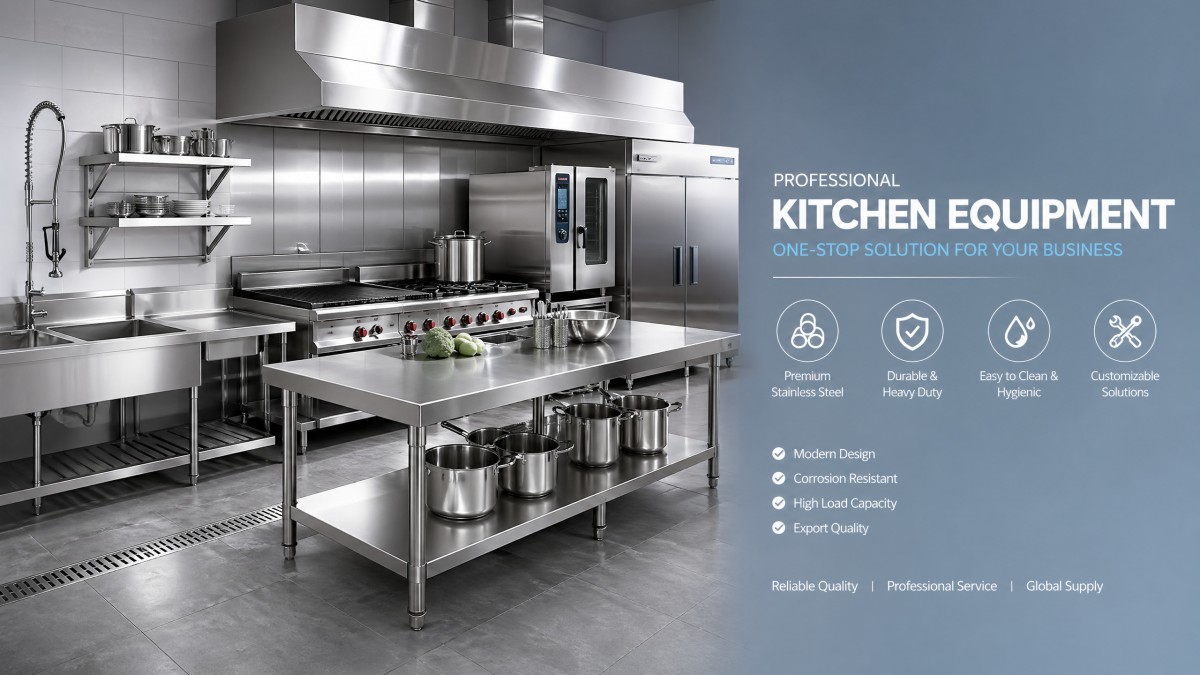
For restaurants, hotels, central kitchens, and foodservice groups, equipment buying is rarely only about price. A reliable restaurant kitchen equipment manufacturer affects workflow stability, food safety control, staff productivity, and replacement planning over a service life that often runs 5–10 years for many core units. In busy kitchens, even a short interruption of 4–8 hours can disrupt prep schedules, service speed, and cleaning routines.
Information researchers usually want clarity: what separates a capable supplier from a trading-only source? Operators care about ease of cleaning, ergonomic layout, and whether parts hold up under daily use. Procurement teams need transparent restaurant kitchen equipment specifications, realistic lead times such as 2–6 weeks for standard items, and consistent after-sales response. Decision-makers want evidence that the supplier can support growth, not just one shipment.
In today’s kitchen equipment industry, reliability also includes adaptation to automation, smart controls, and energy efficiency. Commercial kitchens increasingly require integrated systems rather than isolated products. A manufacturer that understands restaurant kitchen storage, ventilation coordination, stainless steel fabrication, and utility planning can reduce installation conflicts and avoid costly redesigns during fit-out.
The strongest manufacturers usually show reliability in 3 practical dimensions: product consistency, engineering support, and service continuity. If one of these is weak, the buyer often sees problems later in the form of mismatched dimensions, unclear load requirements, difficult maintenance access, or spare parts delays that stretch from 3 days to several weeks.
- Product consistency means repeated production with stable material thickness, weld quality, edge finishing, and dimensional tolerances suitable for installation.
- Engineering support means the manufacturer can review layouts, recommend utility connections, and identify space conflicts before production starts.
- Service continuity means support for spare parts, documentation, cleaning guidance, and communication during installation, commissioning, and routine operation.
What should buyers evaluate first when comparing restaurant kitchen equipment manufacturers?
A structured evaluation process helps buyers avoid decisions based only on unit cost. In commercial kitchen projects, 5 core checks usually matter first: material grade, fabrication quality, equipment specifications, compliance readiness, and service capability. These checks apply whether you are sourcing restaurant kitchen stainless steel worktables, storage systems, sinks, cooking lines, or modular prep stations.
Material and fabrication come first because they affect durability and hygiene every day. Stainless steel surfaces should be appropriate for kitchen exposure, especially in wet or corrosive cleaning environments. Buyers should ask about steel type, sheet thickness range, reinforcement details, weld treatment, and edge finishing. A serious manufacturer can explain why a unit is built a certain way rather than hiding behind generic claims.
The next step is checking whether specifications are complete enough for procurement and installation teams. Clear restaurant kitchen equipment specifications should cover dimensions, utility requirements, load-bearing limits where relevant, operating power ranges for electrical units, drainage, and maintenance clearance. Missing details often create site problems that appear only when equipment reaches the project location.
The table below gives a practical framework for comparing suppliers during sourcing, tendering, or early vendor screening. It is especially useful for purchasing teams handling 3–5 quotations across local and overseas sources.
A good comparison process should not stop at the table. Buyers should also ask for 2–3 reference drawings, sample documentation, and a spare parts policy. If a manufacturer cannot provide basic technical files or cannot explain its production process, that is often a stronger warning sign than a slightly higher quote from a better-prepared supplier.
Useful early-stage questions for procurement teams
Before issuing a purchase order, ask whether the supplier can support standard and custom items in the same project. Many kitchens require a mix of stock units and made-to-order stainless steel fabrication. The ability to manage both within one coordinated schedule can save 7–14 days in communication and reduce responsibility gaps during installation.
- Can you provide shop drawings or layout confirmation before production?
- What is the standard production cycle for stock items versus custom stainless steel units?
- Which spare parts or consumables are typically recommended for the first 6–12 months of operation?
- How do you handle transport protection for welded frames, shelves, doors, and electrical components?
How do technical details reveal a dependable restaurant kitchen equipment supplier?
Reliable suppliers stand out in technical conversations. They do not rely on broad claims like “heavy duty” or “commercial grade” without explanation. Instead, they discuss restaurant kitchen equipment specifications in a way that operators, engineers, and buyers can all verify. This includes dimensions, utility loads, temperature ranges where applicable, cleaning design, and access points for routine maintenance.
For stainless steel fabrication, practical details matter. Buyers should review corner finishing, splashback design, slope and drainage on sink units, reinforcement under worktops, and shelf capacity for dry or cold storage. For powered equipment, typical specification checks include voltage and frequency compatibility, power ranges such as 1kW–12kW depending on equipment type, and service access clearance that may require 50–150mm around the unit.
Cleaning and hygiene design are another major indicator. Operators often judge equipment quality by what happens after the lunch or dinner rush. Can the unit be wiped down quickly? Are there hard-to-reach joints where residue collects? Are drain points practical? In many kitchens, daily cleaning takes place 1–3 times per shift, so poor hygienic design creates labor waste every single day.
The following table highlights how technical transparency separates dependable manufacturers from weaker sources. It is especially relevant when comparing quotations that look similar on paper but differ in long-term usability.
When a supplier can explain these details clearly, buyers gain confidence not because of marketing language, but because technical risk becomes easier to control. This is especially important in multi-unit restaurant projects, hotel kitchens, and export orders where rework can add 2–4 weeks and disrupt opening schedules.
Why restaurant kitchen organization and storage should be part of the discussion
Dependable manufacturers also understand that equipment performance is linked to workflow design. Restaurant kitchen organization is not an accessory issue. Storage racks, pass-through shelving, sink zoning, waste handling, and undercounter utilization all influence labor movement, contamination control, and replenishment speed. A supplier focused only on selling individual units may miss these operational connections.
Typical workflow points a strong manufacturer reviews
- Raw-to-cooked separation to support food safety and reduce cross-contact risk.
- Storage height, shelf depth, and aisle movement so staff can access items quickly during peak hours.
- Cleaning zones and drain planning to shorten end-of-shift washdown time.
- Integration with refrigeration, prep, cooking, and plating stations in a logical operating sequence.
Which compliance, delivery, and service factors reduce project risk?
In commercial kitchen procurement, technical quality alone is not enough. Reliable restaurant kitchen equipment manufacturers reduce risk through documentation, packaging, delivery coordination, and post-installation support. This matters even more in international trade, where customs documents, electrical compatibility, and labeling requirements can affect whether equipment enters service on time.
Compliance should be discussed early rather than after production. Depending on the product category and destination market, buyers may need food-contact material information, electrical safety documentation, or market-specific declarations. A careful supplier will clarify what can be provided as standard documents and what may require additional lead time, often 5–10 working days, for project compilation or third-party coordination.
Delivery planning is equally important. Standard stainless steel tables or sinks may move faster, while custom cooking suites, counters, or integrated lines often need longer production and inspection windows. For many projects, a practical timeline includes 3 stages: drawing confirmation, production, and packing or dispatch. If the supplier cannot define these stages, schedule control becomes much harder for procurement teams.
The checklist below can be used during vendor approval or pre-shipment review to reduce avoidable problems in restaurant kitchen equipment projects.
- Confirm destination requirements for voltage, frequency, plug type, gas category, and language of labels or manuals.
- Review packing details for welded structures, fragile controls, doors, castors, and stainless steel surface protection.
- Request a final equipment list matched against drawings, utility points, and room sequence before dispatch.
- Clarify after-sales response method, spare part ordering process, and remote support availability for the first commissioning stage.
What does dependable service look like after delivery?
Service should be measurable. A dependable supplier typically defines documentation handover, installation guidance, spare parts identification, and a clear contact path for claims or troubleshooting. For operating teams, even simple support such as cleaning instructions, maintenance intervals every month or quarter, and parts diagrams can extend equipment life and reduce misuse.
For larger projects, the best partners can coordinate with contractors, consultants, or franchise teams. That support may include phased delivery, utility reconfirmation, or revision handling if the site changes after initial drawings. This practical flexibility is one of the strongest signs that a manufacturer understands commercial restaurant kitchen design rather than only production in isolation.
How can buyers avoid common sourcing mistakes and choose the right fit?
One common mistake is comparing quotes without comparing scope. Two suppliers may list the same type of restaurant kitchen equipment, but one includes backsplashes, undershelves, edge finishing, installation drawings, and export packing while the other does not. A lower headline price may lead to added site cost, rework, or replacement within a shorter operating cycle.
Another mistake is overlooking future expansion. Restaurants and foodservice groups often begin with one outlet or one kitchen line, then add locations over the next 12–24 months. A reliable manufacturer can support repeatability in specifications, appearance, and fit-out logic. That consistency helps multi-site buyers maintain kitchen standards, staff familiarity, and purchasing control across locations.
Operators also make the mistake of accepting poor ergonomic design because the unit “fits the room.” In reality, if shelves are too deep, sink bowls are impractical, or worktops are hard to clean, labor inefficiency continues every shift. Over 6–12 months, these operational losses may outweigh the savings from buying a cheaper unit. Usability should always be part of supplier assessment.
A practical selection decision often comes down to balancing 4 factors: technical suitability, lead time, compliance readiness, and service support. When those are aligned, procurement teams gain a better total-value outcome than by selecting only on unit price.
FAQ: the questions buyers ask most often
How do I know if a restaurant kitchen equipment manufacturer can handle custom projects?
Ask for drawing workflow, revision steps, and the typical custom lead time. A capable manufacturer should explain how dimensions are confirmed, how many review rounds are normal, and what changes are still possible before production starts. In many projects, 1–2 drawing revisions are common before approval, especially for stainless steel counters, shelving, and wash areas.
What lead time is normal for commercial restaurant kitchen equipment?
It depends on whether the items are standard or custom. Standard pieces may be available within 7–15 days, while custom fabrication or integrated kitchen lines often require 3–6 weeks or more depending on complexity, packing, and export scheduling. Buyers should ask for a stage-based timeline rather than only one final dispatch date.
Which specifications should never be missing from a quotation?
At minimum, the quote should state dimensions, material information, utility requirements, included accessories, packing method, and any installation or clearance notes. For electrical or heated equipment, voltage, phase, frequency, and power range are essential. For fabricated stainless steel units, shelf details, splashback height, and leg or castor configuration should also be clear.
Is one supplier better than multiple specialized vendors?
Not always, but a capable single-source manufacturer or coordinated supplier can reduce communication gaps and speed up project management. This is especially valuable when a project includes restaurant kitchen storage, washing areas, prep counters, cooking line support tables, and utility-linked equipment. The key is whether the supplier truly has coordination ability, not simply a broad catalog.
Why choose us for restaurant kitchen equipment planning and supply?
We focus on the factors commercial buyers actually need: clear restaurant kitchen equipment specifications, practical stainless steel solutions, support for restaurant kitchen organization, and coordination that fits real installation conditions. Whether your project involves a single restaurant, a hotel back-of-house upgrade, or a central kitchen expansion, the goal is to reduce decision risk and improve long-term usability.
Our support can start from the stage that is most useful to you. If you are still comparing suppliers, we can help review parameters, confirm material and configuration options, and organize a more accurate quotation scope. If your project is already underway, we can discuss lead time planning, custom fabrication details, packing requirements, and documentation needed for delivery or compliance review.
You can contact us for specific issues such as parameter confirmation, restaurant kitchen stainless steel selection, commercial restaurant kitchen design coordination, custom storage and cleaning solutions, sample support, certification-related documentation, or phased pricing for multi-item projects. Clear communication at the beginning often prevents weeks of delay later.
If you want a more reliable sourcing process, send your equipment list, kitchen layout, target delivery window, and destination market requirements. We can help you sort key specifications, identify possible risks, and discuss a practical solution that matches budget, operation needs, and project timing.
- central kitchen
- kitchen design
- restaurant kitchen
- Stainless Steel Worktable
- kitchen equipment
- restaurant kitchen equipment
- kitchen equipment manufacturers
- restaurant kitchen design
- restaurant kitchen equipment supplier
- commercial restaurant kitchen design
- restaurant kitchen equipment manufacturer
- restaurant kitchen equipment specifications
- commercial restaurant kitchen
- restaurant kitchen stainless steel
- restaurant kitchen storage
- restaurant kitchen organization
- restaurant kitchen equipment manufacturers
- restaurant kitchen equipment planning
Popular Tags
Kitchen Industry Research Team
Dedicated to analyzing emerging trends and technological shifts in the global hospitality and foodservice infrastructure sector.
Industry Insights
Join 15,000+ industry professionals. Get the latest market trends and tech news delivered weekly.
No spam. Unsubscribe anytime.
Contact With us
Contact:
Anne Yin (Ceramics Dinnerware/Glassware)
Lucky Zhai(Flatware)