
How to Vet a Restaurant Kitchen Equipment Distributor
Choosing the right restaurant kitchen equipment distributor can directly affect food safety, workflow, and long-term operating costs. Whether you manage a commercial restaurant kitchen, plan a modular restaurant kitchen, or compare a restaurant kitchen equipment supplier with a restaurant kitchen equipment manufacturer, careful vetting matters. This guide explains what to check, from restaurant kitchen equipment specifications to service, compliance, and support, so buyers can make confident decisions.
For most buyers, the key question is not simply who offers the lowest price. It is which distributor can reliably supply the right equipment, meet compliance requirements, support installation and maintenance, and reduce operational risk over time. A strong distributor helps protect uptime, food quality, staff efficiency, and capital investment. A weak one can create delays, compatibility issues, warranty disputes, and avoidable replacement costs.
If you are evaluating options, start with a practical mindset: verify product fit, technical expertise, documentation, after-sales support, logistics capability, and total cost of ownership. Price matters, but distributor quality matters more when equipment becomes mission-critical in a busy kitchen.
What buyers are really trying to avoid when vetting a distributor
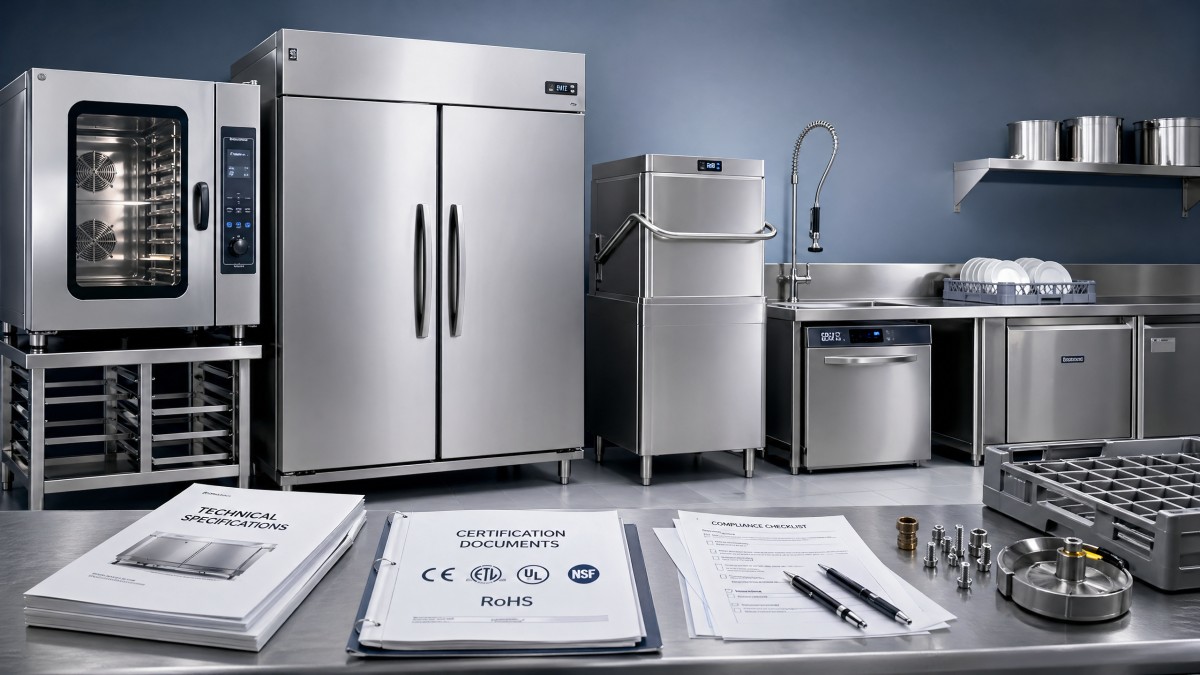
Searchers looking up how to vet a restaurant kitchen equipment distributor are usually trying to avoid a costly mistake. Procurement teams want to reduce sourcing risk. Operators want equipment that works reliably during service hours. Decision-makers want confidence that the supplier can support growth, compliance, and long-term value.
The biggest concerns usually fall into a few categories. First, buyers worry that the distributor may oversell equipment that does not fit their output volume, menu, utility setup, or kitchen layout. Second, they worry about weak after-sales support, especially when a refrigeration unit, oven, dishwasher, or prep machine fails during peak demand. Third, they worry about hidden costs related to installation, spare parts, freight, lead times, and warranty limitations.
That is why proper vetting should focus less on sales promises and more on evidence. Can the distributor show relevant project experience? Do they understand your workflow? Can they explain restaurant kitchen equipment specifications in a way that connects to operations, not just product catalogs? Strong distributors act as solution partners, not only order takers.
Start with product fit, not brand names alone
Many buyers begin by asking which brands a distributor carries. Brand strength matters, but it is only one part of the decision. The more important question is whether the distributor can match equipment to your specific application. A high-end combi oven, fryer, freezer, or ventilation system is still a poor investment if it is oversized, undersized, or poorly integrated into the kitchen line.
Ask the distributor to assess your use case in detail. A serious restaurant kitchen equipment supplier should ask about menu type, service volume, peak-hour output, staffing levels, cleaning requirements, utility availability, and floor plan restrictions. If the discussion remains generic, that is a warning sign. Distributors serving restaurants, hotels, central kitchens, and food processing sites should know that equipment selection depends heavily on operating context.
Product fit also includes compatibility between equipment pieces. For example, refrigeration, prep tables, holding equipment, dishwashing systems, and ventilation should support a logical production flow. In a modular restaurant kitchen, this becomes even more important. If a distributor cannot explain how different units work together, the risk of inefficiency and rework increases.
Check technical knowledge and specification accuracy
One of the clearest signs of a reliable distributor is their ability to discuss technical details accurately and clearly. Buyers should not have to decode vague product sheets on their own. A qualified distributor should be able to explain restaurant kitchen equipment specifications such as capacity, power requirements, temperature range, recovery time, airflow, noise level, materials, and cleaning standards in practical terms.
This matters because specification errors can create major downstream problems. Incorrect voltage or gas configuration can delay installation. Insufficient extraction planning can affect safety and compliance. Misjudged cooling capacity can lead to food quality issues. Poor material selection may increase corrosion risk in humid or high-salt environments. Technical confidence is not optional in commercial kitchens.
Ask for complete documentation before purchase. This should include specification sheets, utility requirements, installation drawings, maintenance guidance, warranty terms, and certification records. If the distributor cannot provide complete and current technical documents, that may indicate weak manufacturer coordination or poor internal processes. Both can become expensive later.
Assess compliance, certifications, and food safety alignment
Foodservice operations work under strict safety, sanitation, and local regulatory expectations. A distributor must understand this environment. Buyers should verify whether equipment meets relevant standards for food contact materials, sanitation, electrical safety, gas safety, energy performance, and local inspection requirements. This is especially important for imported equipment and cross-border sourcing.
Do not assume all products are ready for your market. A restaurant kitchen equipment distributor should be able to identify what certifications apply in your region and provide documentation to support them. That includes product approvals, test reports, and traceable model data where necessary. If they respond vaguely or rely on verbal assurances, proceed carefully.
Compliance is not just a legal issue. It also affects insurance, operating approvals, and brand reputation. If a kitchen fails inspection or a piece of equipment creates hygiene concerns, the operational impact can be immediate. Buyers in chains, hotels, and institutional foodservice should be especially strict here because standardization and audit readiness matter across multiple sites.
Look beyond supply: installation, commissioning, and training matter
A distributor should not disappear after the invoice is issued. Restaurant equipment often requires coordinated delivery, on-site positioning, utility connection planning, startup checks, and user training. This is particularly true for ovens, refrigeration systems, warewashing equipment, and automated or intelligent kitchen solutions. If these steps are handled poorly, even good equipment can perform badly.
Ask how the distributor manages installation and commissioning. Do they use trained in-house teams or outside contractors? Who verifies that the equipment is set up correctly? Who confirms that temperatures, ventilation, water treatment, and load conditions are within specification? You want a clear responsibility chain, not a situation where the distributor and installer blame each other if something goes wrong.
Training is often overlooked during procurement, yet it directly affects outcomes. Kitchen staff and maintenance personnel need practical guidance on safe operation, daily cleaning, preventive care, and basic troubleshooting. A strong distributor should offer this support or coordinate it with the manufacturer. This is especially valuable when introducing smart kitchen technologies or automated systems that change workflows.
Evaluate service responsiveness and spare parts support
For active commercial kitchens, service support can be as important as the original purchase. A broken ice machine, range, freezer, or dishwasher can disrupt service, reduce revenue, and create food safety risk. That is why buyers should ask detailed questions about repair response times, service coverage area, spare parts availability, and escalation procedures.
A reliable restaurant kitchen equipment distributor should be able to explain how service requests are logged, prioritized, and resolved. Ask whether they stock critical spare parts locally, whether they have trained service technicians, and what the average time-to-repair looks like for common equipment categories. If a distributor depends entirely on overseas parts for routine issues, downtime may be unacceptable.
Also review warranty terms carefully. A strong warranty is not only about duration. It is about clarity. What is covered? What voids coverage? Who pays labor, travel, freight, or replacement part costs? Does preventive maintenance affect eligibility? Procurement teams should compare real service models, not just headline warranty periods.
Review logistics reliability, lead times, and inventory discipline
In foodservice projects, timing often matters as much as product quality. A distributor may represent strong brands but still be a poor fit if they cannot deliver accurately and on schedule. Delayed opening dates, incomplete shipments, damaged items, or missing accessories can affect construction schedules, staffing plans, and launch budgets.
Ask how the distributor manages inventory, forecasting, packaging, and delivery coordination. Can they support phased delivery for new builds or renovations? Can they consolidate multiple equipment categories into one schedule? Do they inspect goods before dispatch? For imported items, can they explain customs timing, freight risks, and contingency plans? A professional supplier should have answers grounded in process, not optimism.
This is also where the distinction between a restaurant kitchen equipment manufacturer and a distributor becomes important. Manufacturers may offer factory-direct pricing or deep product knowledge, but distributors often provide stronger local inventory, broader product mix, and on-the-ground service. The best choice depends on your project complexity, urgency, and internal procurement capacity.
Compare total cost of ownership, not just purchase price
Low upfront pricing can be attractive, especially in budget-sensitive projects, but it is often a poor decision metric on its own. The smarter question is what the equipment and distributor relationship will cost over five to ten years. This includes energy use, water use, consumables, maintenance frequency, service access, parts pricing, staff productivity, and likely lifespan.
Energy-efficient kitchen solutions may cost more initially but reduce utility bills significantly over time. Better-designed equipment may shorten prep time, improve consistency, and lower labor strain. More durable materials can reduce replacement cycles. A good distributor should be able to help buyers estimate these tradeoffs rather than pushing the lowest-priced option.
Ask for lifecycle thinking during the evaluation process. If the distributor cannot discuss operating costs, cleaning efficiency, expected wear points, and maintenance planning, they may be selling transactionally rather than strategically. For enterprise buyers and expanding restaurant groups, this distinction matters because standardized long-term value usually outweighs small upfront savings.
Use a practical vetting checklist before awarding the contract
To make the decision process more objective, buyers should use a structured evaluation checklist. Start with business credibility: company history, customer references, market focus, and project examples similar to your scale and format. Then verify product scope, brand authorization status, and whether the distributor can support both core line equipment and related accessories.
Next, assess operational capability. Review technical documentation quality, specification accuracy, compliance support, installation process, training, service coverage, and parts readiness. Ask for named contacts in sales, project coordination, and technical support. Reliable distributors usually have clear account ownership and internal accountability.
Finally, compare commercial terms. Evaluate payment structure, lead times, Incoterms if relevant, warranty details, return policies, and post-installation support commitments. If possible, include a service-level section in the purchase agreement. This helps convert promises into measurable obligations and gives procurement teams a stronger basis for comparison.
Red flags that should slow down or stop the deal
Several warning signs deserve attention during distributor evaluation. One is inconsistent or incomplete documentation. Another is a strong focus on discounting without serious discussion of kitchen workflow, technical requirements, or support. Buyers should also be cautious if a supplier avoids reference checks or cannot show successful installations in comparable restaurant environments.
Other red flags include vague warranty language, unrealistic lead time promises, poor responsiveness during the quotation stage, and frequent changes in product recommendation without a clear reason. If communication is already disorganized before the order is placed, it rarely improves afterward. Service quality often reveals itself early.
Be especially careful when sourcing complex systems such as ventilation, refrigeration lines, dishwashing, or integrated smart kitchen equipment. These require coordination across trades and operational needs. A distributor that treats them as simple commodity purchases may increase the risk of performance problems, safety issues, and expensive corrections.
Final decision: choose the distributor that reduces risk and improves operations
Vetting a restaurant kitchen equipment distributor is ultimately about reducing uncertainty. The best distributor is not automatically the cheapest, the largest, or the one with the most impressive catalog. It is the one that can prove product fit, explain specifications clearly, support compliance, coordinate delivery and installation, respond to service needs, and help your kitchen operate efficiently over time.
For operators, that means fewer disruptions and better workflow. For procurement teams, it means stronger supplier confidence and fewer hidden costs. For business decision-makers, it means protecting capital investment while supporting food safety, consistency, and scalability. In a competitive foodservice environment, those outcomes matter more than a short-term price win.
Before you commit, ask for evidence, not just claims. Review technical documents, verify support systems, speak with references, and compare total cost of ownership. A careful vetting process takes more time upfront, but it can prevent far bigger problems after the kitchen goes live.
- restaurant equipment
- smart kitchen
- central kitchen
- restaurant kitchen
- kitchen solutions
- Freezer
- kitchen equipment
- restaurant kitchen equipment
- smart kitchen equipment
- restaurant kitchen equipment supplier
- restaurant kitchen equipment manufacturer
- modular restaurant kitchen
- restaurant kitchen equipment distributor
- restaurant kitchen equipment specifications
- commercial restaurant kitchen
Popular Tags
Kitchen Industry Research Team
Dedicated to analyzing emerging trends and technological shifts in the global hospitality and foodservice infrastructure sector.
Industry Insights
Join 15,000+ industry professionals. Get the latest market trends and tech news delivered weekly.
No spam. Unsubscribe anytime.

Contact With us
Contact:
Anne Yin (Ceramics Dinnerware/Glassware)
Lucky Zhai(Flatware)