
Restaurant Kitchen Equipment Distributor or Direct Factory?
Choosing between a restaurant kitchen equipment distributor and a direct factory is not just a pricing question. It affects product quality control, customization options, shipping complexity, warranty service, installation support, and how quickly your kitchen can start operating. In most cases, there is no universal best option. A distributor is often the better fit when you need faster communication, local support, mixed product sourcing, and lower operational risk. A direct factory is often the stronger choice when you need large-volume orders, custom stainless steel restaurant kitchen equipment, tighter unit costs, or long-term supply relationships.
For restaurant owners, purchasing managers, kitchen operators, and business decision-makers, the real challenge is knowing which route matches the project. A small restaurant opening one location has different priorities from a hotel chain, central kitchen, cloud kitchen brand, or food processing facility. The right buying channel depends on order size, technical requirements, delivery timeline, compliance standards, and how much support you need before and after the sale.
This guide explains the practical differences between buying from a restaurant kitchen equipment distributor versus a direct factory. It focuses on what buyers actually need to evaluate: cost structure, lead time, customization, quality consistency, after-sales service, logistics, and sourcing risk. If you are comparing restaurant kitchen equipment suppliers for a commercial project, this article will help you make a more confident decision.
What is the real difference between a distributor and a direct factory?
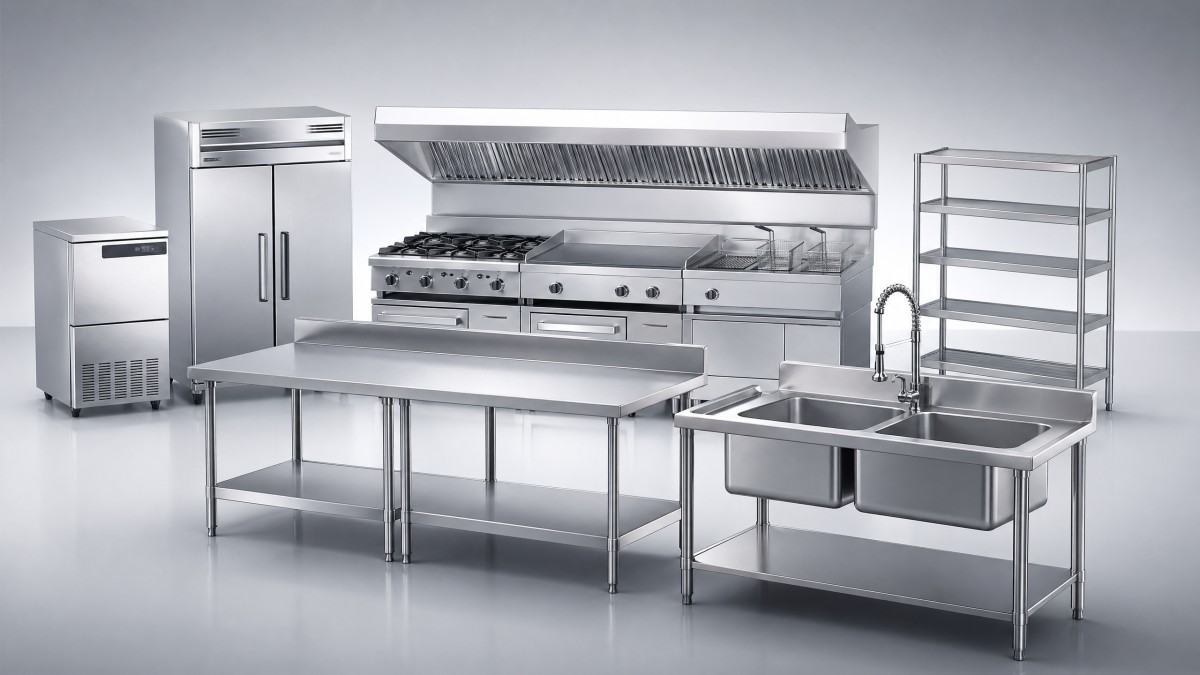
A direct factory manufactures the equipment itself. It may produce stainless steel worktables, sinks, shelves, cooking lines, refrigeration units, food preparation machines, or custom commercial kitchen systems in its own production facilities. Buying direct usually means you communicate closer to the production source, which can help with product customization, technical clarification, and large-order pricing.
A distributor, on the other hand, typically does not manufacture every product it sells. Instead, it represents one or multiple brands and acts as a supply bridge between manufacturer and end user. A restaurant kitchen equipment distributor may maintain inventory, offer local delivery, provide installation coordination, help with equipment selection, and manage warranty communication. For many buyers, that service layer is valuable.
The main difference is not simply “middleman versus maker.” It is about how responsibilities are divided. With a factory, you may gain lower ex-works pricing and more direct control over specifications. With a distributor, you often gain easier purchasing, consolidated procurement, and stronger local execution. For many restaurant projects, buying success depends less on unit price and more on whether the supplier can actually support the full purchasing process.
When is a restaurant kitchen equipment distributor the better choice?
A distributor is often the safer and more efficient option when your project requires multiple categories of equipment from different manufacturers. Most commercial kitchens do not need just one machine. They need preparation tables, cooking equipment, refrigeration, dishwashing systems, storage racks, ventilation support, and smallwares. A distributor can combine these needs into one procurement process, which saves time and reduces coordination work.
This model is also useful for buyers who need local communication and after-sales responsiveness. If your team is not experienced in technical sourcing, a distributor can help verify dimensions, power requirements, installation layout, and compatibility between equipment pieces. That support is especially important in restaurant openings where errors in sizing, drainage, gas configuration, or voltage can delay operations and create expensive rework.
Another major advantage is risk reduction. Reputable distributors usually pre-screen the brands they carry and understand which products perform well in local operating conditions. They may also stock spare parts, offer maintenance arrangements, or send technicians for troubleshooting. For operators and facility managers, this can be more valuable than achieving the lowest initial purchase price.
Distributors are especially suitable for independent restaurants, regional chains, hotels, catering operations, and buyers who want a balance of convenience, support, and manageable procurement complexity. If your priority is smooth project execution rather than pure factory-level cost compression, distribution often provides stronger practical value.
When does buying direct from a factory make more sense?
Direct factory purchasing is usually more attractive when the order volume is large enough to justify a closer manufacturing relationship. Restaurant groups, central kitchens, wholesalers, project contractors, and foodservice brands planning standardized rollouts often benefit most from direct sourcing. In these cases, lower per-unit pricing, customization flexibility, and repeat-order consistency can outweigh the extra coordination effort.
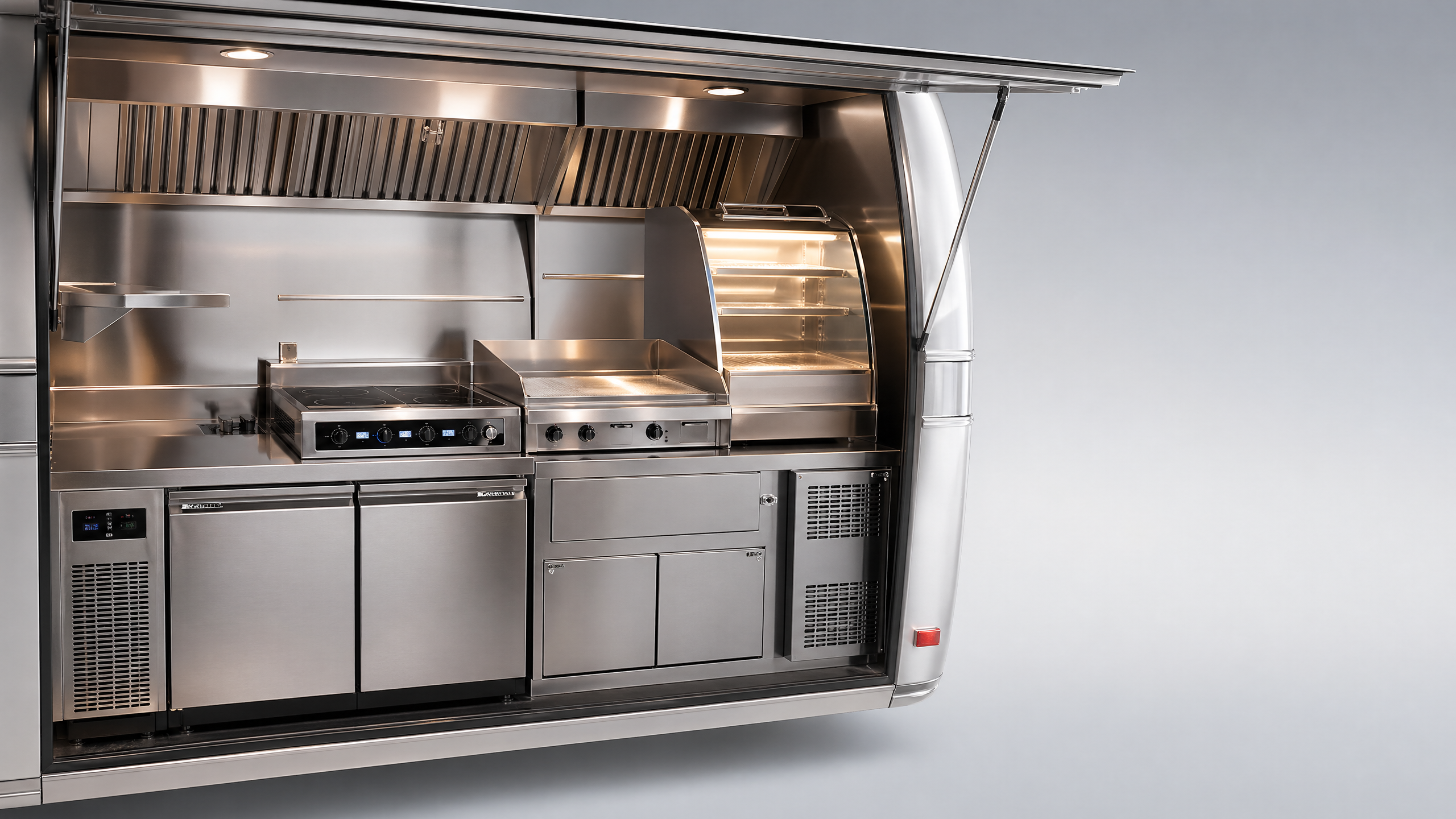
This route becomes especially compelling when you need custom stainless steel restaurant kitchen equipment. Factories can modify dimensions, material grades, shelf heights, sink configurations, wheel options, edge finishes, and production details according to your kitchen layout. If your project has a unique workflow, space limitation, or brand standard, direct communication with the producer can help avoid misunderstandings and design compromises.
Factories are also often better suited to OEM and private-label programs. If you want your own brand identity, packaging, specification control, or dedicated product line, direct sourcing is usually necessary. That is why importers, equipment brands, and large procurement teams often build long-term factory partnerships rather than depending only on distributors.
However, factory purchasing works best when your organization can manage specification review, production follow-up, shipping arrangements, import procedures, and technical acceptance. A lower purchase price does not automatically mean a lower total cost if communication gaps or logistics problems lead to delays or performance issues.
Price is important, but total cost matters more
Many buyers start by asking a simple question: which is cheaper, a distributor or a direct factory? The short answer is that factory pricing is often lower on paper, but the real purchasing decision should be based on total cost of ownership. That includes freight, duties, warehousing, installation coordination, service response, downtime risk, spare parts availability, and internal labor spent on sourcing management.
For example, a distributor may quote a higher unit price for a commercial prep table or restaurant refrigerator, but include local delivery, inspection, faster replacement, and simplified warranty handling. A factory may offer a lower ex-factory price, but if the order requires international shipping, customs clearance, extra packaging, and delayed support, the final savings may narrow or disappear.
Buyers should also consider hidden costs tied to mistakes. An incorrect voltage setup, the wrong countertop depth, poor weld quality, missing accessories, or unclear installation instructions can disrupt a kitchen opening. If every correction requires cross-border communication and waiting for factory approval, operational losses can easily exceed the original price difference.
The smartest approach is to compare landed cost and operational cost, not just quotation cost. Ask each supplier to clarify what is included, what is excluded, and what happens if there is a defect, delay, or technical mismatch. This is where professional procurement teams often outperform inexperienced buyers: they evaluate the full commercial picture.
Lead time, availability, and project timing: what buyers often underestimate
Lead time can be just as important as price, especially for restaurant launches and renovation projects. Distributors often have ready stock or access to nearby inventory, which can dramatically shorten procurement cycles. If your kitchen must open on a fixed date, inventory availability may be more important than securing the absolute lowest factory price.
Factories, especially overseas ones, usually offer stronger pricing on made-to-order items, but production time must be added to export preparation and shipping transit. Custom stainless steel restaurant kitchen equipment may take several weeks or more depending on order complexity, raw material schedules, and factory capacity. Buyers who choose direct sourcing without enough timeline buffer often create pressure on installation and commissioning phases.
There is also a difference between simple and complex projects. If you are ordering standardized equipment with stable specifications, direct sourcing can be manageable. If the project includes many product categories, site-specific adaptations, phased deliveries, or compliance checks, a distributor may better control the execution sequence. Timing risk increases when multiple suppliers must be coordinated without a local project lead.
Procurement teams should build a realistic schedule that covers drawing confirmation, production approval, quality inspection, shipment, customs clearance, site delivery, installation, and final acceptance. The best supplier is not always the one with the cheapest quote, but the one who can meet your opening deadline with the lowest disruption risk.
After-sales service and warranty support can decide the real winner
Restaurant kitchens are high-pressure working environments. Equipment breakdowns affect food safety, labor efficiency, customer satisfaction, and daily revenue. That is why after-sales service is one of the most important differences between distributors and direct factories. A distributor with local support can often respond faster, arrange technicians more easily, and reduce downtime.
Direct factories may still provide warranties, spare parts, and remote troubleshooting, but service execution depends on geography and organization. If the factory is in another country, replacement parts may take time, and communication may pass through sales contacts rather than service technicians. For non-critical equipment, this may be acceptable. For mission-critical kitchen lines, it can become a major operational risk.
Buyers should ask specific questions before purchasing. Who handles warranty claims? How quickly are spare parts available? Is video support or installation guidance included? Are manuals and technical drawings clear? Is there a local service partner? These practical questions matter more than broad warranty promises printed on a quotation sheet.
For operators and maintenance managers, reliability is not only about build quality but also about how fast a problem can be resolved. A slightly more expensive distributor-supported purchase may be the better business decision if it protects kitchen uptime and reduces service uncertainty.
How to evaluate quality when comparing suppliers
Whether you buy from a distributor or a direct factory, quality verification should never rely on marketing claims alone. Buyers should review material specifications, manufacturing standards, weld finish, structural design, component brands, insulation quality, electrical safety, and cleaning practicality. In stainless steel restaurant kitchen solutions, details such as steel grade, thickness, edge treatment, and load-bearing strength directly affect durability and hygiene.
If sourcing from a factory, request factory photos, production process details, quality inspection records, and sample confirmation where possible. For larger projects, third-party inspections before shipment can help reduce risk. You should also check whether the manufacturer has experience supplying similar commercial kitchen environments, not just producing general metal products.
If buying through a distributor, ask which manufacturers they represent and whether product documentation is transparent. A strong distributor should be able to explain the difference between entry-level and heavy-duty equipment, identify suitable models for your operating volume, and support product comparison based on actual usage rather than generic catalog descriptions.
In both channels, the most reliable suppliers are those who answer technical questions clearly, provide traceable specifications, and do not avoid discussions about testing, standards, or expected service life. Trust should be built on verifiable information, not just sales confidence.
A practical decision framework: which option fits your project?
If you are opening a single restaurant, replacing a few key units, or buying a mixed range of commercial kitchen products, a distributor is usually the smarter starting point. It simplifies selection, improves communication, and reduces the burden on internal teams. It is also the better route when service access and local accountability matter more than maximizing purchase price efficiency.
If you are sourcing for multiple sites, ordering in volume, building a standardized concept, or requiring custom fabrication, a direct factory may create better long-term value. This is especially true if your team has procurement experience, technical review capability, and enough lead time to manage manufacturing and logistics professionally.
Some buyers benefit most from a hybrid strategy. For example, they may purchase custom stainless steel fabrication directly from a factory while using local distributors for branded refrigeration, dishwashing systems, or service-sensitive equipment. This approach balances cost control with local responsiveness and is common in larger hospitality or foodservice projects.
The key is to match the sourcing channel to the project profile, not to follow a fixed rule. Budget matters, but so do risk tolerance, internal expertise, operating urgency, and support expectations. The best procurement decisions usually come from alignment between business goals and supplier capability.
Final thoughts
Choosing between a restaurant kitchen equipment distributor and a direct factory is really a question of priorities. If you want simplicity, local support, mixed-product procurement, and lower execution risk, a distributor is often the better choice. If you want volume pricing, customization, private-label potential, and direct control over production, a factory can offer stronger value.
For most buyers, the right answer is not based on theory but on the specific kitchen project. Evaluate total cost, delivery timing, technical complexity, service needs, and internal sourcing capability before making a decision. A well-matched supplier relationship will do more than save money. It will help your kitchen run more efficiently, reduce purchasing mistakes, and support long-term operational success.
When comparing restaurant kitchen equipment suppliers, ask deeper questions than “who is cheaper?” Ask who can deliver the right equipment, in the right configuration, on the right timeline, with the right level of support. That is the standard that leads to smarter purchasing decisions.
- cooking equipment
- central kitchen
- restaurant kitchen
- kitchen solutions
- Stainless Steel Worktable
- Preparation Table
- kitchen equipment
- restaurant kitchen equipment
- kitchen equipment suppliers
- restaurant kitchen equipment supplier
- stainless steel restaurant kitchen
- restaurant kitchen equipment distributor
- restaurant kitchen equipment suppliers
Popular Tags
Kitchen Industry Research Team
Dedicated to analyzing emerging trends and technological shifts in the global hospitality and foodservice infrastructure sector.
Industry Insights
Join 15,000+ industry professionals. Get the latest market trends and tech news delivered weekly.
No spam. Unsubscribe anytime.
Contact With us
Contact:
Anne Yin (Ceramics Dinnerware/Glassware)
Lucky Zhai(Flatware)