
What a Practical Restaurant Kitchen Equipment Setup Looks Like
A practical restaurant kitchen equipment setup is not simply about buying more machines or choosing the most advanced brand. It is about building a kitchen that can support the menu, maintain food safety, move staff efficiently, and stay reliable during busy service. For researchers, owners, or operators comparing options, the most useful way to understand a strong restaurant kitchen equipment setup is to look at how equipment supports real kitchen workflow rather than treating every category as equally important.
In most cases, the best setup is the one that matches production volume, service style, available space, labor skill, and cleaning demands. A small fast-casual kitchen, a full-service restaurant, and a delivery-focused operation may all use similar core equipment, but the layout, capacity, and priority of each item will differ. That is why practical planning matters more than assembling a generic checklist.
For anyone researching commercial kitchen planning, the central question is usually this: what equipment is truly essential, what can be scaled later, and how should the pieces work together? The answer starts with understanding the kitchen as a system made up of cooking, cold storage, prep, holding, ventilation, warewashing, and safety support. When these systems are balanced, the kitchen performs smoothly. When one part is undersized or misplaced, the entire operation suffers.
What makes a restaurant kitchen equipment setup practical in the real world?
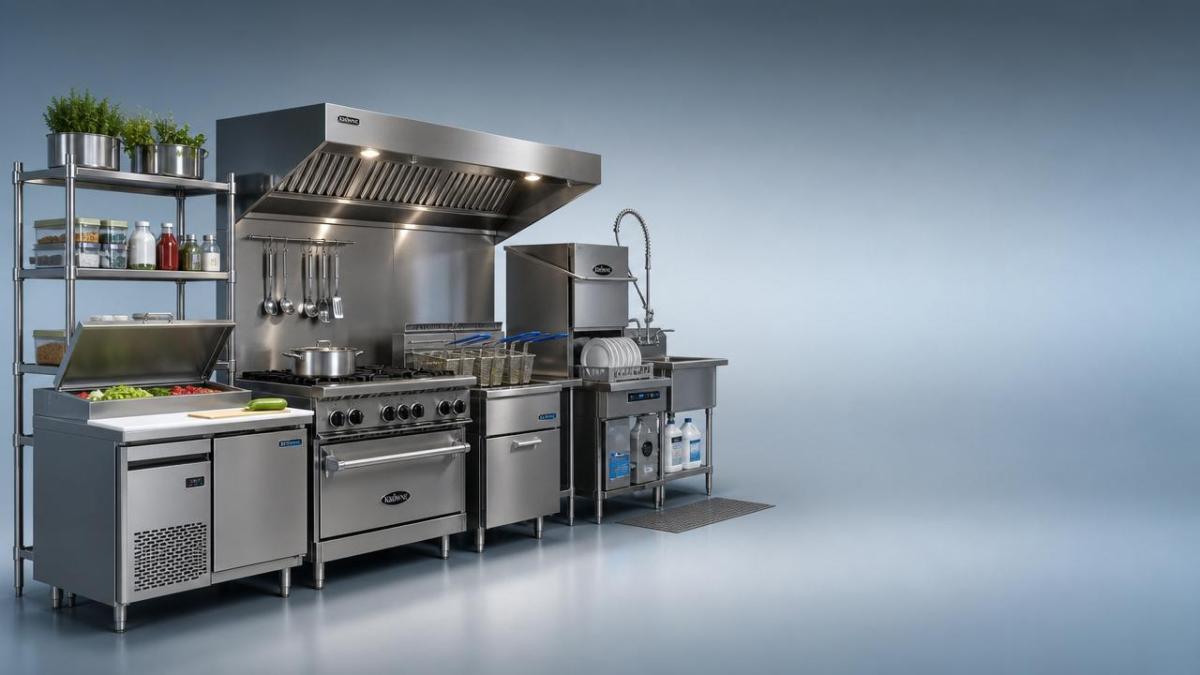
A practical setup is one that supports daily operations without creating bottlenecks. In real restaurants, the goal is not to maximize equipment count. It is to ensure that prep, cooking, plating, cleaning, and storage can happen with as little wasted movement as possible. Practicality shows up in speed of service, consistent food quality, safer handling, easier cleaning, and lower downtime.
That means the right setup begins with operational realities. How many meals are served during peak hours? Is the menu grill-heavy, fryer-heavy, bakery-oriented, or dependent on cold assembly? Does the kitchen handle dine-in only, or also takeaway, catering, and delivery? These questions shape equipment needs far more than trends or supplier catalogs.
Another sign of a practical setup is balance between capacity and usage. An oversized range, underpowered refrigeration system, or insufficient prep table can each create hidden inefficiency. Many kitchens do not fail because they lack equipment. They fail because the wrong equipment was prioritized, or because pieces were selected individually instead of as part of an integrated workflow.
Modern foodservice operations also expect more from equipment than in the past. Energy efficiency, simple controls, easier maintenance, and compatibility with digital kitchen management are increasingly important. A setup that seems affordable at purchase may become expensive if it wastes labor, increases utility costs, or slows production. Practical planning therefore looks beyond upfront price and focuses on everyday performance.
Which equipment categories are actually essential for most restaurant kitchens?
Most restaurant kitchens are built around six core equipment zones: cooking, refrigeration, food preparation, storage, cleaning, and ventilation. The exact mix changes by concept, but these categories form the foundation of a working commercial kitchen.
Cooking equipment is usually the center of production. This may include commercial ranges, ovens, griddles, charbroilers, fryers, steamers, combi ovens, salamanders, or induction units. The right combination depends on menu design and service volume. A burger concept may prioritize griddles and fryers, while a high-output banquet kitchen may rely more on combi ovens and hot holding systems.
Refrigeration equipment is critical for food safety and operational continuity. Typical items include reach-in refrigerators, freezers, undercounter units, prep tables with refrigerated rails, walk-in coolers, and walk-in freezers. Refrigeration should be selected according to ingredient turnover and station needs, not just available wall space. If cold storage is too far from prep or line service, staff lose time every shift.
Food preparation equipment includes worktables, cutting stations, mixers, slicers, food processors, vegetable prep machines, and specialty tools. These items are often less expensive than cooking equipment, but they have a major impact on labor productivity. Restaurants that underestimate prep equipment often end up creating manual tasks that waste hours each day.
Storage equipment includes shelving, ingredient bins, dunnage racks, dry storage systems, and mobile racks. Good storage prevents cross-contamination, improves inventory control, and keeps pathways clear. It also supports first-in, first-out rotation, which is important for quality and cost management.
Cleaning and warewashing equipment includes sinks, pre-rinse systems, dishwashers, glasswashers, grease management tools, and sanitation stations. These are not secondary items. If dishes, utensils, pans, and prep tools cannot be cleaned and returned quickly, the kitchen loses production capacity even when cooking equipment is available.
Ventilation and safety equipment includes hoods, make-up air systems, fire suppression systems, floor drainage, anti-slip surfaces, and temperature monitoring tools. These systems protect staff, support compliance, and keep the kitchen environment workable during long service periods.
How should equipment follow kitchen workflow instead of just filling the room?
The strongest restaurant kitchen equipment setup follows the flow of food from receiving to storage, prep, cooking, plating, service, and cleaning. When equipment aligns with this sequence, staff move naturally through tasks. When layout fights workflow, every station becomes slower and more stressful.
A practical kitchen often starts with receiving and storage near the entry point. Dry goods, chilled products, and frozen items should be placed into the appropriate storage quickly. From there, ingredients move into prep areas equipped with sinks, worktables, cutting tools, and refrigerated support where needed.
The hot line should be arranged based on menu sequence and handoff rhythm. For example, if a concept depends on grilled proteins, fried sides, and plated sauces, the grill, fryer, and finishing area should be positioned to reduce crossing paths. Under-counter refrigeration, heat lamps, and plating counters can reduce unnecessary walking and improve ticket timing.
After cooking, pass-through or service areas should allow food to move out without colliding with dirty dish return or prep traffic. Warewashing should remain accessible but separated enough to avoid contamination and congestion. In compact kitchens, this zoning becomes even more important because one poorly placed sink or fridge door can interrupt multiple stations at once.
Operators researching kitchen design should remember that equipment layout affects labor almost as much as staffing level. A kitchen can have quality appliances and still perform badly if team members must constantly turn, reach, wait, or cross each other’s paths. Practical setups reduce those frictions in ways that are visible only during real operating hours.
What should buyers evaluate before choosing specific equipment models?
Once the basic equipment categories are clear, the next step is selecting the right size, output level, and build quality. Many buyers focus first on brand or price, but practical evaluation starts with operational fit. A better question than “What is the best fryer?” is “What fryer capacity matches our peak order volume, oil management routine, and available hood space?”
Capacity is one of the most important factors. Equipment should support peak periods without excessive overbuilding. Oversized units consume space and utilities, while undersized units create service delays and premature wear. Capacity decisions should be tied to projected meal counts, batch sizes, prep cycles, and menu complexity.
Durability matters because restaurant environments are demanding. Stainless steel construction, heavy-duty hinges, dependable thermostats, easy-to-clean surfaces, and serviceable components all affect long-term value. Equipment used continuously in commercial kitchens should be judged differently from products intended for light-duty applications.
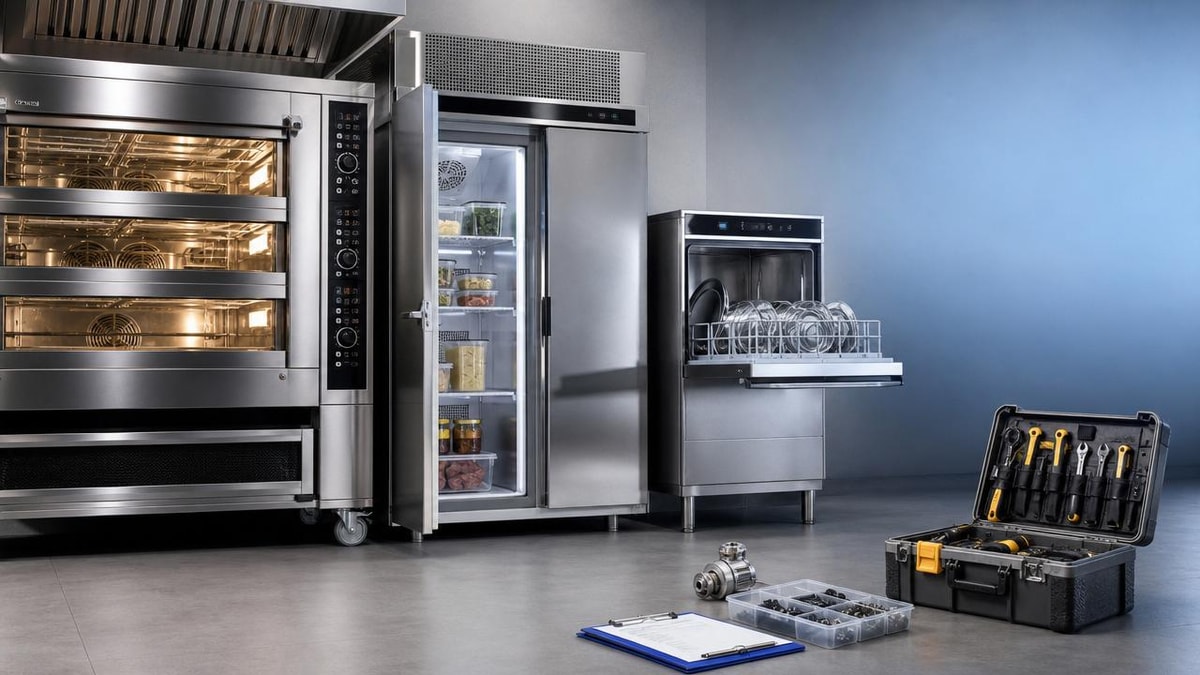
Maintenance access is another practical concern that is often overlooked. Can filters be cleaned easily? Are key parts readily available? Is local service support reliable? A lower purchase price can quickly lose its advantage if downtime becomes frequent or repairs are difficult to arrange.
Energy and water efficiency should also be part of the decision. Efficient refrigeration, dishwashing, cooking, and ventilation systems can reduce operating cost over time. In high-volume kitchens, utility savings accumulate quickly. This is one reason energy-efficient kitchen equipment is now a major consideration for modern operators, not merely a sustainability preference.
Finally, think about training and usability. Intuitive controls, programmable settings, and consistent performance can reduce errors and improve output. Smart features are useful only when they solve real operational problems, such as monitoring temperatures, standardizing cooking cycles, or improving preventive maintenance scheduling.
How does the menu determine the right restaurant kitchen equipment setup?
No equipment plan is practical unless it matches the menu. A kitchen should be built around what is actually produced every day, not around a broad image of what a restaurant kitchen looks like. Menu engineering and equipment planning should happen together.
For example, a pizza concept may need dough mixers, refrigerated prep tables, deck or conveyor ovens, proofing support, and organized topping stations. A café may place more emphasis on refrigeration, beverage systems, compact convection ovens, and display equipment. A high-turnover Asian kitchen might require wok ranges, rice cookers, steamers, prep sinks, and rapid batch handling capacity.
Popular Tags
Kitchen Industry Research Team
Dedicated to analyzing emerging trends and technological shifts in the global hospitality and foodservice infrastructure sector.
Industry Insights
Join 15,000+ industry professionals. Get the latest market trends and tech news delivered weekly.
No spam. Unsubscribe anytime.

Contact With us
Contact:
Anne Yin (Ceramics Dinnerware/Glassware)
Lucky Zhai(Flatware)