
Restaurant Kitchen Organization Mistakes That Slow Service
Poor restaurant kitchen organization can quietly slow ticket times, increase cleaning workloads, and create safety risks in any commercial restaurant kitchen. From inefficient restaurant kitchen storage to poorly placed restaurant kitchen counter, sink, hood, and appliances, small mistakes add up fast. This guide explains how to organize a restaurant kitchen for smoother service, better restaurant kitchen cleaning, and smarter layout planning.
Why do restaurant kitchen organization mistakes slow service so quickly?
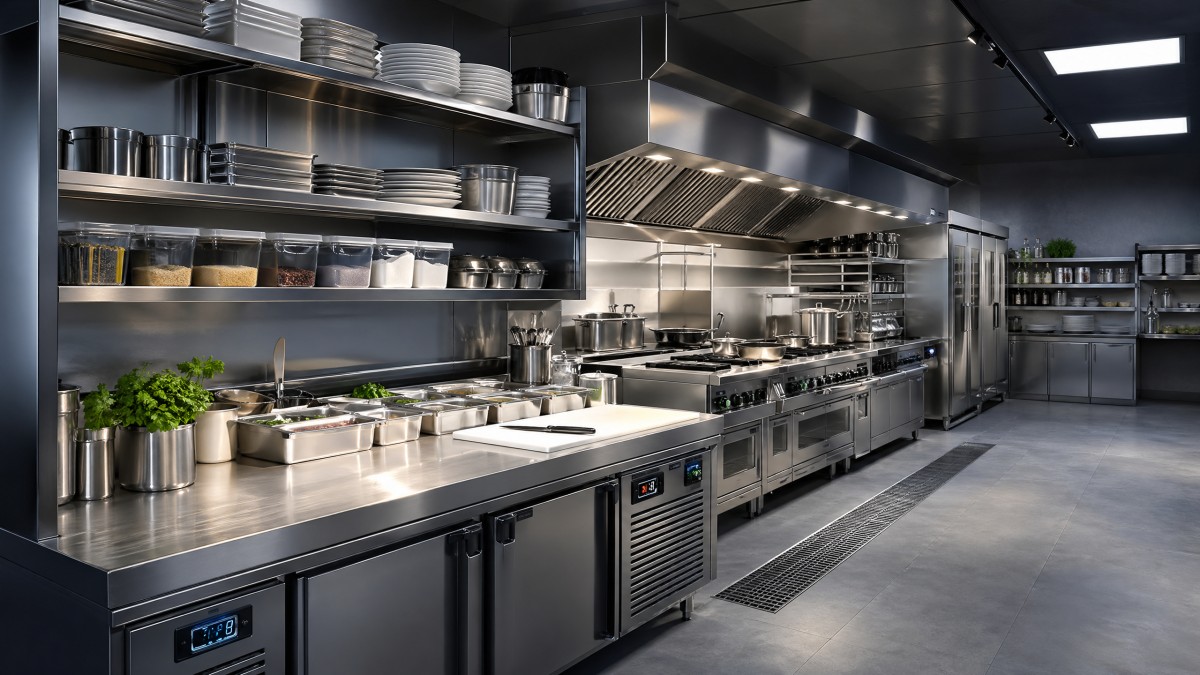
In a busy restaurant kitchen, speed depends on movement, visibility, and repeatable workflow. When prep tables, refrigeration, cooking equipment, and washing areas are not arranged around actual production steps, staff take more turns, cross paths more often, and waste seconds on every plate. Across a lunch or dinner rush of 2–4 hours, those small delays can turn into longer ticket times, inconsistent food quality, and avoidable labor pressure.
The problem is not only layout. Poor restaurant kitchen organization also affects storage labeling, tool placement, waste handling, cleaning access, and line replenishment. For operators, this means fatigue and confusion. For purchasing teams, it means buying more equipment than needed or selecting the wrong size. For business decision-makers, it means weaker throughput, harder training, and a kitchen that cannot scale when demand increases.
Modern commercial kitchen design is moving toward integrated systems, smart appliances, and energy-efficient equipment, but technology does not solve a bad process by itself. A combi oven, undercounter refrigerator, or automated fryer only performs well when surrounding work zones support fast access, safe circulation, and simple cleaning. In many projects, the first 3 planning priorities should be product flow, staff flow, and sanitation flow.
For restaurants, hotels, central kitchens, and foodservice groups, organization should be treated as an operating asset rather than a housekeeping issue. A well-organized commercial kitchen usually improves consistency in 4 critical areas: prep speed, service response, cleaning time, and equipment utilization. That is why layout planning and equipment selection should be reviewed together, especially before renovation, capacity expansion, or new outlet opening.
Common signs your commercial kitchen layout is working against you
- Staff regularly walk back and forth more than 3 times for one order because ingredients, tools, and plating stations are too far apart.
- Restaurant kitchen cleaning takes longer than expected because equipment is installed too close together or hard-to-reach corners collect grease and debris.
- Cold storage, dry storage, and hot line replenishment are disconnected, creating stockouts during peak periods of 60–90 minutes.
- Safety incidents increase around the sink, hood, cookline, or dish area because wet and hot traffic zones overlap.
Which restaurant kitchen organization mistakes appear most often?
Many kitchens are not slow because the team lacks effort. They are slow because the physical environment creates friction. The most common restaurant kitchen organization mistakes usually appear in five places: storage, prep, cookline, dishwashing, and cleaning access. These mistakes are especially common in kitchens that grew gradually over 12–24 months without a full workflow review.
One frequent issue is overloading the restaurant kitchen counter with tools, small appliances, and ingredients that are not used in every shift. This reduces usable prep space and makes sanitation harder. Another issue is mismatched equipment sizing. A fryer, range, worktable, or reach-in refrigerator may fit the room on paper but still create collision points once 3–6 staff members work at the same time.
Placement of the restaurant kitchen sink and hood is another operational weak point. If handwashing sinks are too far from prep or cook stations, hygiene routines become inconsistent. If the exhaust hood does not align with the active hot zone, heat and grease spread into adjacent work areas, increasing cleaning frequency and reducing comfort. These are not cosmetic issues; they affect compliance, workflow, and maintenance cost.
The table below summarizes common mistakes, their operational impact, and practical corrections. It is useful for information researchers comparing layout strategies, for operators diagnosing pain points, and for procurement teams deciding whether to reorganize, replace, or add commercial kitchen equipment.
A useful rule is to separate daily-use items from weekly-use items, and high-frequency items from backup items. In many kitchens, 20–30 core tools and ingredients drive most output during a normal service period. If those items are not positioned at the point of use, staff compensate with extra steps, temporary stacking, and unsafe shortcuts. Organization should reduce decisions, not create more of them.
Mistakes that usually affect service first
1. Storage without frequency logic
When storage is arranged only by available space instead of menu demand, service teams lose time searching, reaching, and restocking. High-use proteins, sauces, garnishes, and containers should be reviewed by shift volume, not just by shelf availability.
2. Cleaning neglected during layout planning
If staff cannot clean behind, under, or between equipment in a daily or weekly cycle, grease and debris build up fast. That raises labor time, pest risk, and maintenance calls. Easy-clean spacing and removable components should be part of procurement decisions.
3. Utility points placed without workflow testing
Power, drainage, gas, and ventilation locations can force poor equipment placement. A kitchen may buy the right machine but install it in the wrong spot because utility points were fixed too early in the project.
How should you organize a restaurant kitchen for faster workflow and easier cleaning?
A practical restaurant kitchen layout starts with process mapping. Track one menu item from receiving to storage, prep, cooking, plating, and dish return. In many operations, this review can be done in 4 steps over 1–2 service cycles: observe movement, identify bottlenecks, group equipment by task, and test revised placement. The goal is not perfect symmetry. The goal is shorter travel paths and fewer interruptions.
The most effective layouts usually divide the kitchen into clear zones: receiving and storage, cold prep, hot prep, cookline, pass or plating, warewashing, and waste. For small kitchens, some zones can overlap, but the workflow should still move in one direction as much as possible. This is especially important in restaurants with limited square footage, high table turnover, or mixed dine-in and delivery service.
Restaurant kitchen cleaning should be built into the layout from the start. That means allowing access around base equipment, avoiding dead corners behind counters, selecting surfaces that can be wiped or rinsed quickly, and planning storage so floor cleaning is not blocked by loose containers. For many operators, reducing 15–20 minutes from end-of-shift cleaning is as valuable as shaving seconds from each ticket.
Digital kitchen management tools and smart equipment can support organization when used correctly. Temperature monitoring, production timers, and maintenance reminders help, but they work best after the physical kitchen is logically arranged. A connected kitchen should not compensate for a cluttered one. First simplify motion and placement, then use technology to standardize, monitor, and scale operations.
A 5-point organization checklist for commercial kitchens
- Place the top 10–20 high-use ingredients and tools within immediate reach of the active station during the busiest 60–90 minutes of service.
- Separate raw, cooked, allergen-sensitive, and cleaning-related items to support food safety and reduce cross-contact risk.
- Check whether prep, cooking, plating, and dish return can flow with minimal backtracking across 3 core staff paths.
- Reserve clear access for daily cleaning around the sink, hood filters, refrigeration gaskets, and equipment undersides.
- Review the layout every quarter or after menu changes, staffing changes, or equipment additions.
Which equipment choices support better organization?
Modular tables, undercounter refrigeration, wall shelving, mobile prep stations, and integrated holding equipment often support cleaner workflows than oversized standalone units. For growing restaurants, it is usually better to choose scalable commercial kitchen equipment that fits current output plus a moderate expansion range, rather than overbuilding for a distant future scenario.
Energy-efficient kitchen equipment also contributes to organization indirectly. Lower heat load around the cookline can make nearby stations more usable. Equipment with simpler surfaces, better accessibility, and fewer exposed joints can reduce restaurant kitchen cleaning time and improve maintenance routines. These details matter in real kitchens where uptime and sanitation affect daily margins.
What should buyers and decision-makers compare before changing layout or equipment?
Purchasing teams often face a difficult question: should the restaurant reorganize the existing kitchen, replace selected equipment, or redesign the entire production flow? The answer depends on output targets, service model, utility limits, compliance needs, and budget. A low-cost reorganization may solve a short-term problem, but if the cookline is fundamentally undersized or poorly ventilated, a broader investment may be necessary.
For B2B buyers, a useful approach is to compare options across 4 dimensions: workflow impact, installation complexity, cleaning and maintenance burden, and scalability over the next 12–36 months. This keeps the decision tied to operations rather than to equipment price alone. It also helps align chefs, facility managers, procurement officers, and owners around shared criteria.
The following comparison table can guide discussions when evaluating restaurant kitchen organization upgrades. It is especially relevant for commercial kitchens planning renovation, menu expansion, multi-shift operation, or the introduction of smart kitchen equipment and energy-saving appliances.
This comparison shows why procurement should not be separated from operations. An equipment purchase that saves floor space but complicates maintenance may not be a real improvement. Likewise, a full redesign may be excessive if the main problem is poor restaurant kitchen storage discipline. The right choice depends on bottleneck severity, available shutdown window, and expected production growth.
Procurement questions worth asking before approval
- Will this equipment reduce walking distance, station congestion, or cleaning time in a measurable way over each shift?
- Can the unit fit existing gas, electric, drainage, and hood requirements without expensive utility relocation?
- Does the design support food safety routines, including separation of raw and ready-to-eat workflows?
- Are spare parts, preventive maintenance, and operator training realistic for the site and staffing level?
What standards, cleaning routines, and future trends should restaurants keep in mind?
Commercial kitchen organization should support food safety and sanitation expectations from day one. While exact local requirements vary, buyers generally need to consider food-contact material suitability, ventilation coordination, cleaning accessibility, drainage logic, and separation between handwashing, food prep, and warewashing. In practice, these basics influence both compliance readiness and daily labor efficiency.
A strong cleaning routine usually combines shift-level tasks, daily tasks, and weekly deep-clean checks. For example, counters, handles, and high-touch tools may need repeated cleaning during service, while hood filters, refrigeration seals, and splash-prone wall areas often need scheduled attention every week or every month depending on cooking volume. When the layout blocks access, even good staff habits become hard to sustain.
Looking ahead, smart kitchen technologies are becoming more valuable in multi-unit restaurant groups, hotel kitchens, and central production facilities. Connected temperature logs, predictive maintenance alerts, and digital cleaning checklists can support standardization across locations. However, future-ready kitchens still depend on fundamentals: organized storage, practical station design, easy-clean equipment, and sensible utility placement.
The global kitchen equipment industry is also shifting toward energy efficiency and integrated systems. For decision-makers, this means layout planning should consider not just current performance but also future replacement flexibility. Over a 3–5 year horizon, modular equipment and scalable kitchen systems can make expansion, maintenance, and process upgrades much easier than rigid one-off installations.
FAQ: practical questions about restaurant kitchen organization
How often should a restaurant review kitchen organization?
A practical review cycle is every quarter, or sooner after a menu change, staffing change, equipment replacement, or service model shift such as adding delivery. A short review during 1 busy shift and 1 closing shift often reveals both workflow and cleaning problems.
What is the first area to fix in a small commercial kitchen?
Start with the highest-frequency station, usually prep-to-cookline movement or plating access. If the top-selling menu items require too many reaches or steps, improve that path first. In small kitchens, reclaiming one counter and improving undercounter storage can deliver faster results than buying more equipment.
Should buyers prioritize smart equipment or layout improvements?
Layout improvements usually come first. Smart equipment adds value when the workflow is already logical. If stations are disorganized, digital features may improve monitoring but will not eliminate unnecessary motion, blocked access, or poor restaurant kitchen cleaning conditions.
How long does a basic organization upgrade usually take?
A basic reorganization of storage, counters, labels, and mobile equipment can often be planned and implemented in 3–7 days. A selective equipment replacement project may require 1–3 weeks depending on utility checks, delivery timing, and installation windows.
Why choose us for restaurant kitchen planning, equipment selection, and upgrade support?
If you are evaluating restaurant kitchen organization improvements, the most useful support is not a generic product list. You need practical guidance that connects workflow, sanitation, equipment dimensions, utility conditions, and future growth. Our approach is built around commercial kitchen realities across restaurants, hotels, central kitchens, and foodservice operations where speed, safety, and cost control must work together.
We can help you review core issues such as station layout, restaurant kitchen storage logic, sink and hood placement, equipment fit, cleaning access, and upgrade priorities. If you are comparing modular units, smart kitchen equipment, or energy-efficient kitchen solutions, we can support parameter confirmation, application matching, and installation planning based on your operating scenario rather than on catalog descriptions alone.
For procurement teams and decision-makers, we can discuss 6 practical topics before purchase: product selection, space planning, utility compatibility, delivery cycle, customization scope, and routine maintenance needs. If your project involves renovation or export-oriented sourcing, we can also communicate around common compliance expectations, material choices, and documentation preparation without overcomplicating the process.
Contact us if you want to compare layout options, confirm equipment parameters, review a floor plan, estimate a reasonable delivery timeline, request sample or specification support, or discuss a customized kitchen solution for your restaurant or foodservice project. A focused consultation can help you avoid costly organization mistakes before they slow service, increase cleaning labor, or limit future expansion.
- commercial kitchen equipment
- smart kitchen
- cooking equipment
- central kitchen
- kitchen design
- restaurant kitchen
- kitchen solutions
- kitchen equipment
- smart kitchen equipment
- commercial kitchen design
- commercial kitchen layout
- restaurant kitchen planning
- how to organize a restaurant kitchen
- commercial restaurant kitchen
- restaurant kitchen layout
- restaurant kitchen sink
- restaurant kitchen counter
- restaurant kitchen storage
- restaurant kitchen organization
- restaurant kitchen cleaning
Popular Tags
Kitchen Industry Research Team
Dedicated to analyzing emerging trends and technological shifts in the global hospitality and foodservice infrastructure sector.
Industry Insights
Join 15,000+ industry professionals. Get the latest market trends and tech news delivered weekly.
No spam. Unsubscribe anytime.
Contact With us
Contact:
Anne Yin (Ceramics Dinnerware/Glassware)
Lucky Zhai(Flatware)