
Hospital kitchen design choices that slow meal delivery
In kitchen design for hospitals, small layout decisions can create major delays in meal delivery, affecting patient care, staff efficiency, and food safety. From workflow bottlenecks to poor equipment placement, this article explores how smart kitchen design, energy efficient kitchen design, and the right commercial restaurant supplies help healthcare facilities improve speed, hygiene, and daily operations.
For researchers, kitchen operators, procurement teams, and healthcare decision-makers, the challenge is not simply buying more equipment. The real issue is whether the kitchen layout supports a high-volume, time-sensitive service model where breakfast, lunch, dinner, and therapeutic diets must reach patients within narrow delivery windows, often 30 to 45 minutes per service wave.
Hospital kitchens differ from standard restaurant environments because they combine strict hygiene controls, diet accuracy, labor efficiency, and coordination with wards, trolleys, elevators, and tray assembly lines. A design that looks acceptable on paper can still add 10 to 20 unnecessary staff steps per tray, create temperature loss, or slow dishwashing turnover during peak periods.
Understanding which design choices cause those delays is essential when planning a new healthcare kitchen, retrofitting an aging facility, or selecting commercial kitchen equipment for long-term operational performance.
Workflow Bottlenecks That Quietly Slow Hospital Meal Delivery
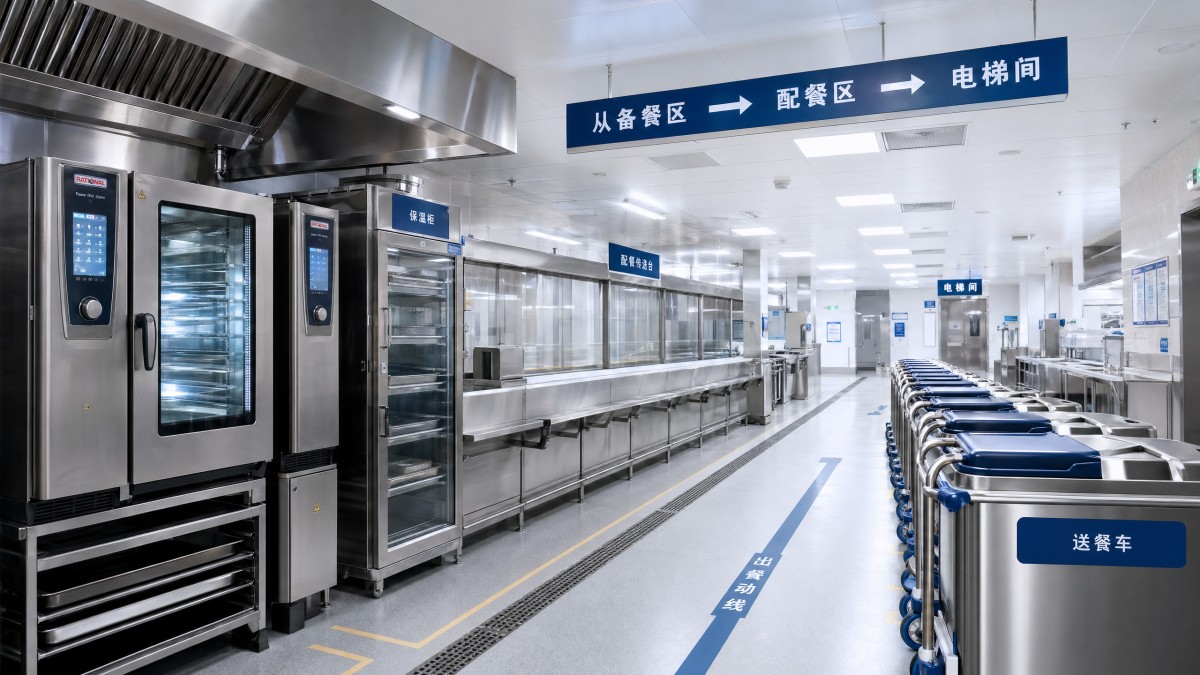
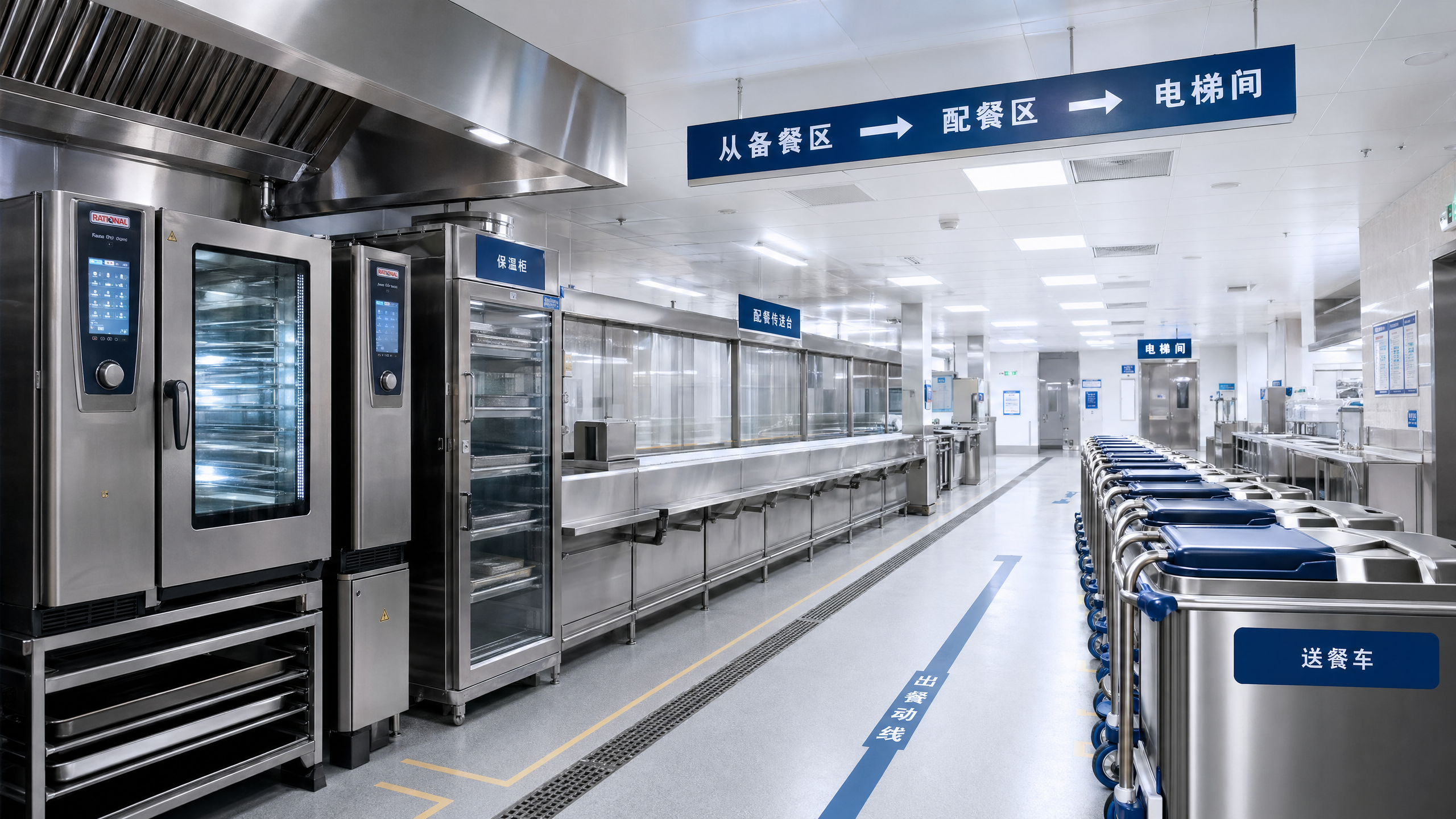
Many hospital kitchens lose time not because staff work slowly, but because the workflow forces them into crossing paths, backtracking, and waiting for shared stations. In a medium-sized facility producing 500 to 1,500 meals per day, even a 15-second delay at one tray assembly point can become 2 to 6 hours of cumulative lost labor across multiple service periods.
A common problem is placing storage, prep, cooking, trayline assembly, and dispatch in an order that does not match the real movement of food. Staff may move hot items 12 to 20 meters from the cookline to the holding area, then another 8 to 15 meters to plating. That extra distance increases handling time and raises the risk of temperature drop before food reaches insulated carts.
Another bottleneck appears when clean and dirty traffic overlap. If dish return routes intersect with meal dispatch routes, carts, staff, and utensils compete for the same corridor or doorway. During a 20-minute peak, one blocked access point can delay dozens of trays and force supervisors to reassign labor away from quality checks.
Typical layout mistakes in hospital foodservice
- Single-door access between production and dispatch zones, creating queue buildup during peak service.
- Cold storage positioned too far from prep, adding repeated walking time for ingredients used in special diets.
- Trayline assembly located beside dishwashing noise and steam, reducing communication accuracy and comfort.
- No intermediate holding zone for high-turnover items such as soup, porridge, or pureed meals.
The table below shows how several frequent layout choices affect delivery speed, labor use, and food safety control in hospital kitchen design.
The key takeaway is that meal delivery speed depends on route logic more than square footage alone. A compact 300-square-meter kitchen with well-zoned flow can outperform a 500-square-meter layout that forces cross-traffic and duplicate handling.
When evaluating a redesign, teams should map the path of ingredients, staff, trays, clean ware, and waste separately. If any one of those paths crosses another more than 2 or 3 times during one service cycle, the layout usually needs correction.
Equipment Placement Errors That Increase Wait Times and Handling Risk
Commercial kitchen equipment selection matters, but placement matters just as much. In hospital operations, equipment that is technically adequate can still reduce throughput if it is installed without considering staff sequence, ergonomic reach, or trayline timing. This is especially true for cook-chill systems, heated holding cabinets, blast chillers, meal cart docking points, and warewashing areas.
One frequent error is oversizing equipment in a way that blocks circulation. For example, a large tilting pan or combi oven may meet production targets, but if it narrows a working aisle below 1.2 to 1.5 meters, two staff cannot pass safely with GN pans or carts. That slows shift changes and creates waiting points during the busiest 60 to 90 minutes of service.
Another issue is separating related equipment too far apart. If hot holding cabinets are installed at the far end of the room from the trayline, staff repeatedly open doors, move pans, and reposition carts. Each transfer adds seconds, but repeated 100 to 300 times, it becomes a measurable service delay.
High-impact equipment placement priorities
The most effective hospital kitchen design usually keeps five links close together: final cooking, portioning, tray assembly, temporary holding, and dispatch. Cold diet prep should also be isolated but not remote, especially when facilities prepare diabetic, low-sodium, renal, pediatric, and texture-modified meals in parallel.
Placement checkpoints during planning
- Keep the cookline-to-trayline transfer path as direct as possible, ideally under 10 meters for high-volume hot items.
- Allow aisle widths that support two-way movement during peak periods, commonly 1.2 to 1.8 meters depending on cart traffic.
- Position handwashing and sanitation points at each critical transition, not only at room entry.
- Separate dish return air, splash, and noise from patient meal finishing zones.
The following comparison helps procurement and project teams evaluate whether equipment placement supports operational goals or only satisfies a basic room fit-out.
Good equipment planning reduces not only delay but also rework. In practice, fewer transfer points mean fewer spills, less lid opening, lower temperature exposure, and more reliable therapeutic diet control. That is why operators should review layout drawings with actual service steps, not just equipment footprints.
Why Smart Kitchen Design and Energy Efficient Kitchen Design Matter in Healthcare
Hospital kitchens operate for long hours, often 16 to 20 hours per day when production, regeneration, cleaning, and prep are combined. That makes smart kitchen design and energy efficient kitchen design more than sustainability topics. They directly influence speed, visibility, maintenance planning, and operating cost per meal.
Smart controls on cooking, chilling, and holding equipment can reduce manual checks and improve consistency across multiple service windows. For example, programmable combi ovens, temperature logs, and timed holding alerts help staff manage 3 or 4 meal periods with fewer guesswork decisions. This is especially useful when labor availability is tight or temporary staff are used.
Energy efficient kitchen design also improves environmental comfort. Excess heat and poor ventilation near the trayline make communication harder and increase fatigue. Better hood coordination, insulated holding, and right-sized electric equipment can lower heat load while supporting food safety. In facilities where meal assembly must stay stable for 45 minutes or longer, that comfort benefit is operationally important.
Practical gains from intelligent and efficient systems
- Automatic temperature tracking can reduce manual recording steps by several checks per batch.
- Cook-chill and regeneration planning can spread labor across 2 shifts instead of one overloaded peak.
- Demand-based ventilation and efficient warewashing can lower utility pressure in high-use periods.
- Digital maintenance alerts can reduce emergency downtime by identifying filter, seal, or calibration issues early.
The return on investment is not identical for every hospital. A 150-bed facility may prioritize labor savings and compact footprints, while a 600-bed hospital may focus on throughput, redundancy, and central production. Still, the planning rule is similar: technology should remove repeated manual tasks, not add a layer of complexity that staff avoid using.
Selection questions for decision-makers
Before purchasing advanced systems, buyers should ask whether the solution integrates with tray assembly timing, HACCP routines, and preventive maintenance schedules. A smart device that saves 5 minutes per batch is valuable only if it also fits cleaning cycles, staff training capacity, and spare parts availability within 24 to 72 hours when service support is needed.
For procurement teams, this means evaluating lifecycle performance rather than upfront price alone. In healthcare foodservice, a lower-cost installation that increases labor by 1 or 2 full-time equivalents can become the more expensive option over 3 to 5 years.
Procurement Criteria for Commercial Restaurant Supplies in Hospital Kitchens
Hospital buyers often source from the same commercial restaurant supplies market used by hotels, chains, and central kitchens, but the evaluation criteria should be stricter. A hospital kitchen needs durable materials, predictable sanitation performance, easy maintenance access, and compatibility with diet-sensitive service models. Products that work in a casual dining kitchen may not suit a healthcare environment with multiple tray waves and compliance-focused cleaning routines.
Procurement should assess at least four dimensions: capacity fit, hygiene design, serviceability, and workflow compatibility. Capacity fit means matching real meal counts, batch sizes, and peak-hour demand. Hygiene design includes rounded edges, cleanable surfaces, drainage control, and reduced dirt traps. Serviceability means spare parts, technician response, and access panels. Workflow compatibility asks whether the item supports the movement and timing of staff rather than disrupting it.
The table below can serve as a practical review tool during tender comparison or supplier qualification for hospital kitchen equipment projects.
A useful purchasing method is to score each supplier on a 1 to 5 scale for those factors, then review total cost over a 36- to 60-month period. That method helps separate low initial price from true operating value. It also gives operators a stronger voice in procurement, since they can explain where specific design features save time during real meal assembly.
Questions buyers should raise before approval
- Can the equipment support current volume and a future increase of 15% to 25%?
- How long does routine cleaning take between meal services?
- What is the expected service response time for critical equipment failure?
- Does the layout drawing include staff movement, cart turning radius, and utility access?
For decision-makers, these questions reduce the risk of investing in an attractive equipment package that performs poorly once installed. In hospital foodservice, operational fit should always outweigh showroom appeal.
Implementation Steps, Risk Control, and Common FAQ
Improving hospital kitchen design does not always require a full rebuild. Many facilities can remove delays through phased implementation over 3 stages: workflow audit, targeted equipment or layout adjustment, and operational validation. This approach is useful when hospitals must keep meal production running during renovation or budget cycles limit immediate capital spending.
A practical audit should track at least 1 full week of meal production, including trayline timing, cart dispatch, dish return, cleaning turnover, and special diet handling. Teams should record where waiting occurs, how many transfers each hot and cold item requires, and where staff congestion peaks. Even a basic time-and-motion review can reveal whether delays come from design, staffing, or process discipline.
Recommended implementation sequence
- Map current flows for food, staff, carts, clean ware, and waste.
- Rank bottlenecks by impact on delivery time, hygiene, and labor load.
- Test low-cost fixes first, such as staging changes, cart parking rules, or station repositioning.
- Plan equipment upgrades around service continuity and utility readiness.
- Validate the new layout using at least 2 meal cycles before final sign-off.
Risk control should focus on continuity. If one combi oven, dish machine, or holding line fails, the hospital still needs fallback capacity. That may mean keeping one redundant unit, splitting production across zones, or choosing equipment with service access and common spare parts. In healthcare, resilience often matters as much as speed.
How long does a hospital kitchen redesign usually take?
A limited retrofit may take 2 to 6 weeks for planning and installation, while a larger kitchen refit can extend to several months depending on utilities, construction phasing, and infection-control requirements. Early coordination between operators, engineers, and equipment suppliers reduces rework later.
Which area should be fixed first if delivery is slow?
In many cases, the first focus should be the route from final cooking to tray assembly to dispatch. That path directly affects speed, temperature control, and staffing pressure. If that link is inefficient, improvements in storage or purchasing alone will have limited effect.
Are smart systems worth it for smaller hospitals?
They can be, especially when the system reduces repeat manual checks, supports food safety records, or helps a lean team manage multiple diet types. The value is strongest when the software and controls are simple enough for daily use without extensive retraining.
Hospital kitchen design decisions have a direct effect on meal timing, sanitation reliability, staff workload, and patient experience. Better zoning, smarter equipment placement, energy efficient kitchen design, and carefully selected commercial restaurant supplies help healthcare facilities reduce delay without sacrificing hygiene or operational control.
If you are reviewing a new hospital kitchen project, upgrading an existing facility, or comparing suppliers for healthcare foodservice equipment, now is the right time to assess workflow, capacity, and long-term service needs together. Contact us to get a tailored solution, discuss product details, or explore more hospital kitchen design options that fit your operational goals.
Popular Tags
Kitchen Industry Research Team
Dedicated to analyzing emerging trends and technological shifts in the global hospitality and foodservice infrastructure sector.
Industry Insights
Join 15,000+ industry professionals. Get the latest market trends and tech news delivered weekly.
No spam. Unsubscribe anytime.
Contact With us
Contact:
Anne Yin (Ceramics Dinnerware/Glassware)
Lucky Zhai(Flatware)