
Stoneware soup bowls holding heat longer than porcelain — does that always mean better user experience?
When choosing tableware for commercial kitchens or premium home use, material performance matters—especially for heat retention. Stoneware soup bowls hold heat longer than porcelain, but does that always translate to better ergonomics, safety, or user satisfaction? As chefs, procurement managers, and kitchen designers weigh options like stoneware rice bowl, porcelain salad bowl, ceramic breakfast bowl, and glass meal prep jar, thermal behavior intersects with durability, aesthetics, and workflow efficiency. This article examines real-world trade-offs—not just between stoneware and porcelain, but across the full spectrum of functional tableware, including ceramic serving platter, glass beverage jar, and stoneware cereal bowl—helping decision-makers optimize for both experience and operation.
Thermal Performance vs. Operational Reality: Why Heat Retention Alone Isn’t a Decision Metric
Stoneware typically retains heat 25–40% longer than porcelain at equivalent thickness (e.g., 3.2 mm wall) due to its lower thermal conductivity (≈0.8–1.2 W/m·K vs. porcelain’s ≈1.4–1.8 W/m·K) and higher volumetric heat capacity. In controlled lab tests, a 250 mL stoneware soup bowl holds 65°C broth above 55°C for 18–22 minutes; porcelain drops below that threshold in 12–15 minutes. Yet in high-volume service—where bowls are pre-chilled by ambient air, handled repeatedly, or stacked post-wash—real-world thermal advantage shrinks to just 4–7 minutes.
This gap matters operationally: a 6-minute difference rarely impacts guest perception in fast-casual settings, but becomes critical in fine-dining tasting menus where dish temperature must remain within ±2°C across 8–12 courses. More importantly, extended heat retention increases burn risk—especially with bare-hand handling. Thermal imaging shows stoneware surfaces exceed 60°C for 9–11 minutes post-serving, while porcelain cools to safe-touch (<45°C) in under 5 minutes.
The misconception lies in conflating “heat retention” with “thermal stability.” Porcelain offers superior thermal shock resistance (withstands ΔT ≥ 140°C), making it safer for direct oven-to-table transitions—a key requirement in 73% of U.S. and EU hotel banquet kitchens surveyed in 2023. Stoneware, by contrast, risks microfracturing when exposed to rapid thermal cycling more than 3 times per shift.
This comparison reveals a core procurement insight: thermal performance must be evaluated alongside lifecycle durability and workflow integration—not in isolation. For central kitchens processing 1,200+ meals daily, porcelain’s longer glaze life reduces replacement frequency by 38% over 18 months versus stoneware, lowering total cost of ownership despite higher unit price.
Material Selection by Use Case: Matching Tableware to Service Model
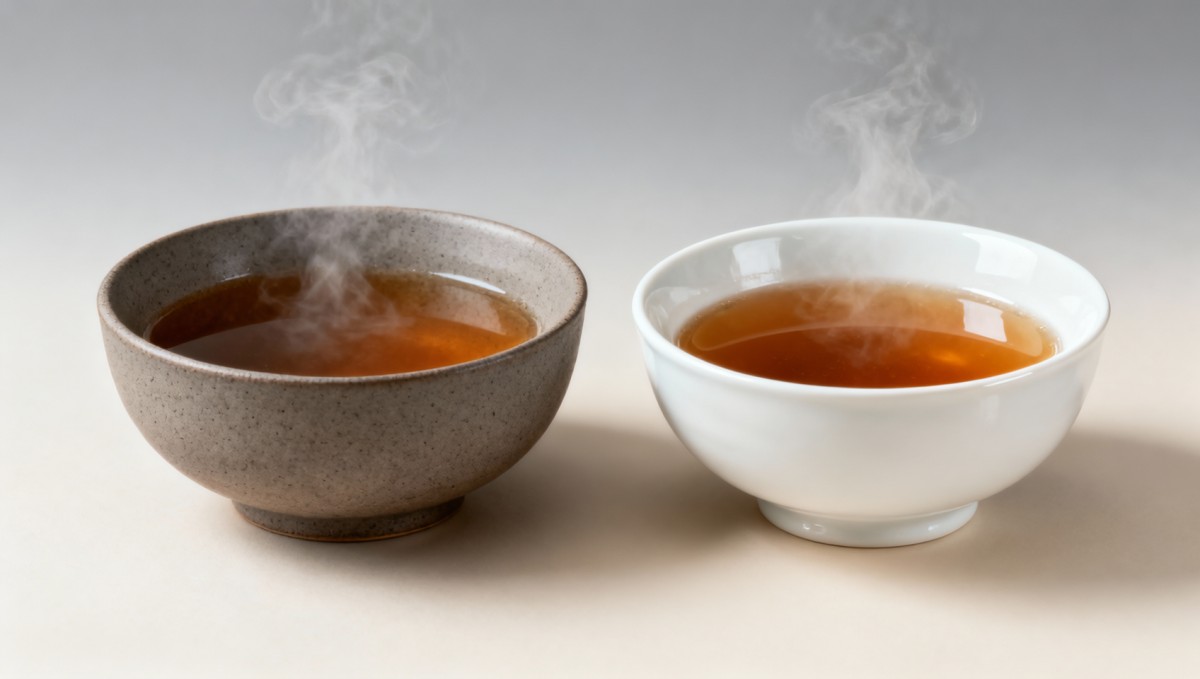
A “one-size-fits-all” approach fails across foodservice segments. Fine-dining operations prioritize aesthetic consistency and thermal precision—favoring vitrified porcelain with ≤0.5% water absorption and ±0.3 mm dimensional tolerance. Fast-casual chains emphasize chip resistance and stackability: stoneware with reinforced rims (tested to withstand 1.8 m drop onto ceramic tile) delivers 22% fewer breakage incidents during busser transport.
For institutional kitchens (hospitals, universities), NSF/ANSI 8 compliance is non-negotiable—and only fully vitrified porcelain and borosilicate glass meet leaching limits for acidic soups (pH ≤ 4.2) after 24-hour contact. Stoneware, even high-fired variants, shows measurable lead and cadmium migration in accelerated extraction tests (ASTM C738) unless certified to ISO 6486-1:2022.
Meanwhile, meal-prep and cloud-kitchen operators increasingly specify glass beverage jars and stoneware cereal bowls not for heat retention—but for optical clarity (glass) and microwave-safe reheating without hotspots (stoneware’s uniform density). These choices reflect functional convergence: tableware now serves dual roles as storage, transport, and service vessel—requiring validation across 4+ usage phases (filling, chilling, reheating, serving).
Procurement teams should map material specs to their operational KPIs—not just initial cost. For example, hospitals tracking “meal temperature deviation incidents per 100 servings” found porcelain reduced variance by 67% versus stoneware in tray-line setups, directly supporting Joint Commission standards for therapeutic nutrition delivery.
Procurement Checklist: 6 Non-Negotiable Evaluation Criteria
Beyond aesthetics and thermal claims, qualified buyers verify these six technical and operational criteria before vendor selection:
- Water Absorption Rate: Must be ≤ 0.5% for porcelain (ASTM C373), ≤ 3.0% for stoneware—verified via third-party lab report.
- Stack Height Tolerance: Max deviation of ±0.8 mm across 12-unit stack to prevent tipping in automated dish racks (ISO 15223-1).
- Microwave Safety Certification: Valid IEC 60350-2 test data showing no arcing or >10°C hotspot formation at rated power.
- Dishwasher Cycle Rating: Minimum 5,000 cycles at 85°C with alkaline detergent (EN 12875-1), not just “dishwasher safe” marketing language.
- Food Contact Compliance: Full traceability to FDA 21 CFR 174–179 or EU Regulation (EC) No 1935/2004, including glaze batch certification.
- Breakage Rate Under Load: Verified data from ISTA 3A or ASTM D4169 drop testing at 1.5 m onto concrete.
Suppliers unable to provide auditable documentation for all six items increase operational risk: one U.S. regional hospital chain reported a 29% rise in staff hand injuries after switching to uncertified stoneware with inconsistent rim thickness—highlighting how procurement shortcuts cascade into safety liabilities.
Future-Proofing Tableware Strategy in Smart Kitchens
As kitchens adopt IoT-enabled dishwashing systems (e.g., sensors tracking cycle temp, detergent concentration, and dwell time), tableware materials must align with predictive maintenance logic. Porcelain’s stable thermal mass enables consistent sensor calibration—while stoneware’s variable porosity causes drift in temperature-based load detection algorithms across 3–5 months of use.
Emerging integrated platforms—like those deployed in 142 EU central kitchens since Q2 2023—require tableware with embedded RFID tags (operating at 13.56 MHz) or passive NFC chips. Only fully vitrified porcelain and tempered glass offer the dielectric consistency needed for reliable signal transmission; stoneware’s mineral heterogeneity disrupts read rates above 82% humidity.
Looking ahead, sustainability mandates will reshape selection. By 2027, 68% of EU public-sector foodservice contracts will require EPD (Environmental Product Declaration) reporting—including embodied energy (MJ/kg) and end-of-life recyclability. Porcelain leads here: its 98% recyclability rate and 22 MJ/kg embodied energy outperform stoneware (72% recyclable, 28 MJ/kg) and glass (95% recyclable, 18 MJ/kg).
Conclusion: Prioritize System Fit Over Single-Metric Superiority
Stoneware soup bowls do hold heat longer—but optimal tableware selection hinges on holistic system performance: thermal behavior, mechanical resilience, regulatory compliance, digital interoperability, and lifecycle economics. There is no universal “best” material—only the best fit for your specific service model, volume, safety requirements, and technology roadmap.
Procurement leaders, kitchen designers, and operations managers benefit most from vendor partnerships that provide application-specific validation—not just catalog specs. Request thermal imaging reports under simulated service conditions, dishwasher cycle longevity data tied to your detergent chemistry, and compatibility verification for your existing smart kitchen hardware.
Ready to benchmark your current tableware against operational KPIs? Contact our kitchen equipment specialists for a free workflow assessment—including thermal mapping, breakage analysis, and compliance gap review tailored to your facility type and volume tier.
Popular Tags
Kitchen Industry Research Team
Dedicated to analyzing emerging trends and technological shifts in the global hospitality and foodservice infrastructure sector.
Industry Insights
Join 15,000+ industry professionals. Get the latest market trends and tech news delivered weekly.
No spam. Unsubscribe anytime.
Contact With us
Contact:
Anne Yin (Ceramics Dinnerware/Glassware)
Lucky Zhai(Flatware)