
Restaurant Kitchen Efficiency Benchmarks Worth Tracking in 2026
In 2026, restaurant kitchen efficiency is no longer a back-of-house concern—it is a strategic metric that shapes profitability, labor performance, food quality, and sustainability. For business decision-makers, tracking the right efficiency benchmarks helps identify operational gaps, justify equipment investments, and build smarter, more resilient kitchen systems in an increasingly competitive foodservice market.
For operators managing multi-unit restaurants, hotel foodservice programs, central kitchens, or growing franchise networks, restaurant kitchen efficiency should be measured with the same discipline used for finance, procurement, and quality assurance. The right benchmarks help connect labor usage, equipment uptime, energy consumption, prep flow, and service speed into a practical decision framework.
This matters even more as the kitchen equipment industry moves toward automation, intelligent controls, digital monitoring, and energy-efficient systems. New ovens, refrigeration platforms, holding cabinets, dishwashing systems, and food preparation equipment can improve throughput, but only when buyers define which performance indicators actually affect cost, output, and guest experience.
Why restaurant kitchen efficiency benchmarks matter in 2026
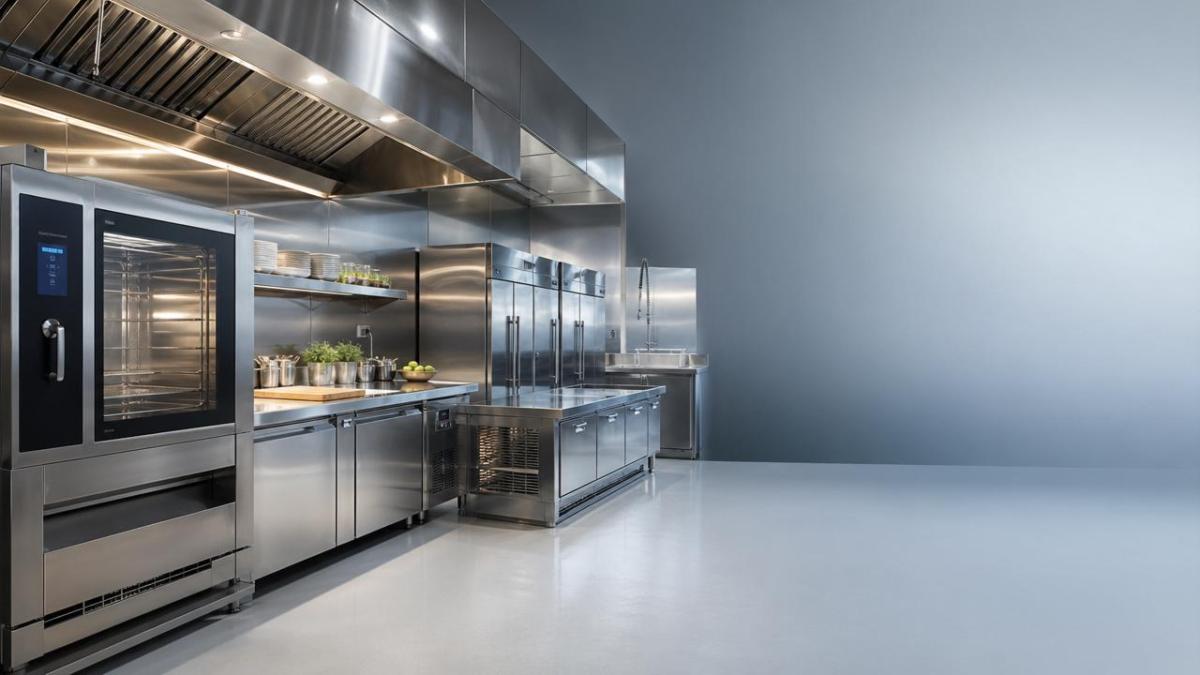
Many kitchens still rely on lagging indicators such as monthly food cost or total labor cost. Those figures are useful, but they do not show where delays begin or which equipment constraints are reducing output. A stronger approach is to track a small set of operating benchmarks weekly, daily, or even by shift.
For decision-makers, restaurant kitchen efficiency is not just about moving faster. It is about balancing 4 priorities at once: production speed, consistency, safety, and resource consumption. If one metric improves while another collapses, the operation may look efficient on paper but perform poorly in practice.
The business impact behind the numbers
A 30-second improvement in ticket time can increase table turns in high-volume formats. A 5% reduction in refrigeration door-open time can support temperature stability and reduce compressor strain. Cutting unplanned equipment downtime from 6 hours per month to 2 hours may protect revenue during peak service periods and reduce emergency repair costs.
In capital planning, these benchmarks also influence purchasing priorities. Instead of replacing equipment based on age alone, operators can compare output, recovery time, maintenance frequency, and energy draw across stations. This creates a more defensible ROI model for combi ovens, induction ranges, blast chillers, warewashing equipment, and kitchen automation tools.
Core benchmark categories to monitor
- Labor productivity per shift, station, or menu category
- Average ticket time and peak-hour output capacity
- Equipment uptime, repair frequency, and maintenance intervals
- Energy and water consumption per cover or production batch
- Food waste rate during prep, holding, and service
- Temperature compliance and sanitation cycle reliability
These categories give a balanced view of restaurant kitchen efficiency because they reflect both human performance and equipment performance. In 2026, that balance is essential as kitchens become more dependent on connected appliances, programmable systems, and integrated workflows.
The most useful restaurant kitchen efficiency benchmarks to track
Not every kitchen needs the same KPI dashboard. A quick-service kitchen, a hotel banquet operation, and a central production facility operate under different constraints. Still, several benchmarks are broadly useful because they connect directly to throughput, quality, and equipment decisions.
1. Ticket time by daypart and menu segment
Track average and peak ticket times separately. For many full-service operations, an average hot-line target may fall within 8–15 minutes, while quick-service production lines often target 2–5 minutes per order. Segmenting by lunch, dinner, delivery, and catering reveals where line design or cooking equipment is underperforming.
2. Labor hours per 100 covers or production batch
This metric helps leaders compare output across locations with different staffing levels. If one unit requires 18 labor hours per 100 covers while another runs at 13, the gap may come from training, layout inefficiency, menu complexity, or outdated prep equipment.
3. Equipment uptime and downtime events
A practical target is to keep critical equipment uptime above 97%–99% during operating hours. Track both planned and unplanned downtime. A fryer that fails twice in 30 days creates a different risk profile than a combi oven with one scheduled 2-hour maintenance window every quarter.
4. Energy use per cover or per kilogram of output
Restaurant kitchen efficiency is increasingly tied to utility management. Comparing energy use by meal period or production batch can show whether cooking equipment is oversized, underloaded, or suffering from poor heat retention. This is especially relevant when evaluating electric versus gas platforms or replacing legacy refrigeration.
The table below shows a practical way to prioritize common efficiency benchmarks for commercial kitchens. These are not fixed universal standards, but they provide a useful operating range for review and equipment planning.
The key insight is that no single metric defines restaurant kitchen efficiency. The strongest operators track speed, reliability, labor, and waste together. That combined view is far more useful when comparing equipment upgrade options or redesigning workflow.
How kitchen equipment influences efficiency outcomes
Equipment decisions now shape benchmark performance more than many operators realize. In older kitchens, production bottlenecks often come from slow recovery times, poor thermal consistency, manual handling steps, or inadequate holding capacity. These issues are usually hidden until managers compare output by station.
Cooking platforms and throughput stability
Combi ovens, high-efficiency fryers, induction systems, and accelerated cooking platforms can reduce variability during rush periods. For example, a cooking station with fast recovery may maintain consistent output over 60–90 minutes of peak demand, while a weaker platform slows after repeated cycles and extends ticket times.
Refrigeration, holding, and waste control
Restaurant kitchen efficiency also depends on cold-chain integrity and holding precision. Refrigeration with stable temperature recovery supports ingredient quality, while smart holding systems can reduce remakes and overproduction. In many kitchens, a 1°C–2°C improvement in temperature consistency makes inventory handling more predictable.
Prep automation and labor redeployment
Food processors, portioning tools, automatic washing systems, and digital recipe controls can reduce repetitive labor. The value is not simply headcount reduction. In many B2B settings, the stronger result is labor redeployment: experienced staff spend less time on low-skill repetition and more time on supervision, finishing, and quality control.
When evaluating new systems, buyers should compare more than purchase price. The matrix below helps connect equipment categories to measurable efficiency outcomes.
This comparison shows why kitchen equipment procurement should be tied to benchmark gaps. If the problem is labor strain in prep, a premium cooking platform may not solve it. If downtime is concentrated in refrigeration, expanding line capacity elsewhere will not improve restaurant kitchen efficiency.
How to implement an efficiency tracking system without overcomplicating operations
One of the biggest mistakes in performance management is building a dashboard with 20 or 30 KPIs that no one reviews. For most operators, 6–8 benchmarks are enough in the first phase. Start with the measures that reflect your largest cost drivers and service constraints.
A practical 5-step rollout
- Map kitchen zones by prep, cooking, holding, dishwashing, and storage.
- Select 6–8 benchmarks tied to labor, speed, uptime, waste, and utility usage.
- Record baseline performance for 2–4 weeks before changing equipment or workflow.
- Test one intervention at a time, such as layout adjustment, preventive maintenance, or equipment replacement.
- Review results monthly and compare by location, shift, or menu mix.
Where digital tools add value
Digital kitchen management systems can automate temperature logging, service timing, cleaning schedules, and maintenance alerts. This reduces manual reporting and improves consistency across locations. Even simple sensor-based tracking can help identify whether a 10% decline in output is tied to labor availability or equipment performance.
When manual tracking is still enough
Not every operation needs a fully connected kitchen. For a single-site restaurant or a small group with stable volume, shift-level logs and weekly maintenance reviews may be sufficient. The priority is data quality, not dashboard complexity. Restaurant kitchen efficiency improves when managers use numbers to make routine decisions, not when they collect data that never changes behavior.
Common mistakes decision-makers should avoid
Efficiency programs fail when they focus on symptoms instead of causes. A kitchen may push staff to work faster, but if the line is poorly sequenced or equipment recovery is too slow, labor pressure will increase without improving output. This often leads to burnout, quality inconsistency, and more maintenance incidents.
Mistake 1: Buying equipment without workflow analysis
A new appliance may have excellent specifications but still underperform if placed in the wrong station or if adjacent prep capacity is too low. Before purchase, review at least 3 factors: throughput requirement, operator touchpoints, and maintenance accessibility.
Mistake 2: Measuring averages only
Daily averages can hide peak-hour failures. Track best case, average case, and peak-load case. A kitchen that performs well at 2 p.m. may still break down between 7 p.m. and 8:30 p.m., which is when restaurant kitchen efficiency matters most for revenue protection.
Mistake 3: Ignoring service and maintenance support
Purchase price is only one component of lifecycle value. Ask suppliers about spare parts lead times, preventive maintenance intervals, training availability, and response windows. A lower-cost unit with a 7–10 day parts delay can become more expensive than a premium alternative with faster support.
Restaurant kitchen efficiency in 2026 depends on disciplined measurement, practical benchmark selection, and equipment strategies that match actual kitchen conditions. The most valuable metrics are the ones that connect service speed, labor productivity, uptime, waste, and utility performance to clear management action.
For business decision-makers in foodservice, hospitality, central kitchen operations, and equipment procurement, benchmark-driven planning creates a more reliable basis for investment and operational improvement. If you are reviewing commercial kitchen equipment, digital monitoring tools, or integrated efficiency upgrades, now is the right time to align procurement with measurable outcomes.
Contact us to discuss your kitchen goals, request a tailored equipment evaluation, or learn more about practical solutions that improve restaurant kitchen efficiency across cooking, refrigeration, prep, holding, and sanitation systems.
Popular Tags
Kitchen Industry Research Team
Dedicated to analyzing emerging trends and technological shifts in the global hospitality and foodservice infrastructure sector.
Industry Insights
Join 15,000+ industry professionals. Get the latest market trends and tech news delivered weekly.
No spam. Unsubscribe anytime.



Contact With us
Contact:
Anne Yin (Ceramics Dinnerware/Glassware)
Lucky Zhai(Flatware)