
Glass juice dispenser demand is growing beyond catering
Demand for the glass juice dispenser is expanding well beyond traditional catering, driven by rising expectations for hygiene, presentation, and operational efficiency across hospitality, retail, offices, and residential settings. For business decision-makers in the kitchen equipment industry, this shift signals new opportunities to align product offerings with smart, durable, and visually appealing beverage solutions for a broader global market.
Why the glass juice dispenser is no longer just a catering product
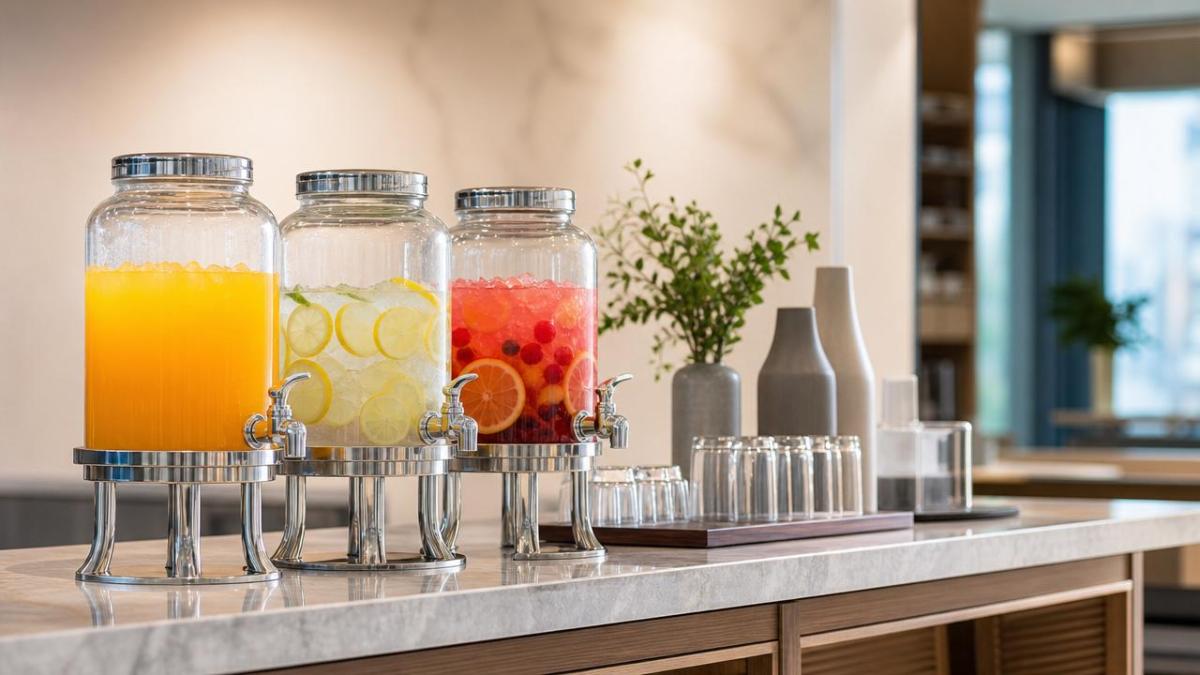
The core market signal is clear: a glass juice dispenser is no longer purchased only for banquet halls, buffets, and event catering operations.
Today, demand is rising from hotels, cafés, convenience formats, office pantries, wellness spaces, premium retail, and even upscale residential projects.
For business decision-makers, the key question is not whether demand exists, but where growth is strongest and which product specifications support profitable expansion.
The broadening appeal comes from three linked factors: better beverage presentation, stronger hygiene expectations, and the need for efficient self-service dispensing.
Unlike plastic alternatives, glass offers a cleaner premium look that supports brand perception while reassuring users about product visibility and freshness.
That combination matters in commercial environments where beverage service has become part of customer experience, not simply a back-of-house utility function.
As a result, the glass juice dispenser is increasingly viewed as a cross-segment serving solution rather than a niche catering accessory.
What business buyers are really searching for when they evaluate this category
When decision-makers search for information on glass juice dispenser demand, they are usually assessing market potential, product fit, and purchase criteria.
They want to know whether this is a durable long-term category, a short design trend, or a practical product line worth expanding.
Their concerns are highly commercial: which user groups are buying, what features drive decisions, and how margins compare with competing beverage dispensers.
They also want clarity on operational factors such as breakage risk, cleaning efficiency, refill speed, spare part availability, and shipping practicality.
In other words, buyers are not just asking if the product looks attractive. They are evaluating total business value across use cases.
This means suppliers and manufacturers must position the category with evidence, application logic, and clear performance advantages instead of generic product descriptions.
Which sectors are driving growth beyond catering
The hospitality sector remains important, but the fastest opportunities often come from adjacent environments where self-serve beverages improve service efficiency.
Hotels are expanding breakfast and lounge beverage programs, and glass dispensers fit well because they combine visual appeal with easy access.
In cafés and bakeries, dispensers support fresh juice, infused water, cold brew blends, and seasonal drinks without requiring constant staff attention.
Retail and specialty food stores are also experimenting with ready-to-serve beverage zones, especially where premium presentation supports higher perceived value.
Corporate offices increasingly use beverage stations to improve employee experience, particularly in shared kitchens, wellness areas, and executive lounges.
Healthcare and senior living facilities may adopt glass models in premium or supervised service areas where cleanliness and visibility are priorities.
Residential demand, especially in luxury housing and home entertaining, is smaller in volume but influential in shaping design expectations across the market.
For suppliers, these sectors create diversification. They reduce dependence on seasonal catering cycles and open more stable year-round sales opportunities.
Why presentation and hygiene are becoming decisive buying factors
One reason demand is broadening is that beverage service is now closely connected to trust, quality perception, and visual merchandising.
Glass allows customers and guests to see the contents clearly, making juices, infused water, and specialty drinks look fresher and more premium.
That transparency can directly support sales in customer-facing settings because appearance often influences beverage choice more than menu wording alone.
Hygiene is the second major driver. Buyers prefer materials that are easy to inspect, easy to clean, and less likely to retain stains or odors.
Glass performs well here, particularly in environments where operators want to avoid the wear, clouding, or scratch-prone appearance of lower-cost plastics.
For decision-makers, the value is practical as well as aesthetic: a cleaner-looking unit reinforces confidence in beverage safety and operating standards.
In premium service environments, that confidence can be worth more than the small cost savings offered by cheaper materials.
What product features matter most in commercial decision-making
Not every glass juice dispenser is suited for growing non-catering demand. Product success depends heavily on the right commercial specification.
Capacity is the first filter. Smaller units work well for offices and cafés, while hotels and buffet operations may need higher-volume configurations.
Faucet quality is equally important. Poor dispensing performance quickly leads to drips, slow flow, mess, and negative user experience.
Decision-makers also look for stable bases, impact-resistant structural elements, and designs that reduce tipping risk during self-service use.
Ease of cleaning is critical because labor efficiency influences total operating cost. Wide openings, removable components, and accessible spigots add value.
Temperature management can also affect purchasing decisions. Some operators need ice-core systems or insulation support to keep beverages appealing for longer periods.
Modular design matters in multi-site operations. Interchangeable parts, matching product families, and stackable shipping formats make procurement easier.
Finally, appearance still counts. Commercial buyers increasingly favor minimalist, modern designs that integrate with premium interior environments.
How to assess the business value of adding or expanding this product line
For manufacturers, distributors, and sourcing teams, the category should be evaluated through market fit, margin potential, and operational complexity.
Start with channel mapping. Identify whether your strongest sales routes are hospitality, foodservice distribution, office supply, retail equipment, or e-commerce.
Then match product tiers to each channel. Entry-level models may serve high-volume price-sensitive buyers, while premium units fit design-led commercial spaces.
It is also important to compare replacement cycles. Well-made glass dispensers may have slower repurchase frequency, but stronger margins and higher trust.
Accessory revenue can improve the business case. Replacement taps, stands, lids, cooling inserts, and cleaning components create useful after-sales opportunities.
Packaging and logistics should be examined early because fragile products can lose profitability if shipping damage rates are not tightly controlled.
When evaluated properly, the category often works best as a value-enhancing line, not simply as a commodity volume play.
Risks and objections buyers may have before committing
Despite the growth outlook, some buyers hesitate because glass is associated with fragility, higher shipping risk, and possible replacement concerns.
These concerns are valid, especially for operators in high-traffic or rough-handling environments where break-resistant alternatives may seem safer.
However, the answer is not to ignore the concern but to address it with engineering, packaging, and clear usage recommendations.
Reinforced design, thick-walled glass, protected corners, stable frames, and tested transit packaging can significantly reduce perceived and actual risk.
Buyers may also worry about cleaning complexity if the dispenser includes narrow internal structures or low-quality metal parts prone to corrosion.
That is why product communication should include maintenance details, material standards, and realistic guidance on use frequency and cleaning procedures.
Another objection is price sensitivity. Some customers may initially compare glass dispensers to basic plastic models without considering experience and longevity.
Strong selling materials should therefore frame value in terms of image, hygiene, service quality, and lifecycle performance rather than unit cost alone.
How suppliers can position glass juice dispenser products for broader demand
As demand moves beyond catering, suppliers need to stop marketing the category only through banquet and buffet language.
Instead, product positioning should reflect specific use environments such as hotel breakfast service, café counters, wellness stations, office beverage areas, and premium homes.
This approach helps buyers immediately understand relevance, especially when they are exploring new beverage service formats rather than replacing existing equipment.
Segmented product storytelling is useful. One line can emphasize elegance and guest experience, while another focuses on durability and easy maintenance.
Technical documentation should support the sales process with practical details: capacity, material grades, faucet type, cleaning method, packing specifications, and lead times.
Visual content also matters because this is a presentation-driven product. Good product imagery can strongly influence buyer confidence and end-market imagination.
For B2B growth, suppliers should also consider private label options, coordinated beverage station sets, and compatibility with broader serving equipment portfolios.
Global market trends supporting future demand
Several wider industry trends support the long-term outlook for the glass juice dispenser market across both commercial and mixed-use settings.
First, self-service formats are expanding because operators want to improve labor efficiency without reducing service quality or guest satisfaction.
Second, premiumization continues across foodservice and hospitality. Even simple beverage setups are expected to look intentional, clean, and brand-consistent.
Third, interest in healthier drinks, infused water, and fresh juices supports visible dispensing formats that showcase ingredients and freshness.
Fourth, the push for more sustainable and reusable serving solutions can favor glass in applications where durability and material perception influence purchasing.
Finally, global buyers increasingly want equipment that combines function with design. That trend is especially strong in urban hospitality and workplace environments.
These dynamics suggest that demand growth is not random. It is tied to structural shifts in how beverages are served, displayed, and valued.
What decision-makers should do next
For business leaders in the kitchen equipment industry, the opportunity lies in treating the glass juice dispenser as a strategic category with wider application potential.
Begin by identifying the customer segments in your portfolio most likely to benefit from premium, hygienic, visually strong beverage dispensing solutions.
Review whether your current models meet commercial expectations for cleaning, faucet durability, transport protection, and modern presentation.
If they do not, product development should focus on practical improvements instead of cosmetic changes alone.
Sales teams should also be equipped with application-based messaging that speaks to business outcomes, not only product dimensions.
That means showing buyers how the right dispenser can improve customer experience, support beverage merchandising, reduce service friction, and justify premium positioning.
In a competitive equipment market, categories that combine utility and aesthetics often create stronger differentiation than purely functional low-cost products.
Conclusion
The rising demand for the glass juice dispenser beyond catering reflects a broader shift in beverage service expectations across many commercial environments.
For decision-makers, this is not just a design trend. It is a practical market signal shaped by hygiene, presentation, self-service efficiency, and premium customer experience.
Companies that respond with the right product specifications, channel strategy, and value-based positioning can capture growth across hospitality, retail, offices, and residential segments.
The real opportunity is to understand where the category fits best, solve the common buyer concerns, and present the product as a business tool, not only a container.
In that context, the glass juice dispenser has moved from a narrow catering item to a versatile equipment solution with meaningful long-term commercial potential.
Popular Tags
Kitchen Industry Research Team
Dedicated to analyzing emerging trends and technological shifts in the global hospitality and foodservice infrastructure sector.
Industry Insights
Join 15,000+ industry professionals. Get the latest market trends and tech news delivered weekly.
No spam. Unsubscribe anytime.
Hot Articles
 Kitchen Tools for Restaurants That Reduce Prep Bottlenecks During Peak Service
- How to Choose a Leak-Proof Glass Storage Container for Meal Prep and Transport
- How to Size a Commercial Charbroiler for Peak-Hour Restaurant Output
- How to Specify Stainless Steel Kitchen Equipment for High-Volume Commercial Kitchens
Contact With us
Contact:
Anne Yin (Ceramics Dinnerware/Glassware)
Lucky Zhai(Flatware)