
Glass storage containers with lids: why seals fail unevenly
For quality control and safety teams, a glass storage container with lid is only as reliable as its sealing performance. When seals fail unevenly, the issue is rarely random. It usually points to a mismatch among gasket material behavior, lid geometry, glass dimensional consistency, closing force, or real-world use conditions. For commercial kitchens, food processing environments, and even premium household lines, uneven sealing creates a chain of risks: leakage, moisture ingress, odor transfer, microbial exposure, reduced shelf life, customer complaints, and avoidable compliance failures.
The most useful way to assess this problem is not to ask whether a container “has a lid,” but whether the full container-lid-seal system compresses evenly, repeatedly, and safely across production lots. For QC and safety managers, that means shifting attention from appearance-based inspection to performance-based evaluation. In practice, the root causes are usually measurable, and many can be reduced through tighter specifications, better incoming inspection, and more realistic validation tests.
Why uneven seal failure matters more than a simple leak
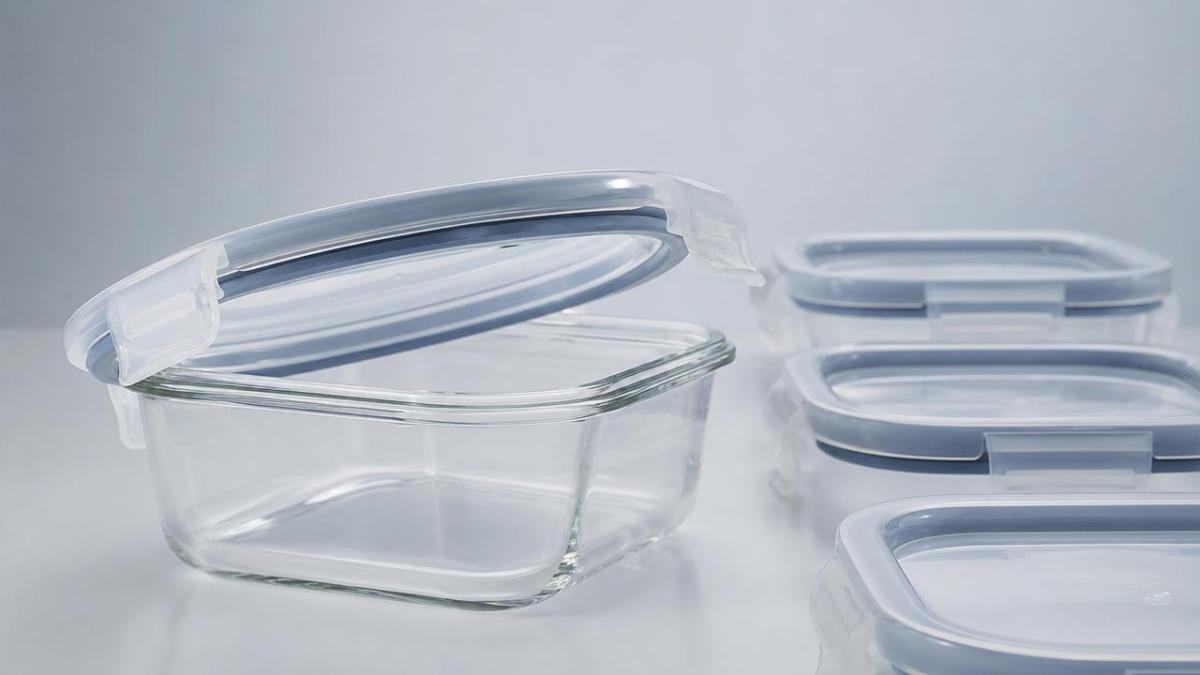
Uneven seal failure means one section of the lid interface holds properly while another section loses compression, lifts, gaps, or deforms under stress. This is more serious than a visible spill because many failures are partial and intermittent. A container may pass a casual handling check and still allow slow air exchange, liquid seepage, or contamination at one point of the rim.
For safety-focused teams, the concern is product integrity. In foodservice or food prep settings, a poor seal can expose stored ingredients to cross-contamination, humidity changes, or foreign matter. In household distribution, it can lead to spoilage complaints, odor migration in refrigerators, and consumer distrust. If the product is marketed as leak-resistant, airtight, or suitable for meal prep, an uneven seal can also become a claims and labeling problem.
From a quality management perspective, uneven failures are harder to detect than total failures. A completely defective lid is often caught quickly. A lid that seals on three sides and fails on one corner may escape visual inspection, especially if line checks are rushed or testing standards are too simple. That is why this issue deserves targeted process control rather than general product inspection.
What usually causes a glass storage container with lid to seal unevenly
In most cases, uneven sealing comes from interaction effects rather than a single defect. The gasket may be within spec, the glass may look acceptable, and the lid may close normally, yet the combined tolerance stack results in weak compression at one segment. This system-level view is essential when investigating repeated field complaints.
1. Glass rim dimensional variation. Glass is inherently more variable than many molded plastics, especially if forming and cooling are not tightly controlled. Slight differences in rim flatness, thickness, roundness, or edge finish can change how the lid contacts the container. A lid designed around nominal dimensions may under-compress on one side when the rim has local high or low spots.
2. Lid warpage or poor rigidity. Plastic lids, bamboo lids, and hybrid frame designs can warp during molding, cooling, storage, or transport. If the lid plane is not stable, compression becomes uneven. This problem becomes more visible when lids are thin, have insufficient rib support, or are exposed to temperature swings before use.
3. Gasket inconsistency. Silicone or elastomer seals can vary in hardness, cross-section, elasticity, and recovery performance. If the gasket is too soft, it may bunch up or collapse in one area. If it is too hard, it may not conform to minor glass variation. Uneven insertion into the lid groove is another common issue, especially in manual or semi-manual assembly.
4. Closure mechanism imbalance. Snap locks, clip locks, and press-fit designs depend on balanced force distribution. If one latch closes tighter than another, or if the hinge geometry pulls the lid off center, the seal load becomes directional. The user may think the container is fully closed while one edge remains under-compressed.
5. Wear and repeated use. A container may leave the factory with acceptable performance but degrade after dishwashing, freezing, microwaving, or repetitive opening cycles. Gaskets can take a compression set, lids can distort, and latch tension can decline unevenly. For QC teams, this means initial pass rates are not enough if the application involves repeated use.
6. Contamination at the sealing interface. Oil residue, food particles, sugar films, and cleaning chemical residue can prevent even contact. This is partly a user-condition issue, but product design influences how tolerant the system is to normal residue. Very narrow sealing margins often perform poorly in realistic kitchen environments.
Which defects QC teams should look for first
When investigating complaints or screening production, quality teams should prioritize defects that are both common and difficult for end users to recognize. The first is rim flatness inconsistency. Even small local deviations can create micro-gaps that are invisible without measurement tools. Sampling should include multiple points around the rim rather than a single diameter check.
The second priority is gasket seating quality. A gasket may appear installed but still be twisted, stretched, pinched, or partially lifted inside the lid channel. These defects often cause “one-corner leaks” or inconsistent airtightness after several uses. Visual checks should be paired with tactile or fixture-based verification, especially on assembly lines with manual insertion.
Third, inspect lid fit under actual closing force rather than relaxed placement. Some lids look properly aligned until latches are engaged, at which point the frame shifts and compression becomes uneven. A good inspection routine observes the seal line before and after full closure.
Fourth, review material aging behavior. If failures spike after warehouse storage, long shipping routes, or seasonal climate change, the issue may not be immediate production quality but post-production deformation or gasket property drift. This is especially relevant for global supply chains where products move through humid, hot, or freezing conditions.
How to test sealing performance in a way that reflects real risk
Basic leak checks are useful, but they are not enough for identifying uneven seal failure. A more robust test strategy should combine dimensional, functional, and durability methods. For a glass storage container with lid, the goal is to confirm not only initial closure but repeatable, uniform performance across expected use conditions.
Compression mapping is one of the most valuable methods. By using pressure-sensitive film, feeler gauges, or a controlled fixture, teams can evaluate whether sealing force is distributed evenly around the perimeter. This is often more informative than a pass/fail water inversion test.
Vacuum or pressure retention testing helps reveal slow losses that visual checks miss. If the product is promoted as airtight, measuring decay over time under controlled conditions is essential. Comparing multiple points in a production lot can also show whether failures are random or tied to systematic tooling issues.
Dye penetration or absorbent strip testing can identify localized ingress paths. This is particularly useful when only one section of the seal is weak. A container may appear to hold water while still allowing capillary migration at the edge.
Thermal cycle testing is critical in kitchen applications. Glass, plastic, and silicone respond differently to temperature change. A lid that seals well at room temperature may lose performance after refrigeration, freezer storage, dishwasher exposure, or warm food loading. Test plans should reflect actual end-use claims, not ideal lab conditions alone.
Life-cycle testing should simulate repeated opening, closing, washing, and stacking. Compression set in gaskets and latch fatigue often emerge after dozens or hundreds of cycles. For quality and safety teams, this provides a more realistic basis for release decisions than first-use testing only.
How material and design choices influence uneven sealing
Not all container systems are equally sensitive to variation. Some designs are naturally more forgiving because they allow the gasket to accommodate small dimensional differences. Others depend on tight geometric precision and therefore show more field failures when production variation increases.
Glass containers with thicker, more stable rims generally offer better support for sealing consistency, but only if the forming process controls edge finish and flatness. Very lightweight glass may reduce cost and shipping weight, yet it can also increase variability or edge vulnerability. For premium storage lines, the trade-off between aesthetics and dimensional stability should be reviewed carefully.
On the lid side, rigid frames with balanced latch points usually perform better than thin unsupported lids. However, excess rigidity without a compliant gasket can also be problematic if the glass rim varies. The best designs usually combine structural stability with a seal profile capable of controlled compression and recovery.
Gasket selection deserves special attention. Silicone is common because of its temperature resistance and food-contact suitability, but not all silicone compounds behave the same way. Shore hardness, compression set resistance, and long-term elasticity all affect sealing quality. A cheaper gasket material may pass initial inspection and still become the main driver of uneven failure after repeated use.
Design teams should also consider user tolerance. Containers used in busy kitchens are opened quickly, washed frequently, stacked under load, and sometimes closed with residue on the rim. A design that only works under perfect alignment may not be suitable for real commercial or household conditions.
What quality control and safety managers can do to reduce failures
The first step is to define seal performance as a critical quality characteristic, not a cosmetic feature. That means setting measurable limits for rim flatness, lid warpage, gasket dimensions, closure force, and retention performance. If the supplier specification simply says “airtight” or “leakproof” without test criteria, the control system is too weak.
Second, improve incoming inspection. For glass components, sample for rim profile and contact surface uniformity. For lids, check warpage after storage conditioning rather than immediately after unpacking. For gaskets, verify both dimensions and hardness, and monitor lot-to-lot variation. Many uneven seal problems begin upstream and are expensive to sort later.
Third, create assembly controls that prevent hidden defects. If gaskets are inserted manually, use poka-yoke features, visual guides, or go/no-go fixtures. If lids are assembled automatically, monitor insertion consistency and reject mis-seated parts early. Process capability matters as much as final inspection.
Fourth, align testing with the actual claim and application. A container intended for dry storage has a different risk profile from one sold for soup transport, cold storage, or meal prep. QC protocols should reflect whether the key hazard is leakage, air ingress, contamination, or durability loss.
Fifth, close the loop with complaint data. Field returns often contain patterns that internal testing misses. If customers repeatedly report failures on one corner, after freezer use, or only on certain sizes, that information should trigger targeted dimensional reviews and design validation rather than generic corrective action.
When uneven sealing becomes a compliance and brand risk
For safety managers, seal inconsistency is not just a product quality issue. It can become a food-contact safety concern if consumers rely on the container for hygienic storage and the product does not perform consistently. The severity increases when marketing claims imply airtightness, leak resistance, freshness preservation, or suitability for specific storage conditions.
If containers are supplied to restaurants, institutional kitchens, or food processing sites, inconsistent sealing can undermine sanitation procedures and inventory control. Leaks in stacked cold storage can contaminate nearby items. Poor odor isolation can create allergen or sensory concerns. In some operations, even minor seal failures can lead to larger procedural nonconformities.
Brand risk is also significant. Storage containers are highly review-driven products. End users often describe seal failure in simple terms—“lid doesn’t close right” or “leaks from one side”—but those complaints can quickly damage perceived quality. For manufacturers and distributors, resolving the technical cause early is far less costly than managing returns, replacement programs, or trust erosion.
A practical decision framework for evaluating a glass storage container with lid
When reviewing a product line or supplier, QC and safety teams can ask a short set of practical questions. Does the glass rim have measured flatness limits? Does the lid maintain dimensional stability after thermal and storage conditioning? Is gasket hardness controlled by lot? Is sealing force distributed evenly around the perimeter? Does performance remain acceptable after repeated use cycles?
If the answer to several of these questions is unclear, the sealing system is likely being accepted on assumption rather than evidence. That is where uneven failures usually survive into the market. By contrast, products with clear dimensional controls, functional sealing tests, and durability validation are much easier to qualify with confidence.
For many buyers, the best choice is not the cheapest unit or the one with the strongest initial latch feel. It is the container system that shows repeatable sealing performance across manufacturing lots and realistic use conditions. In other words, the reliability of a glass storage container with lid should be judged as a controlled system, not a simple accessory feature.
Conclusion
Uneven seal failure is usually a measurable system problem, not an unpredictable defect. For quality control and safety professionals, the key is to examine the interaction among glass tolerances, lid stability, gasket properties, closure mechanics, and actual use conditions. Once those factors are tested together, the causes of leakage, contamination risk, and shelf-life loss become much easier to identify.
The most effective response is to move beyond basic visual checks and adopt performance-based standards: dimensional control, compression consistency, thermal and cycle testing, and complaint-driven corrective action. By doing so, teams can reduce field failures, support food safety expectations, and make better sourcing or release decisions for every glass storage container with lid they approve.
Popular Tags
Kitchen Industry Research Team
Dedicated to analyzing emerging trends and technological shifts in the global hospitality and foodservice infrastructure sector.
Industry Insights
Join 15,000+ industry professionals. Get the latest market trends and tech news delivered weekly.
No spam. Unsubscribe anytime.

Contact With us
Contact:
Anne Yin (Ceramics Dinnerware/Glassware)
Lucky Zhai(Flatware)