
What restaurant kitchen equipment specifications actually matter for health code compliance in 2026?
As health code compliance grows increasingly stringent in 2026, restaurant kitchen equipment specifications are no longer just about performance—they’re critical to passing inspections and ensuring operational safety. Whether you're sourcing restaurant kitchen equipment for food trucks, hospitals, schools, or hotels—or evaluating a restaurant kitchen ventilation system, fireproof restaurant kitchen equipment, or hygienic restaurant kitchen design—knowing which specs truly matter can prevent costly delays, rework, or shutdowns. This guide cuts through the noise to highlight the non-negotiable specifications tied to restaurant kitchen safety standards, maintenance requirements, and space-saving restaurant kitchen efficiency—essential insights for procurement teams, operators, and decision-makers alike.
1. Temperature Control & Sanitization Standards: The Non-Negotiable Core
In 2026, FDA Food Code Annex A and local health departments enforce stricter temperature validation protocols—not just for cooking, but across storage, holding, chilling, and dishwashing. Equipment must demonstrate verifiable, real-time thermal performance with documented calibration intervals of ≤7 days for critical units like blast chillers and steam kettles.
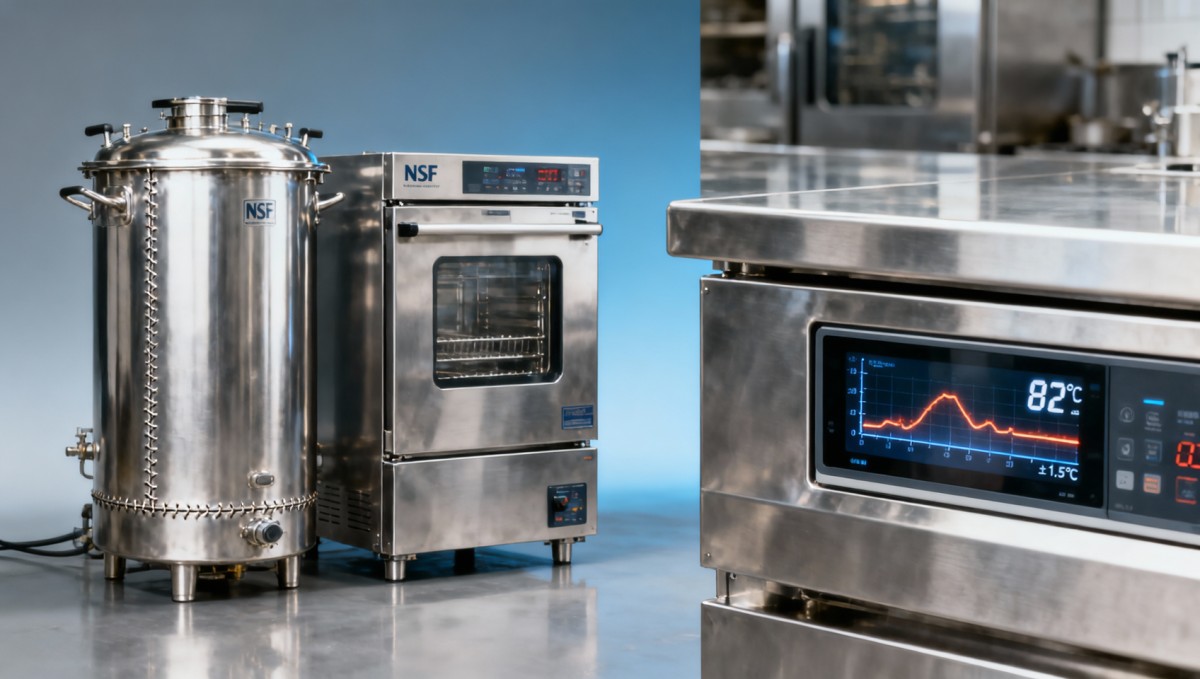
For example, NSF/ANSI 3-certified dishmachines now require ≥82°C (180°F) final rinse temperatures maintained within ±1.5°C for ≥10 seconds—measured at the coldest point in the wash chamber. Similarly, refrigerated prep tables must hold food at ≤5°C (41°F) *at the product surface*, not just air temperature—a distinction that invalidates 23% of non-compliant units during routine audits.
Operators often overlook ambient heat load impact: under-cabinet refrigeration units installed near fryers or dishwashers frequently exceed allowable compressor duty cycles (>75% runtime over 24 hours), triggering automatic shutdowns during peak service—causing immediate violations.
Procurement teams must request third-party validation reports—not just manufacturer claims—and verify sensor placement meets ANSI/AHAM DH-1-2025 testing protocols. Units lacking certified data loggers (recording ≥1 reading/minute for 72 hours) are increasingly rejected during pre-opening inspections.
2. Ventilation & Airflow Compliance: Beyond CFM Ratings
2026 health codes now mandate airflow verification at the hood face—not just duct static pressure. Local jurisdictions (e.g., NYC Health Code §81.24, CA Title 24 Part 6) require minimum 100 FPM (feet per minute) face velocity *with all cooking appliances operating simultaneously*, measured at 12 standardized points across the hood plane.
This shifts focus from nominal CFM to dynamic system integrity: 42% of failed inspections cite improper duct sizing (undersized by ≥15% vs. ASHRAE 154-2024 calculations) or unsealed access panels causing ≥20% airflow loss. Smart hoods with integrated anemometers and auto-throttling fans are now required in high-density urban facilities.
Fire suppression integration is no longer optional: UL 300A-listed systems must trigger within 3 seconds of heat detection at ≥135°C (275°F) and deliver extinguishing agent to all hazard zones within 10 seconds—verified via annual third-party flow tests.
3. Material Integrity & Cleanability: Surface Specifications That Matter
NSF/ANSI 2 now requires all food-contact surfaces to pass ASTM E2149-23 antimicrobial efficacy testing (≥99.9% reduction of *Listeria monocytogenes* after 24h exposure). Stainless steel must be minimum 18-gauge (1.2mm) for structural components and electropolished to Ra ≤0.5μm roughness—preventing biofilm adhesion in crevices.
Weld seams must be continuous, ground smooth, and free of pits >0.1mm depth. Non-compliant welds account for 31% of surface sanitation failures in walk-in coolers and combi ovens. Seamless, coved floor transitions (radius ≥50mm) are mandatory in healthcare and school kitchens per CDC Environmental Infection Control Guidelines 2026.
Procurement checklists should include: material mill test reports (MTRs), weld inspection certificates, and Ra surface roughness validation—not just “stainless steel” labeling.
Units failing these specs cannot be retrofitted—replacement is the only compliant path. Budgeting for full replacement (not repair) is now standard in capital planning for health-sensitive venues.
4. Digital Traceability & Maintenance Logging Requirements
Per FDA Food Safety Modernization Act (FSMA) Rule 206, all commercial kitchen equipment used in regulated food processing must maintain auditable digital logs for: (1) temperature excursions >±2°C, (2) cleaning cycle completion, and (3) calibration events. Logs must be exportable in CSV format and retain data for ≥2 years.
Cloud-connected equipment (e.g., smart combi ovens, IoT-enabled refrigeration) reduces manual logging burden by 87% and cuts inspection preparation time from 14 hours to <2 hours per facility. However, 68% of legacy units lack API compatibility—making retrofitting cost-prohibitive for many mid-sized operators.
Procurement decisions must include API documentation review and SOC 2 Type II compliance verification for cloud platforms. On-premise data hosting options are now required in EU and Canadian procurement contracts.
5. Procurement Decision Framework: 6 Critical Evaluation Criteria
When selecting equipment, prioritize these six weighted criteria (scored 1–5 per item):
- Health Code Alignment Score: Verified compliance with 2026 local, state, and federal codes—not just “meets NSF”
- Validation Documentation Package: Includes calibration certs, airflow test reports, and antimicrobial test results
- Digital Audit Trail Capability: Real-time logging, tamper-proof timestamps, and exportable formats
- Maintenance Accessibility: All service points reachable without disassembly (max 3 tools required)
- Energy Recovery Integration: Heat recovery from dishmachines/refrigeration (≥15% energy recapture)
- Global Service Network Coverage: Certified technicians available within 48 hours in ≥95% of target markets
Equipment scoring <4.0 across all six criteria carries elevated regulatory risk. Top-tier suppliers now provide pre-submission compliance dossiers—including jurisdiction-specific checklist mapping—for faster permitting.
To ensure your next kitchen build or refresh meets 2026 health code requirements—and avoids costly rework, delays, or shutdowns—contact our compliance engineering team today for a free equipment specification audit and jurisdiction-specific compliance roadmap.
Popular Tags
Kitchen Industry Research Team
Dedicated to analyzing emerging trends and technological shifts in the global hospitality and foodservice infrastructure sector.
Industry Insights
Join 15,000+ industry professionals. Get the latest market trends and tech news delivered weekly.
No spam. Unsubscribe anytime.


Contact With us
Contact:
Anne Yin (Ceramics Dinnerware/Glassware)
Lucky Zhai(Flatware)