
Why restaurant kitchen cleaning often fails inspections
Why Restaurant Kitchen Cleaning Often Fails Inspections
For quality control and safety managers, failed kitchen inspections are rarely caused by a single visible mistake or one careless shift.
Most failures come from weak systems: hidden grease, inconsistent routines, poorly maintained equipment, incomplete records, and unclear staff accountability.
Effective restaurant kitchen cleaning is not only about appearance. It must prove sanitation control, risk prevention, and inspection readiness every day.
Inspections fail when cleaning is treated as a task, not a control system
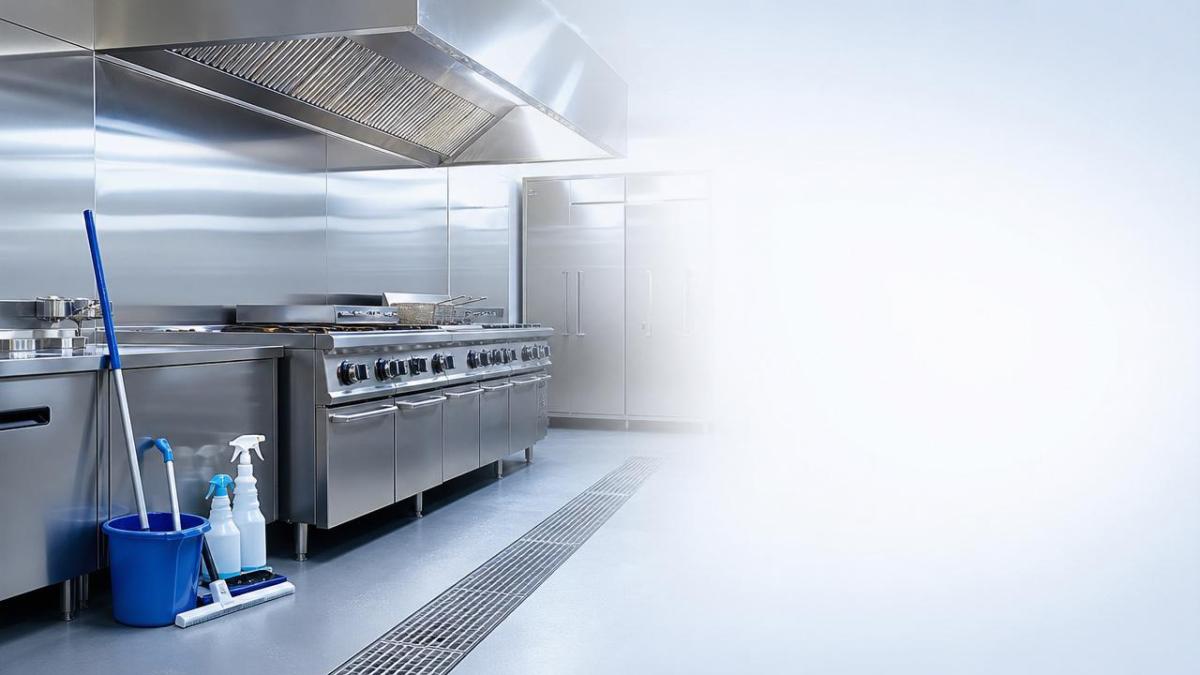
Many restaurants clean daily, yet still fail inspections because the cleaning program is not designed around food safety risks.
Staff may wipe worktops, mop floors, and empty bins, but miss contamination points that inspectors are trained to examine.
Quality managers should view restaurant kitchen cleaning as part of a preventive control system, not a closing-shift checklist.
This means every surface, drain, appliance, hood, utensil, and storage area must have a defined cleaning frequency and verification method.
When cleaning depends on memory or personal habits, standards vary by shift, workload, training level, and supervision quality.
Inspection failure becomes more likely when teams cannot show who cleaned what, when it was done, and how it was verified.
The most common hidden reasons restaurant kitchens fail cleaning inspections
Grease buildup is one of the strongest warning signs for inspectors because it suggests fire risk and poor sanitation discipline.
Grease often accumulates behind fryers, under cooking lines, inside exhaust hoods, around filters, and beneath equipment legs.
These areas are difficult to reach during busy service, so they are often postponed until buildup becomes visible or hazardous.
Another common issue is food debris trapped in slicers, mixers, gaskets, prep tables, refrigeration seals, and removable equipment parts.
Even when surfaces look clean, bacteria can remain in seams, hinges, rubber seals, drain channels, and damaged cutting boards.
Inspectors also check whether chemicals are properly diluted, labeled, stored, and used according to manufacturer instructions and safety procedures.
Using too little sanitizer leaves microbial risk. Using too much can create chemical contamination and employee safety concerns.
Cleaning tools themselves often become a failure point when mops, cloths, brushes, and buckets are not cleaned or segregated.
A cloth used near raw poultry should never be used on ready-to-eat preparation areas or customer-facing service zones.
Floor drains, waste areas, and pest-prone corners are especially important because they reveal whether sanitation is systematic or superficial.
When these zones smell, retain standing water, or show residue, inspectors may assume broader sanitation weaknesses exist.
Why equipment design affects inspection outcomes
Kitchen equipment strongly influences whether cleaning can be completed properly within realistic labor hours and operational constraints.
Equipment with smooth surfaces, removable parts, accessible panels, and rounded corners is easier to clean and verify.
By contrast, older or poorly designed appliances may contain cracks, exposed fasteners, damaged seals, and narrow gaps that trap residue.
For safety managers, equipment selection should include cleanability as a purchasing criterion, not only price, capacity, or energy use.
A fryer that cannot be moved easily creates hidden grease zones behind and underneath the unit during normal operations.
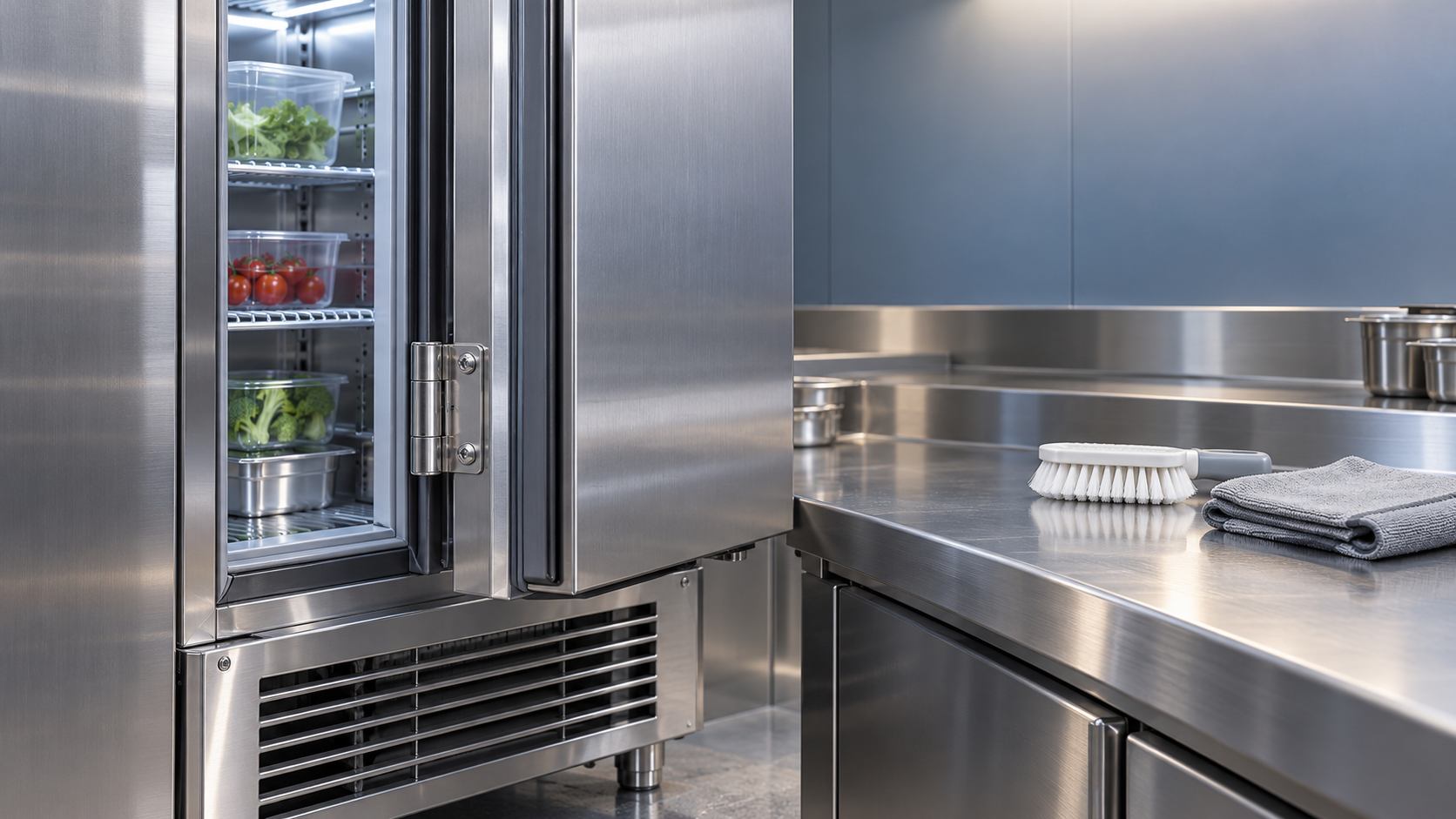
A refrigerator with damaged door gaskets may support microbial growth while also reducing temperature control and energy efficiency.
Commercial mixers, slicers, and food processors require special attention because food-contact components can be difficult to disassemble correctly.
If staff avoid disassembly because it is time-consuming, the restaurant may appear compliant while harboring serious contamination risks.
Modern kitchen equipment increasingly supports safer maintenance through removable guards, tool-free access, digital alerts, and hygienic design principles.
These features reduce cleaning errors, shorten sanitation time, and make inspection readiness easier to maintain across multiple shifts.
Documentation gaps often turn minor issues into inspection failures
Inspectors do not only evaluate whether the kitchen looks clean. They also examine whether cleaning controls are documented and reliable.
A clean kitchen with missing logs may still raise concerns because management cannot prove sanitation was performed consistently.
Cleaning records should show daily, weekly, and periodic tasks, responsible staff, completion times, verification signatures, and corrective actions.
For quality control teams, records should be simple enough for staff to complete but detailed enough to support accountability.
Overcomplicated forms often lead to rushed checkmarks, incomplete entries, or paperwork that does not reflect actual cleaning activity.
Digital checklists can improve consistency by assigning tasks, requiring photos, time-stamping completion, and escalating overdue items.
However, technology only helps when standards are clear and supervisors regularly compare records against physical kitchen conditions.
The best documentation systems connect cleaning tasks to inspection risks, not just routine housekeeping categories or generic duties.
For example, a hood-cleaning record should include filters, canopy surfaces, grease channels, accessible duct areas, and contractor service dates.
If an inspector questions a residue issue, strong records help show whether it was isolated, addressed, and prevented from recurring.
Staff training fails when it focuses only on what to clean
Many cleaning failures happen because employees know the task but not the reason, risk level, or required standard.
A worker may understand that a slicer must be cleaned, but not recognize why hidden blade residue is dangerous.
Training should explain contamination routes, allergen transfer, biofilm formation, pest attraction, and chemical misuse in practical kitchen language.
When employees understand the consequences, they are more likely to complete detailed cleaning even during high-pressure closing periods.
Training must also be role-specific. Dish staff, line cooks, prep cooks, supervisors, and maintenance workers face different sanitation risks.
Supervisors should be trained to inspect finished work, identify recurring patterns, and coach employees without turning sanitation into blame.
Refresher training is especially important after menu changes, new equipment installation, staff turnover, renovation, or a failed inspection.
Visual standards help reduce confusion. Photos showing acceptable and unacceptable conditions are often more effective than written instructions alone.
Multilingual signage, color-coded tools, and step-by-step cleaning cards can improve consistency in diverse and fast-moving kitchen teams.
Cleaning schedules fail when they ignore real kitchen workload
A cleaning plan may look strong on paper but fail when it does not match service volume or staffing realities.
Restaurants often assign too many deep-cleaning tasks to closing teams already fatigued after long and intense service periods.
When time is limited, employees naturally prioritize visible areas and postpone harder tasks behind equipment or inside appliances.
Quality managers should separate cleaning into service-time, shift-change, closing, weekly, monthly, and contractor-supported activities.
High-risk food-contact surfaces need frequent cleaning and sanitizing, while heavy grease zones may require scheduled deep cleaning windows.
Some tasks should not wait until closing, especially when raw proteins, allergens, or ready-to-eat foods are handled throughout the day.
A realistic schedule should include labor estimates, responsible roles, equipment downtime, chemical contact time, and verification requirements.
If cleaning requires moving heavy equipment, management must provide safe access, proper wheels, lockout guidance, and adequate staffing.
Otherwise, employees may avoid the task or perform it unsafely, creating both sanitation and workplace injury risks.
The strongest cleaning schedules are built from observation, not assumptions. Managers should watch actual workflows before assigning responsibilities.
Maintenance problems can look like cleaning failures
Inspection failures are sometimes blamed on poor cleaning when the root problem is equipment condition or facility maintenance.
Cracked tiles, broken coving, leaking pipes, rusted shelving, damaged gaskets, and worn cutting boards are difficult to sanitize properly.
Standing water around drains may indicate slope problems, blockages, or poor drainage design rather than simple neglect.
Refrigeration units with condensation, moldy seals, or airflow problems can repeatedly fail hygiene expectations despite regular wiping.
Ventilation systems that are undersized or poorly serviced may spread grease, heat, and moisture across surrounding kitchen surfaces.
Quality and safety managers should connect sanitation audits with preventive maintenance programs to identify recurring equipment-related failures.
If the same area appears dirty every week, the issue may be access, design, damage, leakage, or inadequate tools.
Corrective actions should therefore include repair, replacement, layout adjustment, or equipment upgrade, not only retraining employees.
This approach reduces repeated inspection findings and prevents teams from wasting labor on problems that require engineering solutions.
How safety managers can build an inspection-ready cleaning program
The first step is to map the kitchen by risk, not by room or general cleaning category.
Identify food-contact surfaces, allergen-sensitive areas, raw protein zones, heat and grease zones, wet areas, storage spaces, and pest-risk locations.
Next, define clear standards for each area, including cleaning method, chemical type, dilution, contact time, tools, and verification method.
Each task should have an owner. Shared responsibility without named accountability often leads to missed work and repeated disputes.
Managers should create a master sanitation schedule that includes daily cleaning, deep cleaning, equipment maintenance, and external contractor services.
Verification should combine visual checks, supervisor sign-off, temperature review, sanitizer testing, ATP testing when appropriate, and periodic internal audits.
Internal inspections should mimic regulatory inspections by checking hard-to-reach areas, documentation quality, equipment condition, and staff knowledge.
Findings should be ranked by risk, with deadlines, responsible persons, and documented corrective actions for each issue.
Trend analysis is valuable. Repeated failures in one zone indicate a system weakness rather than an isolated employee mistake.
When management uses audit results to improve design, scheduling, training, and equipment, inspection readiness becomes more sustainable.
What to review before the next health inspection
Before an expected inspection, managers should avoid cosmetic cleaning that ignores structural and documentation problems.
Start with high-risk zones: food-contact equipment, refrigeration, handwashing stations, drains, pest areas, chemical storage, and grease accumulation points.
Check whether cleaning logs are current, complete, signed, and consistent with the actual condition of the kitchen.
Inspect under, behind, and inside equipment because these locations often separate inspection-ready kitchens from superficially clean ones.
Confirm that staff can explain basic sanitation procedures, sanitizer use, allergen controls, and what they do when contamination occurs.
Review maintenance issues that could undermine sanitation, including broken seals, cracked surfaces, leaks, rust, and poor ventilation performance.
Verify that cleaning chemicals are correctly labeled, stored away from food, and supported by safety data sheets where required.
If contractors clean hoods, ducts, grease traps, or pest-control zones, ensure service records are accessible and up to date.
The goal is not to prepare only for one visit, but to make every operating day inspection-ready.
Conclusion: failed inspections are usually system failures
Restaurant kitchen cleaning fails inspections when sanitation is treated as a routine chore rather than a managed food safety control.
The main causes are predictable: hidden grease, inaccessible equipment, weak documentation, inconsistent training, unrealistic schedules, and unresolved maintenance defects.
For quality control and safety managers, the solution is to strengthen the system behind the cleaning work.
That means designing realistic procedures, assigning accountability, selecting cleanable equipment, verifying results, and using audit findings to improve operations.
A kitchen that is truly inspection-ready does not depend on last-minute effort. It depends on disciplined routines built into daily work.
When restaurant kitchen cleaning is managed this way, inspections become less disruptive, food safety improves, and operational risk becomes easier to control.
Popular Tags
Kitchen Industry Research Team
Dedicated to analyzing emerging trends and technological shifts in the global hospitality and foodservice infrastructure sector.
Industry Insights
Join 15,000+ industry professionals. Get the latest market trends and tech news delivered weekly.
No spam. Unsubscribe anytime.

Contact With us
Contact:
Anne Yin (Ceramics Dinnerware/Glassware)
Lucky Zhai(Flatware)