
Restaurant kitchen hood system cleaning frequency myths vs. NFPA 96 compliance reality
How often should you clean your restaurant kitchen hood system? Misconceptions abound—some operators clean quarterly, others only when grease buildup is visible. But NFPA 96 compliance isn’t about convenience; it’s a non-negotiable safety standard governing restaurant kitchen ventilation, hood system maintenance, and overall restaurant kitchen safety. Ignoring it risks fire hazards, equipment failure, and costly downtime—impacting restaurant kitchen workflow, stainless steel restaurant kitchen integrity, and long-term restaurant kitchen equipment cost. Whether you’re an operator, facility manager, or procurement professional evaluating restaurant kitchen equipment suppliers, understanding the reality behind cleaning frequency myths is critical to compliant, efficient, and safe commercial restaurant kitchen design and operation.
Why “When It Looks Dirty” Is a Dangerous Myth
Grease accumulation in commercial kitchen hood systems is not merely an aesthetic concern—it’s a progressive fire hazard with measurable thermal resistance and ignition thresholds. NFPA 96 defines “clean” as the removal of combustible deposits to ≤1/8 inch (3.2 mm) thickness across all accessible surfaces, including ducts, fans, and plenums. Visual inspection alone fails to detect hidden buildup behind baffles or inside horizontal duct runs—areas where grease layers exceeding 1/4 inch are routinely found during third-party audits.
Operators who delay cleaning until visible grease appears typically exceed safe accumulation limits by 2–3×. In high-volume kitchens (e.g., 200+ meals/hour), grease can reach hazardous thickness in under 10 days—even with daily surface wiping. This misalignment between perception and physical risk directly undermines foodservice operational continuity and violates insurance policy clauses tied to NFPA 96 adherence.
The myth persists because manual inspection lacks calibrated measurement tools. Without standardized grease depth gauges or infrared thermography for hotspot mapping, staff rely on subjective cues—leading to inconsistent intervals, reactive maintenance cycles, and increased exposure to OSHA-recordable incidents.
NFPA 96 Cleaning Frequency: What the Standard Actually Requires
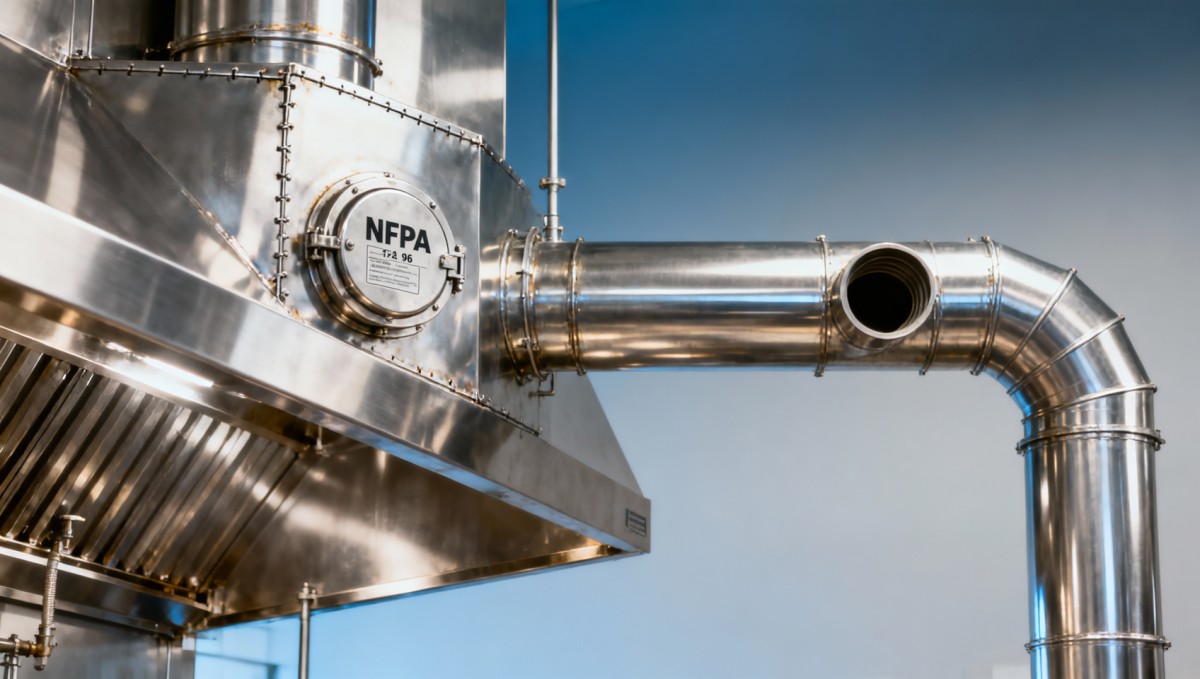
NFPA 96 does not prescribe fixed calendar-based intervals. Instead, it mandates performance-based cleaning schedules determined by three interdependent variables: cooking type (e.g., solid fuel vs. electric), volume (meals per hour), and hood system configuration (e.g., canopy height, duct length). These factors define minimum cleaning frequencies across four risk tiers—verified through documented grease sampling at six standardized test points per system.
For example, a high-volume steakhouse using charbroilers must clean its hood system every 1–3 months, while a low-volume bakery operating induction ranges may qualify for semi-annual cleaning—provided grease thickness remains ≤1/8 inch at all sampled locations. Crucially, NFPA 96 Section 11.6 requires written verification from a certified cleaning contractor after each service, including date, technician ID, grease thickness measurements, and photographic evidence of inaccessible areas.
Non-compliance triggers cascading consequences: failed health inspections, voided fire insurance coverage, and liability exposure in case of fire-related loss. Over 60% of commercial kitchen fires originate in hood systems with overdue cleaning—per UL Fire Safety Research Institute data (2023).
NFPA 96 Risk Tier Classification & Minimum Cleaning Intervals
This table reflects real-world enforcement patterns observed across U.S. health departments and insurance underwriters. Tier 3 systems account for 78% of NFPA 96-related citations—primarily due to undocumented cleaning frequency and unverified grease thickness. Procurement teams evaluating hood system vendors must verify that supplier documentation includes tier-specific maintenance protocols aligned with local AHJ requirements.
How Kitchen Equipment Suppliers Support NFPA 96 Compliance
Leading kitchen equipment manufacturers now embed NFPA 96 readiness into product design—not just as a compliance checkbox, but as an integrated operational enabler. Modern stainless steel restaurant kitchen hoods feature modular baffles with quick-release hardware, reducing cleaning downtime by up to 40%. Duct systems incorporate access panels at NFPA-mandated intervals (≤12 ft for horizontal runs), enabling full-depth inspection without structural modification.
Smart kitchen technologies further enhance traceability: IoT-enabled grease sensors monitor real-time accumulation rates and auto-generate maintenance alerts when thresholds approach 1/8 inch. These systems integrate with digital kitchen management platforms used by central kitchens and multi-unit operators—providing auditable logs required for corporate EHS reporting and insurer submissions.
Procurement professionals should prioritize suppliers offering: (1) NFPA 96-aligned installation guides with duct layout diagrams, (2) OEM-certified cleaning partner networks, and (3) warranty extensions tied to verified maintenance history. Such features reduce total cost of ownership by minimizing emergency service calls and extending stainless steel component lifespan beyond 15 years.
What to Ask Your Hood System Vendor Before Purchase
Selecting the right commercial kitchen hood system involves more than airflow capacity or stainless steel grade. For decision-makers balancing safety, efficiency, and lifecycle cost, these five vendor questions separate compliant partners from transactional sellers:
- Does your hood system include NFPA 96-compliant access panel placement (max 12 ft spacing for horizontal ducts)?
- Can you provide documented proof of third-party testing verifying grease retention rates at 150°F and 200°F exhaust temperatures?
- Do you offer integration-ready interfaces for grease sensor platforms (e.g., Modbus RTU or BACnet IP)?
- What is your average field service response time for emergency cleaning verification in major markets (e.g., Chicago, Dallas, Toronto)?
- Do you maintain an updated list of AHJ-recognized cleaning contractors in your regional support network?
These criteria reflect evolving industry priorities: automation-readiness, regulatory traceability, and global supply chain resilience. Suppliers headquartered in Germany and Japan increasingly lead in precision duct fabrication tolerances (±0.3 mm), while Chinese OEMs dominate scalable smart-sensor integration at competitive price points—enabling hybrid solutions for multinational foodservice operators.
Why Partner With Us for Compliant Kitchen Ventilation Solutions
We engineer kitchen hood systems for global foodservice operators who demand zero compromise on NFPA 96 alignment, stainless steel durability, and intelligent maintenance readiness. Our platform supports Tier 1–3 risk profiles with factory-configured access points, corrosion-resistant fasteners rated for 10+ years in high-humidity environments, and pre-integrated sensor ports compatible with leading digital kitchen OS providers.
When you contact us, you’ll receive: (1) a free NFPA 96 risk-tier assessment based on your menu mix and peak-hour volume, (2) duct layout validation against local AHJ requirements, (3) lead times for certified cleaning partner onboarding (typically 5–7 business days), and (4) technical documentation packages formatted for insurer submission and corporate EHS audits.
Let’s ensure your next kitchen equipment investment delivers continuous compliance—not just on day one, but across its entire 15–20 year operational lifecycle. Reach out today for your customized hood system specification sheet, grease accumulation modeling report, and regional service partner map.
Popular Tags
Kitchen Industry Research Team
Dedicated to analyzing emerging trends and technological shifts in the global hospitality and foodservice infrastructure sector.
Industry Insights
Join 15,000+ industry professionals. Get the latest market trends and tech news delivered weekly.
No spam. Unsubscribe anytime.
Contact With us
Contact:
Anne Yin (Ceramics Dinnerware/Glassware)
Lucky Zhai(Flatware)