
Kitchen design for small spaces that still feels efficient
Kitchen design for small spaces is no longer just about making do with less—it is about creating a room that works smarter, looks cleaner, and feels comfortable every day. Whether you are upgrading an apartment kitchen or planning a compact family cooking area, the right layout, storage, and appliances can turn limited square footage into an efficient and inviting space.
For end consumers, the challenge is rarely one single issue. It is usually a combination of limited floor area, poor storage access, oversized appliances, weak lighting, and layouts that waste valuable movement space. A well-planned small kitchen should support cooking, cleaning, storage, and daily traffic within a compact footprint, often between 4 and 10 square meters.
This is where kitchen design for small spaces becomes both a design decision and an equipment selection decision. The most successful results come from balancing cabinet planning, workflow efficiency, energy-saving appliances, and easy-to-maintain surfaces. In today’s kitchen equipment market, consumers also benefit from smarter compact products, modular storage systems, and integrated solutions once seen mainly in professional foodservice environments.
Why Small Kitchen Design Needs a Performance Mindset
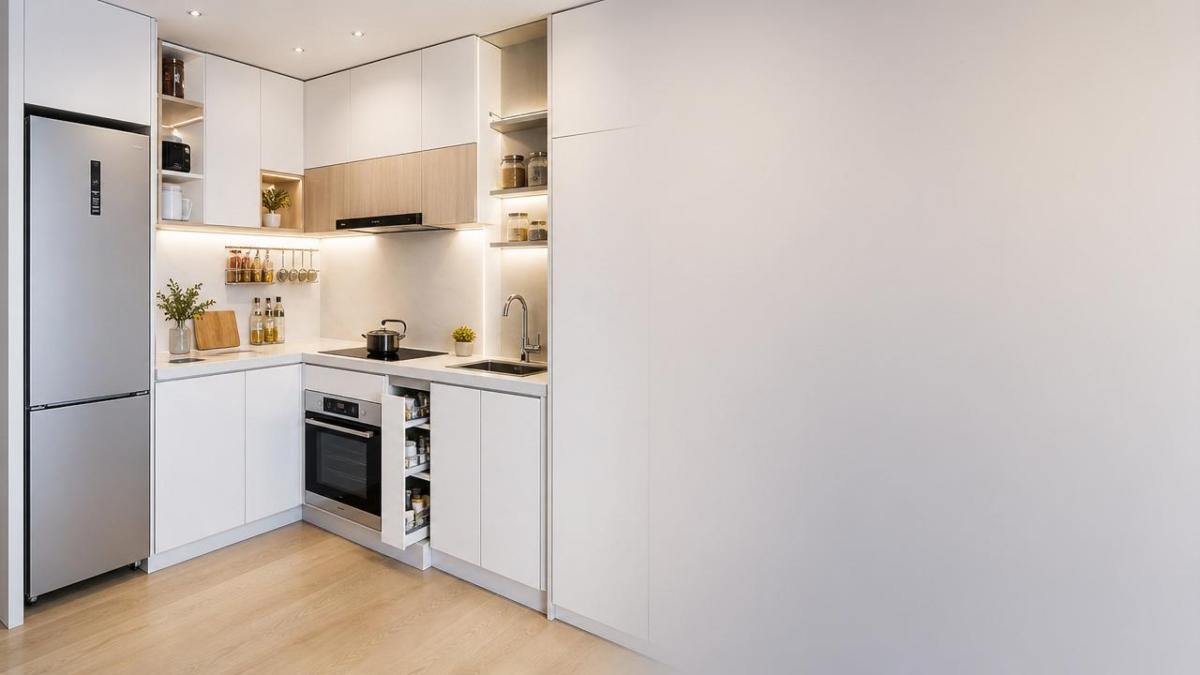
A small kitchen cannot afford wasted motion. In a large room, an extra 2 or 3 steps between the sink, refrigerator, and cooktop may feel minor. In a compact kitchen, that same inefficiency quickly causes crowding, blocked drawers, and uncomfortable daily use. Good kitchen design for small spaces begins with performance, not decoration.
The compact work triangle still matters
The classic work triangle remains useful when adapted to modern homes. In small kitchens, the ideal distance between sink, cooking zone, and cold storage is usually tighter, often within a combined walking distance of 4 to 7 meters. Shorter routes improve meal preparation speed and reduce unnecessary movement during cleaning and food handling.
Common movement problems to avoid
- Oven doors that block the main pathway when open
- Refrigerator doors that collide with base cabinets
- Dish storage placed more than 2 steps from the dishwasher or sink
- Corner cabinets that create dead space deeper than 60 cm
These issues are especially important for families that cook 1 to 3 times daily. When every cabinet opening interrupts another task, the kitchen feels smaller than it actually is. A performance-first approach helps the room stay comfortable even during busy breakfast or dinner hours.
Layout options that work best in tight footprints
Not every plan suits every home. Galley, single-wall, and L-shaped layouts are usually the most practical for kitchen design for small spaces. Each option affects storage volume, appliance sizing, and work flow in different ways. Choosing the wrong layout can reduce usable counter area by 20% or more.
The table below compares common layouts for consumers deciding between remodeling strategies or new kitchen equipment placement.
For most consumers, the galley layout offers the strongest efficiency in compact homes, while the L-shape gives better flexibility if corner storage hardware is properly specified. A single-wall plan works best when paired with vertical storage and multi-function appliances.
Vertical design is not optional
In small kitchens, storage should extend upward rather than outward. Tall cabinets, wall-mounted rails, magnetic strips, and shelves above the backsplash can add 15% to 30% more usable storage without increasing floor coverage. This matters because base cabinets alone rarely meet the needs of households storing cookware, dry goods, cleaning tools, and small appliances in one room.
However, vertical design only works when frequency is considered. Daily-use items should stay between shoulder and waist height. Occasional-use tools can move to upper cabinets. This simple storage zoning reduces bending, climbing, and countertop clutter.
Choosing Appliances for an Efficient Small Kitchen
Appliance selection has a direct effect on how efficient a compact kitchen feels. Many consumers focus on appearance first, but dimensions, door swing, heat output, cleaning access, and energy use are equally important. In kitchen design for small spaces, an appliance that is 5 cm too deep or 10 cm too wide can disrupt cabinet alignment and reduce passage comfort.
Focus on compact, built-in, and multi-function models
Modern kitchen equipment manufacturers increasingly offer compact residential products inspired by commercial efficiency. Combination microwave-oven units, slim dishwashers, induction cooktops, and under-counter refrigeration help consumers consolidate multiple functions into smaller footprints. This can free up one full cabinet section or 40 to 60 cm of counter length.
What to prioritize before buying
- Exact installation dimensions, including ventilation gaps
- Door opening clearance within a 70–90 cm pathway
- Noise level for open-plan living, especially under 50 dB where possible
- Energy-saving features for daily use and lower utility cost
- Cleaning access around filters, vents, and seals
Consumers should also think in terms of use frequency. A household that reheats food daily but bakes weekly may gain more value from a high-quality combi unit than from separate oven and microwave products. A family cooking two hot meals per day may prioritize a 3-zone induction hob over a larger gas setup that consumes more depth and requires stronger ventilation.
Recommended appliance ranges for small kitchens
The table below outlines practical equipment ranges often used in efficient compact kitchen planning. These are not rigid rules, but they help consumers avoid oversizing and preserve workflow comfort.
The best kitchen design for small spaces usually combines at least 2 compact appliance choices rather than shrinking everything at once. This keeps daily performance balanced while preventing the kitchen from feeling under-equipped.
Ventilation and heat management should not be overlooked
Compact rooms trap heat, moisture, and cooking odors faster than large kitchens. That is why extractor capacity, airflow path, and appliance spacing are key planning factors. In many small homes, recirculating hoods are used, but they require regular filter service every 3 to 6 months depending on cooking frequency.
Induction appliances often support better heat control in tight spaces because they reduce ambient heat compared with traditional gas setups. This can improve comfort during summer use and help preserve nearby cabinet finishes over time.
Storage, Materials, and Smart Details That Increase Daily Efficiency
Once the layout and appliance plan are defined, the next step is making every surface work harder. Effective kitchen design for small spaces depends on storage organization, durable materials, and details that reduce visual noise. A compact kitchen feels larger when fewer items sit on the counter and more functions are integrated into cabinetry.
Storage systems that deliver real value
Not all storage accessories justify the cost. The most practical upgrades are usually full-extension drawers, pull-out pantry units, internal dividers, toe-kick drawers, and corner organizers with usable reach. These systems help consumers access items in under 3 seconds rather than searching through stacked shelves.
- Deep drawers for pots and pans reduce bending and improve visibility
- Pull-out spice or bottle units fit narrow 15–20 cm gaps
- Integrated waste sorting supports cleaner food prep routines
- Drawer dividers keep utensils from spreading onto worktops
Consumers planning for long-term use should also consider how many people share the kitchen. A one-person household may perform well with fewer drawers and more open shelving, while a family of 3 to 5 usually benefits from closed storage that controls clutter and protects hygiene.
Material choices affect maintenance and longevity
Small kitchens show wear quickly because each area is used intensively. Countertops, cabinet fronts, and handles should be chosen for easy cleaning and resistance to moisture, stains, and repeated contact. In practical terms, this means smooth surfaces, sealed edges, and hardware that can handle frequent opening cycles.
For consumers comparing finishes, low-maintenance materials often deliver better long-term value than highly decorative surfaces. Matte laminates, engineered stone, stainless steel details, and quality hinges can reduce visible wear and simplify cleaning routines after daily cooking.
Three finishing rules for compact kitchens
- Limit the palette to 2 or 3 dominant finishes to avoid visual crowding
- Use reflective or light-toned surfaces where natural light is limited
- Choose easy-clean backsplashes with minimal joint lines near cooking zones
Lighting and electrical planning often decide usability
A small kitchen can fail even with good cabinets if task lighting is poor. Under-cabinet lighting, ceiling illumination, and correctly placed outlets are all part of efficient design. At least 3 functional lighting layers are often recommended: ambient, task, and accent. In compact homes, task lighting usually has the highest impact because prep space is limited.
Electrical planning should also support modern kitchen equipment. Consumers increasingly use coffee machines, air fryers, kettles, blenders, and chargers in the same room. If outlet planning is too limited, extension cords quickly create clutter and safety concerns.
How to Plan, Budget, and Avoid Common Buying Mistakes
Even the best kitchen design for small spaces can underperform when planning is rushed. Consumers often make decisions in the wrong order, selecting finishes first, appliances second, and layout last. A better process starts with measurements, daily habits, and equipment needs, then moves into cabinetry and visual design.
A practical 5-step planning process
- Measure the room, including ceiling height, window position, plumbing points, and door swing
- List cooking habits, storage volume, and how many users share the kitchen each day
- Select appliance categories and compact dimensions before cabinet ordering
- Define storage zones for food, cookware, cleaning tools, and small electrical products
- Review ventilation, lighting, and installation access before final purchase
This sequence reduces the risk of expensive changes during installation. In many home projects, one wrong appliance size can force cabinet revisions, delay delivery by 2 to 4 weeks, or reduce storage capacity more than expected.
Buying mistakes that make small kitchens less efficient
The most common mistake is oversizing the refrigerator or range. The second is underestimating drawer access and door clearance. The third is choosing too many countertop appliances without assigning permanent storage space. These errors make the kitchen feel crowded, even when the original floor plan was workable.
Another frequent issue is ignoring serviceability. Filters, drainage points, and built-in appliance vents need maintenance access. If components cannot be reached easily, cleaning declines and equipment performance may suffer over time.
Quick decision checklist for consumers
Before approving a final plan, check 6 items: passage width, appliance depth, drawer opening path, task lighting position, outlet count, and ventilation access. These are practical details, but they often determine whether a compact kitchen remains efficient after 6 months, 2 years, and beyond.
A successful small kitchen is not defined by how much it holds, but by how well it supports everyday routines. The best kitchen design for small spaces combines a compact layout, right-sized appliances, vertical storage, durable materials, and smart planning choices that reduce wasted motion and visual clutter.
If you are comparing layouts, compact kitchen equipment, or storage solutions for an apartment or family home, a tailored plan will help you avoid costly mistakes and improve long-term comfort. Contact us now to get a customized solution, discuss product details, and explore more efficient kitchen options for small spaces.
Popular Tags
Kitchen Industry Research Team
Dedicated to analyzing emerging trends and technological shifts in the global hospitality and foodservice infrastructure sector.
Industry Insights
Join 15,000+ industry professionals. Get the latest market trends and tech news delivered weekly.
No spam. Unsubscribe anytime.
Hot Articles
 How to Size a Commercial Kitchen Hood for Cooking Equipment and Heat Loads
- How to Size a Planetary Mixer Machine for High-Viscosity Batch Production
- How to Choose Ceramic Rice Plates for Restaurants: Size, Glaze, and Chip Resistance
- Kitchen Innovation Trends in Emerging Markets: Where Growth Will Come From in 2026
Contact With us
Contact:
Anne Yin (Ceramics Dinnerware/Glassware)
Lucky Zhai(Flatware)