
Why a glass storage container for food is safer than plastic
For quality control and safety managers, choosing a glass storage container for food is more than a packaging decision—it is a risk-control strategy. Compared with plastic, glass offers better chemical stability, resists odor and stain retention, and supports stricter food safety standards across storage, handling, and inspection. Understanding these advantages helps organizations reduce contamination risks while improving product integrity and operational confidence.
Why does a glass storage container for food reduce safety risk in professional kitchens?
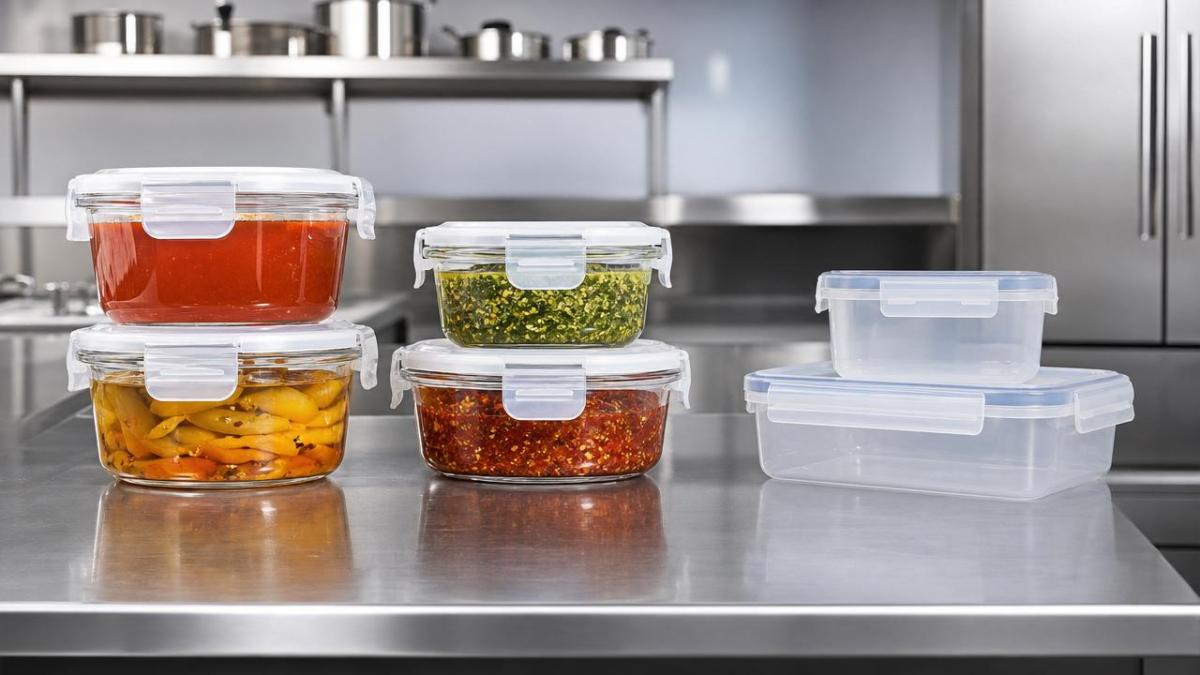
In restaurants, hotels, central kitchens, and food processing environments, storage containers are in direct contact with ingredients, prepared foods, sauces, and samples. That means the container is part of the food safety system, not just a passive accessory.
A glass storage container for food is often preferred by QA and safety teams because glass is non-porous, chemically inert under normal food-contact conditions, and easier to inspect visually. These properties matter when operations handle acidic foods, oils, allergens, strong aromas, and repeated wash cycles.
Plastic containers can still be used in many operations, but they introduce more variables. Surface scratching, odor retention, discoloration, and possible deformation under heat can complicate sanitation verification and increase uncertainty during audits.
- Glass provides a more stable contact surface for cold storage, ambient storage, and many reheating workflows.
- Clear walls support faster visual checks for residue, separation, spoilage signs, and label mismatch.
- Lower odor carryover helps reduce cross-contact concerns between allergen and non-allergen products.
- Consistent shape retention improves lid fit and storage reliability over repeated use cycles.
Why this matters more in today’s kitchen equipment industry
The kitchen equipment industry is moving toward automation, digital traceability, and energy-efficient workflows. In that setting, every component used for storage and handling must support predictable hygiene performance. A glass storage container for food aligns well with systems that depend on repeatable cleaning, documented inspection, and controlled ingredient flow.
For safety managers working across multiple sites or export-oriented supply chains, standardizing on better food-contact materials can simplify SOP development and reduce corrective actions linked to storage practices.
Glass vs plastic: what should quality control teams compare first?
Before choosing between glass and plastic, it helps to compare the decision through a risk lens rather than a unit-cost lens. The table below highlights the practical differences most relevant to quality control, sanitation, and compliance teams evaluating a glass storage container for food.
The comparison does not mean plastic has no place in foodservice. It means that where contamination control, repeated cleaning, and product integrity are critical, glass reduces ambiguity. That reduction in ambiguity is valuable during inspections, incident investigations, and internal audits.
Which risks are easier to control with glass?
A glass storage container for food helps teams manage several practical hazards that are common in mixed-use kitchens and processing areas.
- Residual contamination risk. Smooth, non-porous surfaces improve wash verification and reduce hidden buildup.
- Allergen changeover risk. Lower odor and stain retention support cleaner transitions between recipes and storage categories.
- Temperature misuse risk. Properly selected glass containers are less likely to distort, which protects seal integrity and stack stability.
- Inspection risk. Transparent glass simplifies visual control during receiving, storage, and end-of-shift sanitation checks.
Which application scenarios favor a glass storage container for food?
Not every operation needs the same storage material for every task. The table below helps safety managers match a glass storage container for food to scenarios where its advantages are most meaningful.
This scenario-based view is useful because many procurement mistakes happen when a single container type is applied to every process. A mixed fleet can be practical, but the highest-risk products should be assigned to the most stable and inspectable storage option.
Operations that benefit most
- Central kitchens managing many recipes, allergens, and relabeling steps.
- Hotels with banquet production where staging, reheating, and storage overlap.
- Food processing facilities that retain samples or hold semi-finished ingredients for QA release.
- Premium foodservice brands that need hygiene performance and presentation value together.
How should buyers evaluate specifications and compliance points?
A good purchasing decision goes beyond choosing glass instead of plastic. Quality control managers should review construction details, food-contact suitability, cleaning conditions, and documentation support before approving a glass storage container for food.
Key specification checklist
- Container body material should be clearly identified and suitable for repeated food-contact use.
- Lid and gasket materials should also be reviewed, because seal components often create the real hygiene weak point.
- Temperature range should match actual workflows such as chilled storage, room-temperature holding, or reheating transfer.
- Shape and stackability should support storage density without increasing breakage or handling risk.
- Label adhesion area should allow traceability labels to remain legible during storage and cleaning.
- Replacement availability for lids or seals should be confirmed to avoid discarding complete sets too early.
What compliance teams usually ask for
Documentation expectations vary by region and customer type, but procurement teams often request general food-contact declarations, material information, and basic test references relevant to normal use conditions. For export-oriented supply chains, consistent documentation across batches is often as important as the product itself.
In practical terms, a safety manager should confirm whether the supplier can explain raw material consistency, cleaning recommendations, packaging protection, and defect handling procedures. These are essential for incoming inspection and audit readiness.
Is glass always more cost-effective when total risk is considered?
Initial purchase price is only one part of the equation. The right question is whether a glass storage container for food lowers the total cost of poor quality, rewash time, odor complaints, product disposal, and audit friction over its service life.
The table below compares cost factors that matter in real operations, especially where containers are reused frequently and sanitation checks are strict.
For many food businesses, glass becomes more economical in controlled zones such as ingredient rooms, QA sample retention, sauce storage, and premium prepared food handling. In rough transport-heavy areas, teams may still choose other materials while reserving glass for higher-risk contact points.
A balanced replacement strategy
Instead of replacing all plastic at once, many operators phase in glass where it delivers the clearest safety return. That might include allergen-sensitive storage, acidic ingredient holding, retained sample management, and visible front-of-house preparation zones.
What mistakes do safety managers commonly see during implementation?
Even when the decision to use a glass storage container for food is correct, implementation can fail if operating rules are weak. Most problems come from mismatched specifications, poor handling discipline, or incomplete sanitation procedures around lids and seals.
Common mistakes and how to avoid them
- Choosing by appearance only. Always confirm food-contact suitability, lid material, and actual use temperature range.
- Ignoring gasket hygiene. The cleanest glass body cannot offset a seal that traps residue or is hard to inspect.
- Using one size for every process. Oversized containers create wasted headspace, slower cooling, and labeling confusion.
- No breakage response SOP. Glass requires clear procedures for isolation, disposal, and area reinspection if damage occurs.
- Skipping staff training. Handling, stacking, and dishwasher loading rules should be defined from day one.
A simple rollout sequence
- Map the processes where container performance affects food safety most directly.
- Test a small group of container sizes with real recipes, labels, wash cycles, and staff handling patterns.
- Define acceptance criteria for lid fit, visual cleanliness, odor carryover, and storage stability.
- Train users and update SOPs for washing, stacking, breakage, and replacement frequency.
- Expand only after the pilot confirms process compatibility and supply continuity.
FAQ: practical questions about choosing a glass storage container for food
Is a glass storage container for food safer in every environment?
Not in every environment. It is generally safer where hygiene verification, odor control, and chemical stability are top priorities. In heavy transport or impact-prone zones, teams must balance those benefits against breakage risk and handling conditions.
What should procurement teams check besides the glass body?
They should check lids, seals, stackability, cleaning compatibility, label performance, and replacement part availability. In many cases, the lid system determines leak resistance, sanitation difficulty, and lifecycle cost more than the container body itself.
Which foods benefit most from glass storage?
Acidic foods, strong-smelling foods, oil-rich sauces, allergen-sensitive ingredients, and retained QA samples are common examples. These categories benefit from lower odor absorption, easier visual inspection, and more predictable cleaning outcomes.
How can a multi-site operation standardize container selection?
Use a matrix based on product type, storage temperature, cleaning method, and handling intensity. Standardize a limited number of sizes and define where a glass storage container for food is mandatory, optional, or unsuitable. This approach improves training, replenishment, and audit consistency.
Why choose us for product selection and implementation support?
In the kitchen equipment industry, the right container decision should support food safety, workflow efficiency, and long-term operational control. We focus on practical selection support for restaurants, hotels, central kitchens, food processing users, and buyers who need more than a generic catalog answer.
If you are evaluating a glass storage container for food, you can contact us to discuss the points that matter most to QA and safety teams:
- Parameter confirmation, including size range, lid type, sealing structure, and intended temperature use.
- Application-based product selection for sauce storage, sample retention, allergen control, chilled prep, or open-kitchen display use.
- Delivery lead time planning for pilot orders, staged rollout, or regular replenishment.
- Custom solution discussion when you need specific capacities, packaging methods, or matching kitchen equipment workflows.
- Certification and documentation communication for food-contact requirements and supply chain review.
- Sample support and quotation discussion so your team can test cleaning, handling, and storage performance before full approval.
A safer storage decision starts with the right technical questions. If your team is comparing materials, reviewing compliance expectations, or planning a replacement strategy, reach out with your use case, and we can help narrow the options into a practical, audit-ready solution.
Popular Tags
Kitchen Industry Research Team
Dedicated to analyzing emerging trends and technological shifts in the global hospitality and foodservice infrastructure sector.
Industry Insights
Join 15,000+ industry professionals. Get the latest market trends and tech news delivered weekly.
No spam. Unsubscribe anytime.

Contact With us
Contact:
Anne Yin (Ceramics Dinnerware/Glassware)
Lucky Zhai(Flatware)