
What to check before choosing a kitchen tools OEM partner
Choosing a kitchen tools OEM partner is no longer a simple price comparison.
In today’s kitchen equipment industry, buyers face rising compliance demands, faster product cycles, and stronger expectations for durability and design.
A weak kitchen tools OEM relationship can create defects, shipment delays, and brand damage across multiple markets.
A strong partner supports quality consistency, traceability, customization, and long-term supply security.
This makes partner selection a strategic decision, not only an operational task.
The most reliable evaluation approach is to read current industry signals, understand what is driving change, and check whether a supplier can adapt with you.
Why kitchen tools OEM evaluation has become more critical now
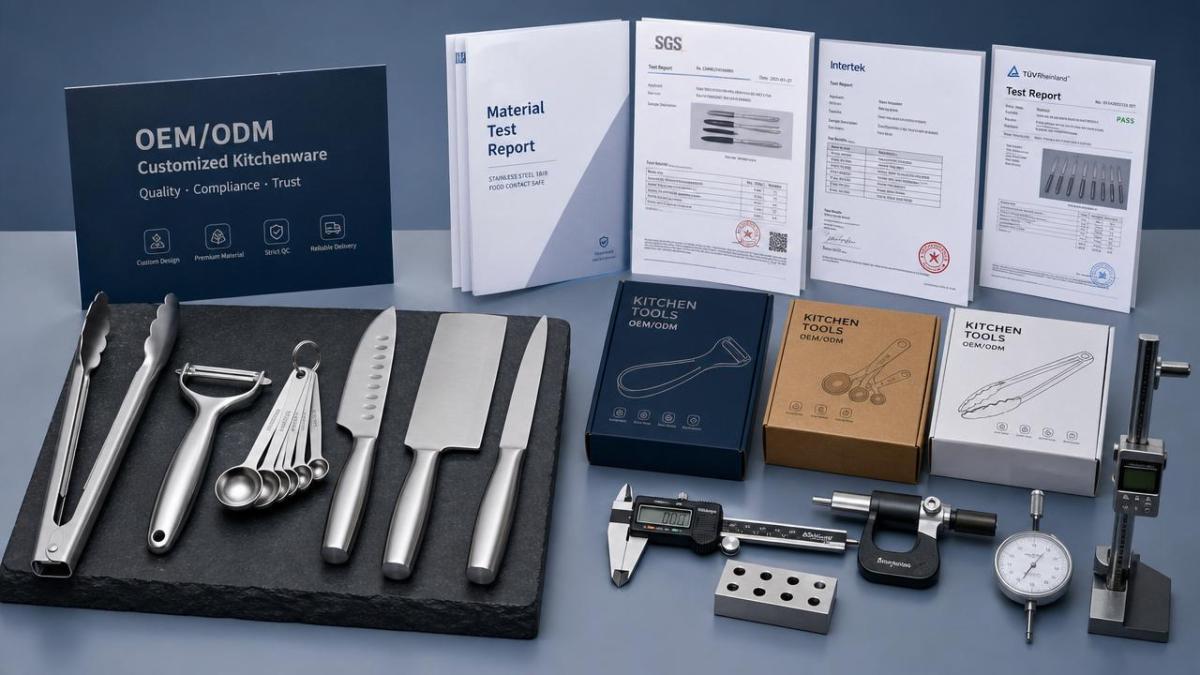
Global foodservice growth has expanded demand for kitchen tools OEM services in commercial and household segments.
At the same time, product standards are becoming stricter in food contact safety, packaging, labeling, and material disclosure.
Energy efficiency and sustainable sourcing also influence purchasing decisions across the kitchen equipment industry.
Shorter lead times create another challenge.
Retailers, distributors, and brand owners expect rapid launch schedules without sacrificing quality.
As a result, a kitchen tools OEM partner must do more than manufacture tools.
The partner must manage materials, tooling, testing, documentation, and logistics with stable performance.
The strongest market signals point to higher supplier standards
Several changes are reshaping how kitchen tools OEM partnerships are assessed.
These signals are visible across restaurants, hotels, food processing, and consumer kitchen channels.
Key signals to watch
- More demand for stainless steel, BPA-free, and food-grade certified materials.
- Growing preference for multifunctional, ergonomic, and easy-clean kitchen tools.
- Faster private label and custom packaging launches.
- Higher need for traceable raw materials and inspection records.
- Pressure to reduce defects, waste, and return rates.
- Greater focus on social compliance and factory transparency.
These trends mean the best kitchen tools OEM partner is usually the one with stronger systems, not only lower quotations.
What is driving these changes in kitchen tools OEM decisions
The shift in supplier selection comes from market, technical, and regulatory pressure.
A structured review helps separate temporary advantages from real manufacturing strength.
The impact reaches quality, cost, launch speed, and brand reputation
A kitchen tools OEM partner influences far more than production output.
Material choices affect food safety claims and product lifespan.
Tooling precision affects ergonomics, fit, finish, and user satisfaction.
Inspection systems affect return rates and customer trust.
Documentation quality affects customs clearance and regulatory acceptance.
Delivery reliability affects launch timing, replenishment planning, and cash flow.
If the kitchen tools OEM partner cannot scale with demand, growth may stall during peak seasons.
The risk is even higher when products serve hotels, restaurants, and food processing facilities.
In these segments, durability and consistency matter because heavy daily use exposes hidden weaknesses quickly.
What to check before choosing a kitchen tools OEM partner
This is the core review stage.
Each point below helps measure whether a kitchen tools OEM candidate can support stable long-term business.
1. Manufacturing capability and process fit
- Check product categories already produced, such as utensils, knives, peelers, tongs, or measuring tools.
- Review forming, stamping, molding, welding, polishing, and assembly capability.
- Confirm whether the factory can manage your expected volume range.
- Ask how bottlenecks are handled during peak periods.
2. Quality control and defect prevention
- Request incoming material checks, in-process inspection records, and final quality procedures.
- Verify whether the kitchen tools OEM partner uses AQL standards or equivalent methods.
- Check sample retention, traceability, and corrective action systems.
- Look for evidence of repeatable quality, not one-time sample perfection.
3. Compliance and certification readiness
- Review material declarations and food contact compliance documents.
- Check factory audit status where needed.
- Confirm labeling, barcoding, and packaging mark accuracy.
- Ask who manages updates when destination market rules change.
4. Customization and development support
- Assess drawing review, prototype speed, and tooling turnaround.
- Check support for logo methods, color matching, and packaging adaptation.
- Ask how design changes are documented and approved.
- Strong kitchen tools OEM partners reduce development friction.
5. Supply chain stability and delivery performance
- Check key raw material sources and backup suppliers.
- Review historical on-time shipment performance.
- Ask how the kitchen tools OEM partner handles urgent replenishment requests.
- Confirm packaging protection for export transport.
6. Communication discipline and problem response
- Check response speed during quotation and sampling stages.
- Review whether reports are clear, complete, and timely.
- Ask for examples of past nonconformance handling.
- Transparent communication is often a leading indicator of future reliability.
A simple comparison model can improve kitchen tools OEM decisions
A structured scorecard helps reduce bias and keeps evaluation focused on business risk.
The most important follow-up steps before final commitment
A promising factory profile is not enough.
Final validation should test real execution under realistic conditions.
- Run a pilot order with clear specifications and inspection points.
- Compare approved samples with mass production output.
- Audit packaging, labeling, carton strength, and pallet condition.
- Measure communication speed during changes or issues.
- Review landed cost, not only ex-factory price.
- Set quality agreements and escalation rules before scaling volume.
These steps reveal whether the kitchen tools OEM partner can convert promises into repeatable operational performance.
The best kitchen tools OEM partnerships are built on readiness for change
The kitchen equipment industry is moving toward smarter, safer, and more efficient products.
That shift increases the value of capable OEM relationships.
Before choosing a kitchen tools OEM partner, check manufacturing depth, quality systems, compliance readiness, development support, and supply resilience.
Use a scorecard, verify documents, and test execution with a pilot order.
The right kitchen tools OEM partner should help protect margin, reduce operational risk, and support long-term market growth.
The next practical step is to create a comparison checklist and validate top candidates against real business priorities.
Popular Tags
Kitchen Industry Research Team
Dedicated to analyzing emerging trends and technological shifts in the global hospitality and foodservice infrastructure sector.
Industry Insights
Join 15,000+ industry professionals. Get the latest market trends and tech news delivered weekly.
No spam. Unsubscribe anytime.
Hot Articles
 How to Size a Commercial Kitchen Hood for Cooking Equipment and Heat Loads
- How to Size a Planetary Mixer Machine for High-Viscosity Batch Production
- How to Choose Ceramic Rice Plates for Restaurants: Size, Glaze, and Chip Resistance
- Kitchen Innovation Trends in Emerging Markets: Where Growth Will Come From in 2026


Contact With us
Contact:
Anne Yin (Ceramics Dinnerware/Glassware)
Lucky Zhai(Flatware)