
Restaurant Kitchen Ideas That Make Small Teams More Efficient
Smart restaurant kitchen ideas can help small teams move faster, reduce mistakes, and keep service consistent during busy hours. From space-saving layouts to energy-efficient equipment and digital workflow tools, the right setup improves productivity without adding pressure. This article explores practical ways operators can create a more organized, safe, and efficient kitchen that supports daily performance and long-term growth.
Why small-team kitchens need a scenario-based approach
Not every kitchen struggles for the same reason. A café with two cooks may lose time because prep, cooking, and dish return happen in one narrow line. A fast-casual outlet may have enough equipment but poor handoff between stations. A hotel breakfast kitchen may face short but intense demand peaks that overwhelm a small crew. That is why effective restaurant kitchen ideas should be judged by scenario, not by trend alone.
For operators and kitchen staff, the right decision often comes down to a few practical questions: where do delays happen, which tasks create bottlenecks, how much menu variety must the team handle, and which equipment supports speed without adding complexity? In the kitchen equipment industry, smart and energy-efficient solutions matter, but they only create value when matched with the actual workflow of the business.
A small team usually has limited labor flexibility. When one person steps away to restock, clean, or plate, the whole line can slow down. Good restaurant kitchen ideas therefore focus on layout logic, multi-function equipment, safe movement, and simple digital control. These are not cosmetic upgrades; they directly affect output, food quality, and staff stress.
Common business scenarios where restaurant kitchen ideas make the biggest difference
Different foodservice formats require different choices. Before investing in equipment or changing the line, it helps to compare the operating pattern of your kitchen with the scenarios below.
This comparison shows why generic advice often fails. The best restaurant kitchen ideas are those that remove the exact friction points your staff face every shift.
Scenario 1: Small dine-in kitchens that must do more with less space
In independent restaurants and neighborhood bistros, space is often the main limit. The team may prepare sauces, cold dishes, hot entrées, and plating from only a few square meters. In this setting, restaurant kitchen ideas should start with movement analysis. If staff cross each other to reach refrigeration, sinks, and cooklines, output drops even when the menu is simple.
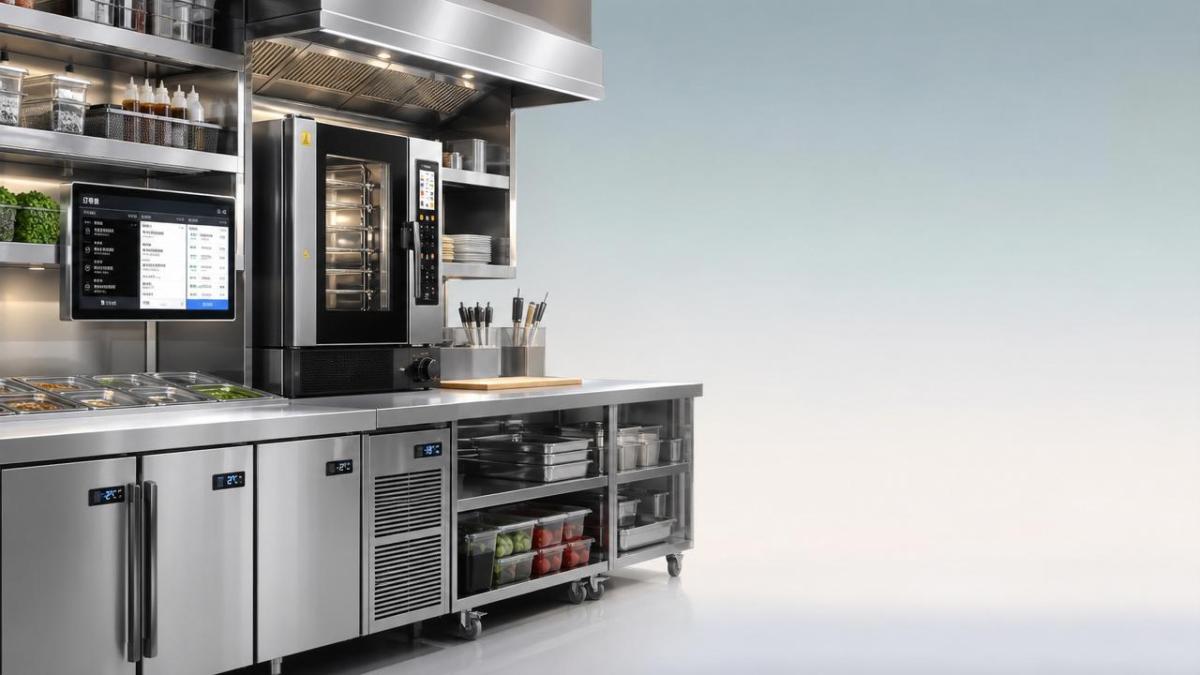
The most useful setup is usually a compact zone plan: receiving and storage near the back, prep in the center, cooking on one side, and pass-out near service. Undercounter refrigerators can reduce walking. Wall-mounted shelves free table space. Mobile prep carts help teams switch from lunch to dinner without rebuilding the whole station.
Operators should also reduce equipment duplication. One versatile griddle, combi oven, or induction unit may support more dishes than several single-use appliances. In small kitchens, every machine should either save labor, reduce heat load, or support multiple menu items.
Scenario 2: Fast-casual and takeaway kitchens focused on speed and consistency
For quick-service formats, the challenge is not only cooking fast but repeating the same process under pressure. Teams often work with a narrow menu but a high number of transactions. In this case, restaurant kitchen ideas should prioritize predictable flow over maximum equipment variety.
An assembly-line layout is often the best match. Ingredients should move in one direction: cold prep to cook to finish to packing. Heated holding units can protect throughput when demand rises for 20 to 40 minutes at a time. Digital kitchen display systems help small teams avoid missed modifiers, duplicate tickets, or paper clutter. Even simple screen-based order routing can cut verbal confusion during a rush.
Another strong idea is menu engineering. If one fryer, one grill, and one prep counter serve too many item variations, service slows down. Operators should review whether low-selling menu items are forcing extra tools, extra containers, or extra handling steps. Sometimes the smartest restaurant kitchen ideas involve simplifying the menu to make the existing team more efficient.
Scenario 3: Café, bakery, and hybrid concepts with mixed workflows
Hybrid concepts are especially demanding for small teams because they combine different production rhythms. Coffee service is immediate, pastries may require timed baking, and sandwiches or brunch dishes create a separate prep load. In these environments, restaurant kitchen ideas should aim to separate fast front-counter tasks from slower back-kitchen tasks.
A practical approach is to create micro-stations. One station handles beverages and point-of-sale adjacent work. Another supports finishing, reheating, and plating. A third holds backup ingredients and packaging. Vertical storage, stackable containers, and labeled drawers are especially valuable here because hybrid kitchens often run out of surface area before they run out of equipment.
For this scenario, multi-function ovens and compact refrigeration are often better investments than large specialized units. Energy-efficient appliances also help because cafés may operate for long hours, and idle energy use can quietly increase cost.
Scenario 4: Delivery-first and ghost kitchens that depend on precise coordination
Ghost kitchens remove the dining room, but they add complexity in timing, packaging, and platform coordination. A small team can quickly become overloaded when multiple apps send orders at the same time. Here, restaurant kitchen ideas should focus on order visibility, staging discipline, and packaging efficiency.
The best layout often separates production from dispatch. Cooking and assembly happen first, then finished orders move to a dedicated staging shelf with labels, condiments, and pickup organization. Without this buffer, drivers interrupt the line and staff waste time searching for bags.
This is also a strong use case for smart kitchen tools. Timers, digital order boards, temperature monitoring, and inventory alerts can help a small crew maintain control without adding supervisors. In the broader kitchen equipment industry, these digital solutions are becoming central because they connect food safety, efficiency, and consistency in one system.
How needs change by team size, menu type, and service pattern
Even among small teams, needs differ. A two-person kitchen needs fewer handoff points than a five-person kitchen. A high-customization menu needs more ingredient access than a fixed daily menu. A kitchen that gets one long dinner rush should be organized differently from one that faces short spikes all day.
Practical restaurant kitchen ideas that fit most small-team environments
1. Build around task flow, not equipment size
Many operators buy equipment first and then try to fit workflow around it. A better approach is to map the movement of ingredients, staff, and finished dishes. Once the team sees where pauses and crossings occur, layout decisions become clearer.
2. Use modular and multi-function equipment
Compact combi ovens, induction units, refrigerated prep tables, and smart holding equipment are useful because they save space while supporting multiple tasks. This matters in a market where the kitchen equipment industry is increasingly moving toward integrated, intelligent solutions.
3. Reduce visual clutter
Visible labels, color-coded containers, standard utensil positions, and clear cleaning zones all reduce mental load. Good restaurant kitchen ideas are not only about speed; they also make the kitchen easier to manage under stress.
4. Plan for cleaning and maintenance
If equipment is hard to clean, small teams postpone sanitation tasks or lose time at closing. Smooth surfaces, removable parts, and accessible service points improve both hygiene and uptime.
5. Choose energy-efficient upgrades with measurable impact
Energy-efficient refrigeration, induction cooking, and insulated holding solutions can lower utility use and reduce heat in the kitchen. That supports comfort and stability, especially in compact spaces.
Common mistakes when applying restaurant kitchen ideas
One frequent mistake is copying the layout of a larger restaurant. Bigger kitchens often rely on specialized stations and more labor, which does not translate well to a small crew. Another mistake is buying advanced equipment without training the team to use it efficiently. Smart systems only help when workflows, recipes, and responsibilities are clearly defined.
Operators also underestimate storage. Dry goods, packaging, backup ingredients, and cleaning supplies can silently consume work space if no dedicated plan exists. Finally, some kitchens focus only on cooking speed while ignoring dispatch, dish return, or replenishment. In reality, efficiency depends on the whole cycle.
FAQ: choosing restaurant kitchen ideas for real operating conditions
Which restaurant kitchen ideas help the most when staffing is tight?
Start with shorter walking distances, undercounter storage, digital order visibility, and equipment that handles more than one task. These changes usually deliver faster results than large renovations.
Are smart kitchen tools worth it for small operators?
Yes, if they solve a specific bottleneck such as missed orders, temperature control, or inconsistent cook timing. The value comes from workflow improvement, not from technology alone.
How can a small kitchen improve efficiency without expanding space?
Use vertical storage, simplify the menu, create clear station ownership, and replace bulky single-purpose appliances with modular equipment. Many strong restaurant kitchen ideas are about better organization rather than larger footprints.
Turning ideas into the right fit for your kitchen
The most effective restaurant kitchen ideas are not the most expensive or the most advanced. They are the ones that match your service model, menu style, team size, and peak-hour pressure. For a small dine-in restaurant, that may mean tighter zoning and shared prep equipment. For a takeaway operation, it may mean line flow and digital order control. For a ghost kitchen, it may mean staging, packaging, and real-time visibility.
Before making changes, review one week of service and identify where time is lost, where staff cross paths, and where mistakes repeat. Then compare those findings with the scenario-based solutions above. When operators align layout, equipment, and process with actual use conditions, small teams can work faster, safer, and with less strain while supporting future growth.
Popular Tags
Kitchen Industry Research Team
Dedicated to analyzing emerging trends and technological shifts in the global hospitality and foodservice infrastructure sector.
Industry Insights
Join 15,000+ industry professionals. Get the latest market trends and tech news delivered weekly.
No spam. Unsubscribe anytime.
Contact With us
Contact:
Anne Yin (Ceramics Dinnerware/Glassware)
Lucky Zhai(Flatware)