Durable Kitchen Tools Can Lower Replacement Costs
For financial decision-makers, every kitchen purchase must justify its long-term value. Durable kitchen tools help reduce frequent replacements, control operating expenses, and support more predictable budgeting across restaurants, hotels, food processing facilities, and commercial kitchens.
As labor, energy, and compliance costs continue to rise, investing in reliable equipment is no longer just an operational choice. It is a strategic cost-management decision that can improve efficiency, minimize downtime, and protect profitability over time.
The core question is not whether durable tools cost more at purchase. The real question is whether they lower total ownership cost across daily use, maintenance, downtime, safety, and replacement cycles.
For finance teams, procurement leaders, and business owners, the strongest purchasing decisions come from measuring lifecycle value. Durable kitchen tools often deliver savings that are not visible on the initial invoice.
Why Replacement Cost Is Bigger Than the Purchase Price
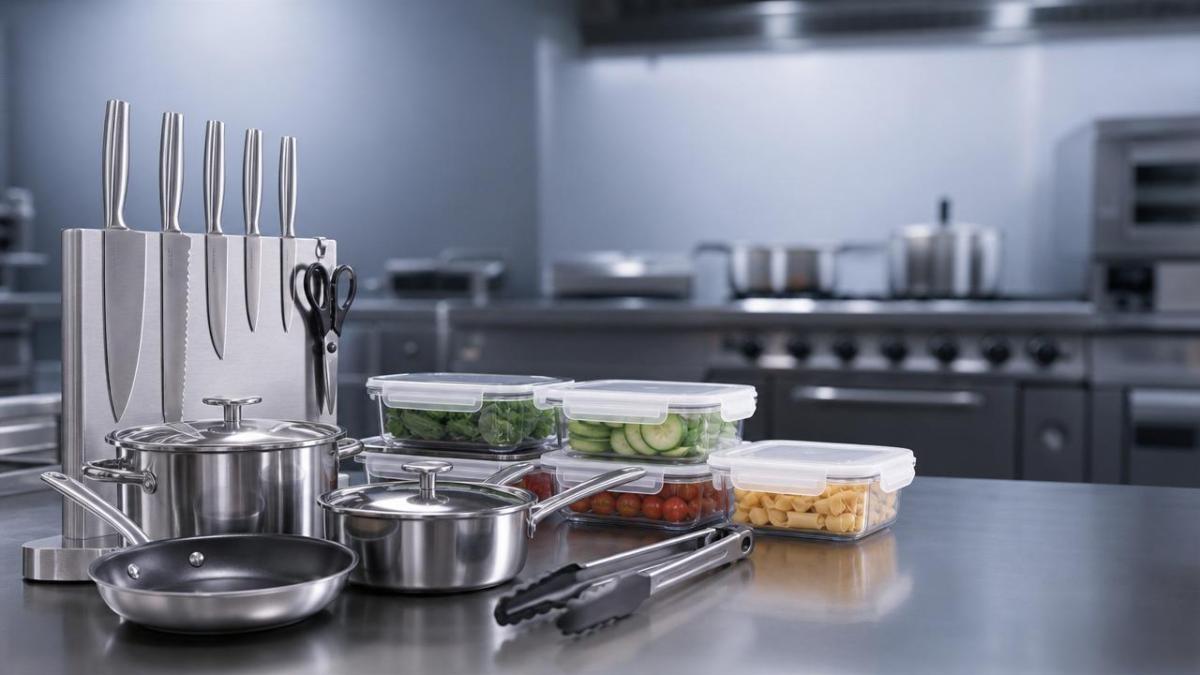
Replacement cost includes more than buying a new knife, pan, mixer attachment, storage container, or preparation tool. It also includes ordering time, approvals, shipping, and operational disruption.
In a busy commercial kitchen, even a small tool failure can interrupt preparation schedules. When teams improvise with inferior substitutes, productivity, consistency, and safety may all decline.
Frequent replacements also create hidden administrative costs. Finance teams must process more purchase requests, reconcile more invoices, and track more supplier transactions throughout the year.
Low-quality tools can appear budget-friendly during procurement. However, repeated failures often make them more expensive than stronger alternatives over a normal operating period.
Durable kitchen tools reduce this cycle. They extend usable life, decrease emergency purchases, and allow replacement planning to become predictable instead of reactive.
What Financial Approvers Should Measure Before Buying
Financial approvers should avoid judging kitchen tools only by unit price. A better decision framework compares total cost of ownership across expected life and usage intensity.
Start with cost per use. A tool used daily in a restaurant or hotel kitchen must withstand far more stress than a tool used occasionally.
If a cheaper product fails after three months, its cost per use may exceed a higher-quality option lasting several years under the same workload.
Maintenance requirements should also be evaluated. Some tools need frequent sharpening, part changes, coating replacement, tightening, calibration, or cleaning procedures that increase labor time.
Downtime impact matters as well. If a failed preparation tool delays service, production, or food processing, the financial impact may exceed the replacement cost itself.
Warranty coverage, supplier responsiveness, availability of spare parts, and product standardization should be included in the approval process. These factors directly affect operating continuity.
How Durable Tools Support Budget Predictability
Budget predictability is highly valuable for restaurants, hotels, and food production businesses. Unplanned equipment and tool replacements can distort monthly operating expense forecasts.
When kitchens rely on weak tools, replacement requests become scattered and irregular. This makes it harder for finance teams to forecast category spending accurately.
Durable kitchen tools help shift purchasing from emergency replacement to scheduled renewal. That shift gives managers better visibility over annual procurement requirements.
Standardized durable tools also simplify inventory planning. Kitchens can hold fewer backup units because failure rates are lower and replacement timing is easier to anticipate.
For multi-site operators, standardization brings additional value. Finance and procurement teams can negotiate better terms, consolidate suppliers, and reduce inconsistent local purchasing.
This predictability supports stronger cash flow control. It also helps operators protect margins during periods of inflation, labor pressure, or fluctuating food demand.
Durability Reduces Operational Risk, Not Just Spending
Finance teams increasingly evaluate operational risk, not only direct cost. Kitchen tool failure can create safety risks, quality issues, and compliance concerns.
A cracked cutting board, unstable handle, warped pan, or damaged utensil can affect food safety. It may also increase the likelihood of workplace injury.
In regulated food environments, poor tool condition can create inspection problems. Replacing tools only after visible failure may expose the business to avoidable compliance risk.
Durable tools made from suitable materials can better withstand cleaning chemicals, high temperatures, moisture, pressure, and repeated sanitation procedures.
This is especially important in central kitchens, hotels, institutional catering, and food processing facilities, where hygiene standards and production volumes are high.
By reducing failure points, durable tools support more stable operations. That stability has financial value, even when it is not listed as a separate accounting line.
Where Durable Kitchen Tools Deliver the Highest Return
Not every kitchen item requires the same investment level. Financial approvers should prioritize durability where usage frequency, failure impact, and replacement volume are highest.
Cutting tools are a strong example. Professional knives, peelers, slicers, and sharpening systems directly influence labor efficiency, preparation speed, and product consistency.
Cookware is another high-return category. Durable pans, stockpots, trays, and baking sheets can resist warping, uneven heating, coating damage, and premature disposal.
Food storage tools also deserve attention. Strong containers, lids, racks, and labeling systems reduce breakage, contamination risk, waste, and inventory confusion.
Preparation utensils such as tongs, whisks, spatulas, scoops, and mixing tools may seem minor. Yet high replacement frequency can create meaningful annual expense.
In food processing operations, durable attachments, blades, molds, and handling tools are even more critical. Failure can interrupt production schedules and increase waste.
Material Quality Is a Financial Decision
Material selection directly affects durability. Stainless steel, reinforced polymers, heat-resistant silicone, cast aluminum, carbon steel, and composite materials all perform differently.
For finance teams, the goal is not to choose the most expensive material. The goal is to match material performance with real operating conditions.
Stainless steel is often preferred for hygiene, corrosion resistance, and long life. It is especially useful in wet, high-cleaning commercial environments.
High-quality plastics and composites can be valuable when weight, color coding, or impact resistance matters. However, they must be food-safe and suitable for sanitation.
Heat exposure should also guide selection. Tools used near grills, ovens, fryers, or dishwashers need materials that resist deformation and surface degradation.
Approving a durable material specification helps prevent repeated buying mistakes. It also makes future procurement decisions faster and easier to defend.
How to Build a Business Case for Higher-Quality Tools
A practical business case should translate durability into measurable financial terms. This helps purchasing teams justify a higher initial price when necessary.
Begin by comparing expected lifespan. If one tool lasts six months and another lasts three years, the cheaper item may not be cheaper at all.
Next, estimate annual replacement frequency. Use actual purchase records, kitchen manager feedback, maintenance logs, or disposal patterns to identify items with recurring failure.
Then include labor and process costs. Every replacement may require staff reporting, manager approval, supplier communication, receiving, documentation, and inventory adjustment.
Consider downtime or service disruption. Even short delays can affect table turnover, banquet preparation, production output, or delivery schedules in commercial food operations.
Finally, calculate payback period. If a durable tool reduces replacements within the first year, approval becomes easier and financially transparent.
Procurement Criteria That Protect Long-Term Value
Procurement teams should define clear criteria before selecting durable kitchen tools. Without standards, buying decisions often drift back toward lowest-price options.
Useful criteria include material grade, expected duty level, sanitation compatibility, ergonomic design, warranty length, spare part availability, and supplier service capability.
Product testing can also reduce purchasing risk. A short pilot in one kitchen area may reveal performance issues before larger orders are approved.
Feedback from chefs, production supervisors, and cleaning teams should be included. They understand where tools fail, which designs slow work, and which items last.
Finance teams should request data from suppliers when available. Lifecycle estimates, warranty claims, certifications, and commercial-use references can support better comparisons.
Supplier consistency is also important. Reliable sourcing reduces the risk of quality variation, unavailable replacements, and fragmented purchasing across different departments or locations.
When Lower-Cost Tools May Still Make Sense
Durability matters most when tools are used frequently, exposed to stress, or critical to service continuity. Some low-intensity applications may not justify premium spending.
For seasonal events, temporary kitchens, or rarely used specialty tools, a moderate-cost option may provide acceptable value without increasing financial risk.
The key is segmentation. Finance and operations should classify kitchen tools by usage intensity, replacement history, safety relevance, and operational importance.
This prevents overinvestment in low-impact items while protecting core kitchen functions with stronger, longer-lasting tools where the return is clearer.
A balanced procurement strategy avoids both extremes. It does not blindly buy premium products, and it does not treat every tool as disposable.
That balance is where durable kitchen tools become a disciplined cost-control measure rather than a simple preference for better materials.
Common Mistakes That Increase Replacement Costs
One common mistake is approving purchases without reviewing actual replacement data. Without evidence, teams may underestimate how often cheap tools are being replaced.
Another mistake is ignoring user experience. If a tool is uncomfortable, poorly balanced, or difficult to clean, staff may misuse it or replace it early.
Buying from too many suppliers can also create inconsistency. Similar-looking tools may differ in thickness, coating quality, handle strength, or sanitation performance.
Some organizations fail to train staff on care and storage. Even durable products can fail early if they are mishandled, overloaded, or cleaned incorrectly.
Finally, treating all breakage as unavoidable hides preventable costs. Tracking failures by tool type and supplier can reveal patterns worth correcting.
A simple review process can turn replacement spending into actionable procurement insight. This is especially useful for multi-location foodservice operators.
How Durable Tools Fit Broader Kitchen Efficiency Goals
Durable tools support more than replacement savings. They contribute to smoother workflows, better food consistency, safer handling, and stronger staff confidence.
In commercial kitchens, small inefficiencies accumulate quickly. A dull blade, warped tray, weak tong, or unreliable container can slow many tasks daily.
Durable equipment and tools also align with sustainability goals. Longer product life reduces waste, lowers disposal frequency, and supports more responsible procurement practices.
For hotels and restaurants, consistent tools help teams maintain presentation standards. This can indirectly support customer satisfaction, brand reputation, and repeat business.
For food processing companies, durability helps protect production stability. Stronger tools reduce interruptions, limit product loss, and support quality assurance procedures.
These benefits make tool durability part of operational excellence. It is not only a purchasing detail, but a contributor to business performance.
Conclusion: Durability Turns Kitchen Spending Into Long-Term Value
Durable kitchen tools can lower replacement costs by extending product life, reducing emergency purchases, minimizing downtime, and improving budget predictability.
For financial approvers, the best decision is rarely based on purchase price alone. Lifecycle cost, usage intensity, operational risk, and supplier reliability matter more.
A disciplined approach helps organizations invest where durability delivers measurable returns. It also prevents unnecessary spending on premium tools in low-impact areas.
When procurement decisions reflect real kitchen conditions, durable tools become a practical cost-control strategy. They support efficiency, compliance, and profitability over time.
In a competitive foodservice and kitchen equipment market, durability is not simply a product feature. It is a financial advantage that protects long-term performance.