
Is Professional Catering Equipment Worth the Upgrade?
For foodservice leaders, upgrading to professional catering equipment is no longer just a matter of replacing old appliances—it is a strategic decision that can influence productivity, food safety, operating costs, and customer satisfaction. As kitchens face rising labor pressures, stricter hygiene standards, and growing demand for consistent quality, the right equipment can help businesses work faster, reduce waste, and improve long-term profitability. This article explores whether the investment is truly worthwhile for modern commercial kitchens.
When Does Professional Catering Equipment Become a Strategic Upgrade?
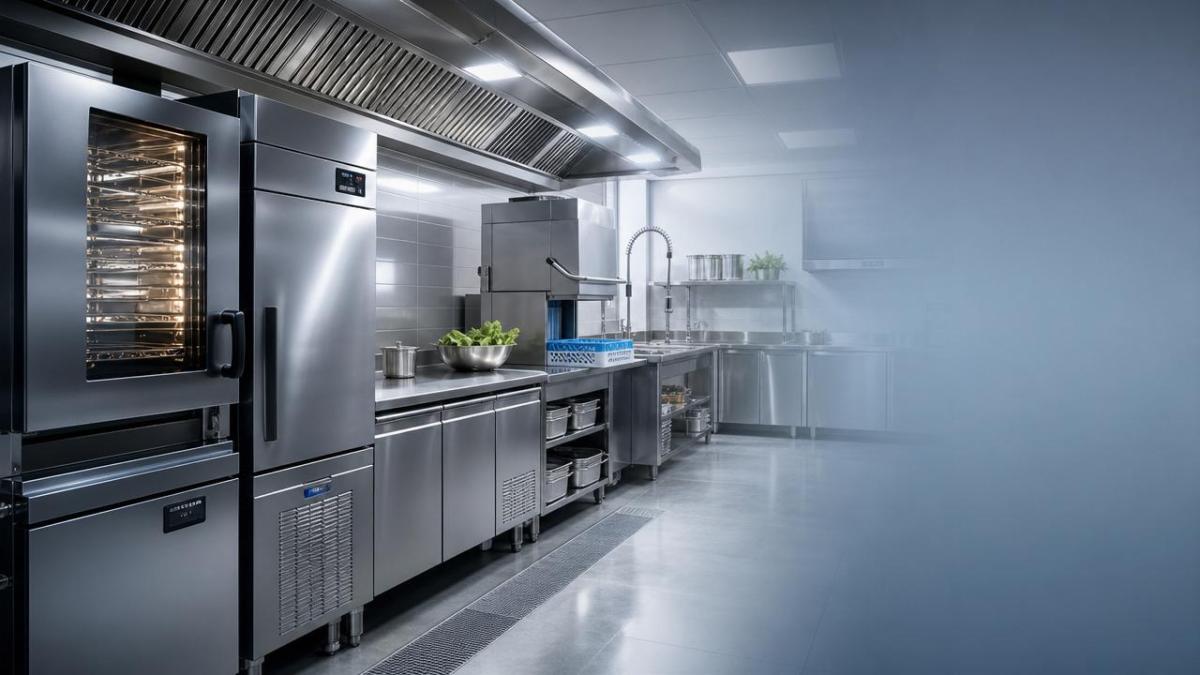
Professional catering equipment becomes valuable when a kitchen must serve more meals, reduce manual variation, and meet repeatable food safety standards. For restaurants, hotels, central kitchens, and food processing facilities, the upgrade often changes the entire operating model.
The question is not simply whether a machine is newer. Decision makers should ask whether the equipment supports faster preparation, safer storage, stable cooking results, lower utility consumption, and easier workflow control.
Key signs that your current kitchen setup is limiting growth
- Peak-hour output depends too heavily on experienced staff, creating delays when labor availability changes.
- Food quality varies between shifts because temperature, timing, and portion control are not standardized.
- Energy bills are rising while older appliances require frequent repairs and longer preheating time.
- Hygiene audits require more documentation, cleaning time, or equipment redesign than the current kitchen can support.
In these situations, professional catering equipment can support business continuity rather than only kitchen convenience. It helps owners convert operational pressure into measurable process improvement.
What Changes After Upgrading from Standard Appliances?
A direct comparison helps clarify whether the investment is reasonable. Professional catering equipment is designed for high-volume use, routine cleaning, predictable performance, and long operating hours in demanding commercial environments.
The practical difference is risk reduction. Professional catering equipment can reduce downtime, food inconsistency, and labor dependence when selected according to actual production volume.
Where the upgrade delivers the most visible value
The strongest gains usually appear in high-frequency processes: cooking, refrigeration, mixing, preparation, dishwashing, holding, and packaging. These areas directly affect speed, safety, and customer experience.
Which Business Scenarios Benefit Most from the Investment?
Not every kitchen needs the same upgrade path. The best professional catering equipment strategy depends on meal volume, menu complexity, service model, floor space, labor structure, and compliance pressure.
The following table helps decision makers identify where commercial-grade equipment can produce stronger operational returns across different foodservice and food processing environments.
This comparison shows why professional catering equipment should be selected by process, not by product category alone. A hotel kitchen and a central kitchen may both need capacity, but their workflow requirements differ greatly.
How Should Decision Makers Evaluate Cost Beyond the Purchase Price?
Budget is often the first barrier. However, focusing only on the invoice price can lead to underinvestment in the equipment that affects daily output most.
Professional catering equipment should be evaluated through total cost of ownership. This includes installation, energy use, labor savings, cleaning time, downtime risk, spare parts, and expected service life.
Cost factors that should enter the investment calculation
- Energy consumption should be reviewed against daily working hours, not only rated power on the specification sheet.
- Labor impact should include preparation time, batch handling, cleaning routines, and supervision requirements.
- Maintenance planning should consider spare parts availability, technical support, and service access in your region.
- Food waste reduction should be estimated through improved temperature control, portion consistency, and lower spoilage risk.
For many enterprises, the upgrade is worthwhile when professional catering equipment reduces repeated operational losses. A cheaper appliance can become expensive if it limits capacity or fails during high-demand periods.
What Specifications Matter Most During Procurement?
Procurement teams often receive multiple quotations with different capacities, materials, controls, and service terms. A structured review helps avoid comparing unsuitable options.
When assessing professional catering equipment, buyers should connect technical parameters with real kitchen constraints. The most expensive model is not always the best fit.
This checklist turns procurement into an operational decision. It also helps technical teams, finance managers, and kitchen managers speak the same language during supplier evaluation.
Which Compliance and Safety Factors Should Not Be Ignored?
Foodservice businesses operate under increasing pressure from hygiene inspections, workplace safety requirements, and customer expectations. Equipment that is hard to clean or unstable under load can create hidden compliance risks.
Professional catering equipment should be reviewed against applicable market requirements. Depending on destination and product type, buyers may need to consider CE, UKCA, UL, NSF, LFGB, RoHS, or food-contact material expectations.
Practical compliance questions before placing an order
- Does the equipment documentation match the target import market and local installation rules?
- Are food-contact parts designed for repeated cleaning, heat exposure, moisture, and commercial detergents?
- Can the supplier provide manuals, electrical diagrams, spare parts lists, and maintenance guidance?
- Does the kitchen layout allow safe staff movement, ventilation clearance, and proper drainage access?
Compliance is not only a certificate issue. It is also about whether professional catering equipment can be installed, operated, cleaned, and maintained safely in the actual facility.
How to Implement an Upgrade Without Disrupting Operations
A poorly planned upgrade can interrupt service, delay opening schedules, or create unexpected renovation costs. Implementation should begin before the purchase order is confirmed.
A practical upgrade sequence for commercial kitchens
- Map the current workflow, including ingredient receiving, storage, preparation, cooking, holding, cleaning, and waste handling.
- Identify the bottleneck process that most affects output, labor cost, food safety, or guest experience.
- Confirm site conditions, including utilities, ventilation, door access, floor loading, and drainage routes.
- Compare professional catering equipment options using lifecycle cost, service support, and compliance documentation.
- Schedule delivery, installation, testing, and staff training around lower-risk operating periods.
This staged approach helps businesses avoid buying isolated machines that do not integrate with the kitchen system. Integration is especially important for central kitchens and multi-site foodservice groups.
Common Misconceptions About Professional Catering Equipment
Many purchasing mistakes come from assumptions rather than analysis. Professional catering equipment should be judged by suitability, not by appearance, brand familiarity, or price alone.
Misconception 1: The largest capacity is always the safest choice
Oversized equipment can waste space, energy, and capital. If workflow, staffing, and storage cannot support the capacity, the kitchen may gain complexity instead of efficiency.
Misconception 2: Automation eliminates the need for skilled workers
Automation improves consistency, but trained staff remain essential. Operators still need to manage recipes, cleaning routines, safety checks, and quality control decisions.
Misconception 3: All stainless steel equipment performs the same
Surface finish, material grade, welding quality, component accessibility, and drainage design can affect durability and sanitation. Visual inspection alone is not enough.
FAQ: Questions Buyers Ask Before Upgrading
How do I know whether professional catering equipment is worth the upgrade?
Start with measurable problems: delayed service, repeated repairs, unstable food quality, rising energy use, or cleaning bottlenecks. If these issues affect revenue or compliance, upgrading is often justified.
Which equipment should be upgraded first?
Prioritize the process that controls output or risk. In restaurants, this may be cooking and refrigeration. In central kitchens, it may be processing, chilling, and portioning.
Is energy-efficient equipment always more expensive?
The purchase price may be higher, but daily operating cost can be lower. Buyers should compare energy use under realistic working hours rather than relying only on the initial quotation.
What information should I prepare before requesting a quotation?
Prepare menu type, daily output, peak-hour demand, site utilities, floor plan, target certifications, delivery deadline, and any customization needs. This makes quotations more accurate and comparable.
Why Choose Us for Professional Catering Equipment Consultation?
Upgrading professional catering equipment is worthwhile when the solution matches your workflow, capacity target, compliance requirements, and budget structure. The right choice should improve performance without creating installation or maintenance problems.
We can support decision makers with parameter confirmation, product selection, equipment layout discussion, delivery cycle review, customization feasibility, certification requirements, sample support, and quotation communication.
If you are planning a restaurant upgrade, hotel kitchen project, central kitchen expansion, or food processing line improvement, contact us with your output target and site conditions. We will help you evaluate practical options before committing capital.
Popular Tags
Kitchen Industry Research Team
Dedicated to analyzing emerging trends and technological shifts in the global hospitality and foodservice infrastructure sector.
Industry Insights
Join 15,000+ industry professionals. Get the latest market trends and tech news delivered weekly.
No spam. Unsubscribe anytime.

Contact With us
Contact:
Anne Yin (Ceramics Dinnerware/Glassware)
Lucky Zhai(Flatware)