
Glass storage container for food: when lids fail first
A glass storage container for food is often trusted for hygiene, visibility, and chemical stability—but in quality and safety management, the lid usually becomes the first point of failure. From seal degradation to material fatigue and contamination risks, understanding why lids fail earlier than the container itself is essential for maintaining food safety, product consistency, and compliance across commercial and household kitchen environments.
Why does the lid fail before the glass storage container for food?
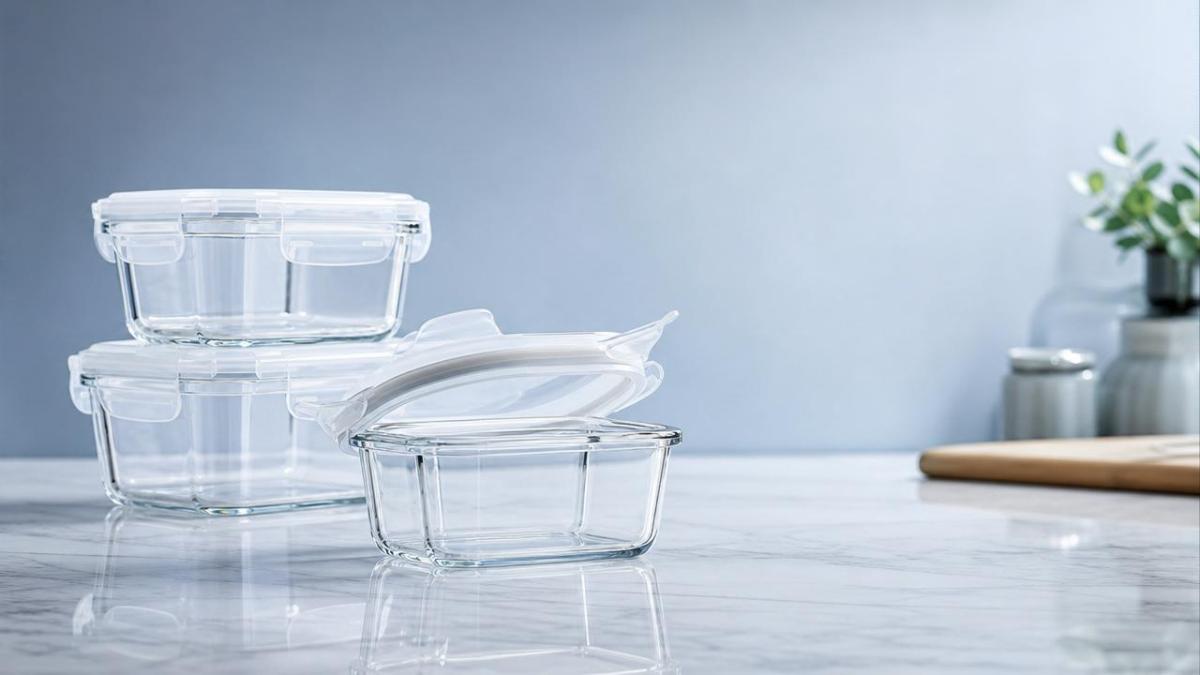
For quality control teams, the weak point in a glass storage container for food is rarely the glass body. Borosilicate or tempered glass can withstand repeated washing, temperature variation, and physical handling better than many lid systems. The lid, however, combines more vulnerable elements: silicone gaskets, snap locks, vent plugs, thin plastic frames, and bonding points. Each of these can degrade at a different rate.
In restaurants, hotels, central kitchens, and food processing support areas, containers move through a demanding cycle. They are filled quickly, stacked under load, exposed to oils, acids, detergents, steam, and cold storage, then reopened many times per day. That operating reality explains why a food storage glass container may still look intact while the lid already leaks, warps, cracks, or loses sealing force.
The problem matters because lid failure is not only a usability issue. It affects shelf life control, allergen segregation, cross-contamination prevention, odor transfer, portion consistency, and traceability. For safety managers, a failed lid can turn a seemingly low-risk storage item into a non-conformance point during internal audits or customer inspections.
- Seal compression loss can reduce airtight performance and accelerate moisture or oxygen ingress.
- Latch or hinge wear can prevent full closure, especially after repeated mechanical stress.
- Thermal cycling can distort plastic lid frames even when the glass base remains dimensionally stable.
- Residue accumulation in gasket grooves can become a sanitation risk if cleaning verification is weak.
Main failure mechanisms quality teams should track
The earliest signs are often subtle. A lid may still close, but closure force changes, the gasket feels sticky or flattened, the rim shows whitening from stress, or the latch begins to loosen. In an industrial kitchen environment that prioritizes speed, these signals are easy to miss until leakage or contamination complaints appear.
The table below helps safety and QC personnel distinguish common lid failure modes in a glass storage container for food and link each mode to likely operational causes.
This comparison shows a practical reality: the more functional the lid becomes, the more carefully it must be validated. Features such as vents, clips, and removable seals improve user convenience, but they also increase inspection points. For large kitchen operations, simpler designs often support better cleaning control and longer service stability.
Which operating scenarios accelerate lid degradation the most?
A glass storage container for food behaves differently in a home kitchen than in a commercial chain, a hotel banquet line, or a food prep center. QC teams should evaluate the container by use intensity, not by appearance alone. A lid used 20 times per week under gentle handling may last much longer than one used 20 times per shift in a fast-paced production environment.
High-risk scenarios in the kitchen equipment industry
- Central kitchens with high batching frequency: repeated opening and re-closing quickly fatigue locks and hinges.
- Hot-fill to chill workflows: sudden thermal transitions stress the lid more than the glass, especially if lids are closed before food cools properly.
- Dishwasher-heavy sanitation programs: high alkaline detergents and heat cycles shorten gasket life.
- Transport between kitchen zones: vibration and stacking pressure can force marginal lids to open or deform.
- Allergen management systems: even slight seal failure can undermine segregation between sensitive ingredient categories.
The next table maps common application environments to lid stress factors. This is useful when selecting a glass storage container for food across mixed-use operations that include restaurants, catering, retail prep, and food processing support.
A key takeaway is that the same glass body may be suitable across several environments, while the lid specification should vary by workflow. That is why procurement decisions should not treat the container as a single-material item. In practice, the lid system defines lifecycle cost and hygiene performance more than the glass does.
What should quality and safety managers check before procurement?
Buying a glass storage container for food only on price, shape, or listed capacity often leads to replacement issues later. For procurement teams serving foodservice and kitchen equipment operations, the right approach is to separate visual acceptance from functional validation. The lid should pass a use-case review, cleaning review, and compliance review before approval.
Practical selection checklist
- Confirm lid material suitability for the intended temperature range, detergent chemistry, and contact duration with fatty or acidic foods.
- Review whether the gasket is removable, replaceable, and easy to inspect during sanitation checks.
- Assess the closure mechanism under repeated opening cycles rather than one-time fit testing.
- Check whether spare lids or replacement seals can be supplied without replacing the entire container set.
- Verify documentation related to food-contact suitability and any applicable compliance declarations requested by your market.
- Evaluate stackability and dimensional consistency if containers will be used in racks, cold rooms, or transport trolleys.
For many buyers, the best option is not the most feature-rich lid. A more complex lid may attract retail users but create extra sanitation labor in commercial settings. When your operation values audit readiness, standardized replacement parts, and predictable maintenance, simpler lid architecture often produces lower total risk.
Comparison points that influence total cost
The table below compares selection factors that matter most when sourcing a glass storage container for food for professional use. It can support RFQ preparation, sample evaluation, and supplier discussions.
The procurement message is straightforward: a lower unit price can become a higher operating cost if the lid is not maintainable, replaceable, and easy to verify. In integrated kitchen systems where uptime and hygiene discipline matter, lid reliability should be treated as a performance variable, not a packaging detail.
How can teams reduce failure risk after containers enter service?
Once a glass storage container for food is approved and deployed, failure prevention depends on process control. Many lid problems result from misuse patterns rather than manufacturing defects alone. A controlled handling and sanitation routine can extend service life and reduce food safety incidents without major investment.
Operational controls worth implementing
- Separate hot-fill and lidded storage steps when possible; avoid sealing steam-heavy contents immediately.
- Set visual rejection criteria for warped lids, torn seals, loose clips, and persistent discoloration.
- Train staff not to pry lids open from one corner if the design requires balanced release.
- Use dedicated wash settings when lid polymers are less heat-resistant than the glass component.
- Track replacement by batch, station, or cycle count if container usage is intensive.
In larger operations, digital kitchen management can support this process. A simple asset log linked to receiving date, production zone, and replacement history makes it easier to identify whether failures are tied to a supplier lot, a wash process, or a specific workstation. This is especially useful in smart kitchen environments where traceability and preventive maintenance are becoming standard expectations.
Standards, compliance, and documentation: what is reasonable to request?
For safety managers, compliance does not mean collecting excessive paperwork. It means obtaining the right information for the intended market and application. When evaluating a glass storage container for food, request material declarations relevant to food contact, temperature guidance, cleaning limitations, and any available migration or conformity information appropriate to the destination region.
Because the kitchen equipment industry serves global trade, buyers often work across different regulatory environments. Importers, distributors, and foodservice operators may need to align with internal supplier approval systems as well as local food-contact expectations. Clear documentation for lid materials is particularly important because plastics, elastomers, and colorants generally require more scrutiny than glass.
Reasonable documentation requests during supplier review
- Product specification sheet covering lid material composition, temperature limits, and cleaning recommendations.
- Food-contact compliance declaration aligned with the target sales market where applicable.
- Information on spare part availability, especially replacement lids and gaskets.
- Packing and labeling details that support inbound inspection and lot traceability.
This documentation baseline helps prevent a common mistake: approving the container because the glass seems universally safe, while overlooking the more sensitive lid assembly. In audits, that gap can become visible quickly if staff cannot explain maintenance criteria or material limitations.
FAQ: practical questions about a glass storage container for food
How do I know whether the lid or the seal is the real problem?
Start with a simple isolation check. Inspect the gasket for flattening, cracks, odor retention, and elasticity loss. Then place the lid on a flat surface to look for warping. If the seal is healthy but corners lift or latches misalign, the frame is likely distorted. If the lid shape is stable but leakage persists, the gasket is usually the first replacement target.
Is a more airtight lid always better for commercial kitchens?
Not necessarily. Greater sealing force can help with freshness and transport, but it may also create harder-to-clean channels, more wear points, and slower line operation. For many professional kitchens, the best glass storage container for food balances seal performance with cleanability, replacement convenience, and predictable opening behavior.
What are common procurement mistakes?
The most frequent mistakes are buying based on the glass specification only, ignoring spare-part support, testing samples under ideal conditions instead of real kitchen cycles, and failing to define rejection criteria for lids. Another issue is mixing too many lid formats in one facility, which complicates training, storage, and replacement control.
How often should lids be inspected in high-use environments?
There is no single universal interval because use intensity varies. In fast-cycle settings such as central kitchens or catering prep, visual checks can be integrated into daily cleaning and weekly supervisor review. The more useful rule is to inspect by exposure level and handling frequency rather than by time alone. High-turn containers deserve a shorter review cycle than backup stock.
Why choose us for sourcing and specification support?
In the kitchen equipment industry, a glass storage container for food should not be treated as a simple commodity. It is part of a broader system shaped by food safety, sanitation efficiency, workflow intensity, and international supply requirements. We support buyers, quality teams, and safety managers with a practical approach that connects product selection to real operating conditions.
You can contact us for specific discussions on parameter confirmation, lid material suitability, replacement-part strategy, sample evaluation points, delivery lead time, packaging requirements, and documentation expectations for different markets. If your project involves central kitchens, hospitality operations, food processing support, or multi-site foodservice rollout, we can also help compare standard options with custom solutions based on usage frequency, cleaning method, and compliance needs.
If you are reviewing a new glass storage container for food, send your target capacity range, temperature conditions, closure preference, expected wash process, and certification requirements. That makes it easier to recommend a more suitable lid structure, identify likely failure points early, and shorten your sourcing and approval cycle.
Popular Tags
Kitchen Industry Research Team
Dedicated to analyzing emerging trends and technological shifts in the global hospitality and foodservice infrastructure sector.
Industry Insights
Join 15,000+ industry professionals. Get the latest market trends and tech news delivered weekly.
No spam. Unsubscribe anytime.

Contact With us
Contact:
Anne Yin (Ceramics Dinnerware/Glassware)
Lucky Zhai(Flatware)