
What Restaurant Kitchen Equipment Prices Usually Leave Out
At first glance, restaurant kitchen equipment prices may seem straightforward, but the listed number often tells only part of the story. For finance decision-makers, understanding what is excluded—such as installation, freight, compliance upgrades, maintenance, and energy costs—is essential to building an accurate budget and avoiding costly surprises. This article breaks down the hidden factors behind equipment pricing so you can evaluate quotes with greater confidence.
Understanding What Restaurant Kitchen Equipment Prices Actually Represent
In most cases, restaurant kitchen equipment prices reflect the base equipment only: the oven, refrigerator, fryer, dishwasher, prep table, or cooking line as a product SKU. That number may include standard factory configuration, but it often excludes the full cost of putting the equipment into daily operation. For financial approvers, this distinction matters because the investment is not the sticker price alone; it is the total cost required to purchase, deliver, install, certify, operate, and maintain the asset over its useful life.
This issue has become more important as the kitchen equipment industry moves toward smarter, more energy-efficient, and more integrated systems. Modern commercial kitchens increasingly depend on digital controls, automation, ventilation coordination, food safety compliance, and utility planning. As a result, restaurant kitchen equipment prices are now tied to broader operating and infrastructure decisions, not just simple product comparison.
For a finance team, the right question is not “What does this equipment cost?” but “What will this equipment truly require from approval to operation?” Once that lens is applied, the gaps in many supplier quotes become easier to identify.
Why the Industry Pays Close Attention to Hidden Cost Gaps
Restaurants, hotels, central kitchens, and food processing businesses all operate under pressure to control capital expenditure while maintaining speed, food safety, and labor efficiency. In this environment, seemingly attractive restaurant kitchen equipment prices can distort budget planning if they omit surrounding costs. A lower upfront quote may lead to higher project cost after freight surcharges, site modifications, utility upgrades, or service contracts are added.
This is especially relevant in global sourcing. Equipment may come from major manufacturing centers such as China, Germany, Italy, or Japan, where factory pricing is competitive, but international logistics, import duties, local certification, and after-sales support can materially affect total spend. In emerging foodservice markets, rapid expansion often increases demand for affordable equipment, yet those projects may also face infrastructure constraints that make the “real” installed cost significantly different from the initial quote.
For budget owners, hidden costs are not just accounting details. They influence payback period, depreciation planning, cash flow timing, operational risk, and vendor selection quality.
The Most Common Items Restaurant Kitchen Equipment Prices Leave Out
The exact exclusions vary by supplier and project type, but several categories appear repeatedly across the commercial kitchen sector. Recognizing them early helps finance reviewers compare quotations on a like-for-like basis.
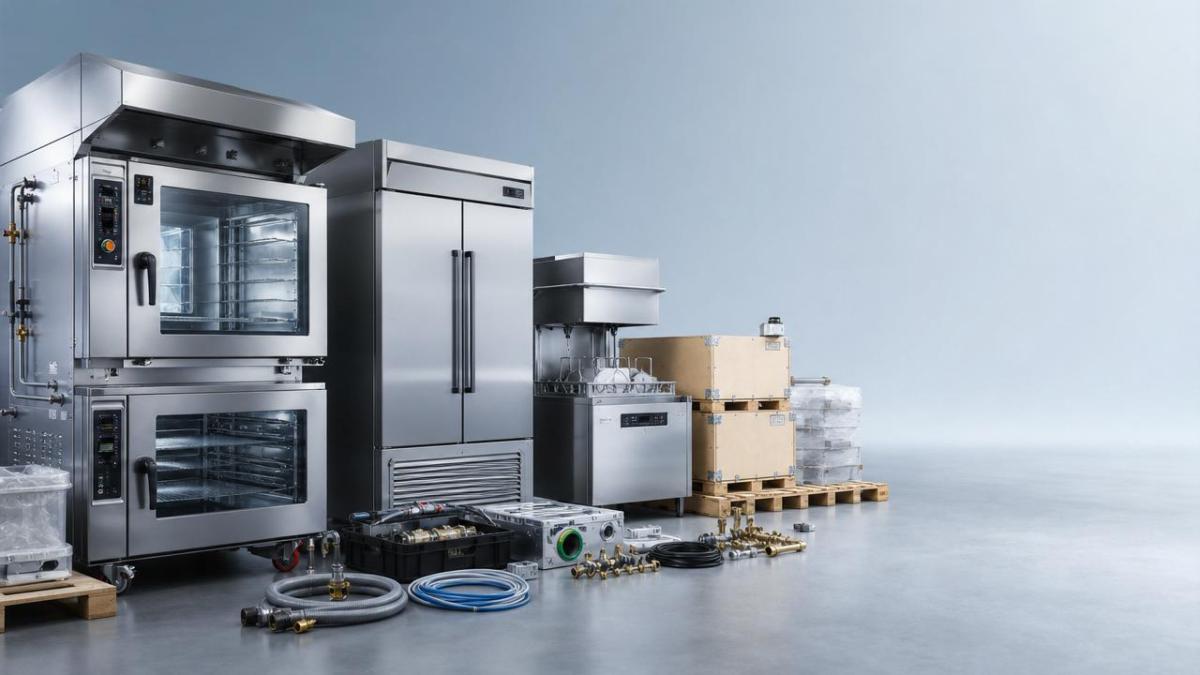
In practical terms, a combi oven, blast chiller, or conveyor dishwasher may look competitively priced until one includes hood compatibility, drainage work, electrical conversion, operator training, and annual service. Restaurant kitchen equipment prices therefore should be treated as the starting point of evaluation rather than the final answer.
How Hidden Costs Vary by Equipment Category
Not all equipment creates the same financial exposure. Some products are relatively simple to deploy, while others affect multiple systems in the kitchen. Understanding category differences supports better approval decisions.
This category view is useful because restaurant kitchen equipment prices are often benchmarked product by product, while financial reality is project by project. A low purchase price on one unit can still create a high installed cost if it forces modifications in ventilation, workflow, or digital integration.
The Business Value of Looking Beyond the Quoted Price
For finance approvers, a broader view of restaurant kitchen equipment prices improves more than budgeting accuracy. It supports stronger capital allocation. Equipment decisions in foodservice are closely connected to throughput, staffing efficiency, menu consistency, food safety, utility consumption, and maintenance exposure. A quote that appears higher at first may deliver lower cost per service hour, lower energy use, or fewer service interruptions over time.
This is particularly important in an industry shifting toward automation and intelligent kitchen systems. Digital cooking controls, programmable refrigeration, and connected monitoring tools can reduce labor dependency and improve quality control. However, they may also introduce training, software, and support needs that are not visible in baseline restaurant kitchen equipment prices. Financial review should therefore account for operational value, not simply acquisition cost.
A disciplined approach also improves supplier accountability. When hidden items are surfaced in advance, vendors are more likely to provide complete scopes, realistic timelines, and clearer warranty responsibilities. That reduces change orders and post-purchase disputes.
Typical Scenarios Where Cost Omissions Create Budget Surprises
Several common scenarios illustrate why restaurant kitchen equipment prices should never be reviewed in isolation.
- A new restaurant receives an attractive price for a cooking line, then discovers the hood system and fire suppression layout must be redesigned.
- An imported dishwasher is competitively priced, but spare parts lead time and local technician availability increase risk and service cost.
- A refrigeration package fits the budget at purchase, yet electricity consumption is much higher than an alternative model over a five-year period.
- A central kitchen adopts smart equipment, but training and software onboarding are billed separately after approval.
- A renovation project orders heavy equipment without confirming access constraints, resulting in extra rigging and delivery charges.
Each case demonstrates the same principle: restaurant kitchen equipment prices often describe product cost, while the business must pay for operational readiness.
A Practical Review Framework for Finance Decision-Makers
To evaluate restaurant kitchen equipment prices with confidence, finance teams should request a structured breakdown before approval. The goal is not to challenge every line item, but to ensure that all major cost responsibilities are visible and assigned.
A practical framework includes the following review points:
- Confirm whether the quote is ex-works, delivered, or fully installed.
- Verify utility requirements and whether site upgrades are needed.
- Check what certifications and local compliance responsibilities remain with the buyer.
- Request estimated annual maintenance, consumables, and service response terms.
- Review energy and water consumption against expected usage volume.
- Clarify warranty coverage, exclusions, and labor charges.
- Ask whether training, commissioning, and software setup are included.
When these questions are applied consistently, restaurant kitchen equipment prices become far more comparable across suppliers. This also allows procurement, operations, and finance to evaluate the same project through a shared cost model.
What to Prioritize in a Market Shaped by Efficiency and Smart Technology
As the global kitchen equipment sector moves toward intelligent, automated, and energy-saving solutions, the meaning of “best value” is changing. Restaurant kitchen equipment prices should increasingly be interpreted together with productivity gains, utility savings, digital visibility, and service continuity. A lower-cost legacy unit may not outperform a more advanced model when labor shortages, food consistency demands, and sustainability targets are considered.
For financial approvers, this does not mean paying more by default. It means asking whether the quoted price aligns with the business case. In high-volume operations, durability and throughput may matter most. In chain expansion, standardization and remote monitoring may justify additional upfront investment. In smaller restaurants, simpler equipment with predictable maintenance may offer stronger control over cash flow.
The most reliable decisions come from balancing purchase price, installation scope, operating cost, and expected service life rather than focusing on one isolated figure.
Conclusion and Next-Step Guidance
Restaurant kitchen equipment prices are useful, but they are rarely complete on their own. In a modern foodservice environment shaped by compliance demands, smart systems, energy efficiency, and global sourcing, the listed price often excludes the costs that determine whether a project stays on budget. Freight, commissioning, utilities, training, maintenance, and lifecycle consumption all deserve attention before approval.
For finance decision-makers, the strongest approach is to treat every quote as a base layer and build a total-cost view around it. That discipline reduces surprises, improves supplier comparison, and leads to better capital decisions across restaurant, hotel, central kitchen, and food processing projects. If you are reviewing upcoming equipment investments, start by requesting a full scope breakdown—not just restaurant kitchen equipment prices—and align the final decision with both operational needs and long-term financial performance.
Popular Tags
Kitchen Industry Research Team
Dedicated to analyzing emerging trends and technological shifts in the global hospitality and foodservice infrastructure sector.
Industry Insights
Join 15,000+ industry professionals. Get the latest market trends and tech news delivered weekly.
No spam. Unsubscribe anytime.


Contact With us
Contact:
Anne Yin (Ceramics Dinnerware/Glassware)
Lucky Zhai(Flatware)