
Restaurant supplies cost keeps rising in these categories
Restaurant supplies cost is climbing fastest in key categories that directly affect daily operations, from commercial kitchen tools and stainless steel kitchen tools to restaurant supplies for catering companies and hospitals. For buyers comparing a kitchen tools price list, sourcing from a reliable kitchen tools supplier or kitchen tools manufacturer is now critical. This guide breaks down where costs are rising, why it matters, and how restaurants can respond with smarter purchasing decisions.
For restaurant operators, procurement teams, and business decision-makers, the challenge is no longer limited to finding stock at an acceptable unit price. It now involves evaluating lifecycle cost, supply continuity, maintenance burden, replacement frequency, and compatibility with modern kitchen workflows. In commercial kitchens, a 5% to 15% increase in a single category can quickly influence menu margins, labor efficiency, and service reliability.
The kitchen equipment industry sits at the center of this shift. As foodservice expands and standards for hygiene, energy efficiency, and automation become stricter, restaurants are buying more advanced tools, appliances, and support items. That makes category-level price analysis essential, especially for buyers sourcing for restaurants, hotels, central kitchens, healthcare foodservice, and catering operations.
Which restaurant supply categories are rising the fastest
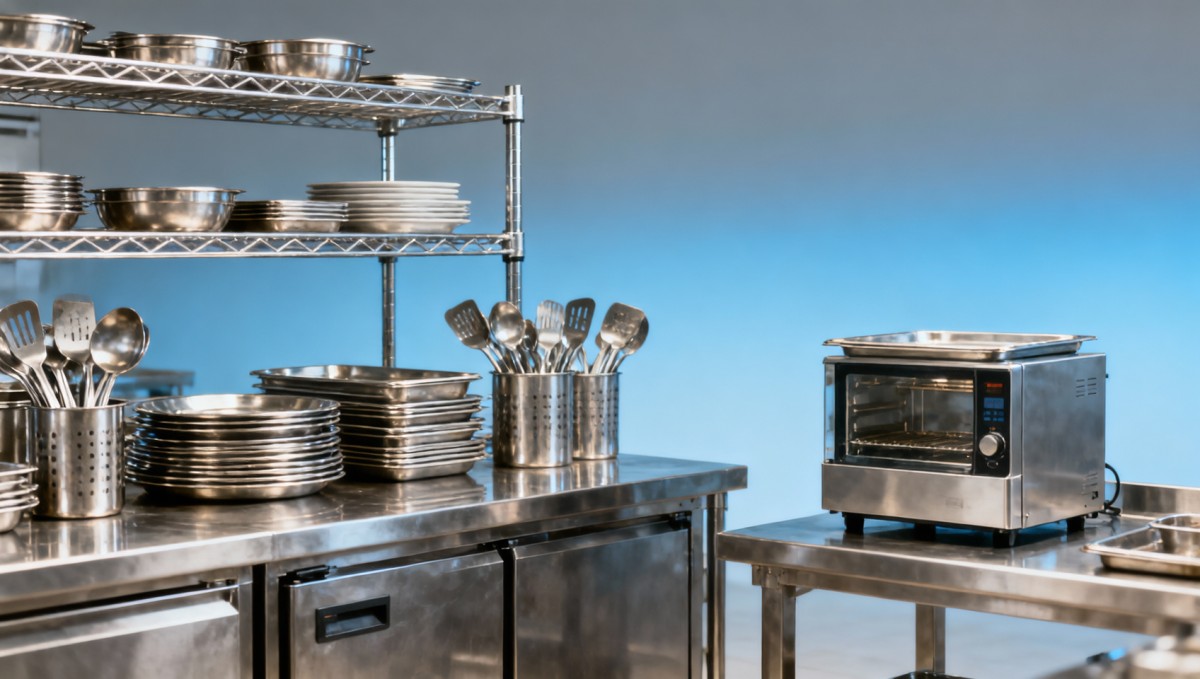
Not every product category is moving at the same pace. In most commercial purchasing environments, cost pressure is strongest in high-usage, metal-intensive, and compliance-sensitive items. Stainless steel kitchen tools, cookware, preparation tables, food pans, shelving systems, and sanitation-related supplies have seen notable upward pressure because raw material, fabrication, transport, and packaging costs are all affecting final pricing.
Buyers comparing a kitchen tools price list often notice that low-value consumables may rise by small increments, while medium-ticket operational essentials can jump more sharply. A chef knife set, gastronorm pan, or utility cart may increase by 8% to 20% over a 6- to 12-month cycle, depending on steel grade, handle material, country of origin, and shipping conditions. For large-volume users, that difference has a direct effect on annual operating budgets.
Another fast-rising area is powered equipment linked to efficiency upgrades. Mixers, slicers, induction units, warming cabinets, and compact food processing machines are influenced by motor components, electronic controls, and safety parts. As the industry moves toward automated and intelligent kitchen systems, more products include digital interfaces or sensor-based features, which pushes average procurement cost above that of traditional equipment.
Healthcare and institutional procurement adds another layer. Restaurant supplies for catering companies and hospitals usually require tighter hygiene control, easier cleaning, and more durable materials. This means buyers often choose NSF-style sanitary designs, seamless welds, corrosion-resistant finishes, and heavier-duty casters or storage systems. Those features raise acquisition cost but often reduce replacement and contamination risk over 24 to 60 months.
High-pressure categories buyers should monitor
The following comparison shows where budget pressure commonly appears first when restaurants refresh tools, back-of-house systems, and service support items.
The key conclusion is that the fastest increases are concentrated in categories that combine daily wear, metal content, food safety requirements, and shipping complexity. That is why a restaurant should not manage supply inflation only at the total budget level. It should review category by category, especially items purchased every 30, 60, or 90 days.
Why prices are moving higher across the kitchen equipment supply chain
Restaurant supply inflation usually starts upstream. A kitchen tools manufacturer may face higher steel input cost, longer lead times for molded components, and more expensive packaging. If production depends on imported parts, even a 2- to 4-week delay can trigger rush shipping, partial assembly runs, or lower factory efficiency. Those costs move through distributors and suppliers before reaching restaurants.
Energy and labor also matter. Fabricating stainless steel kitchen tools, commercial worktables, or food prep accessories requires cutting, stamping, welding, finishing, and inspection. When energy tariffs rise or skilled labor becomes tighter, unit cost changes are difficult to absorb. Products with thicker gauges, reinforced frames, or food-safe finishing processes are especially affected because they require more processing time per unit.
Freight is another major factor. Bulky restaurant supplies, including shelving, racks, bins, and mobile workstations, occupy more shipping volume even when product weight is moderate. A 20-foot or 40-foot container that once supported stable landed cost may now fluctuate significantly depending on route, season, and port congestion. Domestic transportation can add another 3% to 8% to the final delivered price when fuel and warehouse handling rise.
At the same time, the market is shifting toward higher-performance equipment. Intelligent cooking devices, automated prep systems, and digital kitchen management tools are no longer niche products. Restaurants want lower labor dependency, better consistency, and easier energy monitoring. That demand changes procurement patterns: buyers are not just paying more because products cost more to make; they are also selecting more advanced products than they did 3 to 5 years ago.
Four common cost drivers in current procurement cycles
- Raw material volatility, especially in stainless steel, aluminum, and engineered plastics used in food-contact components.
- Longer production and replenishment windows, often extending standard lead times from 15–20 days to 30–45 days for some product groups.
- Higher compliance and hygiene expectations, which increase inspection, finishing, and packaging requirements.
- Technology upgrades in kitchen electrical appliances and automated equipment, raising base specification levels.
Impact on different buyer types
Operators feel the effect through downtime and replacement urgency. Procurement teams feel it through quote instability and MOQ changes. Decision-makers feel it through capex and opex pressure. In practice, all three groups need the same response framework: clearer category planning, better supplier qualification, and a stronger focus on total cost of ownership instead of invoice price alone.
How buyers should compare suppliers, manufacturers, and price lists
When prices rise, many buyers react by selecting the lowest visible quote. That can be risky. A kitchen tools supplier with a low entry price may offer thinner material, weaker weld quality, inconsistent finish, or unstable replenishment. A reliable kitchen tools manufacturer or supply partner should be evaluated across at least 5 dimensions: material specification, production consistency, lead time, after-sales support, and packaging quality for transport.
For daily-use categories, the comparison should include replacement cycle. If one stainless steel utensil lasts 24 months and another lasts only 9 to 12 months, the lower upfront price may not be the better commercial choice. The same applies to carts, racks, pans, and food prep tools used in high-volume kitchens running 2 or 3 shifts per day. Durability under repeated washing, heat exposure, and impact matters more than list price alone.
Buyers should also request specification clarity. Instead of accepting general descriptions such as “heavy duty” or “premium quality,” ask for steel grade, sheet thickness, temperature range, load rating, motor power, and recommended usage environment. In institutional or hospital foodservice, hygienic design and easy-clean geometry should be part of the quote review because cleaning labor and contamination risk influence long-term cost.
A structured sourcing process is especially important for multi-site operators and catering groups. Standardizing 10 to 20 high-frequency SKUs can reduce purchasing complexity, shorten training time, and improve reorder accuracy. It also makes supplier performance easier to measure over quarterly or semiannual review cycles.
Practical decision matrix for rising-cost categories
The table below helps procurement teams compare bids beyond unit price and identify which offer best supports operational continuity.
A good sourcing decision balances 4 priorities: predictable quality, acceptable cost, reliable delivery, and manageable maintenance. If one quotation is 7% lower but carries a 2-times-higher replacement risk or a 3-week-longer lead time, it may create more operational cost than it saves.
A simple 5-step buying workflow
- Group supplies by criticality: daily-use, safety-related, service continuity, and backup inventory.
- Build a standardized specification sheet before requesting quotes.
- Compare total delivered cost, not just ex-factory or list price.
- Test 2 to 3 high-usage samples where possible.
- Review supplier performance every 90 or 180 days.
Cost-control strategies that protect operations without sacrificing quality
Restaurants cannot eliminate inflation, but they can reduce exposure. The first strategy is demand segmentation. Separate frequently replaced tools from long-life equipment, and separate critical service items from non-critical convenience items. This allows purchasing teams to lock in pricing or stock coverage for the categories most likely to affect daily output, such as pans, prep tools, storage containers, and transport equipment.
The second strategy is standardization. When a chain or catering operator uses too many tool sizes, handle styles, or equipment variants, procurement becomes fragmented. By narrowing approved SKUs by 20% to 30%, businesses often improve bargaining leverage, simplify replenishment, and reduce staff confusion. This is especially effective for kitchen tools, gastronorm pans, utility shelving, and mobile carts.
The third strategy is lifecycle planning. Budgeting should reflect expected replacement intervals: for example, 6 to 12 months for some intensive-use smallwares, 18 to 36 months for mid-duty carts or storage systems, and 3 to 7 years for powered equipment depending on usage hours and maintenance discipline. A proactive replacement plan prevents emergency purchases, which usually carry higher pricing and limited specification choice.
The fourth strategy is preventive maintenance and operator training. In many kitchens, poor cleaning routines, overload, improper storage, and misuse accelerate replacement by 15% to 25%. Simple actions such as load labeling, wash protocol standardization, and scheduled inspection can extend service life without major investment. This matters most where rising restaurant supplies cost is eroding margins month after month.
Where savings are realistic
- Bundle purchasing of high-frequency items every quarter instead of issuing fragmented small orders each month.
- Choose modular equipment and accessories that share components across 2 to 4 stations.
- Use heavier-duty tools in high-turnover stations and lighter-duty versions only in low-volume zones.
- Negotiate packaging optimization for bulk shipments to reduce freight damage and repurchase rates.
Common mistakes to avoid
A frequent mistake is treating all kitchen categories as interchangeable commodities. Another is delaying purchases until failure occurs. A third is buying high-specification products for every station even when only 30% of workflows require that performance level. Better cost control comes from matching product grade to actual use intensity, cleaning frequency, and service environment.
FAQ for restaurants, catering companies, and institutional buyers
The most common procurement questions are no longer about finding a single low quote. Buyers now want to know how to build a stable supply base, how to judge manufacturer quality, and how to avoid hidden costs in a volatile market. The answers below address frequent search and sourcing concerns across restaurants, catering operations, and hospital foodservice.
How often should a restaurant review its kitchen tools price list?
For fast-moving categories, every 90 days is a practical review cycle. For larger equipment and fabricated stainless steel items, every 6 months is usually enough unless the market is highly unstable. High-volume groups running multiple sites may benefit from monthly tracking on the top 10 to 15 spend categories, especially if freight or imported material is involved.
What makes a kitchen tools supplier more reliable during price volatility?
Reliability usually comes from 4 things: stable specification control, transparent lead times, clear packaging standards, and responsive after-sales support. Buyers should ask whether the supplier can provide repeatable material details, realistic delivery windows such as 15–30 days or 30–45 days, and replacement support for damaged or defective items. Communication quality is often as important as unit pricing.
Are stainless steel kitchen tools always worth the higher price?
In most commercial kitchens, yes for medium- to high-use applications. Stainless steel generally offers better corrosion resistance, easier cleaning, and longer service life than lower-cost alternatives. However, buyers should still match grade and thickness to the job. Overbuying premium construction for low-frequency tasks can reduce procurement efficiency, while underbuying for heavy-use prep lines usually increases replacement frequency.
What lead times should buyers expect for commercial kitchen supplies?
For stocked smallwares, lead time may be 3 to 10 days domestically. For made-to-order fabricated products or imported kitchen equipment, 3 to 8 weeks is common depending on order size, finishing requirements, and transport mode. Buyers with seasonal peaks should place critical orders at least 30 to 60 days before need dates to reduce rush charges and substitution risk.
What should hospitals and catering companies prioritize differently from restaurants?
They should give additional weight to hygiene design, easy sanitization, standardized workflow compatibility, and durability under repeated high-volume handling. Institutional environments often operate with stricter cleaning schedules and larger batch movement, so carts, storage systems, food pans, and preparation tools need stronger construction and easier maintenance. The initial price may be higher, but the operational fit is usually better.
Restaurant supplies cost will likely remain under pressure in categories linked to stainless steel, powered prep equipment, sanitation, and high-frequency back-of-house operations. The best response is not reactive purchasing but smarter category planning, stronger supplier evaluation, and better alignment between product specification and real kitchen use. For restaurants, catering companies, hospitals, and multi-site foodservice groups, a disciplined sourcing approach can protect both service continuity and budget control.
If you are reviewing a kitchen tools price list, qualifying a kitchen tools supplier, or comparing options from a kitchen tools manufacturer, now is the right time to build a more resilient purchasing strategy. Contact us to discuss product details, request a tailored sourcing plan, or explore more commercial kitchen equipment solutions for your operation.
- commercial kitchen equipment
- stainless steel kitchen
- central kitchen
- kitchen tools
- restaurant supplies
- Slicer
- Mixer
- Preparation Table
- Cookware
- kitchen equipment
- restaurant supplies for catering
- restaurant supplies cost
- restaurant supplies for catering companies
- commercial kitchen tools
- kitchen tools manufacturer
- kitchen tools supplier
- stainless steel kitchen tools
- kitchen tools price list
Popular Tags
Kitchen Industry Research Team
Dedicated to analyzing emerging trends and technological shifts in the global hospitality and foodservice infrastructure sector.
Industry Insights
Join 15,000+ industry professionals. Get the latest market trends and tech news delivered weekly.
No spam. Unsubscribe anytime.

Contact With us
Contact:
Anne Yin (Ceramics Dinnerware/Glassware)
Lucky Zhai(Flatware)