
Restaurant kitchen equipment cost: what inflates the budget
Understanding restaurant kitchen equipment cost is no longer just a purchasing exercise. In foodservice operations, the real budget impact depends on how equipment fits the operating scenario, production volume, compliance requirements, and long-term utility profile. A compact café, a full-service restaurant, a hotel banquet kitchen, and a delivery-first cloud kitchen can all buy “similar” equipment categories, yet their total costs may differ dramatically. Looking only at the sticker price often leads to underestimating installation, ventilation, utility upgrades, downtime risk, and maintenance exposure.
The kitchen equipment industry is evolving toward automation, intelligence, and energy efficiency, which creates both opportunity and budget pressure. Smart ovens, high-efficiency refrigeration, digital controls, and integrated prep systems can improve consistency and reduce operating waste, but they can also raise upfront restaurant kitchen equipment cost. A better approach is to judge equipment spending by scenario: what is being cooked, at what speed, under which regulations, with what labor model, and over what payback period. That perspective reveals what truly inflates the budget and where strategic investment makes sense.
When the operating scenario changes, restaurant kitchen equipment cost changes with it
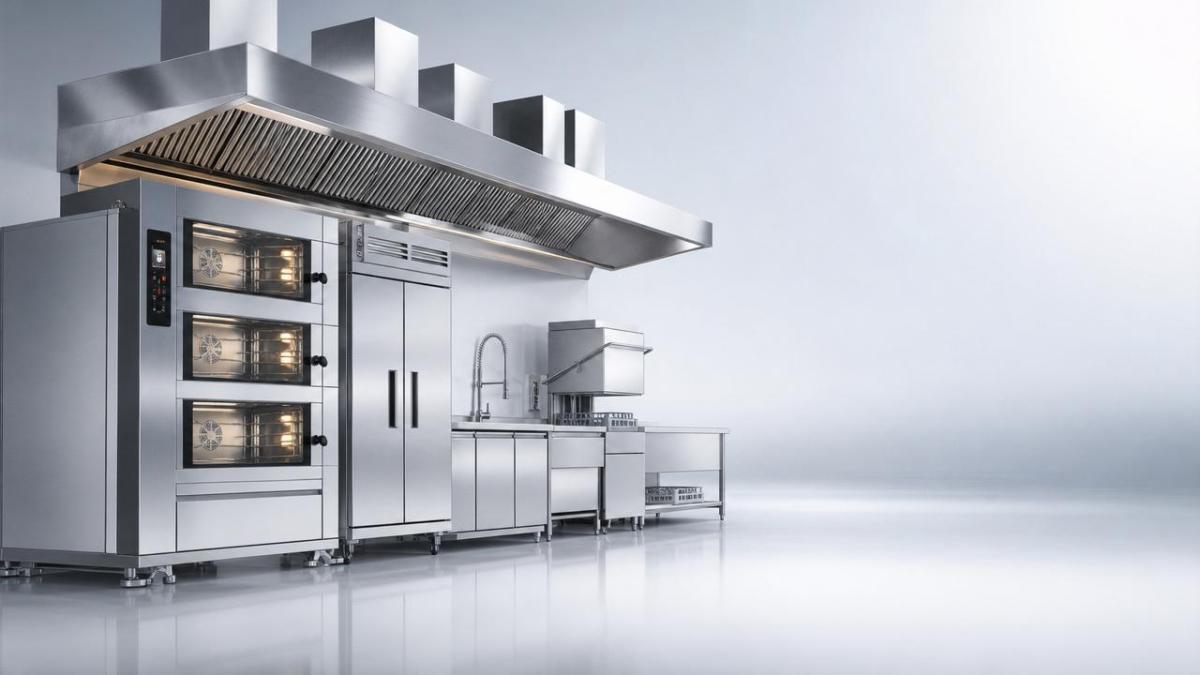
The most important driver of restaurant kitchen equipment cost is not the equipment category alone, but the operating context. A low-volume concept may function well with basic ranges, reach-in refrigeration, and manual prep stations. A high-output kitchen serving hundreds of covers per shift may require combi ovens, rapid-cook systems, walk-in cold storage, exhaust hoods with fire suppression, grease management, and workflow-oriented stainless fabrication. The budget rises because capacity, safety, throughput, and durability expectations rise together.
This is why cost planning should begin with scenario mapping instead of product browsing. Menu complexity, peak-hour demand, available utilities, staff skill level, food safety targets, and future expansion all affect what equipment is appropriate. In many projects, the biggest budget inflation comes from buying equipment that is technically impressive but operationally mismatched, or from discovering too late that the space cannot support the selected machines without infrastructure upgrades.
Different restaurant formats create different cost pressure points
Quick-service and takeaway kitchens: speed and repetition drive equipment selection
In quick-service environments, restaurant kitchen equipment cost is often pushed upward by the need for speed, repeatability, and compact workflow. High-output fryers, griddles, holding cabinets, undercounter refrigeration, and POS-linked kitchen display systems may all be required in a tight footprint. The budget grows not because each item is premium by default, but because every second of production matters and layout mistakes reduce revenue during peak periods.
A common hidden cost in this scenario is ventilation and electrical load. Fast-cook equipment and multiple heat stations can demand upgraded power supply or enhanced hood systems. If these site conditions are ignored early, the final restaurant kitchen equipment cost can exceed projections significantly.
Full-service restaurants: menu diversity raises complexity
For full-service concepts, the main cost driver is versatility. A broad menu may require charbroilers, convection ovens, salamanders, refrigerated prep tables, freezers, dishwashing systems, and specialty stations for bakery, pasta, or grill output. Here, restaurant kitchen equipment cost rises because the kitchen must support multiple cooking methods while maintaining quality and service timing.
In this scenario, stainless worktables, custom shelving, pass-through areas, and food-safe storage also add meaningful cost. These support items are often underestimated even though they are essential for efficiency and hygiene.
Hotels, banquets, and central kitchens: scale amplifies every decision
Large hospitality and central production settings face a different cost profile. Equipment must support batch production, holding, transport readiness, and long operating hours. This pushes restaurant kitchen equipment cost higher through larger capacities, heavier-duty construction, blast chilling, rack systems, warewashing throughput, and stronger redundancy planning. A failure in one machine may affect an entire service block, so reliability often justifies a larger budget.
These environments also tend to invest more in energy-efficient kitchen solutions and digital kitchen management tools. The initial spend is higher, but lifecycle savings can be substantial when utility usage and labor coordination are considered across multiple service periods.
Cloud kitchens and delivery-first models: compact space, high intensity
Delivery-focused kitchens often appear cheaper at first glance because they reduce front-of-house needs. In reality, restaurant kitchen equipment cost can still be high when multiple brands operate from one kitchen. Equipment must support rapid switching, dense station planning, packaging flow, and high turnover in a constrained area. Modular equipment, ventless options where permitted, and stackable refrigeration can reduce space pressure, but they may carry a higher purchase price.
What specifically inflates restaurant kitchen equipment cost in real projects
Several factors repeatedly push budgets beyond the initial estimate:
- Capacity upgrades: Moving from light-duty to heavy-duty equipment increases price quickly but may be necessary for long service hours.
- Energy efficiency features: High-efficiency burners, insulated cabinets, inverter refrigeration, and smart controls often cost more upfront.
- Compliance requirements: NSF, CE, UL, fire suppression compatibility, and food safety design standards can narrow choices and raise cost.
- Installation complexity: Gas piping, drainage, floor reinforcement, water filtration, and exhaust integration frequently exceed expectations.
- Custom fabrication: Non-standard counters, sink stations, and workflow-specific stainless components add material and labor cost.
- Maintenance access and spare parts: Lower-priced equipment may become more expensive if support is limited or downtime is long.
- Automation and digital integration: Smart kitchen technologies improve visibility and consistency, but integration cost should be counted, not isolated.
These drivers explain why restaurant kitchen equipment cost should always be treated as total installed cost plus operating impact, not product price alone.
How scenario needs differ across kitchen types
Practical ways to control restaurant kitchen equipment cost without sacrificing performance
Cost control works best when equipment is prioritized by operational impact. Instead of cutting evenly across all categories, focus spending where failure or underperformance would directly affect food quality, safety, or output. That usually means refrigeration reliability, core cooking line durability, and warewashing compliance deserve stronger investment than purely cosmetic upgrades.
- Build the equipment list from the menu and service volume, not from generic package templates.
- Separate essential equipment from optional specialty items for phased purchasing.
- Compare lifecycle value, including energy use, service intervals, warranty scope, and expected uptime.
- Confirm utility readiness before final selection to avoid surprise retrofit expenses.
- Use modular and integrated kitchen systems where space efficiency can offset higher unit pricing.
- Standardize similar equipment models across sites when possible to simplify maintenance and training.
This approach improves budget discipline while keeping restaurant kitchen equipment cost aligned with operational reality. In many cases, a slightly higher initial spend reduces repairs, labor friction, and utility waste enough to protect margins over time.
Common misjudgments that make restaurant kitchen equipment cost spiral upward
One frequent mistake is overbuying capacity “for future growth” without evidence that demand will justify it. Oversized equipment consumes more space, more utilities, and often more capital than the current model can support. Another mistake is underestimating compliance and installation. The equipment itself may appear affordable until ventilation, suppression, plumbing, drainage, and commissioning are added.
A third issue is treating smart or automated equipment as either always necessary or always excessive. In reality, its value depends on the scenario. For repetitive, high-volume production, automation can reduce inconsistency and labor pressure. In a simpler kitchen with stable manual workflow, the same features may not justify the increase in restaurant kitchen equipment cost. The decision should be based on payback, not trend appeal.
Finally, support infrastructure is often ignored. Water quality, ambient heat, cleaning practices, staff training, and preventive maintenance all influence equipment lifespan. A lower purchase price can become an expensive choice if the operating environment shortens service life or increases downtime.
A smarter next step for evaluating restaurant kitchen equipment cost
The most effective next step is to evaluate restaurant kitchen equipment cost through a scenario-based checklist: menu type, daily output, peak-hour demand, available utilities, compliance needs, labor model, maintenance access, and growth timeline. This converts a broad procurement task into a practical decision framework. It also helps identify where energy-efficient kitchen solutions, automated food processing systems, or digital kitchen management tools can create measurable value rather than simply adding capital expense.
When cost is assessed in context, budget decisions become more accurate and more defensible. The goal is not simply to buy cheaper equipment, but to invest in the right capacity, the right efficiency level, and the right support structure for the intended kitchen scenario. That is how restaurant kitchen equipment cost becomes a strategic investment instead of an unpredictable budget problem.
Popular Tags
Kitchen Industry Research Team
Dedicated to analyzing emerging trends and technological shifts in the global hospitality and foodservice infrastructure sector.
Industry Insights
Join 15,000+ industry professionals. Get the latest market trends and tech news delivered weekly.
No spam. Unsubscribe anytime.
Contact With us
Contact:
Anne Yin (Ceramics Dinnerware/Glassware)
Lucky Zhai(Flatware)