
Restaurant kitchen equipment prices by category in 2026
Restaurant kitchen equipment prices in 2026 are being shaped by more than raw steel costs or freight rates. Across the global foodservice market, pricing now reflects a mix of automation, energy efficiency, digital controls, compliance standards, and regional supply chain shifts. For anyone comparing restaurant kitchen equipment prices, category-level benchmarks are more useful than headline averages, because cooking, refrigeration, prep, ventilation, and warewashing equipment each follow different cost patterns. This guide explains how restaurant kitchen equipment prices are changing, what is driving those changes, and how to evaluate price ranges with a clearer long-term view.
Restaurant kitchen equipment prices are rising unevenly across key categories
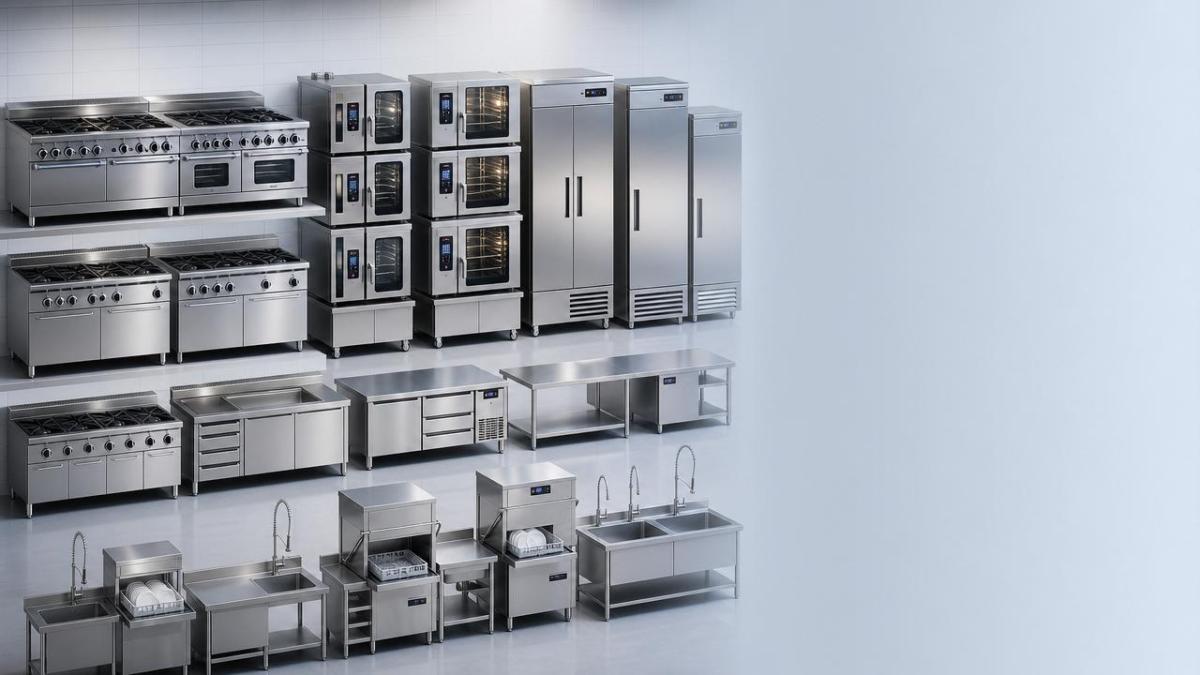
In 2026, restaurant kitchen equipment prices do not move in a single direction. Entry-level stainless units remain widely available, especially from export-oriented manufacturing hubs, but mid-range and premium products are seeing stronger price separation. Equipment with smart sensors, programmable controls, heat recovery, inverter compressors, or modular designs often costs significantly more upfront while promising lower operating costs over time.
The most noticeable trend is that basic price comparisons are no longer enough. A gas range and an induction range may serve a similar cooking function, yet their installation requirements, energy profiles, maintenance needs, and compliance value can make their total cost very different. The same is true for refrigeration, where cabinet size alone says little about lifecycle value if energy use, refrigerant type, and temperature stability are ignored.
Indicative 2026 price ranges by category
The biggest pricing shift comes from technology, energy, and compliance pressure
The clearest signal behind restaurant kitchen equipment prices in 2026 is that functionality is being redefined. Equipment is no longer judged only by output capacity. Buyers increasingly compare labor reduction, digital monitoring, utility savings, hygiene control, and space optimization. That changes both product design and market pricing.
- Energy efficiency: High-efficiency compressors, insulated cabinets, low-water warewashing, and heat-retention cooking systems raise purchase prices but lower monthly operating costs.
- Automation: Programmable cycles, touch interfaces, self-diagnostics, and connected monitoring increase component cost and software value.
- Food safety standards: Better temperature control, hygienic surfaces, and easier sanitation design add engineering complexity.
- Supply chain diversification: Production is spread across multiple countries, affecting lead times, consistency, and landed cost.
- Installation complexity: Ventilation, drainage, gas lines, electrical upgrades, and fire compliance can exceed equipment sticker price in some categories.
- Regional certification: UL, CE, NSF, and other market requirements influence both design and export pricing.
These factors explain why restaurant kitchen equipment prices now show a wider gap between low-end and premium models than in earlier years. A lower initial quote may still lead to higher repair frequency, energy consumption, or replacement cost, especially in high-volume kitchen environments.
Category-by-category pricing reveals where budgets expand fastest
Cooking equipment remains the most visible but not always the most expensive line item
Cooking equipment includes gas ranges, induction cookers, charbroilers, griddles, fryers, steamers, and ovens. Restaurant kitchen equipment prices in this segment vary widely because heat source, capacity, and control level differ so much. A simple countertop fryer may stay under $1,000, while a programmable combi oven can exceed $15,000. Induction models usually cost more upfront than conventional gas units, but their appeal is rising in markets focused on ventilation reduction, precise heating, and cleaner kitchen operation.
Refrigeration prices are increasingly shaped by efficiency rules
Reach-in refrigerators, undercounter chillers, walk-in cold rooms, and prep tables continue to be core assets in every commercial kitchen. In 2026, restaurant kitchen equipment prices for refrigeration are moving upward in mid-range and premium tiers because efficient compressors, environmentally preferred refrigerants, and stable digital temperature systems are now expected features. Lower-priced units still exist, but durability and thermal consistency can vary sharply.
Prep and food processing equipment reflect labor-saving priorities
Mixers, slicers, vegetable cutters, food processors, dough sheeters, and vacuum sealers are influenced by output speed and operator safety design. Manual or semi-automatic versions remain affordable, but automated prep systems are becoming more attractive where labor is expensive or production volume is high. This is one of the categories where restaurant kitchen equipment prices closely mirror productivity value rather than raw material cost alone.
Dishwashing and sanitation systems are gaining strategic importance
Undercounter dishwashers, hood-type machines, conveyor systems, and glass washers show strong pricing variation in 2026. Water-saving technology, faster cycle times, and improved sanitation performance are pushing premium prices higher. Still, these systems can reduce labor pressure and improve hygiene consistency, making them less of a support purchase and more of an operational core asset.
Different business stages feel the price impact in different ways
Not all operations experience restaurant kitchen equipment prices in the same way. Small-format kitchens may be more sensitive to initial cost and space efficiency, while large-volume facilities often focus on uptime, output, and standardization. Hotel kitchens, central kitchens, quick-service formats, and specialty food production environments each prioritize different cost drivers.
This is why comparing restaurant kitchen equipment prices only by model count or kitchen size can mislead. A lower budget can work in one context and fail in another if menu complexity, service intensity, and local utility costs are not considered.
Smarter evaluation means looking beyond the sticker price
A more practical way to assess restaurant kitchen equipment prices in 2026 is to divide cost into four layers: purchase price, installation cost, operating cost, and replacement risk. This approach gives a more realistic benchmark, especially when comparing imported equipment with local stock or budget models with branded alternatives.
- Check whether the quoted price includes accessories, stands, filters, hoses, shelves, or control panels.
- Estimate utility consumption over three to five years, especially for refrigeration, dishwashing, and ovens.
- Confirm electrical, gas, drainage, and ventilation requirements before comparing models.
- Review spare parts access and maintenance support, which heavily affect lifecycle cost.
- Consider whether modular or multifunction units can reduce total equipment count.
- Use category benchmarks rather than a single total kitchen budget estimate.
The next pricing opportunities will come from modularity, efficiency, and sourcing strategy
Looking ahead, restaurant kitchen equipment prices are likely to stay dynamic rather than uniformly inflationary. Certain mature categories such as stainless tables or standard sinks may remain competitive, while advanced cooking and cold-chain systems may continue to show premium pricing. The better opportunities will come from matching equipment level to actual production needs, avoiding unnecessary over-specification, and sourcing from regions with strong manufacturing depth and compliance capability.
For information-led planning, it helps to monitor a few signals: energy regulation changes, refrigerant transitions, labor cost trends, digital kitchen adoption, and export manufacturing shifts in countries such as China, Germany, Italy, and Japan. These signals often influence restaurant kitchen equipment prices earlier than broad market averages do.
Key points worth tracking in 2026
- Premium pricing is strongest in energy-efficient refrigeration and intelligent cooking systems.
- Installation-dependent categories such as ventilation may carry hidden costs larger than expected.
- Mid-range equipment often offers the best balance between durability and budget.
- Category-level comparison is more useful than relying on a single average kitchen estimate.
- Lifecycle analysis is becoming essential when interpreting restaurant kitchen equipment prices.
If the goal is to understand restaurant kitchen equipment prices with greater accuracy, the next step is to build a category-by-category cost map based on cooking, refrigeration, prep, sanitation, and ventilation needs. That creates a stronger basis for budgeting, supplier evaluation, and long-term operational planning in a market where technology and efficiency now shape price as much as hardware itself.
Popular Tags
Kitchen Industry Research Team
Dedicated to analyzing emerging trends and technological shifts in the global hospitality and foodservice infrastructure sector.
Industry Insights
Join 15,000+ industry professionals. Get the latest market trends and tech news delivered weekly.
No spam. Unsubscribe anytime.
Hot Articles
 China's Shipbuilding Industry Q1 Orders Up 195.2%, Boosting Specialized Kitchen Equipment Containers
- France Unveils 2026 China Strategy with Smart Kitchen as Cultural Export Priority
- China-Europe Freight Trains Surpass 130,000 Runs; New Cold-Chain Route to Hamburg and Lyon
- Guangdong's Q1 Kitchen Appliance Exports Turn Positive, Smart Integrated Ranges Surge 41%

Contact With us
Contact:
Anne Yin (Ceramics Dinnerware/Glassware)
Lucky Zhai(Flatware)