
Commercial Deep Fryer Price Trends for 2026 Procurement
As buyers plan 2026 sourcing strategies, understanding commercial deep fryer price trends is essential for balancing cost, performance, and long-term value. From stainless steel kitchen equipment and catering kitchen equipment to restaurant kitchen supplies and industrial kitchen equipment, market prices are being shaped by energy efficiency, automation, material costs, and global supply shifts. This guide helps procurement teams, operators, and decision-makers evaluate smarter purchasing opportunities in a fast-changing kitchen equipment wholesale market.
For commercial kitchens, deep fryers are not simple standalone appliances. They affect output speed, oil usage, labor planning, food consistency, and utility costs across restaurants, hotels, central kitchens, and food processing environments. In 2026 procurement planning, the purchase price is only one part of the equation; total operating cost over 3 to 5 years is often the more important metric.
Buyers researching commercial deep fryer prices are also comparing fryer capacity, energy source, recovery time, filtration options, control systems, and after-sales support. These factors can move pricing by 15% to 40% between models that appear similar on the surface. A structured sourcing approach helps reduce overspending while avoiding under-spec equipment that creates production bottlenecks.
What Is Driving Commercial Deep Fryer Price Trends in 2026
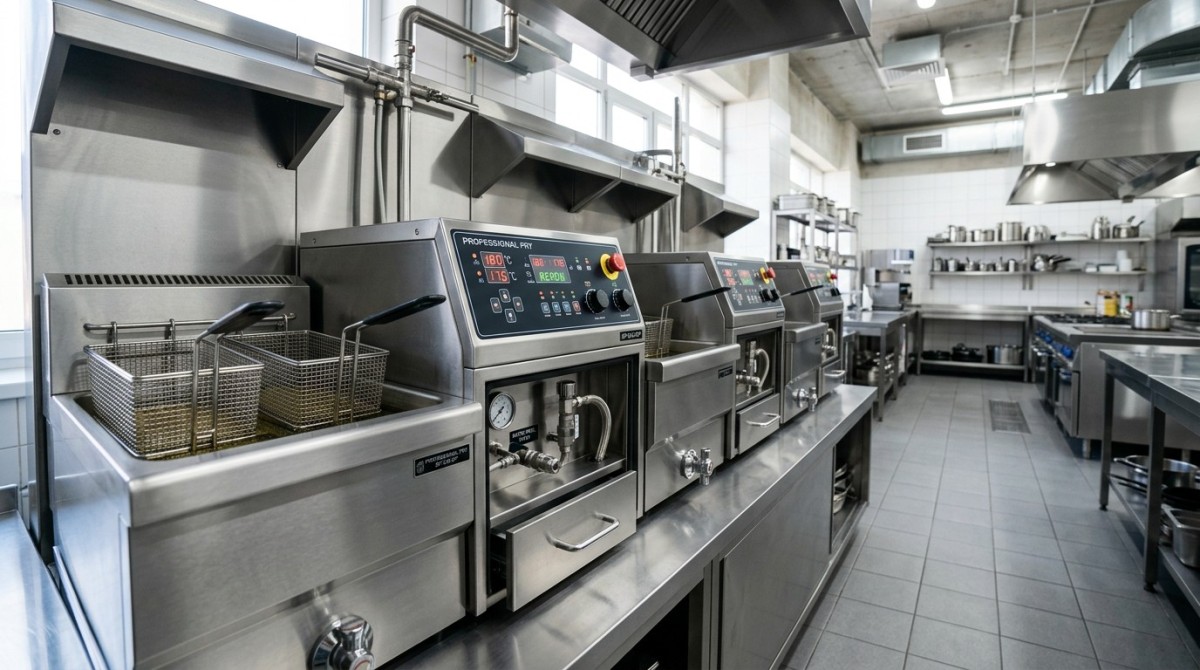
Commercial deep fryer pricing in 2026 is being influenced by four major forces: stainless steel and component costs, energy-efficiency requirements, digital controls, and regional supply chain shifts. In many procurement cycles, base fryer prices are no longer determined only by tank size or burner power. Buyers now pay more attention to whether the equipment reduces oil waste, supports stable temperature control, and fits modern kitchen workflow.
Material cost remains a major variable. Fryers built with thicker stainless steel, reinforced baskets, and higher-grade thermostatic components typically cost 10% to 25% more than entry-level units. However, these models usually offer better durability in high-volume kitchens operating 8 to 14 hours per day. For operators running continuous service, lower replacement frequency can offset the higher purchase price.
Energy type also changes pricing structure. Gas deep fryers often have lower operating cost in regions with favorable gas rates, while electric fryers may offer tighter temperature consistency and easier installation in compact sites. In many markets, premium electric fryers with digital controls and built-in safety protections are priced 12% to 30% above basic analog models, but they can improve batch repeatability and reduce operator errors.
Automation features are another important factor. Auto-lift baskets, programmable cooking cycles, oil filtration systems, and touchscreen interfaces increase capital cost, yet they may reduce labor steps by 2 to 4 actions per batch. In chains, hotels, and standardized catering operations, this consistency has direct value because it lowers training time and helps maintain menu quality across locations.
Key cost drivers procurement teams should track
- Raw material movement, especially 304 stainless steel, heating elements, valves, and thermostats.
- Freight and lead-time volatility, with common delivery windows ranging from 2 to 8 weeks depending on origin and configuration.
- Efficiency upgrades such as insulation, heat recovery design, and oil filtration modules.
- Control level differences, from manual thermostat systems to digital multi-program interfaces.
- Compliance-related features including safety shutoff, splash protection, and easier cleaning structures.
The table below outlines how common specification choices typically affect commercial deep fryer prices in B2B procurement.
For most B2B buyers, the main takeaway is clear: the lowest upfront quote often comes from a stripped-down unit, while long-term value is more often delivered by balanced configurations that improve reliability, oil life, and operational consistency.
Commercial Deep Fryer Price Ranges by Type and Application
Price trends become easier to interpret when buyers segment deep fryers by application instead of looking at a single average. A countertop fryer for a snack bar, a floor model for a full-service restaurant, and a high-capacity fryer for a central kitchen can differ significantly in structure, heating performance, and installation requirements. This is why procurement teams should compare like-for-like equipment categories.
In 2026, entry-level countertop electric fryers are often selected by cafés, kiosks, and small-format foodservice operations with lower daily output. Mid-range freestanding gas or electric models are more common in chain stores, hotels, and fast casual kitchens. Heavy-duty systems with larger oil volume, multiple tanks, or integrated filtration are usually preferred for catering kitchen equipment and industrial kitchen equipment environments.
When evaluating prices, buyers should also consider production rhythm. A smaller fryer may cost less at purchase but create service delays if it cannot handle peak demand in 30 to 60 minute rush periods. Conversely, an oversized fryer may lead to unnecessary energy use and oil turnover if the kitchen only handles moderate traffic.
Typical procurement categories
The following ranges reflect common market positioning rather than fixed quotations. Final pricing varies by region, energy source, control type, basket configuration, and order volume.
This comparison shows why procurement discussions should move beyond a single unit price. A dual-tank fryer, for example, may cost more upfront, but it supports menu separation, improves allergen control, and allows one tank to remain active during cleaning or maintenance.
Application-based buying logic
- Small outlets with fewer than 100 fried portions per day often prioritize compact footprint and lower installation cost.
- Restaurants serving 150 to 300 portions per day usually need stable recovery time and basket durability more than extra digital complexity.
- Hotels, catering operations, and central kitchens often prioritize multi-batch consistency, filtration, and easier sanitation access.
- Food processing environments may require stronger output continuity, more robust construction, and easier integration with production routines.
For decision-makers, the best pricing strategy is not simply buying cheaper equipment. It is selecting the right output level, control features, and construction standard for the actual kitchen workload.
How to Evaluate Total Cost Beyond the Purchase Price
One of the biggest procurement mistakes is comparing only invoice price while ignoring operating cost. A commercial deep fryer affects energy use, oil turnover, cleaning labor, downtime risk, and replacement parts demand. Over a 36 to 60 month ownership period, these hidden costs can exceed the original purchase amount in busy kitchens.
Oil management is one of the most important cost variables. A fryer with better temperature stability and integrated filtration may help extend oil life by several service cycles, depending on product mix and cleaning discipline. Even a modest reduction in oil replacement frequency can produce meaningful savings for kitchens frying chicken, seafood, snacks, or frozen products every day.
Maintenance access matters as well. Units designed with removable heating elements, easy-drain systems, and accessible control compartments reduce cleaning time and service interruptions. In practical terms, saving 10 to 15 minutes per cleaning cycle across daily operations can improve labor efficiency without changing headcount.
Downtime risk should be built into every sourcing decision. If a fryer is critical to menu production, delayed spare parts or weak technical support can be more expensive than paying 8% to 12% more for a supplier with stronger service capability and clearer documentation.
Core total-cost checkpoints
- Energy demand, such as power rating or gas consumption under typical operating load.
- Oil life management through temperature precision, cold zone design, and filtration options.
- Cleaning labor requirements per shift, day, or week.
- Replacement part availability within 48 to 72 hours for critical kitchens.
- Expected service interval and ease of technician access.
The table below helps buyers translate fryer specifications into real operating cost questions.
A sound procurement decision weighs initial quote, operating efficiency, and serviceability together. This is especially important in kitchen equipment wholesale projects where multiple outlets or large-volume replacement plans amplify every cost difference.
Procurement Strategy for Restaurants, Hotels, and Central Kitchens
Different buyers should not use the same sourcing checklist. Restaurant operators often focus on speed, footprint, and menu versatility. Hotel kitchens may need quieter workflow, broader menu flexibility, and stronger safety control. Central kitchens and food processing facilities usually prioritize throughput, standardized output, and cleaning efficiency across longer operating windows.
For procurement teams, a useful starting point is to map fryer demand against three operational variables: daily output volume, product mix, and service peak duration. If the kitchen handles breaded products, frozen items, and high-turnover snacks in the same line, separate tanks or multi-unit configuration may be more efficient than one larger shared fryer.
Another factor is site readiness. Installation planning should cover power load or gas connection, exhaust conditions, drainage access, and cleaning space. In retrofit projects, installation constraints can change the best-value option. A lower-priced fryer may become a higher-cost project if it requires electrical upgrades, gas line work, or layout changes.
Lead time should be part of vendor comparison. Standard models may ship within 2 to 4 weeks, while customized basket setups, control options, or bulk orders can extend to 6 to 10 weeks. For chain rollouts or seasonal openings, procurement timing matters almost as much as equipment price.
Recommended buying workflow
- Define production targets by portion count, menu type, and peak-hour volume.
- Match fryer size and energy source to site conditions and utility economics.
- Compare at least 3 supplier quotations using the same technical checklist.
- Review spare parts lead time, warranty terms, and operator training support.
- Validate cleaning workflow, safety features, and maintenance access before final approval.
Common sourcing mistakes
- Choosing oversized capacity for a kitchen that runs only 4 to 6 peak hours per day.
- Ignoring oil filtration even though the site has high fried-food turnover.
- Comparing quotes without aligning basket count, control type, and steel grade.
- Buying from a distant supplier without confirming local service support.
- Underestimating operator training needs for digital or semi-automated models.
The best procurement outcomes usually come from cross-functional input. Operators, maintenance staff, procurement officers, and business managers often see different risks. Bringing these views together helps prevent short-term savings from turning into long-term operating problems.
FAQ: Practical Questions Buyers Ask Before Ordering
How do I choose the right fryer capacity for my kitchen?
Start with expected fried portions per day, peak-hour demand, and product size. A compact 8L to 16L countertop fryer may work for low-volume outlets, while restaurants with steady lunch and dinner peaks often need 18L to 25L freestanding units. High-volume kitchens may require dual tanks to reduce waiting time and improve menu separation.
Are higher-priced fryers always better for commercial kitchens?
Not always. A higher-priced model is only better when the added features match operational needs. If your kitchen has simple output requirements, manual controls may be enough. But for chains, hotels, or catering operations where consistency, labor control, and oil management matter, premium features can produce better long-term value.
What should buyers ask suppliers before placing a bulk order?
Ask about lead time, spare parts availability, recommended cleaning intervals, warranty coverage, and whether installation guidance is provided. For larger projects, also confirm packaging standards, batch consistency, and whether documentation includes wiring or gas setup details. These questions reduce procurement risk in kitchen equipment wholesale transactions.
How often should commercial deep fryers be maintained?
Daily cleaning is standard in most foodservice settings, while deeper inspection of heating components, thermostats, and drain systems may be scheduled weekly or monthly depending on usage intensity. Sites operating 10 to 14 hours per day typically need a more disciplined preventive maintenance routine than low-volume kitchens.
Commercial deep fryer price trends for 2026 show that procurement decisions are becoming more technical and more operational at the same time. Material quality, energy efficiency, automation, and service readiness are all shaping market pricing across commercial kitchen equipment categories. For buyers in restaurants, hotels, catering, and food processing, the smartest approach is to compare total value rather than only the initial quote.
If you are planning a new kitchen project, replacing aging restaurant appliances, or sourcing stainless steel kitchen equipment in volume, a structured evaluation can help you control cost while improving performance. Contact us to discuss your application, request a tailored product recommendation, or learn more about practical commercial fryer solutions for 2026 procurement.
- commercial kitchen equipment
- industrial kitchen
- stainless steel kitchen
- central kitchen
- restaurant kitchen
- Deep Fryer
- kitchen equipment
- industrial kitchen equipment
- stainless steel kitchen equipment
- restaurant kitchen supplies
- catering kitchen equipment
- kitchen equipment wholesale
- commercial deep fryer
Popular Tags
Kitchen Industry Research Team
Dedicated to analyzing emerging trends and technological shifts in the global hospitality and foodservice infrastructure sector.
Industry Insights
Join 15,000+ industry professionals. Get the latest market trends and tech news delivered weekly.
No spam. Unsubscribe anytime.
Contact With us
Contact:
Anne Yin (Ceramics Dinnerware/Glassware)
Lucky Zhai(Flatware)