
Commercial Deep Fryer Costs: What Drives the Price?
From budget countertop units to high-capacity floor models, commercial deep fryer prices vary widely. For buyers comparing kitchen equipment wholesale options, the real cost depends on factors such as capacity, output, stainless steel kitchen equipment construction, energy efficiency, controls, and brand reliability. This guide explains what drives pricing and how to choose the right fryer for restaurant kitchen supplies, catering kitchen equipment, or industrial kitchen equipment needs.
What actually changes the price of a commercial deep fryer?
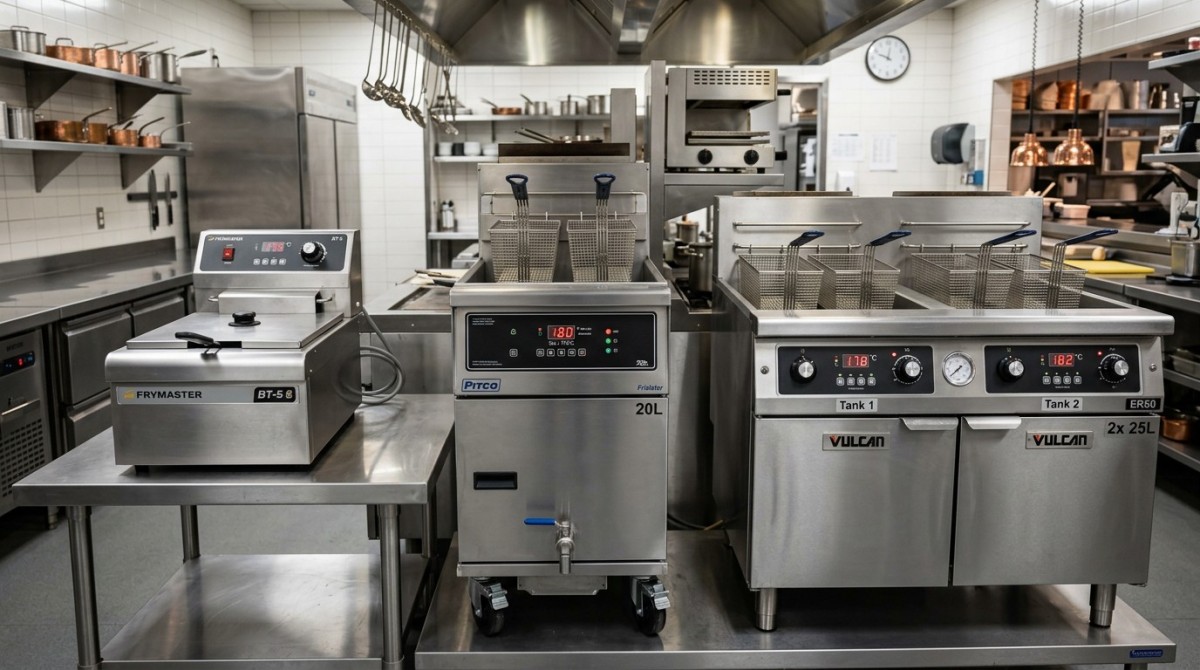
Commercial deep fryer cost is rarely determined by one feature alone. In most procurement cases, price is shaped by 5 core variables: oil capacity, hourly production, heating method, material thickness, and control system. A small electric countertop fryer for light-duty snack service usually sits at the lower end, while a multi-tank gas floor fryer for continuous restaurant or central kitchen output is priced much higher.
For kitchen equipment buyers, the key question is not simply “How much does a fryer cost?” but “What level of output and durability do we need over 2–5 years?” A lower purchase price can become more expensive if recovery time is slow, oil degrades quickly, or spare parts are difficult to source. This is especially relevant in foodservice operations with peak rush periods of 2–4 hours per day.
The kitchen equipment industry is moving toward automation, energy efficiency, and integrated kitchen systems, so fryer pricing increasingly reflects more than steel and burners. Digital thermostats, filtration compatibility, programmable menus, and easier cleaning design now matter in commercial kitchen equipment selection. In a wholesale environment, even small design upgrades can influence labor use, consistency, and long-term operating cost.
For information researchers and procurement teams, it helps to separate upfront equipment price from lifecycle cost. For operators, practical details such as basket size, drain valve access, and temperature recovery after each batch may affect daily performance more than a simple catalog quotation. For decision-makers, the right commercial deep fryer is the model that balances purchase cost, output stability, compliance, and service support.
The main cost drivers buyers compare first
- Capacity range: common fryer sizes vary from around 8L–12L countertop units to 20L–35L or larger floor models, directly affecting tank size, heating power, and frame structure.
- Construction grade: 304 stainless steel kitchen equipment usually costs more than lower-grade material, especially in high-humidity, high-cleaning-frequency kitchens.
- Heating and controls: basic thermostat models are less expensive than units with digital control, high-limit safety systems, or programmable temperature settings.
- Duty level: equipment designed for light commercial use differs significantly from industrial kitchen equipment intended for long production cycles and heavier workload.
These differences explain why two fryers that look similar in photos can have very different quotations. In B2B purchasing, visible appearance is only one layer; internal burner structure, thermostat quality, weld consistency, and maintenance access all contribute to the final cost.
How do fryer type, size, and output affect budget planning?
Commercial fryer pricing becomes easier to understand when you compare machines by format and workload. Countertop fryers suit lower-volume operations, food trucks, cafés, and test kitchens. Floor fryers fit larger restaurants, hotels, and catering kitchen equipment setups where batch size and speed are critical. Pressure fryers, open-pot fryers, and tube-type or flat-bottom designs can also change cost depending on menu focus.
Output matters because recovery time affects serving speed. A fryer that can hold temperature consistently during repeated 3–6 minute cycles will usually cost more than a light-duty unit that struggles under continuous loading. For high-turn menu items such as fries, chicken, seafood, and breaded snacks, under-sizing a fryer often leads to slower service, inconsistent texture, and higher oil stress.
Buyers should also match fryer layout to kitchen workflow. A twin-tank design may cost more initially than a single-tank unit, but it can reduce flavor transfer, support menu separation, and allow one side to remain off during off-peak hours. That creates flexibility for restaurants, central kitchens, and food processing facilities trying to balance energy use with output.
The table below gives a practical comparison for procurement planning. It does not represent a fixed price list, but it helps purchasing teams understand how size, duty level, and operating scenario typically influence cost structure in commercial kitchen equipment buying.
A simple rule works well: if frying is a side menu category, a compact unit may be enough; if frying is core revenue, paying more for capacity and recovery is often justified. For many buyers, the best value comes from matching equipment to real peak-hour volume rather than choosing the lowest quoted model.
Which kitchens need which level of fryer investment?
Light-demand operations
Small cafés, convenience food counters, and limited-menu kiosks often prioritize compact footprint, simple controls, and lower electrical load. In these cases, countertop units make sense when frying happens a few times per hour rather than continuously throughout service.
Medium-demand restaurants
Casual dining and fast-service kitchens usually need stronger recovery, a more durable oil tank, and easier cleaning access. A floor fryer often provides a better balance between price and productivity, especially when service windows are concentrated into lunch and dinner rushes.
High-demand production environments
Catering bases, hotel banquets, and food processing lines should evaluate output over a full shift, not per batch. For these users, buying heavy-duty equipment reduces downtime risk and supports more stable product quality over repeated production cycles.
Which technical features increase cost but may lower total operating expense?
Not every premium feature is necessary, but some technical upgrades can reduce long-term cost. Energy-efficient heating systems, better insulation, precise digital controls, and effective cold-zone design may add to the purchase price while lowering oil waste, overheating risk, and inconsistent frying. In operations that run 6–10 hours per day, those savings can be more important than the initial price difference.
Construction quality is another major factor. Stainless steel kitchen equipment built with stronger welds, better edge finishing, and easier-access service panels is often more expensive because it is designed for frequent cleaning and longer service life. For restaurants and central kitchens under strict sanitation routines, daily cleaning can quickly expose weak fabrication quality.
Control type also affects both cost and usability. Manual thermostats are common and economical, but digital interfaces offer more accurate temperature management, recipe repeatability, and error alerts. For operators handling multiple menu items or staff shifts, consistency can be worth the premium. For procurement teams, the decision should reflect staff skill level and process standardization needs.
The following comparison helps identify which specifications usually deserve attention when evaluating restaurant kitchen supplies or industrial kitchen equipment with frying functions.
When comparing quotations, buyers should ask whether a feature improves production, sanitation, safety, or maintenance. If the answer is unclear, the feature may not justify the premium. If the feature reduces oil change frequency, cleaning time, or service interruption, it usually has stronger value in B2B kitchens.
Three technical questions worth asking suppliers
- What is the intended duty cycle: occasional service, daily restaurant demand, or continuous production over several hours?
- How easy is preventive maintenance, including access to heating components, drain points, and control parts?
- Which replacement parts are standard and what is the typical support window for supply and service?
These questions help buyers move beyond a surface-level price comparison and toward a total-value decision.
How should procurement teams compare quotes and avoid underbuying?
In kitchen equipment wholesale purchasing, price comparison often becomes misleading when quotations do not include the same scope. One supplier may quote the fryer body only, while another includes baskets, lids, drain accessories, or region-specific electrical setup. Before comparing offers, purchasing teams should define at least 6 checkpoints: fryer type, tank size, heating source, control type, included accessories, and warranty or service terms.
Lead time also affects real cost. Standard models may be available within 7–15 days, but custom voltage, gas type adaptation, or bulk orders can extend delivery to 3–6 weeks. For restaurant opening projects or hotel renovation schedules, a cheaper fryer with uncertain delivery can create bigger losses than a slightly higher-priced model available on time.
Decision-makers should involve both end users and technical staff during evaluation. Operators can identify basket handling, cleaning convenience, and workflow fit. Maintenance teams can review spare part accessibility and utility connection requirements. This cross-functional review is especially useful when the fryer is part of a broader integrated commercial kitchen equipment project.
A practical procurement checklist keeps the process objective and reduces the risk of overpaying for features that do not support the actual menu or workload.
Procurement checklist for commercial deep fryer comparison
- Confirm menu type and batch volume: fries, chicken, seafood, frozen products, or mixed use all place different demands on recovery and oil management.
- Verify utility conditions: electric or gas supply, voltage, phase requirement, exhaust layout, and installation environment should match the fryer specification.
- Check sanitation and cleaning details: smooth welds, accessible drain valves, removable components, and surfaces suitable for frequent daily cleaning.
- Review service terms: spare parts availability, technical documents, user manuals, and expected response time for after-sales support.
- Compare lifecycle cost: oil use, energy consumption pattern, maintenance frequency, and expected replacement interval for wear parts.
This method supports procurement teams, restaurant groups, and enterprise buyers that need practical justification rather than a simple low-price decision.
Common buying mistake: choosing by tank size alone
A larger tank does not automatically mean better production. If burner strength, heat recovery, and basket loading are poorly matched, the fryer may still perform weakly during peak demand. Balanced design matters more than headline capacity alone.
Common buying mistake: ignoring operating cost
Many buyers focus only on the purchase quotation and overlook oil turnover, cleaning labor, and maintenance downtime. In daily foodservice use, these recurring costs can outweigh the initial difference between two models over 12–24 months.
What standards, safety, and usage factors should serious buyers review?
Commercial deep fryers operate at high temperatures and are installed in regulated food preparation environments, so compliance and safe use should be reviewed early. Requirements differ by market, but buyers commonly check electrical safety, food-contact material suitability, labeling clarity, and compatibility with local installation rules. For export projects, asking about destination-market documentation at the quotation stage helps avoid delays later.
For operators, safety features are not just technical extras. Overheat protection, stable basket handling, proper drainage design, and easy cleaning access can reduce burn risk and operational errors. In busy kitchens with multiple staff shifts, simple and repeatable controls are often safer than complicated settings that few people understand.
Maintenance discipline also influences value. A fryer used daily should be checked on a routine schedule, with cleaning, oil management, and visual inspection built into operations. Depending on workload, basic checks may occur daily, deeper cleaning weekly, and technical inspection monthly or quarterly. Equipment that is easy to maintain generally creates fewer service disruptions.
In the current kitchen equipment industry, where food safety, efficiency, and intelligent management are becoming more important, buyers increasingly prefer suppliers that can explain both equipment specification and practical implementation details.
FAQ and common misconceptions
Does a higher-priced fryer always mean better value?
Not always. Better value comes from fit, not price alone. A premium fryer makes sense when your kitchen needs heavy-duty output, better oil control, or easier maintenance. For a low-volume outlet, a simpler unit may deliver better return.
Is electric or gas cheaper for commercial frying?
It depends on local utility rates, kitchen infrastructure, and production style. Electric models may suit compact sites and simpler installation, while gas models are often chosen in larger kitchens focused on stronger output. The right answer should be based on facility conditions, not assumption.
How long is the normal delivery cycle?
Typical lead times vary by stock level and specification. Standard units may ship in 7–15 days, while customized requirements, bulk orders, or export documentation can extend schedules to 3–6 weeks. Early confirmation is important for project planning.
What is the most overlooked factor in commercial deep fryer cost?
Many buyers overlook cleaning efficiency and oil management. A fryer that is easier to drain, clean, and keep at stable temperature may reduce labor and oil waste over time, which can significantly change total cost of ownership.
Why choose us when comparing kitchen equipment wholesale options?
If you are evaluating commercial deep fryer cost for a restaurant, hotel, catering operation, central kitchen, or food processing project, we can support more than a basic quotation. We help buyers compare fryer type, capacity, control configuration, utility match, and practical installation needs so the selected model fits both budget and production reality.
Our support can cover key purchasing topics such as parameter confirmation, product selection, matching restaurant kitchen supplies, delivery timing, sample or specification review, and export-oriented documentation communication. For project buyers, we can also discuss how a fryer fits into a broader stainless steel kitchen equipment or integrated kitchen system plan.
To speed up evaluation, you can prepare 4 practical details before contact: expected menu items, estimated batch volume or service peak, preferred power or gas condition, and installation market. With that information, it is easier to narrow options, compare cost drivers, and avoid unsuitable configurations.
Contact us to discuss commercial deep fryer specifications, kitchen equipment wholesale pricing, custom configuration, lead time, certification-related questions, and quotation planning for your specific application. A clear requirement sheet usually shortens the selection cycle and leads to a more accurate purchasing decision.
- commercial kitchen equipment
- industrial kitchen
- stainless steel kitchen
- central kitchen
- restaurant kitchen
- Deep Fryer
- kitchen equipment
- industrial kitchen equipment
- stainless steel kitchen equipment
- restaurant kitchen supplies
- catering kitchen equipment
- kitchen equipment wholesale
- commercial deep fryer
Popular Tags
Kitchen Industry Research Team
Dedicated to analyzing emerging trends and technological shifts in the global hospitality and foodservice infrastructure sector.
Industry Insights
Join 15,000+ industry professionals. Get the latest market trends and tech news delivered weekly.
No spam. Unsubscribe anytime.
Contact With us
Contact:
Anne Yin (Ceramics Dinnerware/Glassware)
Lucky Zhai(Flatware)