
Glass Whiskey Tumbler Trends Premium Brands Follow
From the rise of the glass whiskey tumbler to demand for the glass latte mug, glass cappuccino cup, and glass meal prep jar, premium brands are aligning design with durability, efficiency, and market appeal. This article explores the trends shaping modern drinkware and tabletop products, helping buyers, operators, and decision-makers identify what drives value in today’s competitive kitchen and hospitality landscape.
For B2B buyers in foodservice, hospitality, retail, and kitchen supply chains, glassware is no longer a simple accessory. It affects service efficiency, replacement cost, visual merchandising, and even menu pricing power. A well-selected glass whiskey tumbler or specialty glass cup can improve perceived beverage value, while poor-quality drinkware can increase breakage rates, disrupt operations, and weaken brand consistency.
Across commercial kitchens, hotel bars, cafés, and premium tabletop programs, the most successful brands are following a clear path: stronger materials, more versatile sizing, easier cleaning, tighter stackability, and designs that work across multiple beverage categories. These trends also connect directly with wider kitchen equipment priorities such as efficiency, safety, sustainability, and standardized procurement.
Why Premium Glassware Trends Matter in Modern Kitchen and Hospitality Operations
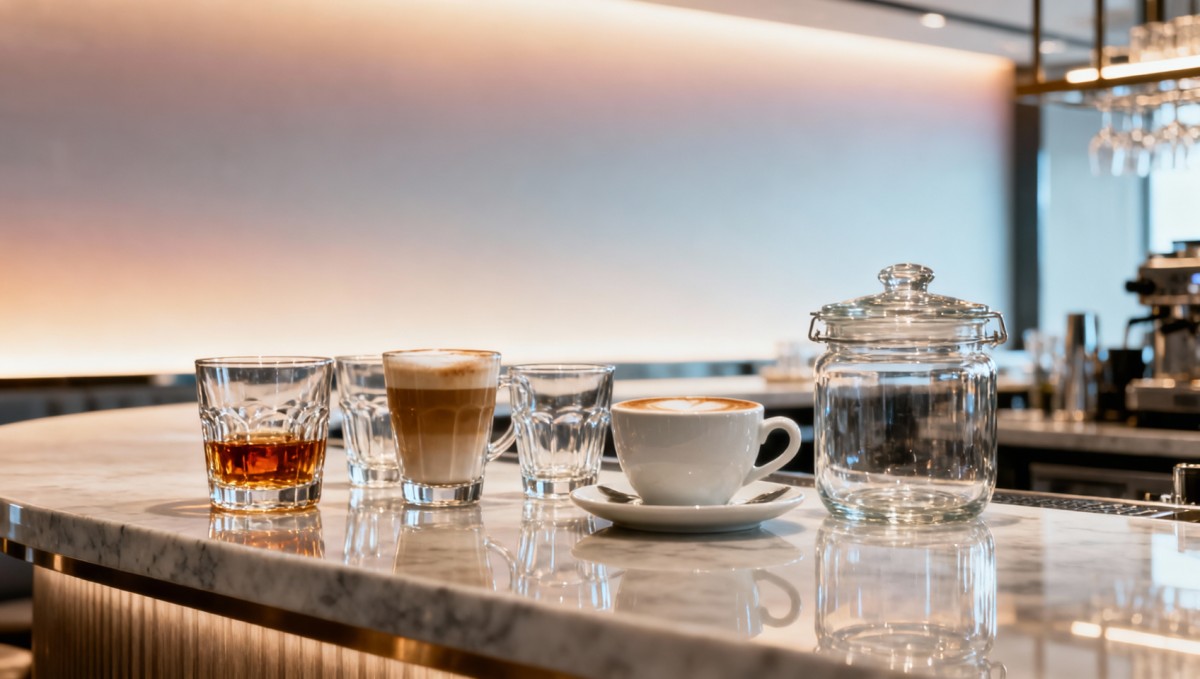
In the current kitchen equipment landscape, drinkware has become part of operational planning rather than a last-minute tabletop purchase. Restaurants, hotels, and café chains often evaluate glass products using at least 4 decision layers: appearance, durability, cleaning compatibility, and replacement cycle. A premium-looking glass whiskey tumbler may support high-margin spirits service, but it also needs to withstand frequent washing, thermal shifts, and dense storage conditions.
Operators are also consolidating SKUs. Instead of carrying 10 to 15 highly specialized glass types, many buyers now prefer 5 to 8 versatile formats that cover whiskey, cocktails, coffee, desserts, and cold beverages. This reduces storage pressure in back-of-house areas and simplifies purchasing. The same logic is driving demand for crossover items like the glass latte mug, glass cappuccino cup, and glass meal prep jar, especially in mixed-use hospitality and grab-and-go environments.
Another reason these trends matter is replacement cost. In high-volume sites, breakage rates of 3% to 8% per month are not unusual when low-grade glassware is used in rapid-service settings. Premium brands therefore focus on edge strength, wall thickness balance, and dishwasher resilience. Their goal is not simply to create elegant glassware, but to lower total operating cost over a 6- to 12-month usage period.
From a procurement perspective, drinkware now sits closer to the broader kitchen equipment strategy. Buyers increasingly compare glassware the same way they compare smallwares or countertop equipment: service life, compatibility, training needs, packaging efficiency, and supplier consistency. This is especially relevant for chain operators and regional distributors that need repeatable specifications across dozens or even hundreds of locations.
Operational drivers behind product selection
The shift toward durable and multifunctional glassware is tied to several measurable operational pressures. Premium brands are responding by refining form factors, improving production consistency, and offering broader application coverage.
- Higher wash frequency: busy bars and cafés may rotate the same glass 3 to 6 times per day.
- Storage limitations: stackable or space-efficient profiles reduce shelf crowding and handling risk.
- Menu flexibility: one tumbler may need to serve neat whiskey, iced cocktails, mocktails, and water.
- Presentation pressure: transparent glass remains important for color visibility, layering, and premium serving cues.
Key Design and Material Trends Premium Brands Are Following
The most visible trend is the move toward balanced durability rather than excessive thickness. In the past, heavy glass was often equated with quality. Today, premium brands know that overly heavy products can slow service, increase shipping cost, and cause operator fatigue. Many preferred whiskey tumblers now target a practical middle range, with enough base weight for stability but a wall profile that remains comfortable during repeated handling.
The second trend is thermal versatility. A glass latte mug or glass cappuccino cup often serves hot beverages in cafés, hotel breakfast stations, and upscale dessert programs. Buyers increasingly look for glassware that can tolerate normal service temperature variation without becoming too fragile. This does not mean every item is suitable for sudden thermal shock, but it does mean product design must support realistic daily use across 60°C to 90°C beverage service conditions where applicable.
A third trend is shape optimization for both branding and function. Straight-sided whiskey tumblers remain popular for classic presentation, while curved or slightly tapered profiles improve grip and reduce slipping during fast-paced service. For coffee service, premium brands often use clear, rounded forms that showcase crema, milk texture, and layering. For meal prep or storage applications, wide-mouth glass jars are preferred because they simplify filling, labeling, and cleaning.
Sustainability is also shaping specifications. Buyers are increasingly asking about longer service life, less frequent replacement, and packaging efficiency. While glass is already valued for reusability and taste neutrality, premium brands are now expected to reduce packaging waste, improve pallet efficiency, and provide more reliable breakage control during transport. These points matter for both importers and local distributors managing large-volume orders.
Common product priorities by category
Different glass formats serve different operational goals. The table below shows how premium buyers typically compare category priorities when selecting glassware for hospitality and foodservice programs.
The key takeaway is that premium brands are not following a single visual trend. They are designing around use case. A tumbler for bar service, a mug for hot beverages, and a meal prep jar for food storage all need different strength profiles, ergonomics, and cleaning considerations. Procurement teams benefit when they compare products by service function rather than appearance alone.
What buyers should verify before approving samples
- Rim consistency and visible defects across at least 12 to 24 sample units.
- Base balance on flat surfaces to avoid rocking during service.
- Handle shape and grip comfort for hot-drink formats.
- Packing resistance during transport, especially for export shipments lasting 2 to 6 weeks.
How Buyers Should Evaluate Glass Whiskey Tumblers and Related Drinkware
A common mistake in sourcing is choosing drinkware based only on catalog appearance or unit price. In professional settings, the better approach is to evaluate total fit. That means matching product design to service style, beverage menu, wash process, replacement budget, and storage workflow. For example, a boutique cocktail bar may accept a more distinctive tumbler shape, while a hotel banquet program usually prioritizes stacking, volume repeatability, and rapid replenishment.
Capacity selection is especially important. A whiskey tumbler in the 280–330 ml range often works well for neat pours, spirit-forward cocktails, and water service. If the same glass is intended for ice-heavy cocktails or mixed drinks, 330–380 ml is usually more practical. For coffee service, cappuccino cups typically align with portion control, while latte mugs need more vertical space for milk-based beverages and decorative presentation.
Procurement teams should also review compatibility with their actual cleaning system. If glassware is washed 2 to 5 cycles daily in commercial dishwashers, low-grade finishing issues become visible quickly. Clouding, edge chipping, or unstable bases can create complaints long before the carton supply is used up. Sample testing under real kitchen conditions for 7 to 14 days is often more valuable than a quick visual check at receiving.
Packaging and replenishment planning are equally important. For multi-site operators, consistent case counts, barcode labeling, and predictable reorder lead times can matter as much as design. A product that looks excellent but arrives with high breakage or inconsistent dimensions may create hidden labor costs across warehousing, store-level receiving, and stock replacement.
Practical procurement checklist
The following comparison framework helps purchasing managers and operators evaluate glassware more systematically before issuing a larger order.
When these 4 factors are reviewed together, buyers can avoid false savings. A lower-priced tumbler may seem attractive at order stage, but if it chips faster, cleans poorly, or requires frequent replenishment, the real cost per month can be significantly higher.
Recommended approval sequence
- Define use case by venue type: bar, café, hotel, restaurant, or retail shelf program.
- Shortlist 2 to 4 candidate designs within the required capacity range.
- Run a 7- to 14-day in-use trial covering washing, handling, and storage.
- Compare replacement risk, ease of service, and reorder practicality before full rollout.
Application Scenarios: From Bar Service to Meal Prep and Display
One reason premium brands continue expanding their glassware portfolios is that the same kitchen or hospitality buyer often manages multiple use cases. A hotel may need whiskey tumblers for room service and lobby bars, cappuccino cups for breakfast and lounge service, latte mugs for café counters, and glass meal prep jars for buffet mise en place or retail-ready food display. This crossover demand favors suppliers that understand operational variety rather than single-item selling.
In restaurants and bars, the glass whiskey tumbler remains one of the most flexible formats. It works for straight pours, cocktails with large ice cubes, tasting flights, and premium water service. The best-performing models combine visual clarity with manageable weight, especially in venues where one staff member may handle 40 to 80 drink serves during a busy shift.
In cafés and hotel breakfast operations, transparent coffee glassware supports presentation-driven service. Customers can see milk texture, layered drinks, and portion quality immediately. This matters for products with visual appeal such as cappuccino, latte, and mocha drinks. For operators, however, appearance must be balanced with handle comfort, dishwashing recovery, and shelf organization. A mug that looks elegant but takes too long to cool or dry can reduce turnover efficiency.
Glass meal prep jars reflect another important trend: the blending of kitchen prep, display, and takeaway. These jars are useful for overnight oats, desserts, sauces, yogurt parfaits, salad layers, or ingredient pre-portioning. In central kitchen and retail-food settings, the wide-mouth design and visible contents improve speed and stock control. Operators can identify fill level, color, and product condition in seconds without opening every container.
Scenario-based matching guide
The table below outlines how different environments typically prioritize form, capacity, and operational value when choosing glassware.
This scenario view helps buyers avoid under- or over-specifying. A heavy decorative tumbler may suit a luxury bar but not a high-turnover banquet operation. Likewise, a visually refined cappuccino cup may be ideal for premium coffee service but unnecessary for self-service buffets where durability and fast restocking matter more.
Common risks to avoid
- Selecting a single design for every venue without reviewing actual service flow.
- Ignoring storage and dish rack fit, which can increase handling damage.
- Choosing oversized capacities that distort portion control or beverage cost.
- Overlooking lid or sealing compatibility for meal prep jar programs.
Implementation, Maintenance, and Supplier Strategy for Long-Term Value
The final trend premium brands follow is integration with long-term service and supply planning. Glassware should not be treated as a one-time styling decision. It performs best when linked to onboarding, handling standards, replenishment policy, and supplier communication. This is especially true for restaurant groups, hotels, and distributors managing recurring orders every 30, 60, or 90 days.
Maintenance starts with handling discipline. Even strong glass products fail early if staff stack them incorrectly, overload racks, or mix incompatible items in dishwashing cycles. A short 15- to 20-minute training module for bar and stewarding teams can reduce careless chipping and extend usable life. In many cases, simple changes in rack loading and shelf separation have a measurable impact on breakage rates.
Supplier strategy is equally important. Buyers should discuss MOQ, sample policy, replacement handling, and lead time before scaling up. In international sourcing, practical lead times may range from 3 to 8 weeks depending on stock status, packaging requirements, and shipping mode. Consistent communication on carton specifications, drop-test expectations, and replenishment forecasting helps prevent avoidable stockouts.
For decision-makers, the strongest value often comes from standardization. Reducing unnecessary SKU variation, aligning glassware with menu and equipment workflows, and choosing reliable supply partners can improve both presentation and operating control. Premium brands succeed because they connect aesthetics with measurable outcomes: fewer replacements, smoother cleaning, better service rhythm, and clearer brand presentation across every touchpoint.
FAQ for buyers and operators
How do I choose the right glass whiskey tumbler size?
Start with your beverage menu. For neat pours and compact cocktails, 250–330 ml is usually efficient. For drinks with large ice or mixed serves, 330–380 ml gives more flexibility. If one SKU must cover 3 or more drink types, mid-range capacity often performs best.
How long should a commercial glassware trial last?
A realistic in-use trial is typically 7 to 14 days. That period is long enough to test washing cycles, service handling, drying behavior, and shelf fit. For chain rollouts, testing in 2 to 3 different locations can reveal issues that a single-site trial may miss.
What are the most common sourcing mistakes?
The main mistakes are focusing only on unit price, skipping sample testing, ignoring packaging quality, and selecting shapes that do not fit dish racks or storage shelves. Another frequent issue is buying visually attractive glassware without checking how it performs after repeated commercial washing.
Are glass meal prep jars suitable for both kitchen prep and front-of-house display?
In many operations, yes. They are especially useful for layered desserts, overnight oats, yogurt, condiments, and pre-portioned cold items. The most practical versions offer easy filling, visible contents, and secure closure, making them suitable for prep, storage, and merchandising within one workflow.
Premium glassware trends are moving toward multi-functionality, operational durability, and cleaner alignment with kitchen and hospitality workflows. Whether you are sourcing a glass whiskey tumbler for bar service, a glass latte mug for café presentation, a glass cappuccino cup for portion control, or a glass meal prep jar for prep-to-display efficiency, the best results come from matching design with real use conditions, cleaning systems, and replenishment strategy.
If you are evaluating new drinkware or tabletop products for foodservice, hospitality, retail, or kitchen equipment distribution, now is the right time to review your specifications, test practical samples, and build a more consistent sourcing framework. Contact us today to discuss product details, request a tailored recommendation, or explore solutions that fit your operational and purchasing goals.
Popular Tags
Kitchen Industry Research Team
Dedicated to analyzing emerging trends and technological shifts in the global hospitality and foodservice infrastructure sector.
Industry Insights
Join 15,000+ industry professionals. Get the latest market trends and tech news delivered weekly.
No spam. Unsubscribe anytime.

Contact With us
Contact:
Anne Yin (Ceramics Dinnerware/Glassware)
Lucky Zhai(Flatware)