
Why Central Kitchen Equipment Is Reshaping Food Operations
Central Kitchen Equipment is transforming modern food operations by improving speed, consistency, and food safety across restaurants, hotels, and processing facilities. From stainless steel kitchen equipment and kitchen shelving system solutions to Commercial Refrigerator, commercial convection oven, and Dish Sterilizer applications, today’s systems support smarter workflows, lower costs, and scalable production for buyers, operators, and decision-makers.
For companies managing multi-site foodservice, growing takeaway volume, or large-batch meal production, central kitchen systems are no longer just a support function. They have become a strategic operating model that influences labor planning, quality control, inventory flow, energy consumption, and delivery reliability. This matters to researchers comparing solutions, operators focused on output and hygiene, procurement teams evaluating total cost, and business leaders looking for scalable growth.
As the kitchen equipment industry moves toward automation, intelligent control, and energy-efficient design, central kitchen equipment is reshaping how food is prepared, stored, transported, and managed. The shift is visible across chain restaurants, hotel groups, institutional catering, and food processing businesses that need repeatable results at higher volumes with lower operational risk.
What Central Kitchen Equipment Changes in Daily Food Operations
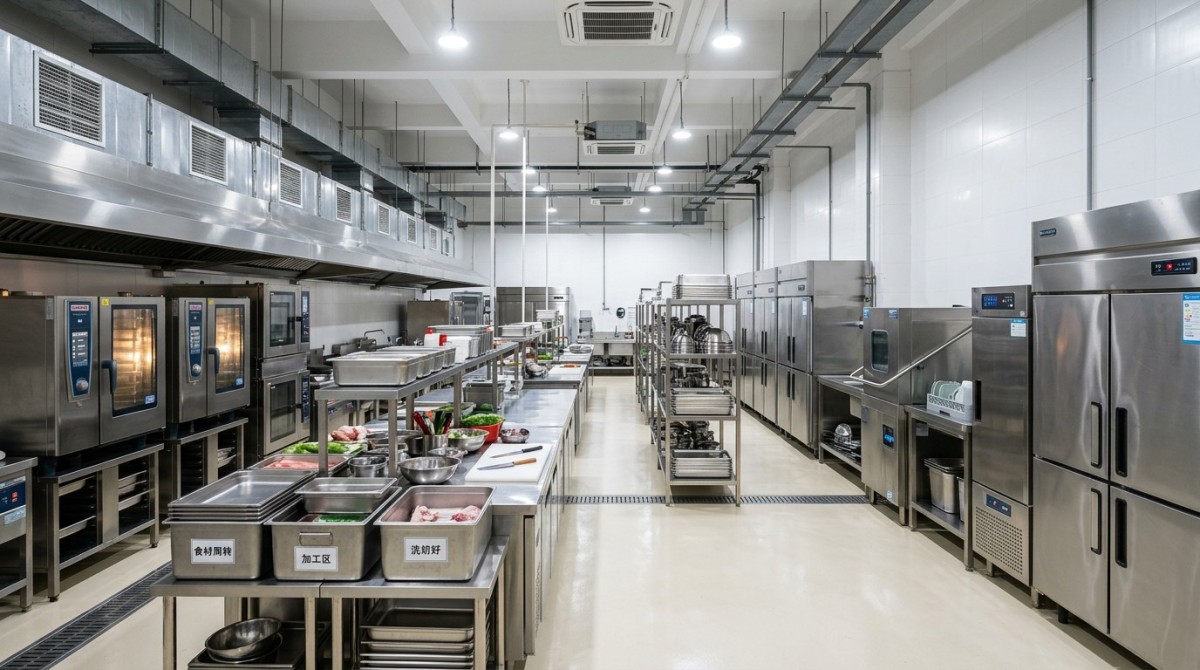
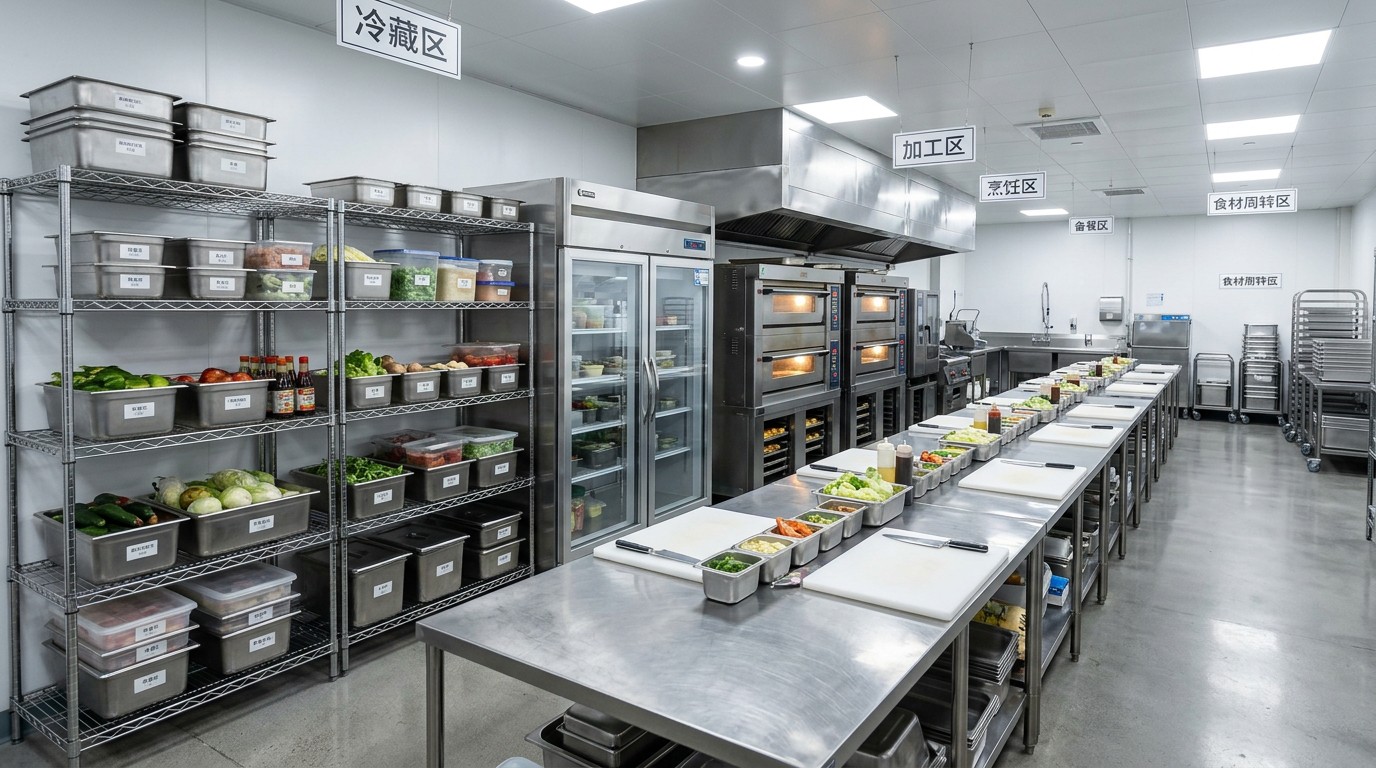
A central kitchen combines preparation, cooking, chilling, storage, cleaning, and dispatch into one controlled production environment. Instead of repeating the same prep work in 10 or 20 outlets, businesses centralize core processes and distribute semi-finished or ready-to-serve products. This reduces duplication, shortens training time, and improves recipe consistency across locations.
In practical terms, the impact is measurable. A well-planned central kitchen can reduce repeated back-of-house prep steps by 20% to 40%, depending on menu complexity and outlet count. For operators, that means fewer manual touchpoints, more stable production windows, and less dependence on highly variable site-level labor. For decision-makers, it creates better forecasting and tighter control over waste.
Core equipment typically includes stainless steel kitchen equipment for prep and hygiene, kitchen shelving system layouts for organized storage, Commercial Refrigerator units for cold-chain stability, commercial convection oven systems for batch cooking, and Dish Sterilizer stations for sanitation control. These are not isolated products. Their value comes from how they work together in a defined process flow.
From decentralized kitchens to integrated production
Traditional decentralized operations often face inconsistent portioning, uneven cooking quality, and higher spoilage rates. A central kitchen addresses these issues by standardizing output. For example, raw material receiving may happen once per day, prep in 2 to 3 scheduled shifts, and dispatch in fixed windows such as every 6 to 12 hours. This structure makes performance easier to monitor and improve.
It also supports stronger food safety routines. Temperature-sensitive items can move through receiving, processing, blast chilling, cold storage, and transport using controlled checkpoints instead of loosely managed handoffs across multiple sites. Even without highly advanced automation, standardized workflows can significantly lower handling errors and cleaning gaps.
Typical operational improvements
- Batch cooking capacity can be planned in cycles of 50 kg to 500 kg depending on product type and oven or kettle configuration.
- Cold storage can be separated into 0°C to 4°C chilled zones and -18°C frozen zones for better product control.
- Cleaning and sterilization procedures can be scheduled every 4 to 8 hours for high-contact zones and after each production lot for critical tools.
- Ingredient staging and shelving layouts can reduce unnecessary movement, often cutting internal transport steps by 15% to 30%.
When evaluating central kitchen equipment, the real question is not whether a single machine performs well. It is whether the full system creates a faster, safer, and more predictable operation from inbound ingredients to outbound meals.
Key Equipment Categories and Their Roles in Efficiency and Safety
Central kitchen performance depends on matching equipment to production logic. A business preparing sauces, baked items, ready meals, and chilled components will need different workflows from one focused on fresh-cut produce or institutional meal packs. Procurement teams should look beyond product lists and assess process compatibility, cleaning demands, energy load, and maintenance frequency.
The most important categories usually fall into five groups: preparation, cooking, refrigeration, storage and transport, and sanitation. Each category affects both output and compliance. For example, a Commercial Refrigerator is not only a storage asset; it protects shelf life, dispatch scheduling, and ingredient quality. A commercial convection oven is not only a cooking asset; it determines batch uniformity and throughput.
The table below shows how common central kitchen equipment supports different operational goals and what buyers should check before purchase.
A key conclusion is that equipment selection should follow process order, not catalog order. Many projects underperform because they overspend on cooking capacity but undersize refrigeration, shelving, or wash area throughput. In a central kitchen, one bottleneck can delay the full production line.
Why system balance matters more than single-machine performance
If a convection oven can process 120 trays per shift but cold holding only supports 60 trays safely, production flow becomes unstable. If a sterilization area handles only 1 cleaning cycle every 20 minutes while utensils are needed every 10 minutes, labor starts compensating through unsafe shortcuts. These mismatches create hidden cost, not visible savings.
That is why experienced buyers often map equipment around peak-hour demand, sanitation turnover, and dispatch frequency. In many facilities, planning for 10% to 20% future growth is also more cost-effective than redesigning layouts within 12 months.
How Buyers and Decision-Makers Should Evaluate Central Kitchen Investment
A central kitchen project is rarely just an equipment purchase. It is an operating model decision involving layout, labor structure, product mix, utility access, cleaning design, and delivery planning. Procurement teams need technical clarity, but leadership also needs a framework for capital efficiency and operational return.
A practical evaluation starts with four dimensions: production volume, menu complexity, compliance requirements, and expansion horizon. For example, a business serving 3,000 meals per day across 8 locations will prioritize different equipment capacities than a premium restaurant group producing sauces, pastry items, and chilled garnishes for 4 high-end venues. One needs throughput discipline; the other may need tighter product differentiation.
The table below can help procurement teams compare decision factors in a structured way before requesting quotations or finalizing a supplier shortlist.
The key takeaway is that total value often comes from reliability and process fit rather than the lowest purchase price. For many B2B buyers, a 5% to 10% higher initial spend can be reasonable if it reduces breakdown risk, preserves food quality, and lowers labor dependency over 24 to 36 months.
A practical procurement checklist
- Define current daily volume and expected growth for the next 12 to 24 months.
- Separate must-have equipment from nice-to-have automation features.
- Confirm utility conditions such as power load, drainage, ventilation, and floor space.
- Review cleaning access, disassembly points, and maintenance intervals before approval.
- Ask for commissioning, operator training, and spare-parts support details in writing.
This approach helps researchers and purchasing teams compare suppliers more accurately and reduces the chance of investing in equipment that looks impressive on paper but creates friction in real production.
Implementation, Layout Planning, and Operational Risk Control
Even high-quality central kitchen equipment can underdeliver if layout and implementation are poorly managed. In most projects, the first 3 stages determine long-term success: process mapping, equipment positioning, and operator onboarding. A good layout shortens movement, separates clean and dirty flows, and aligns people, materials, and machines within realistic shift timing.
A typical implementation cycle ranges from 2 to 8 weeks depending on facility size, utility readiness, and customization level. Small upgrades such as shelving, refrigeration, and wash-zone replacement may move faster. Full central kitchen builds involving cooking lines, drainage adaptation, and ventilation coordination usually require more site preparation and commissioning time.
Risk control is especially important in mixed-use operations where raw and cooked products share adjacent areas. The wrong path design can increase contamination risk and slow production. For example, if clean utensils cross incoming raw material routes, sanitation performance may decline even when a Dish Sterilizer is properly installed.
Recommended implementation sequence
- Assess menu structure, batch size, storage needs, and dispatch frequency.
- Map zones for receiving, prep, cooking, chilling, packing, cleaning, and shipping.
- Verify power, water, drainage, exhaust, and temperature control conditions.
- Install and test core equipment in process order rather than by delivery convenience.
- Train operators and validate output, hygiene checkpoints, and maintenance routines.
Common mistakes to avoid
- Oversizing cooking equipment while undersizing cold storage or cleaning throughput.
- Ignoring aisle space and trolley turning radius in dense shelving or prep areas.
- Placing Commercial Refrigerator units too far from dispatch or prep zones, increasing movement time.
- Choosing stainless steel kitchen equipment without considering edge finishing, drain design, or cleaning access.
- Skipping retraining after installing intelligent controls or automated settings.
For operators, the most useful implementation metric is not just installation completion. It is stable production after handover: consistent cooking results, documented sanitation cycles, smooth shift transitions, and controlled downtime. Many businesses track the first 30 days closely to identify bottlenecks, retrain staff, and fine-tune batch scheduling.
Businesses that take implementation seriously often gain faster payback because equipment is fully utilized earlier. In contrast, rushed launches tend to hide problems until labor pressure, menu growth, or inspection demands expose them.
Future Trends: Smart, Energy-Efficient, and Scalable Central Kitchen Systems
The kitchen equipment industry is moving quickly toward intelligent control, automation, and energy efficiency, and central kitchen equipment sits at the center of that shift. Buyers are no longer comparing only material quality and capacity. They are also asking whether systems can support digital monitoring, reduce utility waste, simplify cleaning, and integrate with broader operational planning.
Smart kitchen technologies are especially valuable in larger food operations where one site may serve 5, 10, or more downstream outlets. Digital temperature monitoring, programmable cooking cycles, and maintenance alerts can reduce operator variability and help teams respond before issues become production failures. This is particularly useful for facilities running multiple shifts or handling strict dispatch windows.
Energy-efficient kitchen solutions are also becoming a major investment criterion. Refrigeration systems with better insulation and optimized compressor performance, ovens with improved heat retention, and sanitation systems with controlled cycle settings can reduce utility pressure over time. For procurement teams, this shifts evaluation from purchase price to ongoing cost per production cycle.
What scalable central kitchen design looks like
A scalable system is not simply larger. It is modular and adaptable. That means adding one more Commercial Refrigerator, extending a kitchen shelving system, or integrating additional cooking capacity without redesigning the full facility. Businesses entering new markets or adding product lines often benefit from this phased investment logic.
The best long-term layouts usually allow 10% to 25% growth in storage, prep, or dispatch capacity. That buffer helps businesses handle seasonal spikes, promotional campaigns, or new account wins without immediately relocating or rebuilding. It also supports more stable staffing because production can expand in planned stages rather than emergency upgrades.
FAQ
How do I know if a central kitchen model fits my business?
It usually fits when you operate multiple outlets, need consistent menu quality, or want better control over prep labor and food safety. Many businesses begin evaluating a central kitchen once they serve 1,000 or more meals per day, manage 3 or more sites, or face repeated quality variation between branches.
Which equipment should be prioritized first?
Start with equipment that protects food safety and process continuity: Commercial Refrigerator units, stainless steel kitchen equipment, core cooking systems such as a commercial convection oven, and cleaning or Dish Sterilizer capacity. After that, optimize storage, internal transport, and digital controls based on production complexity.
What is a reasonable delivery and setup expectation?
For standard equipment combinations, lead time may be around 7 to 15 days if stock and utilities are ready. More customized projects often require 2 to 8 weeks including layout review, installation, testing, and operator training. The exact timeline depends on site conditions and how many systems must be integrated.
What should operators monitor after installation?
Focus on temperature consistency, cycle time, sanitation frequency, internal movement efficiency, and maintenance alerts. The first 30 days are critical. Track downtime, cleaning compliance, batch output, and whether staff can follow the new workflow without workarounds or congestion.
Central kitchen equipment is reshaping food operations because it brings structure to growth. It helps businesses produce more with greater consistency, tighter hygiene control, and stronger operational visibility. From kitchen shelving system design and stainless steel kitchen equipment to Commercial Refrigerator, commercial convection oven, and Dish Sterilizer applications, the right setup improves both daily execution and long-term scalability.
For information researchers, operators, procurement teams, and decision-makers, the priority is clear: choose equipment as part of an integrated process, not as disconnected products. If you are planning a new facility, upgrading an existing central kitchen, or comparing options for multi-site food production, now is the right time to review your workflow and build a more reliable system. Contact us to get a tailored solution, discuss product details, or explore more central kitchen equipment options for your operation.
Popular Tags
Kitchen Industry Research Team
Dedicated to analyzing emerging trends and technological shifts in the global hospitality and foodservice infrastructure sector.
Industry Insights
Join 15,000+ industry professionals. Get the latest market trends and tech news delivered weekly.
No spam. Unsubscribe anytime.
Contact With us
Contact:
Anne Yin (Ceramics Dinnerware/Glassware)
Lucky Zhai(Flatware)