
Restaurant Kitchen Stainless Steel Gauge Differences That Matter
Choosing the right gauge in restaurant kitchen stainless steel affects durability, hygiene, cost, and daily workflow more than many buyers expect. Whether you manage a commercial restaurant kitchen, compare restaurant kitchen equipment specifications, or plan a restaurant kitchen counter, sink, and storage setup, understanding gauge differences helps you make smarter purchasing and design decisions.
What does stainless steel gauge mean in a restaurant kitchen?
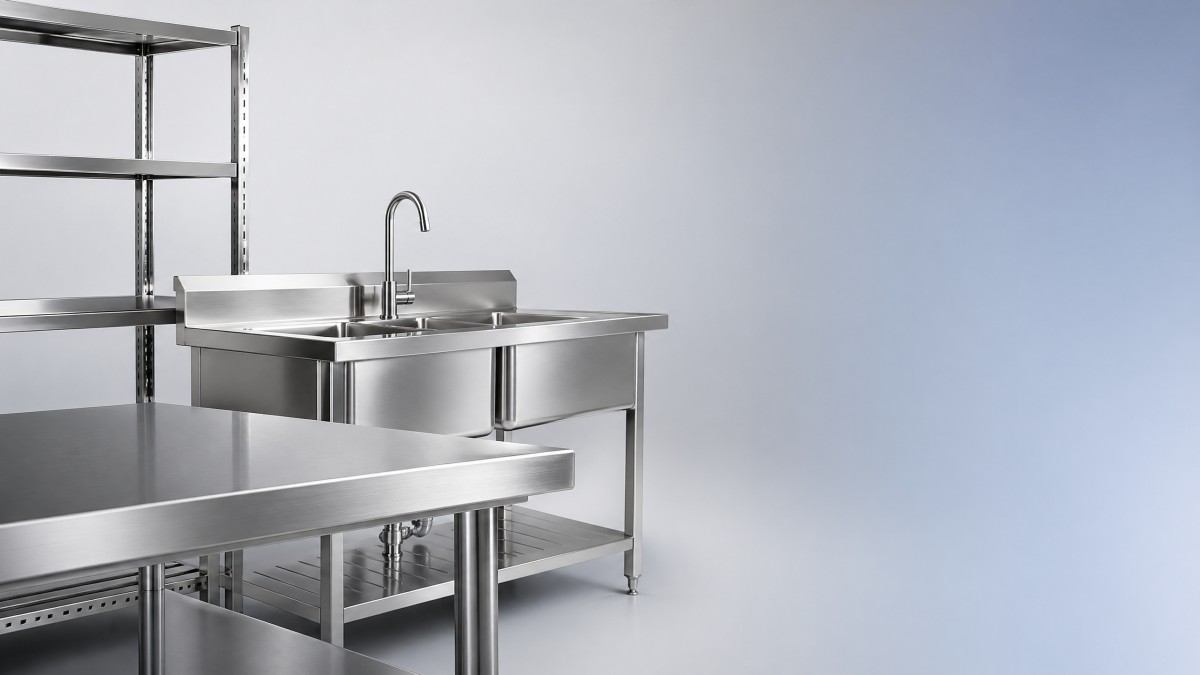
In restaurant kitchen stainless steel, gauge refers to sheet thickness, but the numbering works in reverse. A lower gauge usually means thicker steel. For example, 14 gauge is thicker than 16 gauge, and 16 gauge is thicker than 18 gauge. This matters because thickness influences dent resistance, load capacity, vibration, sound, and long-term appearance in busy foodservice environments.
Gauge should never be evaluated alone. Buyers also need to consider steel grade, fabrication method, reinforcement, weld quality, and where the item will be installed. A 16 gauge restaurant kitchen counter with proper bracing may perform better than a poorly reinforced thicker unit. In real procurement work, 3 factors usually need to be checked together: gauge, stainless grade, and structural support.
In commercial kitchen equipment, common thickness ranges often fall between 14 gauge and 20 gauge depending on the product category. Heavy-duty prep tables, worktables, and dish tables often use 14 or 16 gauge top surfaces. Sinks, wall shelves, cabinets, and lighter-duty enclosures may use 18 gauge or 20 gauge if the application is less demanding and cost sensitivity is higher.
For operators and decision-makers, the practical question is simple: where will the steel take impact, weight, moisture, heat, or frequent cleaning? A restaurant kitchen sink used 8–12 hours per day under constant washing needs a different specification than a dry storage shelf loaded once per shift. Matching gauge to duty cycle is more useful than chasing the thickest option everywhere.
Common gauge logic buyers should remember
- Lower gauge number means thicker material, which usually improves rigidity and dent resistance.
- Thicker steel often increases material cost, shipping weight, and sometimes installation complexity.
- High-contact zones such as worktops, sink areas, and equipment stands usually justify thicker stainless steel.
- Light-duty covers, backsplashes, or decorative panels may not need the same thickness as load-bearing surfaces.
Which gauge differences matter most for counters, sinks, shelves, and cabinets?
Not every restaurant kitchen component faces the same stress. A prep counter handles repeated chopping, pan drops, mixer movement, and frequent sanitation. A sink sees standing water, chemicals, and thermal shifts. A shelf may carry boxed ingredients for weeks at a time. Because the use conditions differ, the right gauge for one product may be unnecessary or insufficient for another.
The comparison below helps information researchers and procurement teams quickly understand how gauge affects common restaurant kitchen equipment. These are typical market-use ranges rather than fixed rules. Final specification should still be matched to span length, reinforcement, and actual loading frequency across 1-shift, 2-shift, or nearly continuous operation kitchens.
The table shows why gauge decisions should be localized instead of generalized. Upgrading every item from 18 gauge to 14 gauge can raise project cost without proportional benefit. On the other hand, under-specifying a restaurant kitchen counter or sink can cause visible dents, drainage issues, and instability within the first 12–24 months of heavy use.
For restaurant owners, hotels, and central kitchens, the most effective approach is to classify equipment into heavy-duty, medium-duty, and light-duty zones. This usually reduces waste and supports better lifecycle value. In many projects, only 20%–30% of stainless steel items need premium thickness, while the rest can be optimized for budget and operational practicality.
How to think by usage zone
Heavy-duty contact areas
These include butcher prep lines, equipment landing tables, dish return stations, and sink areas exposed to repeated impacts. In these positions, 14–16 gauge often provides a safer margin against warping and denting, especially when staff handle heavy stock pots, trays, or small countertop appliances several times per hour.
Moderate-duty workflow areas
Packing counters, pass tables, and utility sinks may work well with 16–18 gauge when the frame design is stable and the span is controlled. This is a common compromise for buyers who need durability but must still control total fit-out budget across multiple kitchen stations.
Light-duty storage or enclosure areas
Dry storage cabinets, splash guards, or undershelf panels often do not need the same thickness as impact zones. In these applications, 18–20 gauge can be reasonable if the environment is dry, loads are predictable, and cleaning methods do not involve aggressive mechanical abuse.
How do gauge, stainless grade, and fabrication affect hygiene and service life?
Many buyers assume thicker stainless always means better hygiene, but hygiene is more closely linked to surface finish, weld treatment, corner design, and resistance to standing water. Gauge still matters because a more stable surface is less likely to deform, open seams, or create water traps over time. In a commercial kitchen, cleanability depends on construction details as much as material thickness.
Restaurant kitchen stainless steel is commonly discussed together with grades such as 304 and 430. For wet areas, food preparation, and high-frequency sanitation, 304 is often preferred because of its stronger corrosion resistance. For dry environments or cost-sensitive exterior components, 430 may be considered. The right combination is often gauge plus grade, not one or the other.
Fabrication details are especially important in sectors that overlap with food processing, hotel kitchens, and central kitchens, where cleaning may occur multiple times per shift. Reinforced undersides, smooth welds, rounded internal sink corners, and integrated backsplashes all influence maintenance time. A surface that saves even 5–10 minutes per cleaning cycle can make a meaningful labor difference over 6 or 7 days each week.
Service life is also affected by installation conditions. If a counter is installed on an uneven floor or a sink is connected with poor drainage slope, thicker gauge alone will not solve the problem. Buyers should assess 4 elements together: material grade, gauge, fabrication quality, and site installation. That framework reduces costly misunderstandings during purchasing and commissioning.
Key checks for hygiene-focused stainless steel selection
- Confirm whether the application is wet, acidic, high-temperature, or dry, then match stainless grade accordingly.
- Review weld smoothness, edge finishing, and whether corners can trap debris after 2–3 cleaning cycles.
- Ask if the countertop or sink bowl includes reinforcement to limit vibration and reduce metal fatigue.
- Check whether the supplier can clarify thickness tolerance, structural support spacing, and installation requirements.
What should procurement teams compare before ordering restaurant kitchen stainless steel?
For procurement staff and business decision-makers, the challenge is rarely just technical. It is about balancing performance, budget, delivery, and project risk. A lower upfront price may hide thinner material, fewer reinforcements, or limited after-sales clarity. Conversely, a higher quote may be justified if the specification better matches a 3–5 year operating plan or a high-intensity kitchen model.
A practical purchasing process usually follows 4 steps: define application, confirm loading and cleaning intensity, compare material and fabrication details, and then verify lead time. For imported or project-based restaurant kitchen equipment, standard lead times can range from 2–4 weeks for simple stock-type items to 4–8 weeks for custom counters, sink lines, and integrated storage combinations.
The next table can be used as a procurement checklist when comparing suppliers or internal project options. It is designed for restaurants, hotel kitchens, foodservice chains, and central kitchen expansion projects where multiple stainless steel items must be purchased together and consistency matters as much as unit price.
When teams use this type of checklist, comparison becomes more objective. It shifts the discussion from “Which quote is cheaper?” to “Which stainless steel solution is more suitable for our workload, cleaning process, and layout?” That is especially important when the kitchen supports high turnover restaurants, institutional catering, or semi-automated food preparation lines.
A simple 5-point buying checklist
- List each item by duty level instead of using one gauge for the entire project.
- Separate wet-zone requirements from dry-zone requirements before requesting quotations.
- Ask for detailed drawings or dimensional confirmation for counters, sinks, and storage combinations.
- Check packaging and transport conditions if goods will move internationally or through multiple warehouses.
- Plan acceptance around 5 key points: gauge, grade, welds, dimensions, and reinforcement details.
Common mistakes, FAQ, and decision tips for buyers and operators
Restaurant kitchen stainless steel selection often goes wrong in predictable ways. Some buyers overpay for thickness where it adds little value. Others focus on gauge but ignore grade, resulting in corrosion problems in wash areas. Operators may also assume all stainless steel surfaces are equally easy to clean, even though weld finish and edge design can change sanitation effort significantly over a 6-month or 12-month period.
The most useful rule is to connect specification with task intensity. If a table supports mixers, hot pans, or repetitive impact, thickness matters more. If a storage cabinet mainly protects dry goods, structural design and door reliability may matter more than moving from 20 gauge to 18 gauge. Accurate selection improves both cost control and operational flow.
Below are practical questions that frequently come up during specification review, quotation comparison, and kitchen planning. These questions also help search users who are early in research but need a clearer path toward product selection, supplier discussion, or budget approval.
Is thicker stainless steel always better?
No. Thicker gauge improves rigidity and impact resistance, but it is not always the best value. For a dry shelf or light enclosure, heavier steel may increase cost and shipping weight without improving performance in a meaningful way. The better approach is to specify thicker material only in zones with repeated load, impact, heat, or water exposure.
What gauge is usually suitable for a restaurant kitchen sink?
Many commercial sinks fall in the 16–18 gauge range, depending on use intensity, bowl size, and frame design. If the sink supports heavy pots, frequent dumping, or long daily operation, a more robust configuration may be justified. Buyers should also verify corner finish, drainage design, and leg stability, not just bowl thickness.
How can I compare quotes fairly?
Compare at least 6 points: gauge, stainless grade, reinforcement, dimensions, weld quality, and lead time. If one supplier only lists “stainless steel table” and another provides detailed specifications, the second quote may reflect a more transparent and lower-risk offer. Procurement teams should request the same specification basis from all vendors before final price review.
Are there compliance or standard issues to keep in mind?
Requirements vary by market and project type, but food-contact hygiene, corrosion resistance, cleanability, and fabrication quality are common concerns. In export or institutional projects, buyers often ask for material confirmation, dimensional drawings, and production details before shipment. It is wise to align specification review with local foodservice regulations and installation practices early in the process.
Why choose us for restaurant kitchen stainless steel projects?
In the kitchen equipment industry, good results depend on more than supplying metal products. Buyers need a partner who understands restaurant workflow, hygiene priorities, cost pressure, and cross-border sourcing realities. We support restaurants, hotels, food processing operations, and central kitchens with practical guidance on commercial kitchen equipment selection, stainless steel gauge planning, and project coordination.
If you are comparing restaurant kitchen counters, sinks, shelves, cabinets, or integrated stainless steel work areas, we can help you confirm 4 key areas before ordering: suitable gauge range, recommended material grade, customization scope, and expected lead time. This reduces rework risk and makes internal approval easier for procurement teams and business decision-makers.
You can contact us for specification review, sample discussion, drawing confirmation, layout matching, and quotation comparison support. We can also help evaluate whether a standard product is enough or whether a custom solution is better for a high-volume restaurant kitchen, hotel operation, or central food preparation line with demanding sanitation and efficiency targets.
When reaching out, prepare your product list, target dimensions, preferred gauge or stainless grade if known, expected quantity, and delivery schedule such as 2–4 weeks or a phased project timeline. That allows faster feedback on product selection, customization options, certification-related questions, packaging, and commercial quotation details.
Popular Tags
Kitchen Industry Research Team
Dedicated to analyzing emerging trends and technological shifts in the global hospitality and foodservice infrastructure sector.
Industry Insights
Join 15,000+ industry professionals. Get the latest market trends and tech news delivered weekly.
No spam. Unsubscribe anytime.

Contact With us
Contact:
Anne Yin (Ceramics Dinnerware/Glassware)
Lucky Zhai(Flatware)