
Restaurant Kitchen Storage Upgrades That Free Up Prep Areas
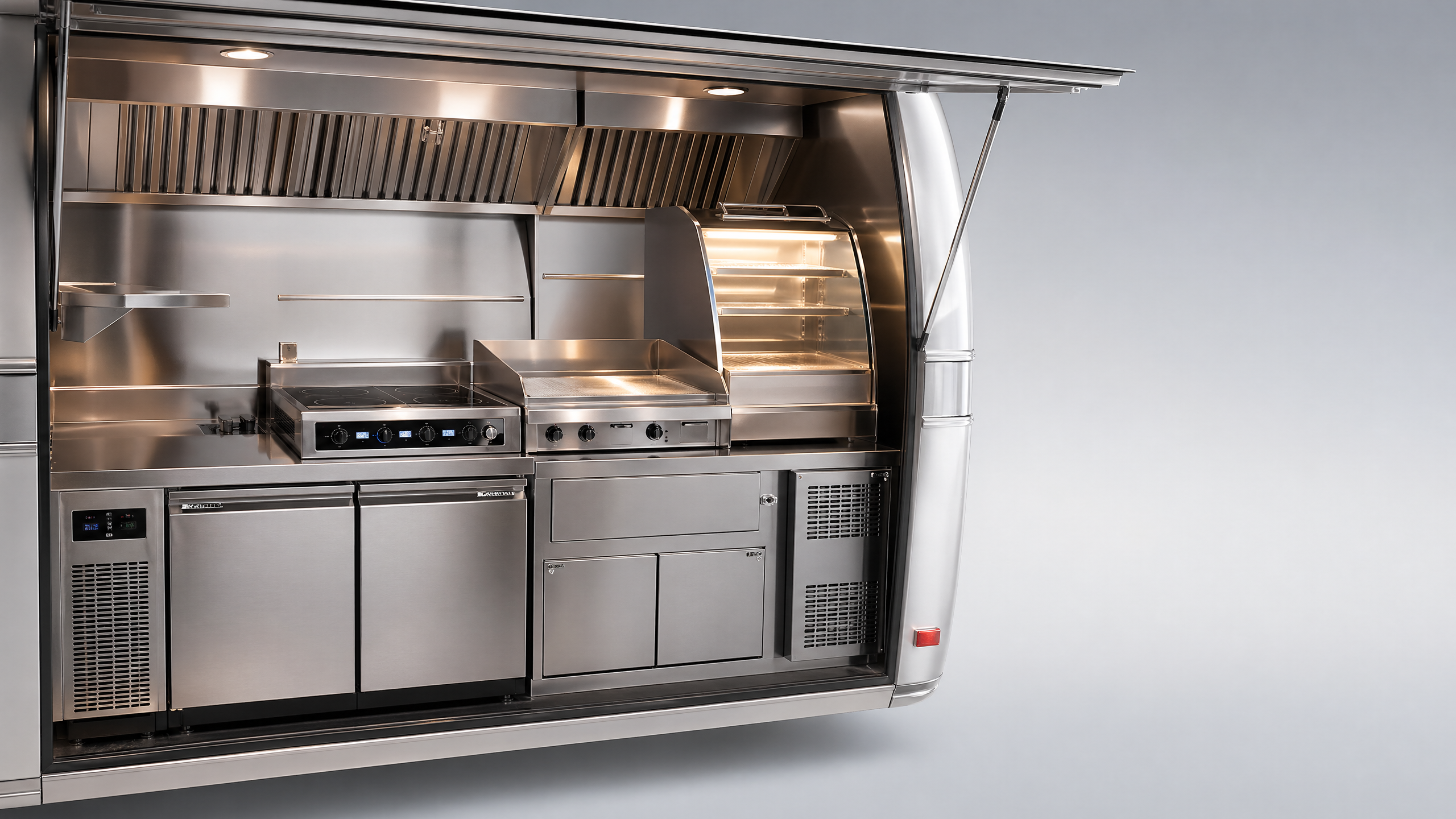
In a busy commercial restaurant kitchen, smart restaurant kitchen storage upgrades can instantly free up prep zones, improve restaurant kitchen organization, and support faster restaurant kitchen cleaning. From stainless steel restaurant kitchen shelving to modular restaurant kitchen workstations, the right solutions help operators maximize every restaurant kitchen counter while keeping tools, ingredients, and restaurant kitchen appliances within easy reach.
When operators search for restaurant kitchen storage upgrades that free up prep areas, they are usually not looking for generic design ideas. They want practical ways to create more usable workspace without expanding the kitchen footprint. In most cases, the real goal is to improve speed, reduce clutter, support sanitation, and make staff movement easier during peak service.
That matters because prep space affects almost everything in a commercial kitchen. If cutting boards, ingredient bins, mixers, pans, and small appliances compete for the same surfaces, productivity slows down. Staff waste steps, cleaning becomes harder, and the risk of cross-contamination rises. A smart storage plan can often deliver measurable gains faster and at lower cost than a full remodel.
For buyers, kitchen managers, chefs, and business decision-makers, the best storage upgrades are the ones that solve specific workflow problems. They should create clear prep zones, improve access to frequently used tools, fit sanitation requirements, and justify their cost through labor savings, smoother service, or better use of floor space. The following guide focuses on those decisions.
Why freeing up prep areas matters more than adding more equipment
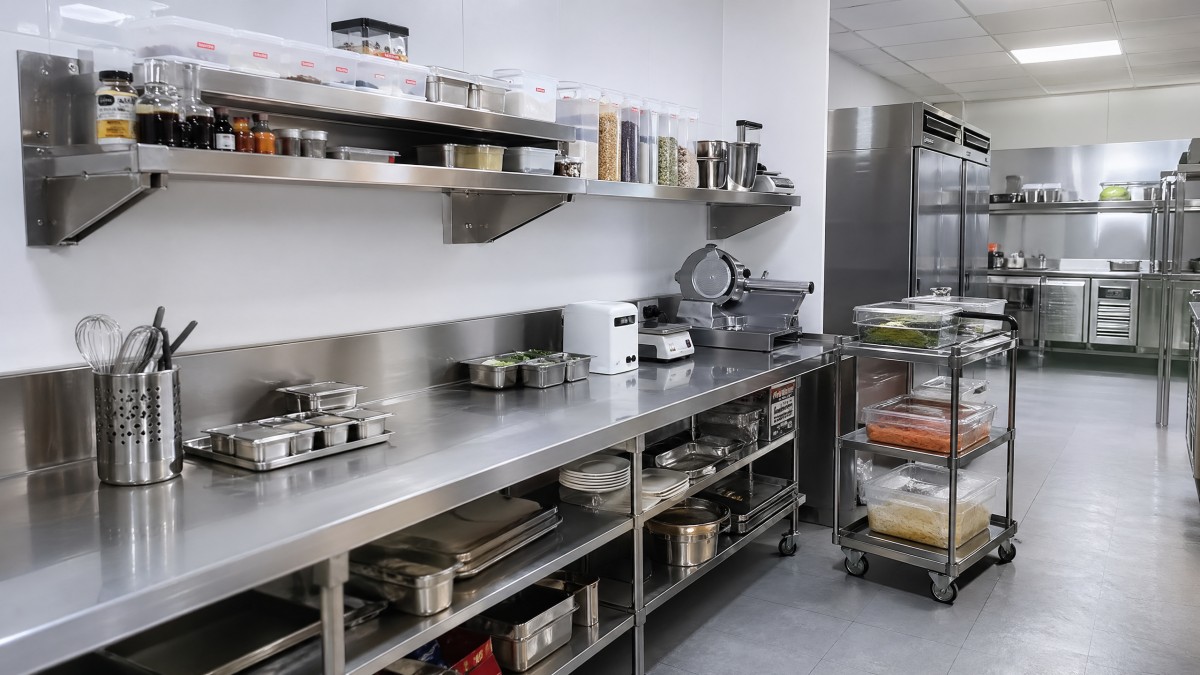
Many commercial kitchens are not short on equipment. They are short on organized, usable space. That distinction is important. A kitchen may own enough shelves, tables, and appliances, yet still feel crowded because the layout does not match the way staff actually prep, cook, store, and clean throughout the day.
Prep areas are where ingredients are washed, trimmed, portioned, mixed, assembled, and staged for service. If those zones are crowded with backup stock, rarely used tools, or countertop equipment with no dedicated home, output drops. Even a few seconds lost per prep task can add up across an entire shift, especially in high-volume restaurants.
Freeing prep space also supports food safety. Clear countertops are easier to sanitize between tasks. Staff can separate raw and ready-to-eat workflows more effectively. Ingredients are less likely to be stacked in unstable or unhygienic ways. For operations under regular inspection or with strict HACCP-style procedures, storage upgrades often improve compliance as much as convenience.
For decision-makers, there is also a financial angle. Better storage can delay or eliminate the need for construction, reduce labor inefficiency, lower breakage, and help staff work faster in the same square footage. That makes storage optimization one of the most practical kitchen improvement projects for both independent restaurants and multi-unit operations.
Which storage problems usually waste prep space in restaurant kitchens
Before choosing products, it helps to identify the specific reasons prep areas stay crowded. One common issue is horizontal storage. When restaurants rely too heavily on counters and undershelf table surfaces for everything, they leave vertical wall space unused. That forces ingredients, utensils, and appliances into active prep zones.
Another frequent problem is poor zoning. Items used for receiving, cold prep, hot line support, bakery work, and dish return may all end up stored in overlapping areas. Staff then move tools back and forth all day, creating clutter and interruptions. In many kitchens, the issue is not lack of storage volume but poor storage location.
Small equipment is also a major culprit. Food processors, blenders, slicers, scales, and countertop warmers are essential, but they often occupy premium work surfaces full-time even when used only during certain periods. Without dedicated shelving, equipment garages, mobile stands, or nearby racks, staff naturally leave them wherever there is space.
Inventory habits matter too. Over-ordering dry goods, keeping excess containers on the line, or storing backup disposables near prep tables can consume valuable room. If every station holds more than one shift’s practical need, useful prep capacity disappears quickly. Storage upgrades work best when paired with stock-level discipline.
High-value restaurant kitchen storage upgrades that create immediate workspace
Wall-mounted shelving is one of the simplest and highest-value upgrades. Stainless steel wall shelves move frequently used pans, seasoning bins, smallwares, and prep containers off the countertop while keeping them accessible. In compact kitchens, even one well-placed shelf above a prep table can dramatically increase clear work surface.
Overhead pot racks and hanging systems can free lower shelves and corners that are often misused. For kitchens with vertical clearance, hanging ladles, sauté pans, strainers, and mixing bowls near the relevant station keeps tools visible and accessible without occupying prep tables. The key is to place them where they support workflow rather than create overhead congestion.
Adjustable wire shelving or stainless steel shelving units are especially useful in dry storage, walk-ins, and back prep areas. Their value comes from flexibility. As menu mix, container sizes, or volume needs change, shelf heights can be adjusted without replacing the whole system. That makes them attractive for both growing restaurants and operations with seasonal shifts.
Mobile ingredient racks and utility carts are another practical solution. Instead of storing all mise en place on permanent counters, restaurants can stage ingredients on rolling units and move them where needed. This is especially effective in central prep kitchens, bakeries, banquet operations, and restaurants that convert one zone for multiple tasks throughout the day.
Undershelf additions for worktables, including drawer inserts, lower racks, and slide-out organizers, help reclaim dead space without enlarging the footprint. The most effective versions store items that support the station directly, such as cutting boards, hotel pans, scales, wraps, and gloves. That keeps tools close at hand while preserving the main work surface.
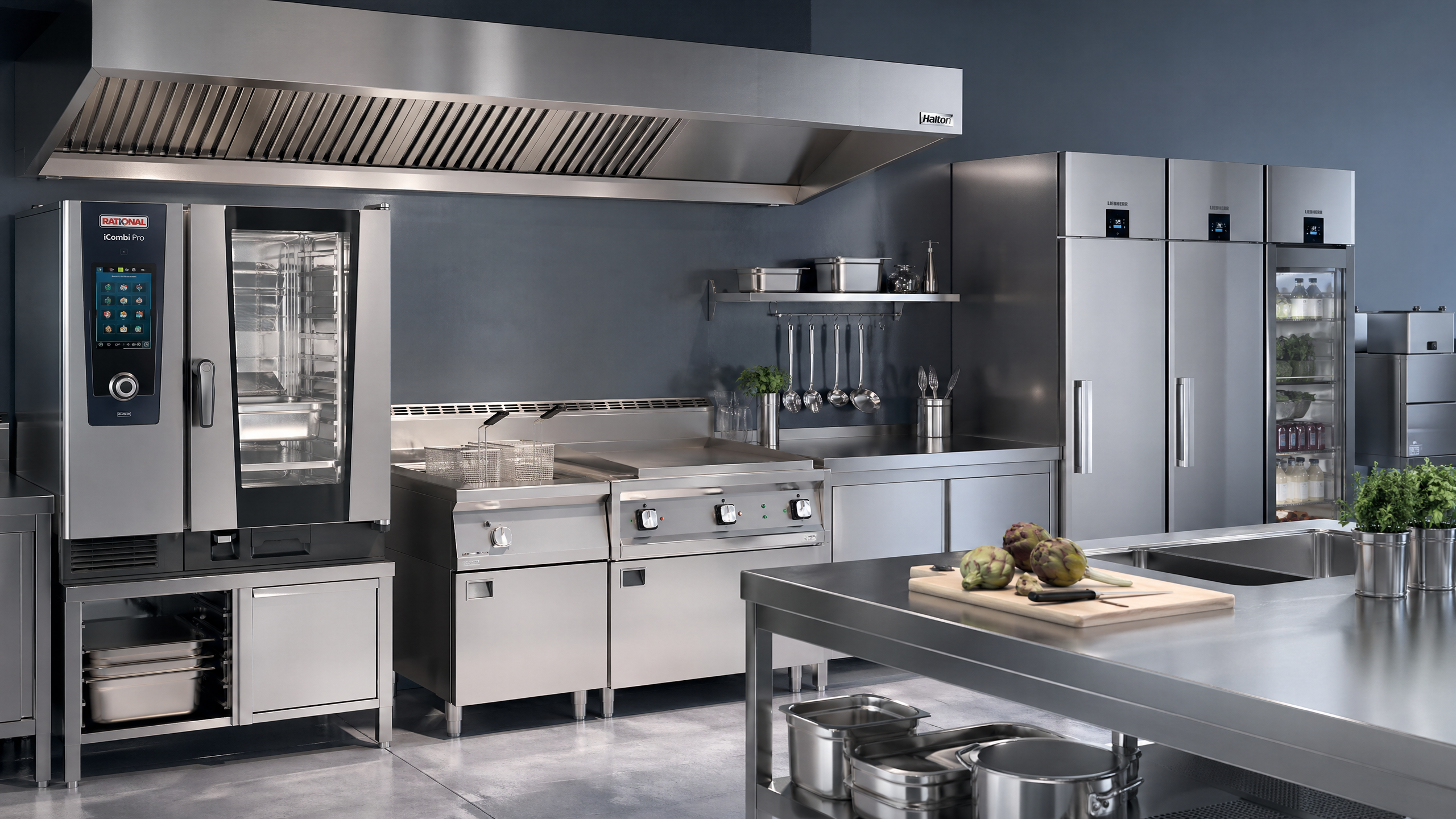
For small appliances, dedicated equipment stands often outperform countertop placement. A mixer stand with storage below or a mobile stand for a slicer can remove bulky machines from prep areas while keeping them operationally convenient. If equipment is heavy or used daily, mobility, safety, and cleaning access should be part of the purchasing criteria.
How to choose the right storage upgrade for your kitchen layout and workflow
The best storage solution depends on where congestion actually happens. Start by observing the kitchen during prep, peak service, and closing. Which counters become blocked first? Which items are repeatedly moved to make room? Where do staff wait for access to a surface? Those pressure points usually reveal where storage changes will have the biggest impact.
Next, separate items by frequency of use. Daily-use tools should stay within immediate reach of the relevant station. Weekly or occasional-use items can move to less premium locations. This simple distinction prevents expensive prep-space real estate from being consumed by things that do not need constant access.
Think in terms of zones rather than products. Cold prep, hot prep, pastry, plating support, dish area, and receiving each have different storage needs. A shelving unit that works well in dry storage may not be ideal near a high-moisture prep station. Likewise, a wall shelf above a vegetable prep sink may need different depth, load capacity, and cleaning considerations than one near a sandwich line.
Material choice matters. Stainless steel remains a top option in many commercial kitchens because it supports sanitation, durability, and professional appearance. Wire shelving can improve airflow in certain storage environments, especially in walk-ins. Polymer or hybrid systems may suit damp or corrosive conditions. The right choice should reflect cleaning routines, local regulations, and operating intensity.
Mobility is another key decision. Fixed shelving creates stable, permanent organization, but mobile racks and carts offer flexibility for changing menus and multi-use spaces. Restaurants with frequent production shifts often benefit from combining both: permanent vertical storage for core items and mobile units for ingredients or tools that move between stations.
What buyers and decision-makers should evaluate before purchasing
For procurement teams and owners, the most important question is not simply whether a storage unit fits physically. It is whether it improves throughput and reduces friction in daily operations. A lower-priced shelving system that creates awkward access or complicates cleaning may cost more over time than a better-designed option.
Load capacity and durability should be verified carefully. Commercial kitchens place real stress on shelves, brackets, casters, and welds. Heavy ingredients, bulk containers, mixers, and metal cookware can quickly expose weak construction. Buyers should review intended loads, usage frequency, and cleaning exposure before standardizing on a product line.
Ease of sanitation is equally important. Smooth surfaces, accessible corners, removable components, and proper wall clearances can save significant cleaning time. Storage that traps grease, blocks floor access, or requires difficult disassembly may create labor costs and hygiene risks that offset its organizational benefits.
It is also worth considering installation complexity and downtime. Some upgrades, such as wall shelving or rack systems, may require reinforcement, precise placement, or temporary workflow disruption. Others, such as mobile carts or modular workstations, can often be deployed with minimal interruption. In active restaurant environments, implementation speed can influence total project value.
Finally, calculate value using a broader lens than purchase price alone. Consider labor minutes saved, prep bottlenecks reduced, waste prevented, and cleaning efficiency improved. For a busy operation, recovering even a small amount of prep time per staff member per shift can justify a storage investment faster than expected.
Practical upgrade combinations that work well in real restaurant settings
A common high-impact combination is wall shelving plus an open-base prep table. This approach shifts containers, tools, and backup pans upward while preserving legroom or mobile bin storage below. It works especially well in sandwich shops, cafés, and compact line-prep environments where every inch of counter space matters.
Another effective setup is a mobile ingredient cart paired with labeled dry storage shelving. Bulk inventory stays organized off the station, while shift-level product is rolled into place only when needed. This reduces visual clutter, simplifies restocking, and supports cleaner end-of-shift breakdown in high-turnover kitchens.
For bakeries or prep-heavy restaurants, speed racks and tray racks can replace ad hoc pan stacking on counters or floors. They organize sheet pans, dough trays, cooling items, and portioned ingredients vertically, making production easier to track while preserving prep tables for active tasks rather than temporary holding.
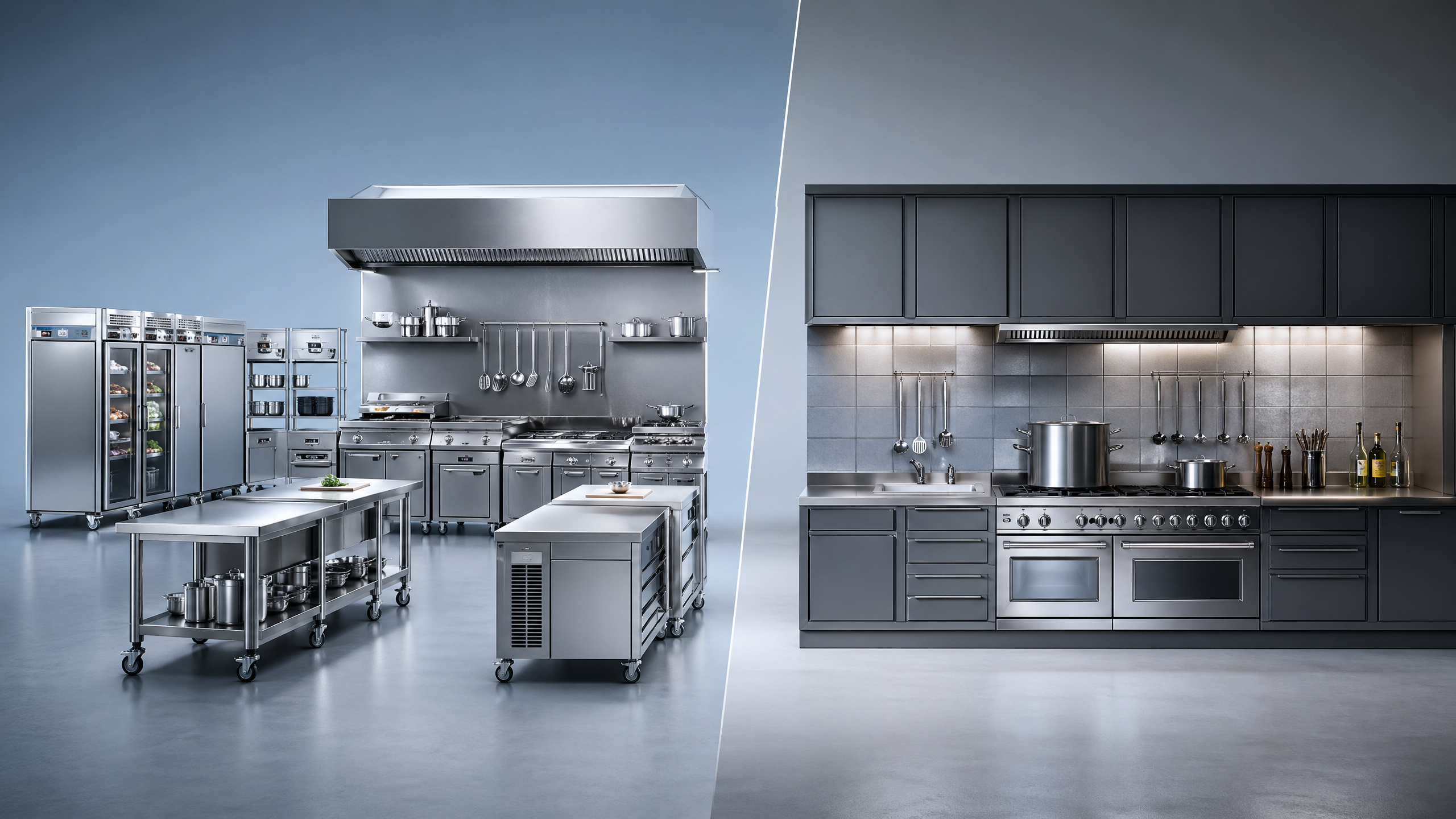
Restaurants with heavy use of countertop appliances often benefit from modular workstations that combine an equipment stand, undershelf storage, and nearby wall organization. Instead of allowing appliances to spread across multiple surfaces, the workstation creates a defined operational hub. This can be particularly useful for beverage prep, dessert assembly, or specialty menu stations.
In walk-in coolers, adjustable shelving combined with clear product zoning can also indirectly free prep space outside the cooler. When ingredients are easier to locate, retrieve, and rotate, staff spend less time staging excess product on prep counters “just in case.” Better cold storage organization often leads to better prep space discipline.
How to implement storage upgrades without disrupting operations
The safest way to upgrade restaurant kitchen storage is to begin with one or two high-friction areas rather than trying to redesign the entire kitchen at once. Choose a station where blocked prep space regularly affects service, such as garde manger, pastry, or the main line support table. Small targeted wins help build staff buy-in and reveal what works.
Involve the people who use the station every day. Operators and prep staff can often identify wasted movement, poor shelf placement, and items that should stay within arm’s reach. Their feedback helps prevent attractive but impractical installations. Storage should support real habits and tasks, not only look organized on paper.
Labeling and standard placement are essential after installation. Even the best restaurant kitchen organization system fails if items drift back onto counters over time. Use clear location rules for tools, pans, backup stock, and cleaning supplies. Photos, shadow boards, shelf labels, and par levels can help maintain the improvement.
Measure the results. Look at prep speed, number of items stored on counters, cleaning time, staff walking distance, and ease of shift change. If the upgrade does not improve one or more of these metrics, adjust the configuration. Storage planning is most effective when treated as an operational process rather than a one-time purchase.
Common mistakes to avoid when upgrading restaurant kitchen storage
One common mistake is buying storage based only on available wall or floor space without considering task flow. A shelf placed too high, too deep, or too far from the work area can create frustration instead of efficiency. Accessibility matters as much as capacity.
Another mistake is overfilling every new storage surface. The purpose of an upgrade is to free prep space and support cleaner operations, not to create permission for more clutter. If every shelf immediately becomes overflow storage, the original problem simply returns in a different form.
Some kitchens also ignore cleaning access. A tightly packed arrangement may look space-efficient but make it harder to sweep, mop, wipe down walls, or inspect corners. In foodservice settings, storage must balance density with sanitation. Any upgrade that compromises cleaning routines creates long-term risk.
Finally, avoid treating all stations the same. Different prep areas require different tool access, product exposure, and sanitation controls. A one-size-fits-all storage approach usually underperforms. Tailored solutions, even if modest, tend to produce better operational results.
Conclusion: the best storage upgrades create more working space, not just more places to put things
The most effective restaurant kitchen storage upgrades do more than add shelves or racks. They free prep areas, improve kitchen workflow, support sanitation, and help staff perform faster with less friction. For most restaurants, the biggest gains come from using vertical space better, reducing unnecessary countertop storage, and aligning storage with real station needs.
Whether you are a kitchen manager trying to improve daily efficiency, a purchaser comparing commercial kitchen equipment options, or a business owner evaluating return on investment, the right question is simple: will this upgrade create clearer, more usable prep space where the team actually needs it? If the answer is yes, the storage improvement is likely worth serious consideration.
In a market where labor efficiency, food safety, and operational flexibility matter more than ever, smart restaurant kitchen organization is not a cosmetic upgrade. It is a practical way to strengthen performance without expanding square footage. The best results come from targeted, workflow-based decisions that turn crowded counters into productive prep space.
- commercial kitchen equipment
- kitchen appliances
- restaurant kitchen
- Slicer
- Mixer
- Food Processor
- Cookware
- kitchen equipment
- stainless steel restaurant kitchen
- modular restaurant kitchen
- commercial restaurant kitchen
- restaurant kitchen appliances
- restaurant kitchen counter
- restaurant kitchen storage
- restaurant kitchen organization
- restaurant kitchen cleaning
Popular Tags
Kitchen Industry Research Team
Dedicated to analyzing emerging trends and technological shifts in the global hospitality and foodservice infrastructure sector.
Industry Insights
Join 15,000+ industry professionals. Get the latest market trends and tech news delivered weekly.
No spam. Unsubscribe anytime.
Contact With us
Contact:
Anne Yin (Ceramics Dinnerware/Glassware)
Lucky Zhai(Flatware)