
Kitchen design for small spaces that still fits full prep
Kitchen design for small spaces can still support full prep when layout, workflow, and equipment are planned with precision. From kitchen design for home and cafes to energy efficient kitchen design for commercial restaurant supplies environments, the right approach improves speed, safety, and storage. This guide explores smart kitchen design ideas, practical cost considerations, and sourcing insights from a reliable restaurant supplies manufacturer.
For researchers, operators, buyers, and decision-makers, the challenge is rarely just about fitting cabinets into a compact footprint. The real question is how to preserve a full prep sequence, maintain hygiene, and avoid workflow collisions in kitchens that may range from 6 to 25 square meters in homes, kiosks, cafés, cloud kitchens, and small restaurants.
In today’s kitchen equipment market, compact design is increasingly tied to automation, energy use, modular installation, and procurement efficiency. A small kitchen that is poorly planned often loses 15% to 30% of usable motion space, while a well-zoned layout can reduce unnecessary operator steps and improve throughput during peak periods.
Why small kitchen design must start with workflow, not furniture
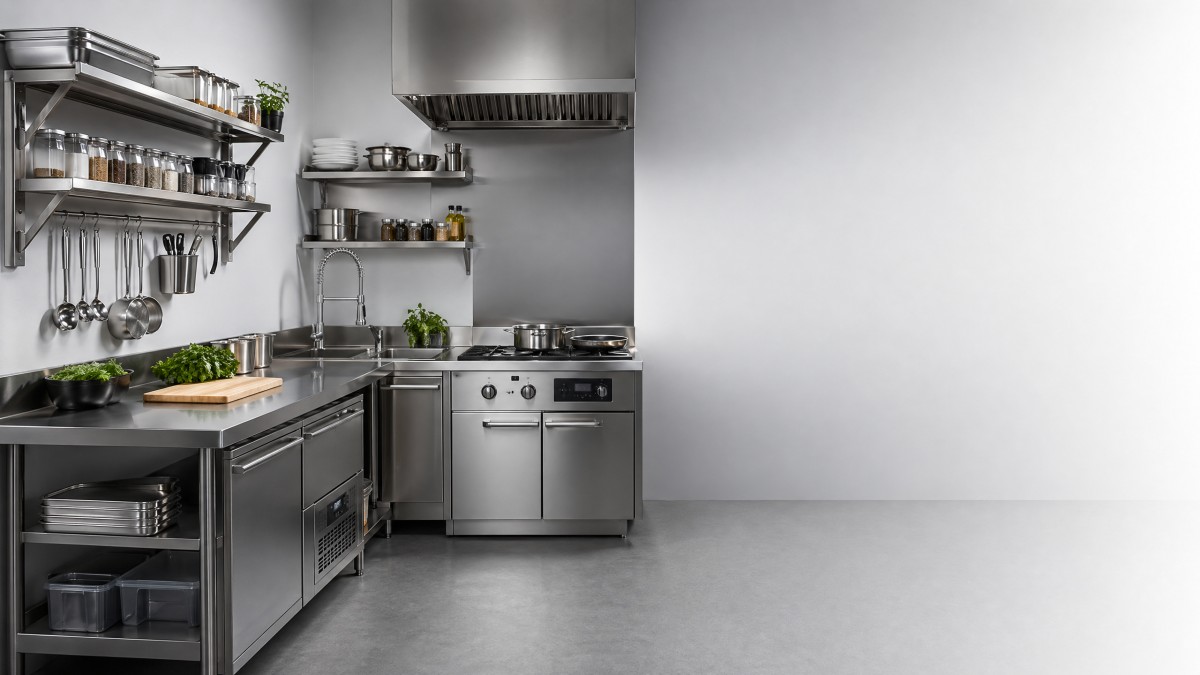
Small kitchen design succeeds when prep flow is mapped before materials, finishes, or appliance style are selected. Whether the site is a residential galley kitchen, a café back bar, or a compact commercial prep line, the sequence usually follows 4 core stages: receiving or storage, washing, prep, and cooking or assembly. If those stages overlap, the room may look complete but perform poorly.
Operators in tight spaces commonly lose time through backtracking. A sink placed too far from prep surfaces may add 20 to 40 extra walking steps per hour. In foodservice environments, that is not a minor inconvenience. It affects ticket speed, sanitation rhythm, and labor fatigue over 8 to 12 hour shifts.
For procurement teams, workflow-driven kitchen design also lowers the risk of overbuying equipment. Compact spaces cannot absorb redundant appliances, oversized refrigeration, or underused worktables. Every 600 mm to 900 mm section of wall or floor area must serve a defined task, preferably with dual-purpose value such as storage plus prep, or refrigeration plus ingredient staging.
Decision-makers should also note that full prep does not require a large footprint when menu structure is controlled. A menu with 20 highly overlapping ingredients is easier to support than a menu with 8 items requiring separate hot, cold, allergen-safe, and pastry workflows. Small kitchen planning is therefore both an equipment question and an operational design question.
Core layout models for compact kitchens
The most common compact layouts are single-wall, galley, L-shaped, and pass-through formats. Each has a different effect on storage depth, turning radius, and line-of-sight supervision. In commercial micro-sites, a galley setup often performs well when aisle width is kept in a workable range, while a single-wall format suits lower-volume beverage or light assembly concepts.
- Single-wall layout: often suitable for 5 to 8 square meters with low to medium prep complexity.
- Galley layout: useful for 6 to 12 square meters where parallel stations support wash and prep separation.
- L-shaped layout: effective in corners and mixed home-commercial hybrid spaces.
- Pass-through layout: practical for cafés, kiosks, and delivery kitchens focused on one-direction movement.
A practical planning rule
A useful rule is to place the three highest-frequency actions within a 1.2 to 2.4 meter reach zone whenever possible. In home kitchens this might be sink, cutting surface, and cooktop. In commercial environments it may be refrigerated ingredient rail, prep table, and finishing equipment. The goal is to shorten repetitive movement without compromising safety clearance.
Space-saving equipment choices that still allow full prep capability
Equipment selection determines whether a small kitchen remains functional after installation. The best kitchen design for small spaces usually relies on modular, narrow-depth, or undercounter equipment rather than full-size units copied from larger kitchens. For example, a 450 mm to 600 mm deep worktable may fit where a standard table blocks circulation, yet still support vegetable prep, plating, or beverage assembly.
Multi-function equipment can recover significant room in compact sites. Combination ovens, induction hobs with precise heat control, refrigerated prep counters, wall-mounted shelves, and fold-down side tables reduce the number of stand-alone units required. In a café or small restaurant, replacing 3 separate pieces with 1 integrated prep counter can simplify cleaning and improve mise en place access.
Energy efficient kitchen design matters even more in small rooms because heat buildup directly affects comfort, food holding, and air extraction load. Equipment that runs cooler, cycles efficiently, or offers standby modes may reduce unnecessary thermal stress. This is especially important in enclosed kitchens under 10 square meters, where ventilation inefficiency is quickly felt by staff.
A buyer should verify not only nominal dimensions but also service clearances, door swing, cleaning access, and utility entry points. A unit that is 700 mm wide on paper may effectively require 900 mm to operate and maintain safely. Compact kitchens leave little tolerance for installation oversight.
Typical equipment strategy by use case
The table below compares common equipment priorities across compact kitchen scenarios. The objective is to preserve full prep without filling the room with single-purpose machines.
The key takeaway is that small-space kitchen design is not about shrinking every appliance equally. It is about preserving the tasks that directly affect prep quality, food safety, and service speed, while compressing low-value or infrequently used functions.
Selection checklist for buyers and operators
- Measure the real installation envelope, including door openings, corners, columns, and drainage points.
- Confirm utility requirements such as power load, water inlet, waste outlet, and ventilation path.
- Check cleaning clearance, service access, and replacement-part availability before purchase.
- Prioritize equipment with 2-in-1 or modular functions when the prep menu supports it.
Storage, sanitation, and safety standards in tight footprints
A compact kitchen fails quickly if storage is treated as an afterthought. Full prep requires dry goods, chilled ingredients, tools, cleaning supplies, and waste handling to coexist without cross-contamination. In practice, vertical storage often delivers the biggest gain. Wall shelving, overhead racks, magnetic tool strips, and shallow upper cabinets can recover 20% or more of usable work zone capacity.
Sanitation becomes more sensitive as equipment density rises. In small foodservice kitchens, one poorly placed waste bin or open ingredient container can interrupt the wash-prep-cook sequence. Buyers should ask whether the layout supports at least 3 distinct sanitation behaviors: handwashing access, raw-to-ready separation, and easy wipe-down of high-touch surfaces at multiple points during service.
Safety clearances also deserve careful review. Hot equipment next to refrigeration, or knives stored above shoulder height, creates avoidable risk. Compact design does not excuse poor ergonomics. Operators working in a 700 mm to 900 mm aisle must still turn, carry, clean, and restock without contact burns or collision hazards.
For decision-makers, these details affect insurance exposure, staff training burden, and operating consistency. A kitchen that saves 1 square meter but creates daily sanitation shortcuts is not efficient. It simply moves cost into rework, waste, and supervision.
Storage and hygiene priorities by zone
The following table highlights how storage choices should align with hygiene and prep frequency in small kitchens.
The strongest compact kitchens separate high-frequency items from reserve stock. Daily-use tools should remain within arm’s reach, while refill inventory can move to upper shelves or a nearby dry store. This reduces counter clutter and keeps prep surfaces open for actual food work.
Common mistakes to avoid
- Using deep cabinets that create dead corners and block fast access.
- Placing waste handling directly beside ingredient staging.
- Overloading wall shelves beyond safe reach height for frequent-use items.
- Ignoring ventilation and moisture around enclosed storage modules.
Budgeting, sourcing, and supplier evaluation for compact kitchen projects
Small kitchen projects often appear simple, but procurement mistakes can become more expensive because there is less room to correct them. Replacing one mis-sized prep counter may require re-routing utilities, changing cabinet sequencing, or delaying opening by 7 to 21 days. For this reason, cost planning should include equipment, installation, utilities, ventilation, and service access rather than comparing unit prices alone.
Buyers sourcing from a restaurant supplies manufacturer should request dimension drawings, material specifications, utility requirements, and lead times early in the process. Stainless steel grade, shelf load capacity, caster quality, and compressor placement can materially affect long-term performance in high-use environments. A lower purchase price may not be attractive if maintenance interruptions increase after 6 to 12 months.
Commercial kitchen design for small spaces also benefits from phased procurement. Instead of ordering all possible equipment at once, some operators install the core prep line first, then add specialized units after 60 to 90 days of live operation. This helps confirm actual menu demand, labor pattern, and bottleneck points before capital is locked into nonessential assets.
For enterprise decision-makers, supplier evaluation should include after-sales response, spare parts path, packaging for export, and documentation quality. Cross-border sourcing is increasingly common in kitchen equipment, but successful procurement depends on predictable communication and accurate technical alignment as much as on manufacturing cost.
Procurement comparison factors
The table below can be used as a practical reference when comparing suppliers or product packages for compact kitchen projects.
A disciplined sourcing process reduces layout risk and protects return on investment. In compact kitchens, every product interacts with at least 2 or 3 adjacent elements, so technical clarity at the quote stage is especially valuable.
A simple 5-step sourcing process
- Define menu, daily volume, and prep sequence before requesting equipment quotes.
- Measure the site and create a functional zone map with utilities and ventilation points.
- Shortlist equipment by footprint, power load, and multi-use value.
- Review supplier drawings, lead times, and service commitments in writing.
- Finalize installation sequence and acceptance checklist before shipment or production.
Implementation tips, maintenance planning, and common buyer questions
Even a strong kitchen design for small spaces can underperform if implementation is rushed. Before commissioning, operators should test movement paths with actual bins, trays, and staff motions. A dry run of 30 to 60 minutes often reveals blocked drawers, awkward shelf heights, and prep surfaces that looked sufficient on drawings but feel narrow during real use.
Maintenance planning is equally important because compact kitchens leave less redundancy. If one refrigerated prep counter fails, production may stop immediately. Preventive checks should therefore be scheduled by equipment type. High-use refrigeration may need inspection every 30 to 90 days, while stainless workstations, hinges, seals, and casters should be reviewed as part of weekly cleaning and monthly wear checks.
Smart kitchen technologies are also becoming more relevant in limited spaces. Digital temperature monitoring, timer integration, and power management features help small teams maintain consistency without adding labor. For buyers evaluating future-ready setups, simple automation often provides better value than large capital systems in the early stage.
The long-term goal is not to make a tiny kitchen feel large. It is to make it dependable, safe, and scalable for the intended volume. That applies equally to a family kitchen, a high-turn café, or a compact commercial preparation room linked to restaurant supplies operations.
How much prep can a small kitchen realistically support?
It depends on menu complexity, storage strategy, and equipment integration. A well-planned 8 to 12 square meter commercial kitchen can handle light to medium prep for a focused menu, especially if refrigerated ingredients, wash access, and hot line equipment are arranged in sequence. In homes, full daily prep is possible in 6 to 9 square meters when vertical storage and compact appliances are used intelligently.
What are the most common layout mistakes?
The most frequent errors are oversized equipment, insufficient prep surface, blocked service clearances, and poor separation between clean and dirty workflows. Another common mistake is selecting attractive cabinetry or appliances before confirming actual prep tasks. In B2B settings, this can lead to underperforming kitchens that require modifications within the first 3 to 6 months.
How should buyers balance cost and performance?
Start with core functions that protect throughput and food safety: refrigeration, wash access, prep surface, storage, and one reliable cooking or finishing zone. Then compare suppliers on technical fit, service support, and lifecycle practicality, not only purchase price. In compact kitchens, one durable multi-use unit often delivers more value than two lower-cost units competing for space.
Kitchen design for small spaces is most effective when workflow, equipment, storage, and sourcing decisions are aligned from the start. For researchers, operators, buyers, and business leaders, the right compact kitchen strategy can improve prep capacity, sanitation control, energy efficiency, and day-to-day usability without demanding a large footprint.
If you are planning a home kitchen upgrade, a café back-of-house layout, or a compact commercial food prep environment, now is the time to review your floor plan, utility limits, and equipment list with a practical sourcing lens. Contact us to get a tailored solution, discuss product details, or explore more kitchen equipment options for efficient small-space operations.
Popular Tags
Kitchen Industry Research Team
Dedicated to analyzing emerging trends and technological shifts in the global hospitality and foodservice infrastructure sector.
Industry Insights
Join 15,000+ industry professionals. Get the latest market trends and tech news delivered weekly.
No spam. Unsubscribe anytime.

Contact With us
Contact:
Anne Yin (Ceramics Dinnerware/Glassware)
Lucky Zhai(Flatware)