
Bakery kitchen design that supports proofing and cooling flow
A well-planned kitchen design for bakeries can transform proofing and cooling flow, improving product quality, labor efficiency, and food safety. For buyers comparing commercial restaurant supplies, stainless steel restaurant supplies, or a reliable restaurant supplies manufacturer, understanding layout strategy is as important as equipment choice. This guide explores practical, energy efficient kitchen design ideas that support smoother bakery operations and smarter investment decisions.
In bakery production, proofing and cooling are not secondary steps. They directly affect crumb structure, crust quality, moisture retention, packaging speed, and shelf-life consistency. A weak layout often creates avoidable delays of 10 to 30 minutes per batch, while a strong process design can reduce walking distance, lower handling damage, and support cleaner separation between hot, raw, and finished zones.
For operators, the priority is a workflow that is simple and safe during peak output. For procurement teams, the challenge is balancing capacity, sanitation, durability, and budget. For business decision-makers, the key question is whether the bakery kitchen design supports future growth, labor efficiency, and energy performance over the next 3 to 5 years.
Why proofing and cooling flow should drive bakery kitchen design
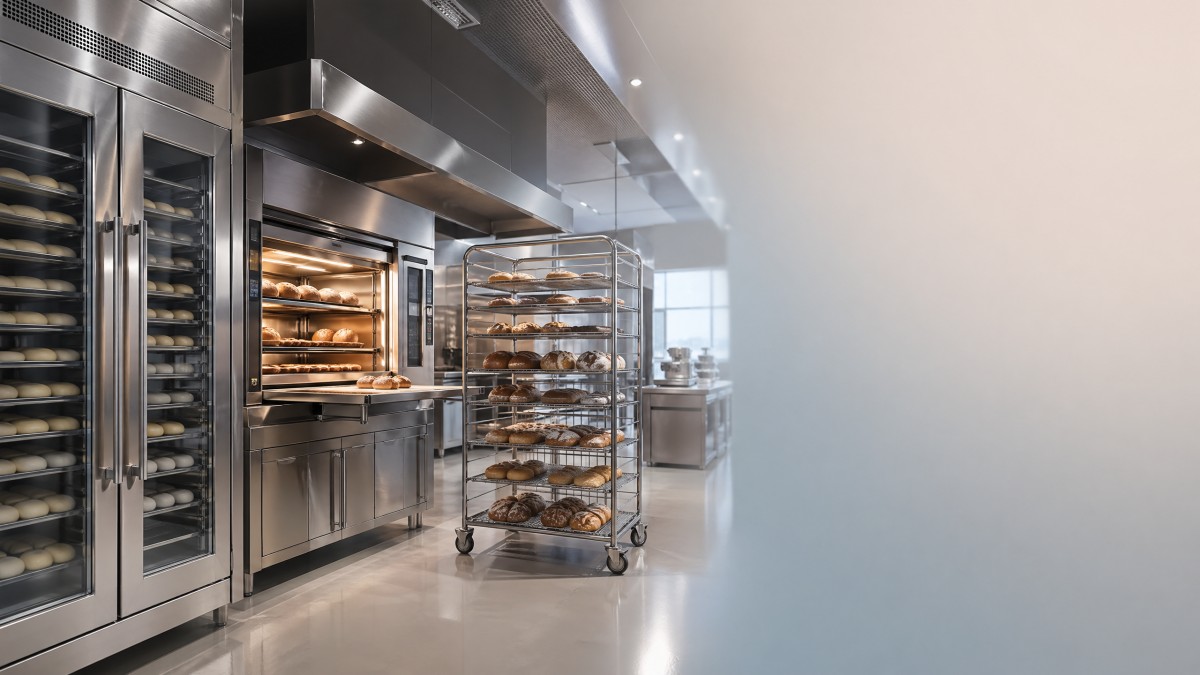
In many bakery projects, equipment is selected first and the workflow is adjusted later. That approach often causes bottlenecks between dough preparation, proofing, baking, cooling, and packing. A better sequence is to map the process in one direction, from ingredient handling to dispatch, then place each station according to time, temperature, and labor movement.
Proofing depends on environmental control. For many yeast-based products, the operating range is commonly around 30°C to 38°C with relative humidity between 75% and 85%. If the proofer is too far from makeup tables or too close to loading doors, temperature fluctuation and unnecessary transport time can cause inconsistent rise, skin formation, and tray congestion.
Cooling is equally important. Bread, buns, croissants, and laminated products need time to release internal steam before slicing or packaging. In practical bakery operations, cooling can take 20 to 90 minutes depending on product size, density, ambient airflow, and rack design. If products are packed too early, condensation can shorten shelf life and increase the risk of soggy crusts or mold growth.
Typical flow problems in bakery kitchens
A poor bakery kitchen design usually shows the same warning signs: workers crossing paths, racks parked in aisles, oven exits facing prep tables, or cooling racks placed near flour dust zones. These issues look small at first, but over 2 to 3 production shifts they can reduce throughput, increase breakage, and complicate sanitation control.
- Proofers located more than 8 to 12 meters from shaping stations, increasing tray transport time.
- Insufficient cooling lanes, forcing hot products to queue in oven discharge areas.
- Mixed traffic between raw dough racks and finished product racks, raising hygiene risk.
- Packaging areas placed too close to ovens, creating heat stress for staff and wrappers.
What an efficient directional layout achieves
An efficient directional layout reduces handling steps and creates clearer separation between warm process zones and ambient finishing zones. In many medium-scale bakeries, reducing just 2 handling touches per tray can improve labor use across dozens of batches each day. The result is more stable quality and lower wear on racks, trays, and transport carts.
The table below outlines how proofing and cooling decisions affect key operating outcomes in bakery production.
The key takeaway is that bakery kitchen design should be process-led, not equipment-led. Buyers reviewing commercial restaurant supplies often focus on specifications first, but a strong proofing and cooling flow turns standard equipment into a more productive system.
Core layout zones and equipment placement for smoother bakery operations
A bakery kitchen should usually be divided into 5 functional zones: receiving and storage, mixing and scaling, makeup and proofing, baking and cooling, then packing and dispatch. The exact footprint varies, but the sequence should remain as linear as possible. This helps operators avoid backtracking and gives managers clearer control over labor allocation and cleaning schedules.
Stainless steel restaurant supplies are especially valuable in bakery environments because they support hygiene, corrosion resistance, and repeated washdown. Benches, rack stands, sinks, shelving, and transfer tables should be selected not only for durability but also for edge design, cleanability, and compatibility with tray sizes used in daily production.
Recommended sequence from proofing to cooling
The path from final shaping to packed product should be short, visible, and easy to supervise. A common arrangement places the proofer near the makeup line, with direct transfer to the oven loading side, then a dedicated cooling corridor or rack bay on the discharge side. The packaging area should be physically separate enough to protect wrapping quality from oven heat and moisture.
- Shape and tray the dough close to the proofing entrance to reduce handling time.
- Place ovens so loaded and unloaded traffic do not cross within the same narrow aisle.
- Reserve cooling positions based on peak batch volume, not average output.
- Move slicing and packaging after full cooling confirmation, especially for sandwich bread.
For bakeries producing 200 to 800 trays per day, mobile racks often provide the best balance between flexibility and throughput. For higher volume lines, fixed conveyors or guided transfer paths may become more attractive. Even then, buffer space matters. A cooling zone sized for only one batch often fails when output rises during holiday or weekend peaks.
Equipment matching by bakery scale
The right equipment package depends on product mix, hourly output, and operating rhythm. The comparison below can help procurement teams link bakery kitchen design choices with practical capacity planning.
This comparison shows that layout logic changes with business model. A restaurant supplies manufacturer that understands bakery operations can often help buyers choose not just machines, but a full movement pattern that protects efficiency from day one.
Energy efficient kitchen design ideas that improve bakery performance
Energy efficient kitchen design is not limited to low-power equipment. In bakeries, efficiency also comes from reducing heat loss, shortening transfer paths, minimizing rework, and controlling air movement. A badly arranged kitchen can waste energy through open doors, overheated packing areas, and repeated reheating caused by production interruptions.
One practical improvement is thermal zoning. Heat-generating equipment such as ovens, steam systems, and proofers should be grouped logically, while packaging and ingredient prep should remain in more stable ambient areas. This reduces HVAC strain and can improve worker comfort during 8 to 12 hour production shifts.
Design choices with measurable impact
Several energy-related decisions also support better proofing and cooling flow. Insulated proofers, controlled ventilation, and dedicated cooling lanes can reduce production variability. Even a reduction of 1 to 2 unnecessary door openings per batch may help maintain a more stable warm zone environment over time.
- Use separated hot and cool work zones to prevent packaging areas from absorbing oven discharge heat.
- Plan exhaust and make-up air so drafts do not disturb proofing cabinet stability.
- Install LED task lighting to reduce ambient heat load around finishing stations.
- Choose stainless steel restaurant supplies with smooth surfaces that clean faster and reduce water use during washdown.
Cooling should also be treated as an airflow design issue. Racks placed too tightly can trap steam and slow temperature drop. In many bakery settings, leaving consistent clearance around hot product racks can improve passive cooling performance without adding mechanical complexity. Where high throughput is required, dedicated cooling rooms or directed airflow can support more predictable release times.
Where buyers often overspend
Many procurement teams overspend on oven capacity while underinvesting in transfer, staging, and cooling support. That imbalance creates hidden losses. If one oven cycle finishes every 12 minutes but the cooling area can only absorb half a batch, output slows despite strong installed equipment. The lesson is clear: total system balance matters more than headline machine power.
For decision-makers comparing global kitchen equipment suppliers, it is worth asking for a process view that includes utility planning, cleaning access, rack circulation, and air management. Those details often produce a better return than simply adding more heat capacity.
How procurement teams should evaluate bakery kitchen equipment and suppliers
Selecting bakery equipment for proofing and cooling flow requires more than comparing price lists. Buyers should evaluate at least 4 dimensions: process fit, material durability, sanitation design, and support capability. This is especially important when sourcing commercial restaurant supplies across borders, where lead times, spare parts planning, and installation support can vary widely.
A strong restaurant supplies manufacturer should be able to discuss tray format, rack capacity, workflow sequencing, and maintenance intervals in practical terms. If a supplier only talks about machine dimensions and not movement logic, the project may still leave costly operational gaps after installation.
Key procurement checklist for bakery projects
Before issuing a purchase order, procurement and operations teams should review equipment decisions against real production assumptions: batches per hour, staff per shift, product families, and required cooling dwell times. This helps avoid under-sizing or buying equipment that works individually but not as a line.
This checklist helps teams compare suppliers on operational value, not only unit cost. For many bakeries, a lead time of 4 to 10 weeks, plus commissioning and operator training, should be planned into the project schedule. Rushed procurement often creates hidden compromises in utility coordination and floor flow.
Common selection mistakes
Three common mistakes appear repeatedly: buying proofing capacity without enough staging space, selecting cooling racks without confirming aisle turning radius, and ignoring cleaning access around fixed installations. These issues may not show up on quotations, but they affect daily labor cost and food safety discipline.
- Do not size proofers only by theoretical tray count; match them to actual product cycle time.
- Do not treat cooling as leftover floor space; reserve it according to peak batch release.
- Do not overlook after-sales support, especially for imported components and replacement parts.
Implementation, maintenance, and FAQ for bakery proofing and cooling systems
A good bakery kitchen design must also be easy to implement and maintain. In most commercial projects, rollout can be divided into 5 steps: process review, layout planning, utility confirmation, equipment installation, and trial production. Each step should include both operations and procurement stakeholders to make sure the final arrangement works in real use, not only on paper.
Maintenance planning should start before the first batch is produced. Proofers need routine checks for seals, humidity systems, sensors, and drainage points. Cooling zones require regular attention to rack condition, airflow cleanliness, and floor sanitation. A simple preventive routine every 1 to 4 weeks can reduce avoidable service calls and protect product consistency.
Implementation priorities
- Validate product mix and hourly output targets before freezing the floor plan.
- Confirm utility loads, ventilation, drainage, and safe traffic routes for racks and staff.
- Run a trial sequence using empty racks to test turning, queue points, and cooling positions.
- Train staff on movement rules so hot and finished products follow separate paths.
Even smaller bakeries benefit from this discipline. A compact shop with only 2 to 4 staff members can still lose time if one person blocks oven discharge or if packing starts before internal product heat has stabilized. Clear movement logic often delivers faster payback than adding extra labor.
FAQ: practical questions buyers and operators ask
How much cooling space does a bakery usually need?
A practical estimate starts with peak batch output, not daily average volume. If a bakery releases 3 oven batches within 30 minutes and each batch needs 30 to 60 minutes of cooling, the layout should support at least that simultaneous load with safe aisle clearance. Underestimating this area is one of the most common planning errors.
Are stainless steel restaurant supplies necessary in all bakery zones?
They are most valuable in high-contact, wet-cleaning, and hygiene-sensitive zones such as prep benches, sinks, transfer tables, and rack interfaces. In dry storage or non-contact areas, other materials may be used if they meet sanitation and durability needs, but stainless steel remains the most common commercial choice for long-term reliability.
What delivery timeline should buyers expect?
For standard bakery equipment and restaurant supplies, delivery may fall within 2 to 6 weeks depending on stock and region. More customized projects involving proofers, ventilation coordination, or integrated line planning may require 6 to 12 weeks. Buyers should also allow time for site preparation, utility checks, and operator training before full production launch.
What is the most important question to ask a supplier?
Ask how the proposed equipment supports the full path from dough makeup to cooled finished product. This question reveals whether the supplier understands workflow, not just machinery. It is often the quickest way to distinguish a basic seller from a more capable restaurant supplies manufacturer with real project insight.
Bakery success depends on more than ovens and mixers. A kitchen designed around proofing and cooling flow helps protect product quality, labor efficiency, sanitation discipline, and energy use at the same time. For information researchers, operators, buyers, and business leaders, the most valuable investment is a system that matches process reality and future growth. If you are planning a new bakery, upgrading commercial restaurant supplies, or comparing stainless steel restaurant supplies from a trusted manufacturer, now is the right time to discuss layout, capacity, and workflow in detail. Contact us to get a tailored solution, review product options, and explore more efficient bakery kitchen design strategies.
Popular Tags
Kitchen Industry Research Team
Dedicated to analyzing emerging trends and technological shifts in the global hospitality and foodservice infrastructure sector.
Industry Insights
Join 15,000+ industry professionals. Get the latest market trends and tech news delivered weekly.
No spam. Unsubscribe anytime.
Contact With us
Contact:
Anne Yin (Ceramics Dinnerware/Glassware)
Lucky Zhai(Flatware)