
What school kitchen design gets wrong about storage
Many school kitchens look efficient on paper, yet fail in one critical area: storage. From overcrowded prep zones to poor inventory flow, weak kitchen design for schools can slow staff, raise waste, and affect food safety. This article explores what school kitchen design gets wrong about storage, while comparing practical lessons from commercial restaurant supplies, stainless steel restaurant supplies, and energy efficient kitchen design.
For most schools, the real problem is not simply “not enough space.” It is that storage is often planned as leftover space rather than as a working system. When storage does not match menu volume, delivery patterns, staffing, and food safety needs, the entire kitchen becomes harder to run. For operators, that means extra motion and stress. For buyers and decision-makers, it means lower efficiency, more spoilage, and expensive redesigns later. The best school kitchen design treats storage as part of production flow, not as an afterthought.
Why storage is the part of school kitchen design that fails first
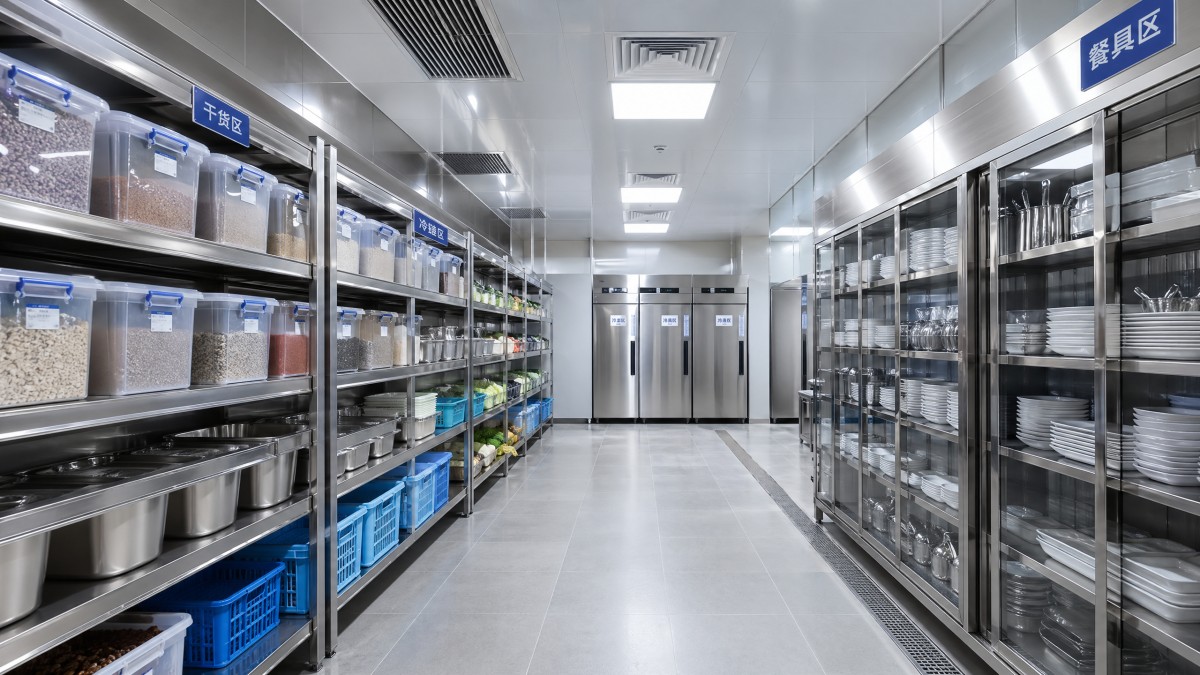
School kitchens usually have stricter budgets, tighter footprints, and more standardized planning than many commercial foodservice sites. That creates a common mistake: designers focus on cooking line capacity, serving speed, and compliance, but underestimate how much storage drives daily performance.
In practice, storage affects almost everything:
- How quickly staff can receive and put away deliveries
- Whether raw and ready-to-eat items stay properly separated
- How often employees bend, reach, carry, or double-handle products
- Whether smallwares, trays, utensils, and cleaning supplies are available when needed
- How much inventory gets lost, expired, or damaged
In many school projects, dry storage, cold storage, and equipment storage are sized by rough assumptions instead of actual operating data. A layout may look neat in drawings, but if staff cannot move goods from receiving to storage to prep without crossing traffic, it is not efficient. This is where school kitchen design often gets storage wrong: it plans for square footage, not workflow.
The most common storage mistakes in school kitchens
Readers researching this topic usually want specifics, not general advice. These are the storage errors that show up most often in kitchen design for schools.
1. Dry storage is too small for real purchasing patterns
Schools often buy in bulk to control cost and reduce delivery frequency. But if dry storage is sized for ideal weekly turnover rather than actual purchasing behavior, ingredients overflow into prep areas, corridors, or offices. That creates clutter, slows work, and increases contamination risk.
A better approach is to size dry storage around:
- Average and peak student meal counts
- Delivery frequency
- Emergency reserve stock needs
- Packaging size and carton dimensions
- Seasonal menu changes
2. Refrigerated and frozen storage are disconnected from prep flow
Cold rooms and reach-in units may meet capacity requirements, yet still hurt operations if placed too far from prep stations or if access doors create traffic conflicts. Staff then spend more time walking and more time with doors open, which affects labor and energy use.
Good storage planning links cold storage to actual task sequence. Items used daily should be closest to prep. Secondary or reserve stock can sit deeper in storage. This principle is common in high-performing commercial kitchens and should be standard in schools as well.
3. Smallwares and service items are poorly organized
Food pans, trays, utensils, containers, and cleaning tools are often treated as minor details during design. In reality, they can create constant friction. If staff must search for lids, stack trays in awkward corners, or share storage between unrelated tasks, the kitchen loses time every shift.
This is one reason lessons from commercial restaurant supplies matter. Professional kitchens often use dedicated shelving, modular bins, wall-mounted organization, and clearly zoned access points for fast retrieval. School kitchens benefit from the same discipline.
4. Storage zones ignore food safety separation
Another frequent mistake is inadequate separation between raw products, ready-to-serve items, allergens, chemicals, and janitorial tools. Even if there is enough total storage volume, weak zoning creates risk.
Storage should support:
- First-in, first-out inventory rotation
- Clear allergen segregation
- Separate chemical storage away from food
- Easy cleaning under and around shelving
- Label visibility and stock traceability
5. Shelving and materials are chosen by price, not lifecycle value
Low-cost shelving may seem acceptable during procurement, but in humid, high-use environments it can fail quickly, corrode, or become hard to sanitize. That is why stainless steel restaurant supplies are often relevant in school settings too. Stainless steel shelving, tables, racks, and storage accessories generally offer stronger hygiene performance, better durability, and easier maintenance over time.
What target readers should evaluate before approving a school kitchen layout
Whether you are an operator, purchaser, or decision-maker, the key question is not “Does this kitchen include storage?” but “Does the storage support daily work without waste or risk?” Before approving a design, review these points.
Match storage volume to actual operating reality
Ask for calculations based on meal counts, menu types, stock days on hand, and delivery schedules. If a design team cannot show how storage capacity was determined, there is a good chance the plan is underdeveloped.
Check movement, not just room labels
A floor plan can list dry storage, freezer, and prep areas, but the real issue is movement between them. Trace the path of:
- Received goods
- Daily-use refrigerated ingredients
- Bulk staples
- Serving ware and trays
- Waste and empty packaging
If these paths cross heavily or require repeated backtracking, storage design is not working.
Review access height, reach, and ergonomics
Storage should reduce strain, not create it. High-turn items should not require ladders, deep bending, or lifting from floor level. Operators care about this because it affects speed and fatigue. Managers should care because it affects safety and labor efficiency.
Plan for change, not just opening day
School food programs evolve. Menus, packaging formats, participation rates, and nutrition requirements change over time. Flexible shelving systems, adjustable racking, and modular storage zones make it easier to adapt without major renovation.
What school kitchens can learn from commercial kitchen storage planning
Commercial kitchens often operate under intense time pressure, so they have developed practical storage habits that school projects can adopt.
Zoned storage beats general storage
Instead of one large catch-all area, better kitchens use clearly defined zones: receiving, bulk dry goods, day-use cold storage, smallwares, cleaning supplies, and service items. This reduces searching, improves accountability, and shortens staff movement.
Frequency-based placement improves labor efficiency
The products and tools used most often should be closest to the point of use. Reserve stock can sit farther away. This sounds simple, but many school kitchens reverse the logic because rooms are allocated by architecture instead of operations.
Standardized containers and shelving improve visibility
Commercial sites often standardize bins, labels, pan sizes, and shelf spacing. That makes stock counting easier and reduces wasted space. For procurement teams, this also simplifies replacement and future expansion.
Durable materials reduce long-term maintenance
Stainless steel restaurant supplies remain a strong choice wherever sanitation, moisture resistance, and heavy use matter. While the upfront cost may be higher than basic alternatives, the longer service life and easier cleaning often make stainless solutions more economical over time.
How storage design affects energy efficiency and operating cost
Storage is not only an organization issue. It also has a direct connection to energy efficient kitchen design.
Poorly located or overloaded cold storage can increase compressor workload, door-open time, and heat gain. Crowded aisles can also make cleaning harder, which affects ventilation and equipment condition. Better storage planning supports lower energy use in several ways:
- Reducing unnecessary refrigerator and freezer door openings
- Shortening travel distance for ingredient retrieval
- Preventing over-purchasing and spoilage
- Making inventory easier to track and rotate
- Supporting cleaner, less obstructed work areas
For enterprise decision-makers, this matters because storage design influences both labor cost and utility cost. A kitchen with smarter storage may not look dramatically different at first glance, but over months and years it can deliver measurable operational savings.
Practical signs that a school kitchen storage plan is strong
If you are comparing designs, equipment packages, or renovation options, these signs usually indicate a stronger storage concept:
- Receiving, storage, prep, and service areas follow a logical sequence
- Dry, refrigerated, frozen, and chemical storage are clearly separated
- High-use items are placed near their workstations
- Shelving is adjustable, cleanable, and appropriate for load and moisture conditions
- There is enough room for stock rotation and cleaning access
- Tray, pan, and utensil storage are planned in detail, not left vague
- The design allows future menu or volume changes without major reconstruction
By contrast, warning signs include mixed-use storage rooms, overflow into circulation areas, unclear container systems, and plans that rely too heavily on staff “figuring it out later.”
Conclusion: storage should be treated as infrastructure, not leftover space
What school kitchen design gets wrong about storage is usually not a single equipment choice. It is a planning mindset. Too many layouts treat storage as secondary to cooking and serving, when in reality it shapes workflow, food safety, labor efficiency, waste control, and energy performance.
For schools, the smartest approach is to evaluate storage the way experienced commercial operators do: by flow, frequency of use, hygiene, durability, and long-term adaptability. Drawing from proven practices in commercial restaurant supplies, stainless steel restaurant supplies, and energy efficient kitchen design can help schools build kitchens that are easier to operate and less costly to maintain.
If a school kitchen storage plan supports real inventory behavior, safe zoning, ergonomic access, and efficient movement, the whole facility performs better. That is the standard worth designing for.
Popular Tags
Kitchen Industry Research Team
Dedicated to analyzing emerging trends and technological shifts in the global hospitality and foodservice infrastructure sector.
Industry Insights
Join 15,000+ industry professionals. Get the latest market trends and tech news delivered weekly.
No spam. Unsubscribe anytime.
Contact With us
Contact:
Anne Yin (Ceramics Dinnerware/Glassware)
Lucky Zhai(Flatware)