
Kitchen design for home that borrows from commercial logic
Kitchen design for home is increasingly borrowing from commercial logic to improve workflow, hygiene, and efficiency. From smart kitchen design and energy efficient kitchen design to insights shaped by commercial restaurant supplies and stainless steel restaurant supplies, today’s homes can benefit from professional planning. This guide explores practical ideas, costs, and custom kitchen design strategies that help homeowners, buyers, and operators create kitchens that work better every day.
Why does commercial kitchen logic make sense in residential kitchen design?
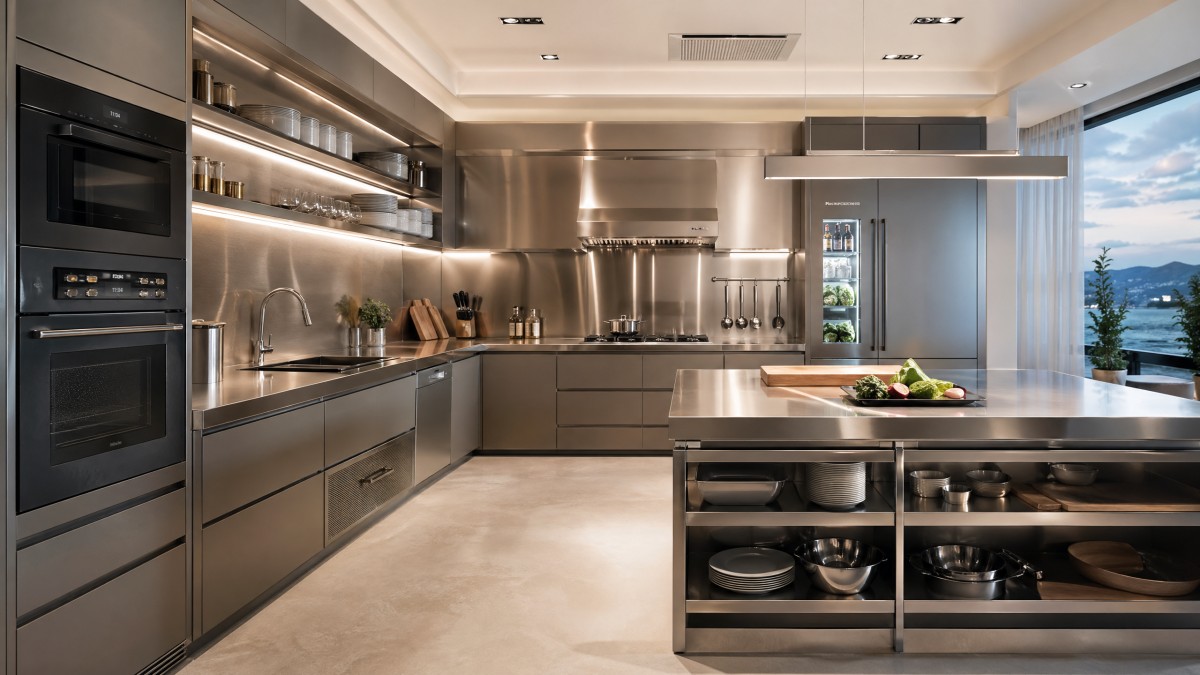
Many home kitchens look attractive on day one but become frustrating after 3–6 months of daily use. The common problems are familiar: poor movement between sink and cooktop, limited prep space, hard-to-clean corners, and appliances that increase heat and energy use. Commercial kitchen logic addresses these issues by focusing first on task flow, sanitation, durability, and service life rather than decoration alone.
In restaurants, every meter matters because delays of even 10–20 seconds per task add up across hundreds of actions. While a home kitchen has lower volume, the same principle applies. If a user walks back and forth between storage, washing, prep, and cooking zones several times per meal, the layout is underperforming. A better kitchen design for home reduces unnecessary steps and supports safer, faster routines.
Commercial logic also improves hygiene. Stainless work surfaces, easier drainage planning, controlled ventilation, and separation between raw and cooked food zones are standard in professional environments. When adapted correctly, these ideas support a cleaner household kitchen without making it feel industrial. This is where custom kitchen design becomes valuable: it translates professional principles into a space that still feels domestic, warm, and practical.
For procurement teams, developers, and decision-makers, the value goes beyond aesthetics. A kitchen planned with commercial logic tends to have a clearer bill of materials, easier maintenance scheduling every 6–12 months, and better appliance replacement compatibility. These factors matter in premium housing projects, serviced apartments, rental properties, and family homes where long-term usability influences satisfaction and operating cost.
The four-zone workflow homeowners should understand
A strong residential layout usually follows a simple four-zone sequence that mirrors light commercial planning. It is not about copying a restaurant kitchen exactly. It is about organizing the room around real behavior patterns and reducing cross-traffic.
- Storage zone: dry goods, refrigeration, and daily-use utensils should sit within 1–2 steps of the prep area.
- Wash zone: sink, dishwasher, waste sorting, and cleaning supplies should form one service cluster.
- Prep zone: allow a continuous work surface where cutting, mixing, portioning, and staging can happen safely.
- Cook-and-serve zone: cooktop, oven, hood, landing space, and plating area should work as one coordinated line.
When these four zones are compressed too tightly, the kitchen feels crowded. When they are spread too far apart, the user wastes time. In most homes, the target is balance, not maximum separation. That is why smart kitchen design starts with movement mapping, not only cabinet selection.
Which commercial ideas translate best into a smart kitchen design at home?
Not every restaurant feature belongs in a house, but several commercial concepts adapt extremely well. The best ones improve daily comfort, reduce cleaning effort, and support energy efficient kitchen design. They also help buyers compare products more rationally, especially when choosing among imported appliances, modular systems, and custom fabrication options.
Stainless steel restaurant supplies are one example. Full stainless interiors may feel too cold for some homes, but targeted use is highly effective. Splash zones behind sinks, areas around heavy-use cooktops, pull-out trays, and internal shelving benefit from corrosion-resistant materials. In busy family kitchens or rental units, these surfaces usually outperform decorative laminates in terms of maintenance and service durability.
Another transferable idea is equipment sequencing. Commercial kitchen equipment is selected by process order: store, wash, prep, cook, hold, clean. Homeowners can apply the same logic when placing refrigerators, sinks, ovens, dishwashers, and waste bins. Even a compact 8–12 square meter kitchen can feel more open when each action has a defined location and support surface.
Smart kitchen design also benefits from light automation. Examples include sensor-based lighting in storage areas, induction cooking with timer memory, touchless faucets, and app-enabled ovens. The goal is not technology for its own sake. The goal is to reduce friction in repeated tasks and support more consistent results, especially for households that cook daily or for premium residential projects seeking higher operational value.
Home-friendly features inspired by professional kitchens
The table below compares common commercial logic features and how they can be adapted in a residential kitchen without overbuilding the space. This helps users and purchasers identify which upgrades have practical value and which are only visual trends.
The key takeaway is selectivity. Borrowing from commercial restaurant supplies does not mean filling a home with oversized equipment. It means choosing durable surfaces, workflow-based layout, and serviceable components that match household volume and available utilities.
What operators and homeowners should prioritize first
- Ventilation capacity matched to actual cooking intensity rather than only appliance size.
- Surfaces that tolerate repeated cleaning cycles every day without swelling or edge failure.
- Storage placement based on task frequency over a 7-day routine, not showroom symmetry.
- Appliances with accessible maintenance points so service can be completed in one visit when possible.
How should buyers compare layout, materials, and energy efficient kitchen design options?
Procurement decisions often fail because buyers compare visual style before comparing operating logic. A better evaluation method uses three layers: layout efficiency, material suitability, and energy performance. This approach helps individual homeowners, project purchasers, and developers avoid costly redesign work after installation.
Layout efficiency should be reviewed first. Check the travel path from refrigeration to sink, prep surface, and cooktop. In many residential projects, a practical target is to keep the main workflow compact enough that one person can complete most tasks within a few directional turns rather than repeated crossing movements. Islands can help, but only when they add landing space and electrical planning rather than becoming obstacles.
Material selection comes next. Wood-look finishes remain popular, but moisture exposure near sinks, heat near ovens, and abrasion in prep zones make hybrid material strategies more reliable. A kitchen design for home often performs better when decorative finishes are used on low-stress surfaces, while metal, stone, or engineered materials are used where cleaning frequency and impact risk are higher.
Energy efficient kitchen design should be treated as a whole-system issue. Appliance efficiency matters, but so do insulation quality, hood performance, door seal integrity, lighting control, and standby power management. For users who cook daily, even modest efficiency gains across refrigeration, cooking, and extraction can improve comfort and reduce waste over the life of the kitchen.
A practical comparison framework for selection
The table below can be used during design review, supplier discussions, or quotation comparison. It focuses on three common decision areas: workflow, materials, and energy performance. This type of matrix is especially useful when comparing custom kitchen design proposals against standard modular packages.
This framework is useful because it converts subjective taste into measurable review points. It also helps procurement staff and decision-makers ask better questions during supplier comparison, especially when multiple countries of origin, fabrication standards, or appliance packages are involved.
Three checks before approving a proposal
- Confirm utility compatibility: power supply, gas option, water point, drain position, and extraction route must match the actual site.
- Review the cleaning path: ask how filters, corners, handles, and under-counter zones will be cleaned weekly and monthly.
- Check future replacement logic: ensure standard-size appliances or removable panels allow upgrades after 5–10 years of use.
What does custom kitchen design cost, and when is it worth the investment?
Cost is one of the biggest barriers in kitchen design for home, especially when buyers are balancing appearance, function, and long-term value. The mistake is to compare only initial quotation totals. A more useful method is to separate base construction cost, equipment package cost, utility modification cost, and lifecycle maintenance cost over the first 3–5 years.
Custom kitchen design is usually worth considering when the space is irregular, when cooking frequency is high, when several users share the same kitchen, or when the project has premium rental or resale objectives. In these cases, the benefit often comes from better workflow, fewer installation compromises, and improved integration of smart kitchen design features. Standard modular packages can still work well, but they are strongest in predictable room shapes and moderate usage intensity.
Buyers should also account for hidden expenses. These may include moving drain lines, upgrading electrical capacity, reinforcing ventilation, changing countertop cutouts, or replacing decorative materials that fail near heat and water. On many projects, lead times are another cost variable. A standard package may be delivered in 2–4 weeks, while a custom fabricated solution may require 4–8 weeks depending on drawings, materials, and imported equipment coordination.
For commercial-influenced home kitchens, the most cost-effective path is often selective upgrading. Instead of industrializing the entire room, invest in the parts that carry the highest workload: prep surfaces, ventilation, storage ergonomics, and durable fittings. This creates a practical midpoint between decorative residential design and full commercial styling.
Cost logic by solution type
The table below shows how different solution types usually compare from a planning perspective. It does not provide universal pricing, because costs vary by country, material, and utility conditions, but it helps clarify where budget pressure typically appears.
In many cases, the hybrid option delivers the best return because it captures the useful lessons of commercial kitchen equipment planning without importing unnecessary complexity. This is especially relevant for buyers who want durability, easier maintenance, and a better user experience rather than a purely decorative upgrade.
Where to spend and where to save
- Spend on ventilation, hinges, drawer systems, sink quality, and moisture-resistant surfaces in heavy-use zones.
- Save on purely decorative panels where service life has little impact on food safety or workflow.
- Choose smart functions that solve repeated tasks, not features that add complexity without use frequency.
- Ask suppliers to separate fabrication, appliance, transport, and installation costs for clearer comparison.
How should procurement teams and homeowners manage implementation, compliance, and risk?
A well-designed kitchen can still fail if implementation is rushed. The most common problems appear during measurement, utility coordination, ventilation routing, and final handover. For that reason, a reliable project usually follows 4 stages: needs definition, technical review, fabrication or sourcing, and on-site installation with commissioning. Even for residential projects, this structured process reduces rework and supplier conflict.
Compliance should not be overlooked simply because the project is a home kitchen. Electrical safety, gas installation rules where relevant, ventilation requirements, and material suitability near heat and moisture still matter. If imported appliances are involved, buyers should confirm voltage, plug type, installation clearance, and available after-sales service before purchase. These checks are especially important in global trade scenarios where kitchen equipment may come from different manufacturing centers.
For operators and facility managers in serviced residences or rental properties, maintenance planning is a procurement issue, not only a service issue. Filters may need monthly or quarterly cleaning depending on cooking intensity. Drawer slides, hinges, seals, and touch controls should also be reviewed on a periodic basis. A kitchen that is easy to maintain is usually cheaper to operate than one that looks refined but is difficult to service.
Risk management also means knowing what not to copy from commercial kitchens. Oversized equipment, excessive stainless exposure, and high-power systems without proper ventilation can reduce comfort in a home. The goal is adaptation. Kitchen design for home should use commercial logic as a planning method, not as a rigid style template.
A simple implementation checklist
- Site verification: confirm dimensions, floor level, wall conditions, and utility points before final drawings are approved.
- Equipment alignment: check installation clearance, door swing, ventilation path, and maintenance access for each appliance.
- Material review: confirm cleaning method, heat exposure limits, moisture resistance, and edge sealing method.
- Handover items: request operating guidance, spare part list, warranty scope, and service contact process.
FAQ: common buying and design questions
The questions below reflect common search intent from information researchers, operators, purchasers, and decision-makers evaluating smart kitchen design and custom kitchen design options.
Is a commercial-style kitchen always better for a home?
No. A home kitchen should not copy a restaurant kitchen without adjustment. The better approach is to borrow professional principles such as workflow zoning, durable surfaces, and easier cleaning. This creates better performance without making the kitchen too loud, cold, oversized, or utility-intensive for residential use.
What should I check first when comparing suppliers?
Start with three points: whether the layout matches your cooking process, whether the materials fit your cleaning and heat conditions, and whether the supplier clearly separates product scope from installation scope. Also confirm lead time, after-sales response, and whether replacement parts are standard or project-specific.
Are stainless steel restaurant supplies suitable for every household kitchen?
They are suitable in selected zones rather than always across the full kitchen. Splash areas, utility shelves, internal cabinet protection, and heavy-use counters often benefit the most. In visible social areas, many buyers prefer a hybrid finish that balances performance with residential appearance.
How long does a typical project take?
For many projects, concept and technical confirmation may take 7–15 days, followed by sourcing or fabrication over 2–8 weeks depending on complexity. Installation may require several days to around 2 weeks, especially if utility changes and appliance commissioning are included. Imported equipment or custom stone work can extend the schedule.
Why choose us for kitchen planning, equipment selection, and project support?
We understand that a successful kitchen design for home is no longer only a furniture decision. It is a systems decision that connects workflow, hygiene, material performance, appliance coordination, and long-term operating efficiency. Drawing on knowledge from the wider kitchen equipment industry, including commercial kitchen equipment, restaurant appliances, and smart kitchen technologies, we help clients build solutions that are practical, durable, and easier to manage.
Our support is structured for different decision roles. Information researchers can request layout logic and product comparisons. Users and operators can discuss cleaning, ergonomics, and daily workflow. Procurement teams can review material options, lead times, and replacement logic. Business decision-makers can evaluate custom kitchen design against standard packages based on lifecycle value rather than showroom appearance alone.
You can contact us for specific and useful discussions, including parameter confirmation for appliance placement, product selection across residential and commercial-influenced options, delivery cycle planning, custom kitchen design proposals, certification or utility compatibility questions, sample material support, and quotation communication. If your project involves imported products, mixed equipment sources, or energy efficient kitchen design targets, we can help organize the selection process more clearly.
If you are planning a renovation, evaluating a supplier, or upgrading a premium residential or rental kitchen, send your layout, target functions, and preferred timeline. A clearer brief at the start usually saves time, reduces change orders, and leads to a kitchen that performs well not just in the first week, but across years of real daily use.
- commercial kitchen equipment
- smart kitchen
- kitchen design
- restaurant kitchen
- restaurant supplies
- Cookware
- kitchen equipment
- energy efficient kitchen design
- smart kitchen design
- custom kitchen design
- kitchen design for home
- kitchen design cost
- commercial restaurant supplies
- stainless steel restaurant supplies
Popular Tags
Kitchen Industry Research Team
Dedicated to analyzing emerging trends and technological shifts in the global hospitality and foodservice infrastructure sector.
Industry Insights
Join 15,000+ industry professionals. Get the latest market trends and tech news delivered weekly.
No spam. Unsubscribe anytime.


Contact With us
Contact:
Anne Yin (Ceramics Dinnerware/Glassware)
Lucky Zhai(Flatware)