
Kitchen design for bakeries that keeps heat zones under control
Effective kitchen design for bakeries is essential for project managers who need to balance production flow, worker safety, and equipment performance. When heat zones are properly controlled, bakeries can reduce energy waste, improve product consistency, and create a more efficient workspace. This article explores practical planning strategies that support smarter bakery operations and long-term project value.
For engineering leads and project managers, kitchen design for bakeries is not only about fitting ovens, proofers, and prep tables into a floor plan. It is a risk-control exercise that affects HVAC load, workflow speed, maintenance access, and the long-term operating cost of the facility. In high-volume bakery environments, even a 3°C to 5°C temperature drift between adjacent zones can influence dough behavior, worker comfort, and refrigeration efficiency.
A well-planned bakery layout should separate hot production, cold storage, finishing, washing, and packaging into coordinated zones. This matters even more as the kitchen equipment industry moves toward energy-efficient systems, automated handling, and integrated controls. For buyers evaluating new facilities, renovations, or central bakery expansions, controlling heat zones is one of the clearest ways to protect product quality and improve project ROI.
Why Heat Zone Control Matters in Bakery Kitchen Planning
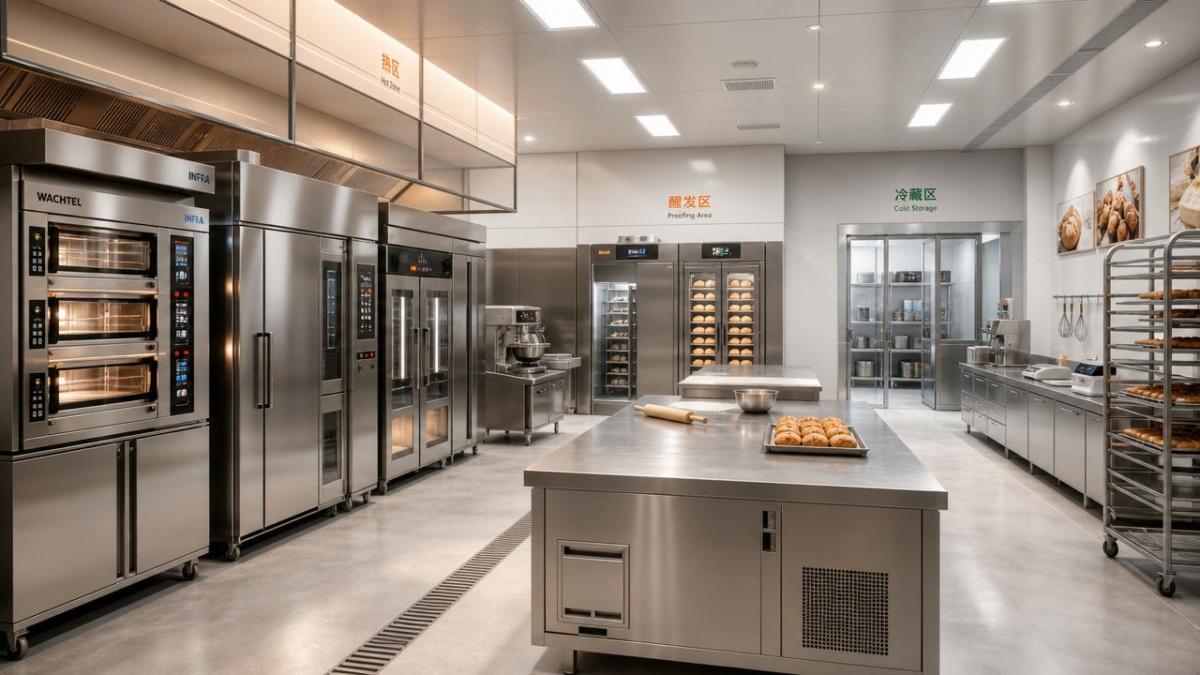
In bakery operations, heat is not generated by one machine alone. Deck ovens, rack ovens, rotary ovens, steam injection systems, dishwashing areas, motors, lighting, and even compressed human traffic all contribute to thermal buildup. In a compact production room, surface temperatures near major baking equipment can rise quickly, while ambient conditions may exceed the ideal range for dough processing within 30 to 60 minutes of peak production.
Project managers responsible for kitchen design for bakeries must therefore think beyond equipment capacity. A 2,000-piece daily bread line and a 12-hour pastry shift require different thermal separation strategies, even if both use similar ovens. If zoning is weak, staff fatigue increases, refrigeration systems work harder, and proofing becomes less stable. These issues create hidden costs that may not appear in the original equipment quotation.
Key Operational Risks Caused by Poor Heat Zoning
- Unstable dough handling when prep areas exceed 22°C to 24°C for extended periods.
- Higher cooling loads when cold rooms are placed too close to oven banks or wash stations.
- Reduced worker efficiency in hot aisles where continuous exposure lasts more than 2 to 3 hours.
- Condensation and moisture imbalance near transitions between hot and chilled spaces.
- Faster wear on HVAC and ventilation systems due to uneven thermal peaks.
How Heat Affects Product Consistency
In bread and pastry production, temperature has a direct effect on fermentation rate, lamination stability, and finishing quality. Croissant dough, for example, reacts very differently at 18°C than at 26°C. Cream-based products also require stricter environmental control than dry baked goods. That means kitchen design for bakeries should align thermal zoning with product mix, batch size, and hourly throughput rather than relying on a generic commercial kitchen template.
The table below outlines common bakery zones and the operational impact of uncontrolled heat. It can help project teams prioritize space planning decisions during concept design, tender review, and equipment coordination.
The main takeaway is simple: heat zone control is not a comfort feature but a process stability requirement. In bakery projects, the most expensive problems often come from the interaction between adjacent zones, not from the oven itself. Early zoning decisions can reduce later rework in ventilation, drainage, partitioning, and refrigeration design.
Core Principles of Kitchen Design for Bakeries
A strong kitchen design for bakeries follows a sequence-based layout. Raw material receiving, storage, mixing, resting, shaping, proofing, baking, cooling, finishing, packing, and dispatch should move in one logical direction. When project teams reduce unnecessary cross-traffic by even 15% to 20%, they often gain better hygiene control and lower heat migration between spaces.
1. Separate Hot, Warm, Neutral, and Cold Areas
The most effective zoning model divides the bakery into at least four environmental categories. Hot areas include ovens and wash-up stations. Warm areas include intermediate transfer and tray handling spaces. Neutral zones support prep and assembly. Cold zones serve ingredients, finished goods, or sensitive dough processes. Physical distance, insulated partitions, and controlled door openings all help limit thermal bleed.
Recommended planning logic
- Keep major heat-generating equipment on one side or one end of the production floor.
- Place cold rooms and chilled ingredient storage at least one transition zone away from ovens.
- Use dedicated return paths for racks, trays, and wash items to avoid crossing product-sensitive areas.
- Allow service clearance of 800mm to 1200mm around key equipment, depending on door swing and maintenance needs.
2. Design Ventilation Around Equipment Load, Not Room Size Alone
A common project mistake is sizing ventilation by floor area without calculating actual heat release. A bakery with three ovens, two proofers, and one tunnel cooling section behaves very differently from a similarly sized prep kitchen. Heat extraction should consider sensible heat, latent moisture, steam peaks, and shift duration. During peak cycles, a bakery may require higher air changes and more targeted canopy or hood capture than a standard restaurant back-of-house.
For project managers, coordination between equipment suppliers, mechanical engineers, and installation contractors should begin before procurement is finalized. If this coordination is delayed by 2 to 4 weeks, duct routing conflicts and power distribution changes often follow. That can slow commissioning and increase site modification costs.
3. Protect Process-Sensitive Workstations
Not every bakery station needs full environmental isolation, but some stations should never sit directly beside high-heat equipment. Dough lamination, cream filling, chocolate finishing, and precision scaling are examples. When these tasks are exposed to fluctuating heat, product variance increases and labor time rises because staff must compensate manually.
In practical kitchen design for bakeries, this often means using short partition walls, air curtains at selected doorways, localized cooling, or separate finishing rooms. Even a modest buffer corridor of 1.5m to 2.5m can improve thermal stability when space is limited.
Equipment Layout Strategies That Reduce Heat Spread
Equipment selection and placement determine how much unwanted heat enters the room and where it accumulates. In bakery projects, the layout should group machines by thermal behavior, utility requirement, and operator frequency. This reduces both environmental interference and installation complexity.
Oven Placement and Clearance Planning
Ovens should be located where extraction routes are short and maintenance access is predictable. Placing ovens in a central position may simplify loading, but it often creates 360-degree heat exposure and reduces flexibility for future line changes. A perimeter or line-end arrangement is usually easier to ventilate and control.
The table below compares common equipment layout approaches for kitchen design for bakeries and their heat-control implications.
For most B2B bakery projects, the best answer is not the densest layout but the most controllable one. If future expansion is expected within 12 to 36 months, modular zoning with planned utility reserves usually delivers better project value than tightly packed equipment that leaves no room for thermal management upgrades.
Choose Energy-Efficient Equipment With Lower Ambient Impact
Modern kitchen equipment suppliers increasingly offer better insulation, smarter standby modes, and improved heat recovery features. These do not eliminate the need for zoning, but they reduce the total burden on the room. In procurement reviews, ask suppliers for external surface temperature behavior, exhaust requirements, service clearances, and duty-cycle expectations, not just production capacity.
- Request utility schedules covering power, gas, steam, and extraction needs.
- Check whether the equipment supports staged operation during partial loads.
- Review maintenance access to avoid relocating hot units later for servicing.
- Confirm whether insulation design helps reduce radiant heat to adjacent work zones.
Implementation Steps for Project Managers and Engineering Teams
Turning a concept into a workable bakery facility requires more than a good layout drawing. Project success depends on sequencing, coordination, and measurable acceptance points. For kitchen design for bakeries, heat control should be reviewed at each project stage, from planning through commissioning.
A Practical 5-Step Delivery Framework
- Define product mix, batch volume, shift length, and peak hourly output.
- Map process flow and classify each zone as hot, warm, neutral, or cold.
- Coordinate equipment schedules with HVAC, electrical, drainage, and structural teams.
- Review installation clearances, operator routes, and future expansion options.
- Commission the site with live-load testing during a simulated production window of at least 2 to 4 hours.
Procurement and Review Checklist
Before approving suppliers or final layouts, project teams should verify a short list of technical and operational points. This prevents frequent issues such as undersized exhaust, blocked maintenance paths, or proofing areas exposed to oven discharge air.
Six questions worth asking during design review
- What is the peak thermal output of each major oven or heat-generating unit?
- How many door openings per hour are expected between hot and cold zones?
- Is there a physical buffer between baking and finishing operations?
- Can operators move trays, racks, and ingredients without crossing the hottest aisles?
- Are HVAC controls flexible enough for seasonal shifts and different production loads?
- Is the maintenance team able to access filters, ducts, and service panels safely?
In many projects, the difference between an adequate bakery and a high-performing one comes down to these practical checks. A design that looks efficient on paper can still fail if service routes, thermal barriers, and working durations are not evaluated under realistic production conditions.
Common Mistakes, Cost Risks, and Long-Term Value
Several mistakes appear repeatedly in bakery fit-outs and expansion projects. One is placing refrigeration or ingredient staging too close to baking lines to save walking distance. Another is underestimating steam and residual heat from wash zones. A third is designing for current production only, without reserving space for one more oven, a spiral cooler, or an additional proofing chamber within the next 24 months.
Where Budget Pressure Can Create Hidden Costs
Reducing partitioning, simplifying extraction, or compressing service clearances may lower the initial capital budget, but it can raise operating cost over the life of the facility. If the HVAC system must run harder every day or if operators lose productive time moving around heat-heavy bottlenecks, the project gives up value month after month. For central kitchens and multi-site bakery groups, these losses multiply quickly.
Well-executed kitchen design for bakeries supports more predictable production, easier sanitation, and better integration with modern kitchen equipment trends such as smart controls, automated handling, and energy-efficient appliances. It also makes future upgrades less disruptive, which matters when downtime windows are limited to weekends or short shutdown periods.
Final Guidance for Decision-Makers
If you are planning a new bakery, refurbishing a production kitchen, or evaluating suppliers for a central foodservice facility, start with heat mapping before finalizing the equipment list. Build the layout around process temperature needs, not just floor availability. Ask for technical coordination early, confirm ventilation assumptions, and review how each zone will perform during the busiest 10% of the production day.
The right kitchen design for bakeries creates measurable advantages: safer working conditions, lower energy waste, more stable product quality, and a facility that can grow with your operation. If you need help comparing bakery equipment layouts, refining thermal zoning, or developing a project-ready specification, contact us today to get a customized solution and discuss the most practical options for your site.
Popular Tags
Kitchen Industry Research Team
Dedicated to analyzing emerging trends and technological shifts in the global hospitality and foodservice infrastructure sector.
Industry Insights
Join 15,000+ industry professionals. Get the latest market trends and tech news delivered weekly.
No spam. Unsubscribe anytime.
Contact With us
Contact:
Anne Yin (Ceramics Dinnerware/Glassware)
Lucky Zhai(Flatware)