
Why Chafing Dish fuel cost often gets underestimated
Many buyers assume Chafing Dish fuel is a minor operating expense, but the real cost is often underestimated when hidden factors like burn efficiency, event duration, waste, and supplier pricing are overlooked. For financial approvers, understanding these variables is essential to controlling catering budgets, improving purchasing decisions, and avoiding unnecessary long-term cost leakage.
When people search for why Chafing Dish fuel cost often gets underestimated, they are usually not looking for a technical explanation alone. They want to know why actual spending ends up higher than the quoted unit price, what cost drivers are being missed, and how to evaluate supply options more accurately before approving purchases.
For finance-focused decision-makers, the answer is straightforward: Chafing Dish fuel looks inexpensive at the item level, but it becomes materially expensive when consumption assumptions are weak, event conditions vary, product performance is inconsistent, and purchasing teams compare suppliers only by carton price instead of usable heating hours.
Why the “low unit price” of Chafing Dish fuel creates a misleading budget picture
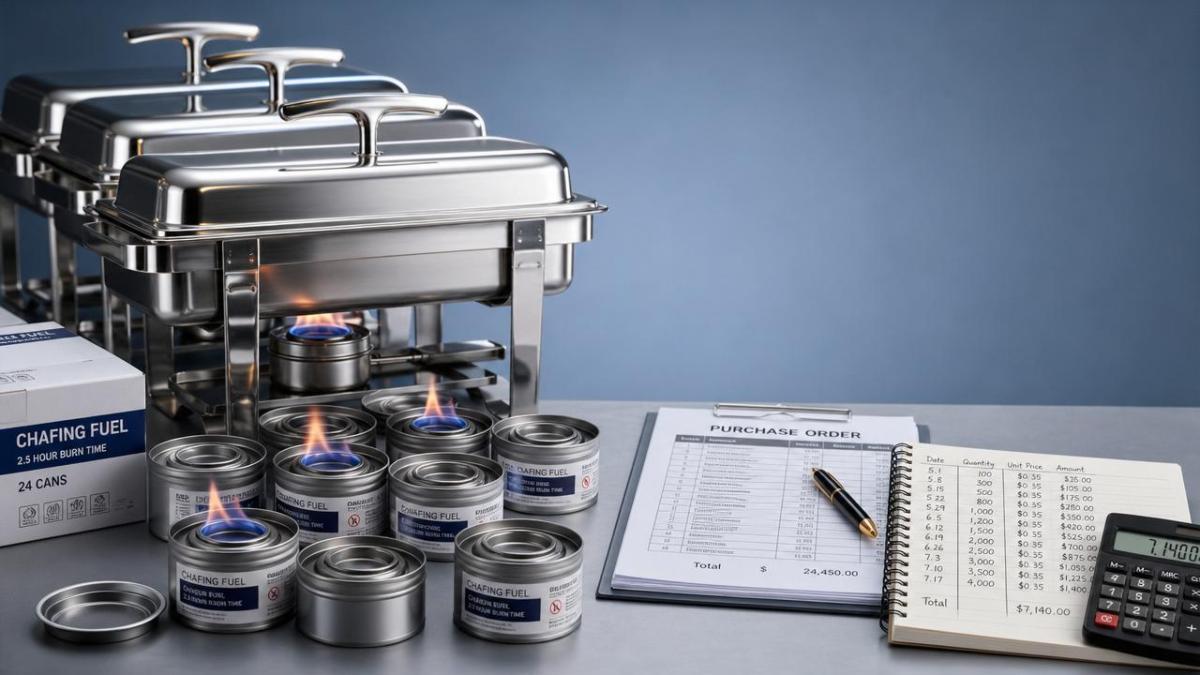
The main reason Chafing Dish fuel gets underestimated is that it is often treated as a trivial consumable rather than an operational energy input. A can of fuel may seem inexpensive on paper, which encourages buyers to approve orders quickly without questioning how many cans will actually be needed per service period, buffet line, or event format.
This creates a common accounting blind spot. Teams focus on the purchase price per can, while the real business question should be cost per usable heating hour, cost per guest served, or cost per event station. Those metrics reveal the true operating impact far better than carton pricing alone.
In many catering, hospitality, and foodservice settings, Chafing Dish fuel is purchased repeatedly in relatively small amounts. Because each order may not look large, it does not always receive the same scrutiny as equipment purchases, labor allocation, or major food categories. Over time, however, recurring underestimation compounds into significant annual overspend.
Financial approvers should also recognize that Chafing Dish fuel cost is not only the product price. It is the total cost of keeping food safely warm for the required period with minimal waste, minimal replacement labor, and predictable service quality. If any of those conditions fail, the apparent savings disappear quickly.
What financial approvers actually need to measure before approving Chafing Dish fuel spend
To assess Chafing Dish fuel accurately, finance teams need better measurement logic. The first metric is burn duration under real operating conditions, not laboratory claims. A product labeled for four, six, or eight hours may not consistently achieve that result in a busy banquet environment with drafts, repeated lid opening, or variable room temperature.
The second metric is burn consistency. If flame intensity fluctuates too much, food may fall below desired serving temperature or require earlier replacement than expected. That means extra cans are opened before their theoretical end of life, which directly increases cost per event.
The third metric is utilization rate. In many operations, partially used cans are discarded because there is no practical way to store, track, and reuse them efficiently. If a team opens a fresh can for a short service window and throws away the remainder, the effective cost can be far higher than purchase records suggest.
The fourth metric is labor interaction. Every fuel change requires staff time. If a lower-priced fuel burns less reliably and needs more frequent monitoring or replacement, then the labor burden rises. From a finance perspective, fuel decisions should not be isolated from service labor cost.
Finally, approvers should examine variance across event types. Breakfast buffets, wedding receptions, hotel brunches, outdoor catering, and corporate banquets all impose different heating demands. A fuel cost model that ignores these use-case differences will almost always understate actual spend.
The hidden factors that make Chafing Dish fuel more expensive than expected
One of the biggest hidden factors is event duration creep. Planners may estimate a two-hour service, but setup, guest delays, extended networking, and post-service holding time can push the actual requirement well beyond that. Each additional hour may trigger extra fuel use across multiple stations, and the budget impact multiplies quickly.
Another hidden factor is over-allocation for risk prevention. Service teams often open more Chafing Dish fuel than necessary because running short during an event is unacceptable. This buffer behavior is understandable operationally, but if management does not track the gap between planned and used fuel, overstock and waste become normalized.
Environmental conditions also matter. Outdoor events, air-conditioned banquet halls, windy service areas, and large-capacity pans can all reduce thermal efficiency. A fuel product that performs acceptably in one context may require much higher consumption in another. Without segmentation by use environment, purchasing estimates remain too optimistic.
Supplier pricing structure is another source of underestimation. Buyers may compare only the carton price, ignoring differences in fuel volume, burn time, packaging quality, safety features, and shipping efficiency. A cheaper carton may deliver fewer effective heating hours, making it more expensive in actual use.
Product inconsistency can also erode budget control. If quality varies between batches, teams cannot predict usage accurately. This uncertainty encourages over-ordering, emergency purchases, and duplicate stock across sites. In financial terms, inconsistent Chafing Dish fuel creates both direct waste and indirect inventory inefficiency.
There is also a procurement habit problem. In many organizations, fuel is bought through routine replenishment rather than performance review. Once a product is approved, nobody revisits whether burn efficiency, event fit, or supplier terms still make sense. That inertia allows avoidable cost leakage to continue for years.
Why buying cheaper Chafing Dish fuel can increase total operating cost
The cheapest option is often assumed to be the most economical, but with Chafing Dish fuel, lower upfront price can produce higher total spend. If the product burns shorter than expected, burns unevenly, or cannot maintain serving temperature consistently, more units are consumed to achieve the same service outcome.
That means the relevant question is not “What is the cost per can?” but “How much does it cost to support one buffet station for one full service cycle?” This shift in perspective is especially important for finance approvers who need to compare suppliers based on operational output rather than invoice appearance.
Lower-grade fuel can also create service risks that carry financial consequences beyond the fuel line item. If food quality declines due to unstable heating, guest satisfaction may suffer. In hospitality and premium catering, that risk touches brand reputation, repeat business, and contract retention. A small consumable can therefore have a larger commercial effect than expected.
Safety and handling issues matter too. Poorly packaged or unreliable fuel may increase the chance of spillage, difficult ignition, or improper storage. Even if incidents are minor, they can lead to operational disruption, staff concerns, and stricter internal controls. Those hidden administrative and compliance costs are rarely captured in a simple purchasing comparison.
For organizations with multiple venues or recurring events, these inefficiencies scale rapidly. What looks like a minor difference of a few dollars per event can become a meaningful annual variance once multiplied across locations, seasons, and service formats.
How to build a more accurate Chafing Dish fuel cost model
A reliable cost model starts with usage segmentation. Separate fuel consumption by event type, service duration, venue condition, and pan configuration. A single average rate is too simplistic for meaningful budgeting. Segmenting usage allows finance teams to identify where underestimation occurs most often.
Next, calculate effective burn cost rather than list price. For each fuel option, estimate the actual average heating hours achieved in real service, not supplier claims alone. Then divide total purchase cost by usable heating hours. This creates a more realistic comparison across brands and formats.
It is also useful to track opened-versus-fully-consumed units. This reveals how much waste results from partial use, early replacement, or poor planning. In some operations, reducing opened-can waste can generate more savings than negotiating a lower unit purchase price.
Another important step is to include labor touchpoints. If one fuel type requires fewer checks, fewer changeovers, or easier storage management, that operational advantage should be included in cost evaluation. Financial decisions improve when consumables are assessed as part of workflow, not in isolation.
Approvers should also request event-level reporting from operations or catering managers. Even simple records such as planned event time, actual service time, number of stations, fuel units opened, and units discarded can dramatically improve budgeting accuracy over time.
Where possible, compare suppliers using a structured scorecard. Include unit cost, effective burn time, consistency, packaging quality, safety, storage efficiency, minimum order quantity, lead time, and emergency fulfillment capability. This helps prevent decisions based only on the cheapest immediate quote.
Questions finance teams should ask procurement and operations before approving orders
A practical approval process begins with a few disciplined questions. What assumptions were used for burn time? Are those assumptions based on actual service records or supplier marketing claims? If nobody can answer clearly, the budget estimate may already be unreliable.
What percentage of Chafing Dish fuel is typically discarded before full consumption? If waste data is unavailable, that is a sign the true cost is not being monitored closely enough. Waste visibility is essential because partial-use losses often remain hidden in routine replenishment orders.
How often do service teams run out early or open backup units “just in case”? Frequent contingency opening usually indicates weak planning or inconsistent product performance. Both issues raise consumption and should be addressed before simply approving higher order volumes.
Are different venues or event formats using the same fuel standard regardless of need? Standardization can simplify procurement, but over-standardization may create cost inefficiency if a premium product is used where a basic one is sufficient, or if a basic product underperforms in longer events.
Has the supplier been evaluated on delivered value, not just price? Reliable lead times, consistent batches, and responsive service can reduce emergency buying and stock padding. These supply chain benefits have financial value even if they do not appear in the unit price.
Where better Chafing Dish fuel decisions create measurable business value
For finance approvers, the goal is not merely to reduce a small consumables line. It is to improve predictability, reduce leakage, and support smoother operations. Better Chafing Dish fuel decisions can lower annual operating costs by reducing over-ordering, waste, and mismatch between product and application.
They can also improve inventory discipline. When organizations understand true consumption patterns, they can order with more confidence, hold more appropriate stock levels, and reduce capital tied up in unnecessary inventory buffers. That is especially valuable for groups managing multiple hospitality or catering sites.
More accurate fuel planning also supports cleaner cost allocation. Instead of treating fuel as a vague overhead item, businesses can assign it by event type, service package, or customer account. This makes pricing decisions stronger and helps prevent underquoted catering packages.
There is a strategic benefit as well. In a market where kitchen equipment and foodservice operations are increasingly focused on efficiency and control, even small consumables should be managed with a total-cost mindset. Organizations that apply this discipline consistently tend to perform better across purchasing categories, not only in Chafing Dish fuel.
Conclusion: the real issue is not fuel price, but cost visibility
Chafing Dish fuel cost is often underestimated because the product appears cheap, routine, and operationally minor. In reality, total spend is shaped by burn efficiency, service duration, waste, labor interaction, supplier quality, and planning discipline. When these variables are ignored, budgets look reasonable at approval stage but drift upward in actual execution.
For financial approvers, the most useful shift is to stop evaluating Chafing Dish fuel by unit price alone. Instead, assess cost per usable heating hour, cost per station, and cost per event under real operating conditions. That approach gives a clearer basis for supplier comparison and more reliable budget control.
In short, underestimation happens when visibility is low. The organizations that manage this category well are not necessarily buying the cheapest fuel. They are buying the most appropriate fuel, measuring actual consumption, and linking procurement decisions to operational reality. That is where meaningful savings and smarter approvals come from.
Popular Tags
Kitchen Industry Research Team
Dedicated to analyzing emerging trends and technological shifts in the global hospitality and foodservice infrastructure sector.
Industry Insights
Join 15,000+ industry professionals. Get the latest market trends and tech news delivered weekly.
No spam. Unsubscribe anytime.

Contact With us
Contact:
Anne Yin (Ceramics Dinnerware/Glassware)
Lucky Zhai(Flatware)