
Bakery oven machine heat recovery matters more than max temp
When evaluating a bakery oven machine, maximum temperature often gets the spotlight, but heat recovery has a far greater impact on baking consistency, output speed, and energy costs. For bakeries and foodservice operations using kitchen preparation equipment such as a dough mixer machine, bakery proofer machine, and dough divider machine, understanding this performance factor helps buyers and operators choose equipment that supports stable production and better long-term efficiency.
For research-oriented buyers, production managers, operators, and business decision-makers, the issue is practical rather than theoretical. An oven that reaches 300°C or 350°C on paper may still underperform if it takes too long to recover heat after each door opening, tray loading, or batch change. In real bakery production, that delay affects bake color, rise, moisture retention, labor rhythm, and daily throughput.
In the broader kitchen equipment industry, energy-efficient and process-stable systems are becoming more valuable than single-specification selling points. Just as dough mixer machine torque, bakery proofer machine humidity control, and dough divider machine accuracy directly shape workflow quality, bakery oven machine heat recovery determines whether the entire baking line can maintain stable output over 8-hour, 12-hour, or even multi-shift production cycles.
Why heat recovery is a more useful performance metric than maximum temperature
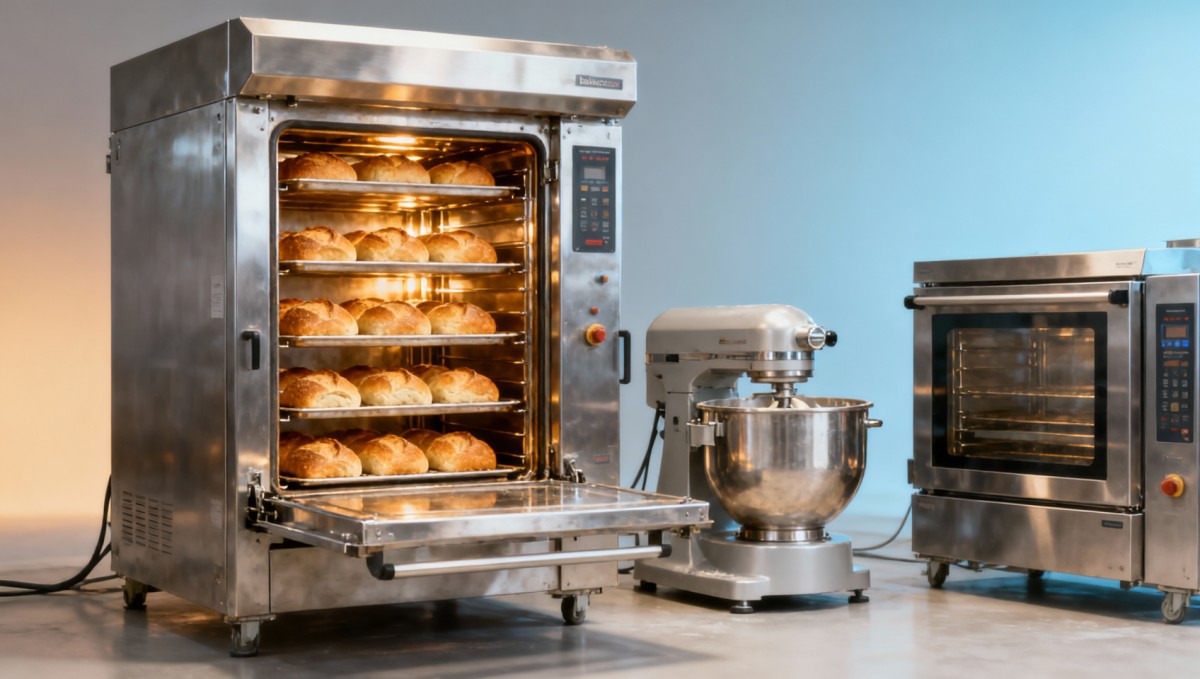
Maximum temperature is easy to market because it is simple to list and easy to compare. However, most bakery products do not need extreme peak heat. Bread, buns, pastries, cookies, pizza bases, and laminated products usually bake within defined working ranges such as 160°C–280°C, depending on product type and oven design. What matters more is how quickly the oven returns to the target setpoint after thermal disturbance.
Heat recovery refers to the oven’s ability to restore chamber temperature and usable thermal balance after the door opens, fresh dough enters, or a previous batch releases moisture. In practical terms, a bakery oven machine with a 20–45 second faster recovery cycle can improve consistency across dozens or hundreds of loads per day. That is especially important in retail bakeries, central kitchens, hotels, and food processing lines where product uniformity affects waste, customer complaints, and brand perception.
A weak recovery profile creates hidden problems. Operators may compensate by extending bake time 1–3 minutes, raising setpoint temperature by 5°C–15°C, or staggering batches inefficiently. These adjustments increase energy use, reduce output rhythm, and make results more dependent on operator experience. Over time, this turns a seemingly capable oven into a production bottleneck.
In integrated kitchen equipment planning, oven performance should be evaluated as part of the full line. If a dough divider machine produces 1,200 pieces per hour, a bakery proofer machine handles stable proofing windows, and a dough mixer machine supports repeatable dough development, the oven must recover fast enough to protect flow continuity. Otherwise, upstream efficiency is wasted.
What recovery affects in day-to-day production
- Batch consistency: uneven top color, pale sides, and irregular crust often appear when the chamber does not recover within the planned loading interval.
- Output speed: in operations running 20–80 tray cycles daily, even a 1-minute delay per cycle can remove significant sellable capacity.
- Energy efficiency: repeated temperature overshooting and longer preheating increase utility costs across monthly production schedules.
- Operator dependence: low recovery forces staff to use workarounds, making results less repeatable across shifts.
Maximum temperature versus useful thermal performance
The table below highlights why buyers should compare thermal behavior instead of relying only on peak heat claims when sourcing a bakery oven machine for commercial kitchen equipment or food processing applications.
For serious procurement, recovery time and temperature uniformity usually tell more about usable value than a single top-end heat number. This is particularly true for bakeries that run mixed product schedules and frequent loading cycles rather than occasional high-heat baking.
How heat recovery shapes baking quality, labor efficiency, and operating cost
Heat recovery affects product quality first. When the chamber temperature drops too far after loading, dough receives less initial thermal energy. That can reduce oven spring in bread, delay crust setting in pastries, and create uneven structure in cookies or buns. In a bakery producing 300–3,000 units per day, small quality shifts quickly become visible as higher reject rates or product variation across shifts.
The second impact is labor efficiency. Many bakery teams schedule production in short intervals of 5–15 minutes between loading events. If operators must wait for the oven to recover, the entire line slows down. The dough mixer machine may be ready, the bakery proofer machine may be at the correct proof stage, and trays may be loaded from the dough divider machine output, but the oven becomes the pacing constraint.
The third impact is energy use. A bakery oven machine with poor recovery often leads operators to keep the chamber hotter than necessary as a safety buffer. That creates a cycle of overheating, door opening, temperature drop, and reheating. Over a 26-day monthly production calendar, the wasted energy can be meaningful, especially in gas-fired or electric systems running 6–12 hours daily.
In foodservice and hotel kitchens, the problem is even broader. Menus change, batch sizes vary, and opening frequency is often higher than in standardized factory baking. Recovery strength helps these kitchens maintain service speed during breakfast rushes, banquet preparation, or peak retail windows. In this context, thermal resilience is a business tool, not just a machine feature.
Typical operational effects across bakery scenarios
The following comparison shows how recovery performance influences real production outcomes in different bakery and kitchen equipment environments.
This comparison makes one point clear: the value of heat recovery grows as production becomes faster, more frequent, or more integrated with other kitchen equipment. In most B2B settings, that makes it a more decision-relevant metric than peak temperature alone.
Common hidden costs caused by weak recovery
- Extra bake time of 30–180 seconds per load, which reduces hourly capacity.
- More product rework or waste due to underbaked centers or uneven color.
- Higher training burden because operators rely on judgment rather than repeatable settings.
- Increased utility consumption from overset temperatures and repeated heat-up cycles.
What buyers should ask suppliers when comparing bakery oven machine options
Procurement decisions in the kitchen equipment industry should focus on performance under actual use conditions. Instead of asking only for chamber size, power rating, and maximum temperature, buyers should request recovery-related details. A useful conversation includes loading interval, full-load temperature drop, stabilization time, airflow pattern, insulation quality, and door-opening effect. These factors offer a clearer picture of real production suitability.
For example, a supplier should be able to explain how the bakery oven machine behaves after repeated loading every 6–10 minutes, not just after an empty preheat test. Operators and technical buyers should also ask whether the machine is intended for light retail use, medium bakery throughput, or continuous food processing production. The answer affects heating system design, control logic, and chamber balance.
Another key point is line compatibility. If your site uses a dough mixer machine with fixed batch capacity, a bakery proofer machine with timed proofing cycles, and a dough divider machine with stable hourly output, the oven must fit that cadence. Buying an oven with high advertised temperature but weak cycle recovery can create mismatch across the entire production chain.
Service access also matters. Thermal performance can degrade over time if sensors drift, door seals wear, or airflow components are not maintained. Buyers should confirm spare parts availability, recommended maintenance intervals such as every 3–6 months, and the expected response time for technical support in their market.
Practical evaluation checklist for decision-makers
- Ask for recovery behavior after a full tray load, not only unloaded heating data.
- Confirm how long it takes to return within the working range after one door opening.
- Check whether the oven maintains uniform bake results across at least 3 consecutive cycles.
- Review how the oven integrates with upstream preparation equipment and actual staffing patterns.
- Evaluate insulation, seal quality, airflow design, and control stability rather than brochure claims alone.
Suggested comparison framework
The table below can be used by purchasing teams, factory managers, and technical evaluators to compare bakery oven machine options in a more decision-oriented way.
Using a structured framework helps organizations compare ovens based on total operational value instead of isolated headline numbers. That improves investment clarity for both small bakeries and larger foodservice groups.
How to test, implement, and maintain heat recovery performance
A good purchasing decision should be followed by a disciplined implementation process. Even a well-designed bakery oven machine can underperform if installed poorly, overloaded, or operated without process control. The first step is commissioning under realistic production conditions. This means testing the oven with actual dough types, tray weights, and loading intervals rather than dry empty-chamber runs.
A practical test plan often includes 3 stages: preheat verification, loaded cycle testing, and repeated batch observation. During loaded tests, operators should record setpoint temperature, recovery time, product appearance, and total cycle duration over at least 3 consecutive batches. This creates a baseline for future maintenance and operator training.
Operational discipline is equally important. Door openings should be kept as short as possible, loading patterns should remain consistent, and tray density should match the oven’s intended design. If one shift overloads trays while another uses lighter loads, recovery behavior and bake quality will change. Standard operating procedures can reduce that variation significantly in both bakery and food processing environments.
Maintenance should focus on the components that most affect thermal stability. Door gaskets, sensors, fans, steam systems, and control modules deserve regular inspection. In many commercial kitchen equipment environments, a monthly visual check and a deeper technical inspection every 90–180 days can help preserve performance and reduce unexpected downtime.
Recommended implementation steps
- Match oven capacity with the hourly output of the dough mixer machine, bakery proofer machine, and dough divider machine.
- Test at normal production loads instead of relying on empty-chamber performance.
- Document recovery time over at least 3 repeated cycles for key product categories.
- Train operators to minimize door-open duration and keep tray loading consistent.
- Schedule preventive inspection every 3–6 months to protect long-term thermal behavior.
FAQ for buyers and operators
How fast should heat recovery be in a commercial bakery oven?
There is no single universal number because chamber size, heating method, product load, and door-opening frequency all matter. However, buyers should compare recovery under similar loading conditions and look for stable repeatability across 3 or more cycles rather than one favorable reading.
Is heat recovery more important for small bakeries or large production sites?
It matters in both, but for different reasons. Small bakeries benefit from easier operation and lower waste, while larger sites benefit from line balance, labor efficiency, and stronger output predictability across 8-hour to 12-hour production windows.
Can operators compensate for poor recovery by raising the temperature?
Only partially, and usually at a cost. Raising the setpoint by 5°C–15°C may mask the symptom for some products, but it can also increase crust overcoloring, dry out sensitive doughs, and raise energy use without fixing the root cause.
What maintenance issues most often reduce recovery performance?
Common causes include worn door seals, inaccurate sensors, blocked airflow paths, fan wear, steam imbalance, and delayed calibration. These are manageable issues, but they require scheduled inspection instead of reactive repair only.
For bakery and foodservice operations evaluating new kitchen equipment, the smarter question is not how hot a bakery oven machine can get, but how well it performs through repeated real-world cycles. Heat recovery influences consistency, capacity, labor rhythm, and energy cost more directly than maximum temperature in most commercial baking applications.
When oven selection is aligned with the full preparation line, including the dough mixer machine, bakery proofer machine, and dough divider machine, businesses gain a more stable and scalable production system. If you are comparing bakery equipment for a retail bakery, central kitchen, hotel, or food processing site, contact us to discuss product details, request a tailored solution, or explore more energy-efficient kitchen equipment options for your operation.
Popular Tags
Kitchen Industry Research Team
Dedicated to analyzing emerging trends and technological shifts in the global hospitality and foodservice infrastructure sector.
Industry Insights
Join 15,000+ industry professionals. Get the latest market trends and tech news delivered weekly.
No spam. Unsubscribe anytime.
Contact With us
Contact:
Anne Yin (Ceramics Dinnerware/Glassware)
Lucky Zhai(Flatware)