
Food slicer machine blade choices affect yield more than speed
In food processing, the right food slicer machine blade can improve portion consistency, reduce waste, and protect product value far more than simply increasing cutting speed. For buyers and operators comparing kitchen preparation equipment, understanding blade choices is just as important as selecting a vegetable cutter machine, meat grinder machine, or commercial food processor for efficient daily production.
In commercial kitchens, central kitchens, hotel catering operations, and food processing lines, slicing quality directly affects cost per serving, labor stability, and downstream packaging performance. A machine rated for high output may still deliver poor yield if the blade geometry is wrong for the product, the edge degrades too quickly, or slice thickness drifts beyond tolerance.
For procurement teams and business decision-makers, this means blade selection should be treated as a production variable, not an accessory decision. A difference of just 1-2 mm in thickness variation, or a small increase in crushed product, can accumulate into noticeable waste over 8-12 hour shifts. This article explains how food slicer machine blade choices influence yield, where operators commonly lose product value, and how to evaluate blade options in a practical purchasing process.
Why blade choice matters more than headline cutting speed
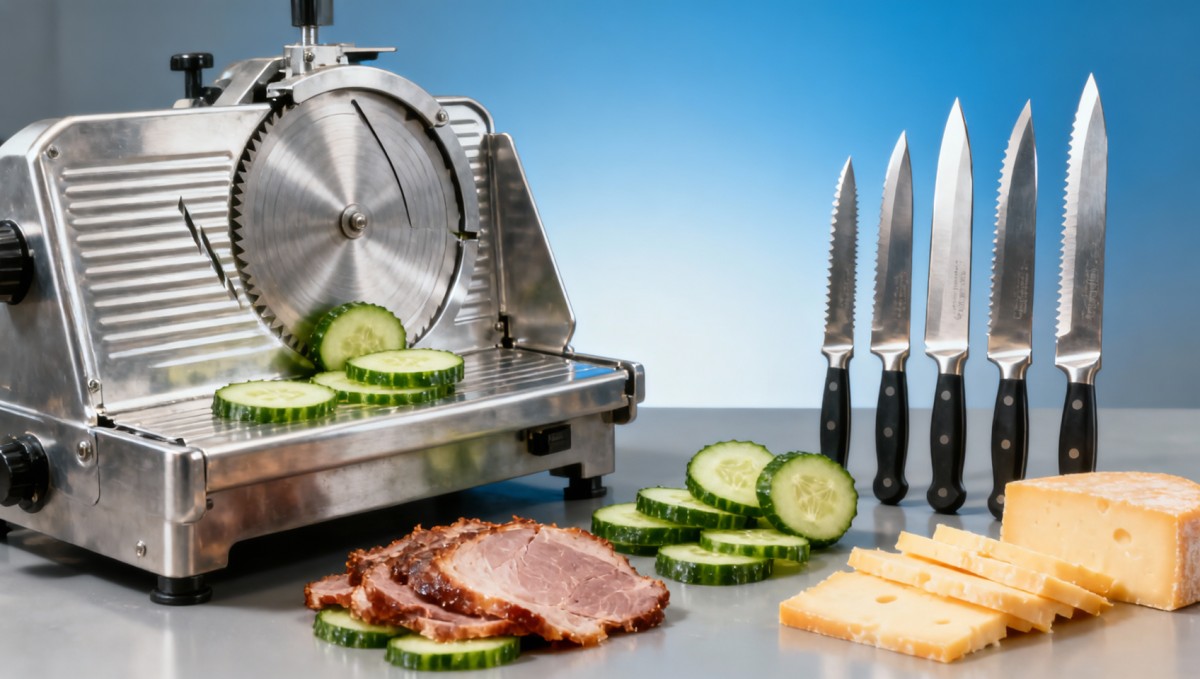
When buyers compare food slicer machine specifications, speed is often the first metric they see: cuts per minute, belt throughput, or hourly capacity. However, output speed only describes how fast product passes through the machine. It does not reveal how much saleable product remains after trimming loss, edge damage, sticking, irregular slices, or moisture release caused by poor cutting action.
A sharp, properly matched blade can improve usable yield by reducing tearing and maintaining cleaner cut surfaces. In vegetables, this helps preserve appearance and shelf life. In meat and cooked protein applications, it can reduce fiber damage and improve portion accuracy. In bakery or cheese processing, blade selection affects smearing, compression, and consistency. These issues often matter more than increasing line speed from 200 slices per minute to 260 slices per minute.
Operators also feel the difference quickly. A blade that requires adjustment every 2-3 hours creates interruptions, while a stable blade may run a full shift with only standard sanitation pauses. Less rework means lower labor cost and easier scheduling. For facilities processing 300-800 kg per day, even a 2% reduction in waste can become commercially meaningful over one quarter.
Another overlooked factor is product value tier. High-value ingredients such as cured meats, premium vegetables, or prepared proteins are less tolerant of rough slicing. In these cases, blade quality protects margin. A machine that cuts faster but damages edges, creates broken pieces, or increases giveaway can cost more overall than a slower but more precise setup.
Common production losses linked to the wrong blade
The most frequent losses are easy to identify on the shop floor but are often not tracked in the procurement stage. Blade mismatch usually appears in one or more of these forms:
- Thickness variation beyond ±0.5 mm to ±1.5 mm, causing inconsistent portions and package weight corrections.
- Tearing, bruising, or compression on delicate produce such as tomatoes, cucumbers, leafy stems, and cooked vegetables.
- Product sticking to the blade surface, especially in cheese, processed meat, and moist starch products.
- Short blade life, forcing resharpening or replacement every few days instead of every few weeks.
- Higher trim and rework volume, which increases labor steps and affects food safety handling time.
For managers evaluating kitchen equipment as part of a broader food preparation line, blade selection should therefore be reviewed alongside machine frame stability, motor consistency, feed method, and cleaning access. It is a system decision, not a single spare-part decision.
Blade types, edge profiles, and their best-fit applications
Not all food slicer machine blades are designed for the same products. Straight blades, serrated blades, circular blades, wavy edges, and specialty coated options all solve different cutting challenges. The best choice depends on product firmness, moisture content, target thickness, temperature condition, and required appearance after slicing.
In general, smooth straight edges suit products that need clean surface finish and precise portions. Serrated edges often perform better on products with skins, crusts, or soft interiors because they reduce drag during entry. Circular blades are common in continuous slicing systems, while gravity-fed slicers and batch machines may use disc or reciprocating blade systems.
Blade material matters as well. Stainless steel is widely used because it balances corrosion resistance and food contact suitability. Harder alloys may hold an edge longer but can become less forgiving in some wet or impact-heavy environments. Coated surfaces can help reduce sticking, especially in cheese or high-starch applications, but coatings should always be reviewed for durability under repeated sanitation cycles.
Temperature also changes blade performance. A chilled protein at 0-4°C behaves differently from room-temperature vegetables or frozen semi-rigid products. Procurement teams should request blade recommendations based on actual operating conditions, not only on generic product category labels.
Practical blade matching by product category
The following comparison helps users shortlist blade types by application rather than by speed claims alone.
The key takeaway is that blade choice should be matched to product behavior, not simply to machine category. A vegetable cutter machine and a commercial food processor may share preparation roles, but the blade mechanics for preserving yield are different. The same is true when comparing slicing tasks with mincing on a meat grinder machine.
What operators should confirm during testing
- Check slice thickness repeatability over at least 50-100 consecutive cuts.
- Measure waste collection after one batch, one hour, and one full shift.
- Observe product temperature before cutting, especially for protein and cheese.
- Review whether the blade can be cleaned and reinstalled without alignment error.
A short production trial often reveals more than a brochure. If possible, buyers should test with their real product, target thickness, and expected hourly volume before finalizing blade configuration.
How procurement teams should evaluate yield, total cost, and maintenance
Procurement decisions in the kitchen equipment industry increasingly focus on total operating value rather than initial machine price alone. Blade choice affects at least four cost layers: product loss, labor time, maintenance frequency, and spare parts planning. This is why food slicer machine selection should be assessed with a broader cost model.
For example, a lower-cost blade that needs replacement every 1-2 weeks may appear economical at purchase, but if it increases waste by even 1.5% and adds 15-20 minutes of daily cleaning or adjustment, its annual cost can exceed a more durable option. This is especially relevant in high-volume catering kitchens and processing plants running 5-6 days per week.
Decision-makers should also separate blade life from edge life. A blade may remain physically usable, but once slicing quality falls outside tolerance, the effective service period has already ended. Measuring only visible wear can lead to late replacement and hidden yield loss.
From a service perspective, buyers should confirm lead time for replacements, sharpening policy, installation guidance, and operator training. In many export-driven kitchen equipment supply chains, machine lead time may be 2-6 weeks, but spare blades should ideally be available much faster to avoid stoppages.
A simple decision matrix for blade-related purchasing
The table below gives a practical framework for comparing blade options during RFQ review or equipment trials.
This matrix helps align technical teams, operators, and purchasing managers around measurable criteria. It also makes supplier conversations more productive because requirements move from general claims such as “high efficiency” to practical indicators that affect yield and operating continuity.
Questions worth asking suppliers before purchase
- What blade style is recommended for our exact product texture, temperature, and target thickness?
- How many operating hours are typical before resharpening or replacement in similar applications?
- Can the machine support multiple blade configurations for seasonal menu changes or different SKUs?
- What sanitation method is compatible with the blade material and finish?
These questions are useful not only for large processors but also for restaurant groups, commissary kitchens, and hotel operations standardizing output across multiple locations.
Implementation, operator control, and common mistakes on the shop floor
Even the correct blade will underperform if implementation is weak. Yield protection depends on setup discipline, feed consistency, and maintenance timing. In practice, many slicing problems attributed to “machine quality” actually come from blade handling, poor alignment, inconsistent product loading, or delayed replacement schedules.
Operators should be trained to recognize the first signs of edge decline: increased drag, more broken slices, visible compression, or greater residue build-up. Waiting until the blade becomes obviously blunt usually means product value has already been lost for several batches. In fast-paced commercial kitchens, this can happen within a single lunch-prep window or during one high-volume production cycle.
Implementation should also consider upstream preparation. If products enter the food slicer machine at inconsistent size, temperature, or firmness, blade performance will vary. This is why slicing efficiency should be coordinated with upstream equipment such as washing stations, chilling steps, trimming tables, vegetable cutter machine preparation, and protein pre-processing systems.
For multi-product facilities, changeover planning matters. A blade that works well on one item may not be ideal for the next. Facilities running 3-5 SKUs through the same line each day should define blade selection rules in the SOP rather than leaving decisions to operator preference.
A practical 5-step implementation routine
- Verify product condition before slicing, including size range and temperature band such as chilled 0-4°C or ambient 18-22°C.
- Install and align the blade according to the machine guide, then confirm fastener security and cutting gap settings.
- Run a short test batch of 20-30 pieces to check slice thickness, visual quality, and waste generation.
- Monitor the first 60 minutes of operation and record any drift, sticking, or edge build-up.
- Clean, inspect, and replace or sharpen the blade based on condition, not only on calendar frequency.
This process adds only a small amount of control time, but it can prevent repeated quality losses over long operating hours. It is especially useful in foodservice businesses expanding toward more standardized central production.
Frequent mistakes that reduce yield
- Selecting blades by general machine type instead of actual product behavior.
- Using a worn blade because throughput still appears acceptable.
- Ignoring sanitation chemistry that gradually degrades blade surface condition.
- Failing to keep a spare blade set, which turns routine wear into unplanned downtime.
For decision-makers, these are controllable issues. A modest investment in training, spare inventory, and application-specific blade selection usually delivers a faster return than simply buying a faster machine.
FAQ for buyers, operators, and foodservice managers
Below are some common questions from information researchers, equipment users, procurement teams, and business leaders comparing food preparation machinery in the kitchen equipment market.
How do I know if poor yield is caused by the blade rather than the machine?
Start with three checks: compare slice quality at the beginning and end of a shift, measure thickness consistency over 50 cuts, and inspect product surfaces for tearing or compression. If the machine runs smoothly but cut quality degrades quickly, the blade or its application match is usually the first area to review.
Is a faster slicer always better for large kitchens or food processing plants?
Not always. If higher speed increases waste, overfeeds the product, or forces more frequent blade changes, total efficiency can decline. For many operations, stable quality at a moderate rate delivers better commercial value than peak speed with inconsistent yield. The right target is usable output per hour, not just theoretical capacity.
How many spare blades should a facility keep?
A practical starting point is 2-3 blade sets per active machine, depending on daily runtime, sharpening turnaround, and supplier lead time. High-volume sites or facilities with limited local support may require more. The goal is to cover one installed blade, one ready spare, and one blade in cleaning or service rotation.
Can one food slicer machine handle vegetables, cooked meat, and cheese?
It can in some cases, but not usually with a single blade configuration if yield and presentation matter. Multi-product use is possible when the machine supports quick blade changes, sanitation between products, and proper operator setup. Buyers should verify this during specification review, especially if allergen or flavor transfer is a concern.
What should be included in a serious blade-related quotation review?
Look beyond machine price. Review blade material, recommended product range, expected edge life, cleaning method, spare lead time, changeover complexity, and trial support. A useful quotation should help you estimate 6-12 month operating impact, not only the initial transaction cost.
Food slicer machine performance is not defined by speed alone. In real production, the right blade improves usable yield, protects product appearance, supports stable portion control, and reduces hidden loss across labor, waste, and downtime. That makes blade choice a strategic consideration for restaurants, hotels, central kitchens, and food processing businesses investing in modern kitchen equipment.
If you are comparing slicing solutions with other preparation equipment such as a vegetable cutter machine, meat grinder machine, or commercial food processor, a product-specific blade review should be part of your purchasing process. For tailored recommendations based on your ingredients, daily volume, and hygiene requirements, contact us to discuss equipment details, request a customized solution, or explore more food processing and kitchen equipment options.
Popular Tags
Kitchen Industry Research Team
Dedicated to analyzing emerging trends and technological shifts in the global hospitality and foodservice infrastructure sector.
Industry Insights
Join 15,000+ industry professionals. Get the latest market trends and tech news delivered weekly.
No spam. Unsubscribe anytime.

Contact With us
Contact:
Anne Yin (Ceramics Dinnerware/Glassware)
Lucky Zhai(Flatware)