
Planetary mixer machine suppliers to watch at 2026 trade shows
As 2026 trade shows approach, buyers and operators are closely tracking planetary mixer machine suppliers that can also support broader kitchen preparation equipment needs. From dough mixer machine and bakery oven machine solutions to kitchen prep table, commercial sink unit, and commercial freezer options, the right partners can improve efficiency, product quality, and purchasing confidence across modern foodservice and processing operations.
For research-driven buyers, production teams, procurement managers, and business leaders, the priority is no longer limited to a single mixer specification. Trade shows have become a practical place to compare planetary mixer machine suppliers on capacity range, hygiene design, service responsiveness, integration ability, and export readiness. A supplier that can support multiple preparation and storage categories often reduces sourcing risk and shortens project timelines by 2–6 weeks.
This matters across bakeries, hotel kitchens, central kitchens, food factories, and restaurant groups. A planetary mixer may sit at the center of batter, cream, sauce, or dough preparation, but its value depends on how well it works with ovens, prep tables, washing stations, and cold storage. That is why 2026 trade show shortlists should focus on supplier capability, not just machine appearance or quoted price.
What buyers should look for in planetary mixer machine suppliers at 2026 trade shows
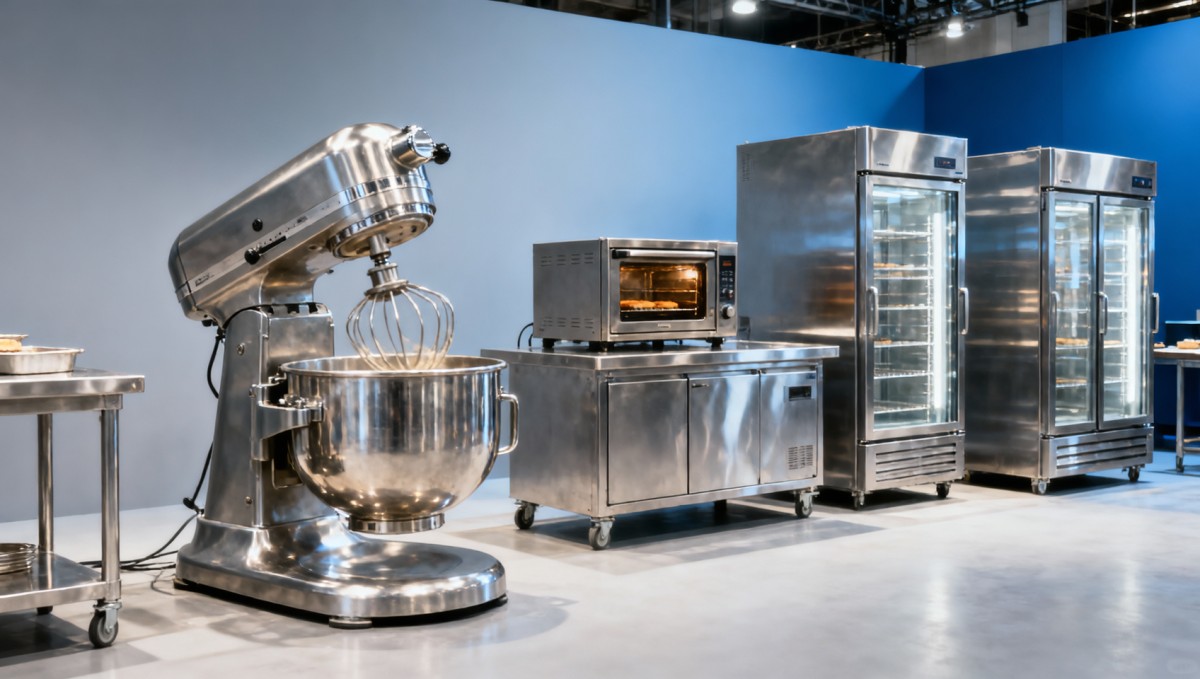
A strong trade show prospect should demonstrate more than a polished stand. Buyers should assess whether planetary mixer machine suppliers can cover at least 3 key dimensions: machine performance, kitchen system compatibility, and after-sales execution. In many foodservice and food processing projects, poor supplier coordination causes more downtime than the machine itself.
For daily operators, the first checkpoint is usability. A mixer with 10L, 20L, 40L, or 60L bowl options may look suitable on paper, but real operations also need intuitive controls, bowl guard safety, accessible cleaning points, and stable mixing consistency across multiple batches. If a supplier cannot explain ideal applications by bowl size, attachment type, and product viscosity, that is a warning sign.
For procurement teams, consistency across categories matters. Many buyers now prefer suppliers that can quote mixer lines together with dough mixer machine models, bakery oven machine units, commercial freezer systems, and stainless workstations. Consolidating 4 to 6 product categories under one capable supplier can simplify quality checks, shipment planning, and spare parts management.
Decision-makers should also ask about export project handling. A trade show conversation should cover lead time, voltage customization, packaging protection, documentation, and service support. Typical lead times for standard units can range from 15 to 35 days, while larger integrated kitchen equipment orders may require 30 to 60 days depending on quantity and finishing requirements.
Core evaluation points on the exhibition floor
- Check whether the supplier offers multiple mixer capacities and attachments for cream, batter, egg, and medium-duty dough applications.
- Ask for recommended duty cycles, such as batch frequency per hour, motor power range, and typical cleaning time after each production shift.
- Review whether the supplier can bundle related equipment including bakery oven machine, kitchen prep table, commercial sink unit, and cold storage equipment.
- Confirm support for electrical standards such as 220V or 380V, 50Hz or 60Hz, and destination-market plug or safety adjustments.
The table below summarizes practical criteria buyers can use when comparing planetary mixer machine suppliers during a trade show visit rather than after the event, when details are often forgotten or mixed together.
In practice, buyers who compare suppliers with a structured checklist usually make faster decisions after the event. Instead of judging only appearance or brochure claims, they can rank suppliers by operational fit, supply depth, and implementation reliability.
How planetary mixers fit into broader kitchen equipment sourcing
A planetary mixer is rarely purchased in isolation. In commercial kitchens and food production sites, it works as part of a preparation chain. Ingredients are stored in a commercial freezer or chiller, moved to a kitchen prep table, processed in a mixer, transferred to a bakery oven machine or cooking station, and followed by washing through a commercial sink unit or cleaning zone.
That chain is why many buyers now give preference to planetary mixer machine suppliers with wider kitchen equipment experience. Even if the mixer remains the core item, surrounding equipment affects labor flow, hygiene, and output stability. A poor prep table height, limited sink depth, or mismatched freezer access can add 10 to 20 minutes of unnecessary handling per batch.
For example, in bakery settings, the distinction between planetary mixers and dough mixer machine equipment is important. Planetary mixers are generally preferred for cream, cake batter, mashed fillings, and medium-load mixing tasks. Dough mixer machine units are typically better for heavier dough with stronger gluten development. The right supplier should explain where each machine belongs instead of pushing a single product for every task.
In hotels and central kitchens, buyers often need integrated layouts rather than one-off machines. Here, a supplier able to coordinate 5 to 8 equipment types offers value in dimensions, workflow planning, and finish consistency. Stainless steel thickness, splash control, temperature holding, and operator access should all be considered during the quotation stage.
Typical sourcing combinations by application
The following comparison shows how planetary mixer machine suppliers may be assessed differently depending on end-use environment and supporting equipment requirements.
This broader view helps buyers avoid a common mistake: selecting the best-looking planetary mixer but ignoring the supporting environment. The more integrated the sourcing plan, the lower the chance of operational bottlenecks after installation.
Practical signs of a system-oriented supplier
- The supplier can discuss production flow from receiving, prep, mixing, baking or cooking, cooling, cleaning, and storage.
- The quotation includes dimensions, materials, voltage details, and accessory lists rather than only a unit price.
- The team can recommend different configurations for small shops, mid-size chains, and industrial food preparation rooms.
At 2026 trade shows, this systems perspective will likely separate transactional sellers from real kitchen equipment partners. Buyers should reward suppliers that understand the operating sequence, not just the machine category.
Key technical and commercial questions to ask before shortlisting suppliers
Trade shows can move quickly, so buyers need a disciplined question set. In many cases, 15 to 20 minutes at a booth is enough to determine whether a supplier deserves a follow-up. The goal is not to collect the most catalogs, but to narrow the list to suppliers that can support real operating conditions and project timelines.
Start with technical fit. Ask what bowl sizes are available, what products each speed setting is suited for, and whether attachments are included or optional. A supplier should be able to explain use cases for whisk, beater, and dough hook attachments, plus recommended batch loading ranges. If the machine is overloaded beyond normal practice, mixing quality and motor life can both suffer.
Then move to commercial details. MOQ, sample availability, packaging standards, and spare parts lead time all matter. For cross-border orders, some buyers accept an MOQ of 1 to 5 units for standard machines, while integrated projects may combine 10 or more equipment pieces in one shipment. Asking these questions early prevents unrealistic price comparisons.
After-sales support should never be treated as a secondary issue. A practical benchmark is whether the supplier can provide key wear parts, operating manuals, and remote troubleshooting support within 24 to 72 hours. For larger kitchens and production sites, buyers may also ask about video guidance, commissioning documents, or recommended maintenance intervals every 3 to 6 months.
Shortlist questions that reveal supplier quality
- What is the recommended batch volume range for each planetary mixer model, and what products are not advised for it?
- Can the same supplier also provide dough mixer machine, bakery oven machine, kitchen prep table, commercial sink unit, and commercial freezer products?
- What is the normal production lead time for standard versus customized orders, and how does peak season affect schedules?
- How are machines packed for export, and what spare parts are commonly stocked for the first 12 months of operation?
Commercial risks buyers should avoid
One common error is focusing only on initial unit price. A lower quote may exclude bowls, attachments, freight protection, electrical adaptation, or essential stainless components. Another issue is buying from a supplier that cannot support future scale-up. If a project may expand from 1 site to 3 sites within 12 to 18 months, repeat supply ability should be confirmed now, not later.
Another risk appears when suppliers cannot clearly separate commercial kitchen use from light domestic-style usage. Buyers in restaurants, bakeries, and food preparation facilities should prioritize duty-rated equipment designed for repeated daily cycles, easier sanitation, and stable operation under continuous use.
By combining technical and commercial questions, procurement teams can avoid shortlists built on marketing language alone. This improves post-show follow-up quality and gives decision-makers a stronger basis for factory checks or request-for-quotation rounds.
Trade show selection strategy for operators, procurement teams, and executives
Different stakeholders evaluate suppliers differently, yet the final decision must align. Operators care about ease of use, cleaning, noise, and batch stability. Procurement teams focus on cost structure, lead time, and service terms. Executives tend to prioritize supplier reliability, product range, and long-term expansion potential. A good trade show plan should include all 3 viewpoints.
One useful approach is a 3-stage review process. Stage 1 is booth screening, where teams remove suppliers that fail basic technical or communication checks. Stage 2 is quotation and specification comparison after the show. Stage 3 is final validation through factory audit, sample review, or video inspection. This process can reduce decision errors and improve internal approval efficiency.
For operators, hands-on details matter. They should check bowl lifting smoothness, guard opening convenience, control labeling, and cleaning access around contact areas. If a machine takes 20 minutes to clean instead of 8 to 10 minutes, that difference adds up across multiple shifts. Similar logic applies to prep tables, sink units, and freezer access design.
For executives, supplier breadth can create leverage. A company that can support mixer-based preparation lines together with baking, washing, storage, and stainless fabrication may become a strategic vendor rather than a one-time seller. That can improve standardization across locations and make future purchasing more efficient.
A simple decision matrix for post-show comparison
The matrix below can help teams score planetary mixer machine suppliers consistently after the exhibition. It is especially useful when several departments participate in the same buying project.
This kind of weighted review is useful because it prevents one appealing booth demo from dominating the final decision. It also helps separate suppliers suited for standard purchases from those better suited for multi-equipment kitchen projects.
Recommended post-show action steps
- Reduce the long list to 3 to 5 qualified suppliers within 7 days after the event.
- Request full quotations with specifications, accessories, lead times, and packaging details.
- Compare mixer models together with related kitchen equipment support, not as isolated products.
- Arrange a factory review, reference discussion, or technical video meeting before final commitment.
A disciplined selection method saves time, protects budgets, and improves cross-department confidence. In competitive foodservice and food processing environments, that alignment is often worth as much as a small price difference.
FAQ: practical questions before placing an order
How do I know whether a planetary mixer or a dough mixer machine is the better choice?
The answer depends on product type and mixing load. Planetary mixers are commonly used for cream, egg foam, fillings, cake batter, sauces, and moderate dough tasks. Dough mixer machine equipment is usually more suitable for heavier dough production with stronger kneading requirements. If your menu includes both pastry cream and bread dough, many kitchens need both machine types rather than forcing one machine to do everything.
What lead time is typical for commercial kitchen equipment orders?
For standard planetary mixer machine units, a common production window is around 15 to 35 days. For bundled orders that include bakery oven machine products, prep tables, commercial sink unit configurations, and freezer equipment, lead time may extend to 30 to 60 days. Custom dimensions, voltage changes, and peak trade show season can all affect scheduling.
Which supplier capabilities matter most for multi-site buyers?
Multi-site buyers should focus on repeatability, documentation, and category range. It is helpful when the supplier can provide the same equipment standard across 2, 5, or more locations, with consistent materials, accessories, and support terms. This makes staff training easier and reduces spare parts complexity across the network.
What maintenance points should operators ask about during a trade show?
Operators should ask about daily cleaning points, recommended inspection intervals, attachment replacement, bowl handling, and motor protection. For many commercial-use machines, a practical review cycle is every 3 to 6 months depending on usage intensity. Clear maintenance instructions are especially important in kitchens running more than 1 shift per day.
Planetary mixer machine suppliers worth watching at 2026 trade shows will be the ones that combine reliable mixer performance with broader kitchen equipment understanding. Buyers should look beyond headline pricing and evaluate capacity fit, workflow compatibility, lead time, support depth, and the supplier’s ability to serve bakery, restaurant, hotel, and food processing applications with practical solutions.
If you are planning a 2026 sourcing program for mixers, bakery equipment, stainless preparation stations, washing zones, or cold storage, now is the right time to define your checklist and shortlist criteria. Contact us to discuss your application, request a tailored equipment plan, or get more details on integrated kitchen equipment solutions for your project.
- commercial kitchen equipment
- bakery equipment
- central kitchen
- Freezer
- Cold Storage Equipment
- Mixer
- Dough Mixer
- Bakery Oven
- Planetary Mixer
- kitchen equipment
- commercial freezer
- dough mixer machine
- planetary mixer machine
- bakery oven machine
- kitchen preparation equipment
- kitchen prep table
- commercial sink unit
Popular Tags
Kitchen Industry Research Team
Dedicated to analyzing emerging trends and technological shifts in the global hospitality and foodservice infrastructure sector.
Industry Insights
Join 15,000+ industry professionals. Get the latest market trends and tech news delivered weekly.
No spam. Unsubscribe anytime.
Contact With us
Contact:
Anne Yin (Ceramics Dinnerware/Glassware)
Lucky Zhai(Flatware)