
Commercial microwave oven market sees stronger replacement demand
As foodservice operators upgrade for speed, consistency, and energy efficiency, the commercial microwave oven market is seeing stronger replacement demand across restaurants, hotels, and central kitchens. Buyers evaluating a commercial microwave oven increasingly compare it with other essentials such as kitchen prep table systems, commercial freezer units, commercial sink unit setups, and food warmer equipment to build smarter, more productive kitchens.
This shift is not driven by novelty alone. In many kitchens, the replacement cycle for heavy-use microwave equipment has shortened to roughly 3–7 years, depending on output volume, duty cycle, maintenance quality, and menu complexity. For operators, the decision is less about buying a single appliance and more about improving throughput, labor efficiency, workflow control, and food quality within a tightly planned kitchen line.
For researchers, operators, procurement teams, and business decision-makers, the current market presents a practical question: when does it make sense to replace instead of repair, and what specifications matter most? The answer depends on application intensity, service speed targets, energy use, installation conditions, and how the microwave fits with adjacent equipment in the broader kitchen equipment ecosystem.
Why replacement demand is rising in the commercial microwave oven market
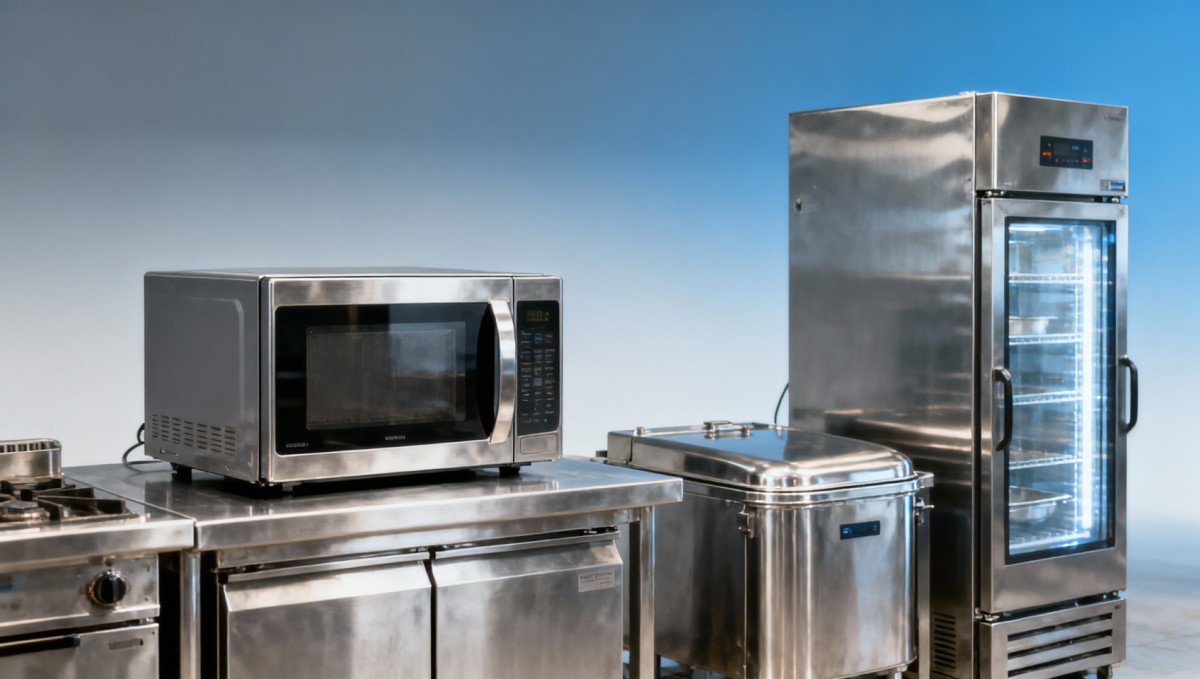
Replacement demand is strengthening because the role of the commercial microwave oven has expanded in modern foodservice. It is no longer used only for reheating. In convenience-led restaurant formats, hotel breakfast stations, delivery kitchens, and central production units, microwaves support defrosting, regeneration, portion finishing, sauce heating, and fast service recovery during peak periods. When a unit slows down or becomes inconsistent, the impact is operational rather than purely technical.
A second driver is higher labor cost and tighter service expectations. Many operators now design kitchen workflows around fewer manual steps and shorter ticket times. A microwave that adds even 20–40 seconds per order can create bottlenecks during high-volume windows. In quick-service and hybrid retail food environments, delays at one station often affect prep table use, hot holding timing, and handoff coordination with food warmer equipment.
Energy efficiency and uptime are also influencing replacement decisions. Older units may still function, but they often show declining magnetron performance, uneven heating, more frequent door switch faults, and rising maintenance interruptions. If a site experiences 2–3 service incidents per quarter, many buyers begin comparing repair cost against productivity loss, especially where daily output exceeds 80–150 heating cycles.
The broader kitchen equipment industry is reinforcing this change. As kitchens move toward integrated, smarter, and more energy-aware systems, operators are replacing microwave ovens as part of wider upgrades that may include commercial freezer units, prep counters, wash zones, and digital monitoring tools. This is particularly visible in chains standardizing equipment across 5, 20, or 100 locations to improve training consistency and spare parts planning.
Operational signals that trigger replacement
In practice, replacement is usually triggered by a combination of performance decline and workflow pressure rather than a complete breakdown. Operators should watch for several recurring signs before failure becomes costly.
- Heating inconsistency across portions of 300–800 g, causing uneven service quality.
- Repeated service calls within a 6–12 month period for door latches, switches, or power components.
- Longer regeneration times that disrupt service targets during peak 1–2 hour meal windows.
- Higher energy draw or poor ventilation compatibility in compact kitchen layouts.
- Difficulty sourcing replacement parts for older platforms after years of use.
When two or more of these conditions occur together, replacement often offers a stronger business case than extending the life of outdated equipment.
How buyers should evaluate commercial microwave oven specifications
Selecting a commercial microwave oven requires more than checking wattage. In a B2B purchasing environment, buyers should connect technical specifications to menu type, kitchen rhythm, staff skill level, and expected daily workload. A unit that suits a low-volume café may underperform in a hotel banquet support kitchen, while an oversized model may create unnecessary cost and space pressure in a compact service line.
Output power is one of the first filters. For light to moderate use, buyers often consider 1000–1800 W units. For busier restaurants, convenience stores, and central kitchens handling repetitive regeneration, 1800–3200 W is more common. Chamber size must also match plate, tray, and container dimensions. If standard GN or takeaway formats do not fit properly, the claimed power advantage may not translate into real throughput.
Control type matters as much as power. Manual dial controls can be suitable for simple tasks and lower training requirements, while programmable touch controls support recipe consistency in multi-shift environments. Operations with frequent staff turnover often benefit from 10–100 stored programs, reducing variability and shortening training time from several hours to a more manageable process.
Procurement teams should also assess cavity construction, door cycle durability, stackability, ventilation clearance, and electrical compatibility. Installation conditions may require single-phase or three-phase power, and insufficient planning at this stage can delay deployment by 7–14 days. In high-output kitchens, serviceability is especially important because downtime of even one critical appliance can affect multiple stations.
Core specification comparison
The following table helps buyers align application intensity with practical commercial microwave oven specifications and surrounding kitchen requirements.
The key takeaway is that buyers should size the microwave oven to real duty intensity rather than assume more power is always better. Over-specification can increase acquisition and utility cost, while under-specification usually creates repeat heating, poorer consistency, and a shorter replacement interval.
Specification checklist for procurement teams
Five points to verify before purchase
- Confirm actual food formats, including bowl depth, tray width, and portion weight range.
- Check electrical supply and peak load compatibility with nearby kitchen equipment.
- Review cleaning access, cavity material, and door hinge durability for heavy use.
- Assess programmable controls if multiple staff members need repeatable heating results.
- Ask about typical spare parts availability and standard service response windows.
This process reduces common specification errors and helps procurement teams compare suppliers using operational criteria rather than only purchase price.
Integration with prep, freezing, washing, and holding equipment
A commercial microwave oven rarely works in isolation. Its value increases when it is integrated with kitchen prep table systems, commercial freezer units, commercial sink unit setups, and food warmer equipment. In real kitchen design, these links determine whether the microwave supports a clean, continuous flow or becomes an awkward interruption between prep and service.
For example, in a sandwich or bowl assembly line, frozen or chilled ingredients may move from a commercial freezer or refrigerated prep station to the microwave for rapid regeneration and then directly to a hot holding or finishing point. If the travel distance exceeds 2–4 meters, service speed declines and food handling complexity increases. This is why replacement decisions often appear in larger equipment refresh projects rather than as isolated purchases.
Wash zones matter as well. Commercial sink unit placement affects container turnover, hygiene discipline, and the speed of reloading microwave-safe vessels during peak traffic. In central kitchens processing repeated batches, poor coordination between heating and washing can lead to queue buildup, extra labor movement, and reduced workstation safety.
From a business perspective, integrated planning improves capacity without always increasing headcount. Operators can often save one repetitive handling step or trim 10–15% from service-side delay when equipment layout is built around product flow rather than individual appliance categories. This aligns with the kitchen equipment industry’s broader direction toward smart, efficient, and more connected kitchen systems.
Workflow comparison in different kitchen settings
The table below shows how microwave replacement demand is influenced by surrounding kitchen equipment and operational format.
This comparison shows that replacement demand is tied to kitchen workflow reliability. When adjacent equipment is upgraded, an aging microwave often becomes the weakest link and is replaced to restore line balance.
Layout and installation considerations
- Keep loading and unloading movement compact to reduce unnecessary operator steps.
- Allow ventilation clearance according to manufacturer guidance, especially in stacked installations.
- Position the microwave near prep and holding areas, but not where splashing from sink units can affect hygiene or electrical safety.
- Coordinate with freezer and warmer placement to support a one-direction product flow.
Even a strong microwave specification will underperform if the kitchen layout forces cross-traffic, repeated handling, or awkward access during busy service periods.
Procurement strategy, cost control, and replacement planning
For procurement personnel and enterprise decision-makers, replacement demand should be managed through total operating value rather than initial price alone. The lowest-cost unit may appear attractive, but if it leads to slower service, more frequent repairs, or a shorter service life, the actual cost over 24–36 months can be significantly higher. This is especially true in multi-site operations where downtime can multiply service disruption.
A practical purchasing strategy begins with segmentation. Not every location needs the same model. High-volume sites may justify heavy-duty units, while smaller branches can use medium-duty configurations. Standardizing only 2–3 equipment tiers often makes more sense than forcing one specification across all branches. This improves spare parts planning, staff familiarity, and supplier coordination without overinvesting in low-demand sites.
Lead time is another key factor. Depending on region, stock availability, electrical adaptation, and installation schedule, procurement cycles may range from 7 days for local stock to 4–8 weeks for larger project orders. If the microwave is part of a broader kitchen renovation involving prep stations, commercial freezer units, and sink systems, delays in one equipment category can affect the entire commissioning timeline.
Buyers should also define acceptance standards before delivery. These may include heating uniformity checks, control function testing, door operation durability, installation verification, and cleaning accessibility. A structured replacement plan reduces emergency buying and helps organizations shift from reactive maintenance to scheduled asset management.
Commercial decision factors by buyer role
Different stakeholders evaluate a commercial microwave oven from different angles. Aligning these views early can speed approval and reduce specification changes later.
This type of buyer-role alignment improves decision quality. It also helps suppliers present solutions that match real business needs instead of relying on generic product claims.
Recommended replacement planning process
A four-step approach
- Audit current equipment age, repair frequency, and daily heating volume at each site.
- Classify locations into light, medium, and heavy usage bands based on actual workflow.
- Test candidate units using real menu items, standard containers, and typical staff routines.
- Plan phased rollout over 1–3 cycles to avoid peak-season installation pressure.
This staged method works well for chains, hotels, institutional catering, and food production facilities where microwave replacement affects multiple teams and service periods.
Maintenance priorities, common mistakes, and future selection trends
Maintenance remains central to replacement economics. Many commercial microwave ovens fail earlier than expected because of neglected cleaning routines, poor ventilation, repeated door abuse, or improper container use. In busy kitchens, a simple daily wipe-down may not be enough. Heavy-use sites often need surface cleaning every shift and a more detailed inspection weekly or biweekly, especially around air filters, seals, and control areas.
One common mistake is treating a commercial microwave oven like a domestic appliance. Commercial use involves higher door cycles, longer operating periods, and more demanding food loads. Another mistake is replacing only when a unit stops completely. By that stage, the business may already have absorbed weeks or months of hidden inefficiency, from slower service to product inconsistency and added operator frustration.
Looking ahead, the market is likely to favor more durable, programmable, and energy-conscious models that fit into broader smart kitchen strategies. Buyers are paying closer attention to interfaces that simplify staff training, materials that support faster cleaning, and designs that fit modular kitchen layouts. As the kitchen equipment industry continues moving toward automation and integrated systems, microwave selection will increasingly be linked to digital workflow, preventive service planning, and line-level productivity goals.
For global buyers, sourcing flexibility also matters. Manufacturing and export centers in countries such as China, Germany, Italy, and Japan continue to shape supply options across the kitchen equipment market. The most effective purchasing decisions balance local service support with production capability, realistic lead times, and technical suitability for the intended market and kitchen environment.
Common maintenance priorities
- Clean cavity surfaces and spills daily to reduce odor buildup and performance issues.
- Inspect door closure, latch action, and seal condition at least every 1–2 weeks.
- Keep ventilation paths clear and avoid stacking without approved clearance.
- Train staff to use suitable containers and avoid overloading beyond intended portion size.
These routines do not eliminate replacement demand, but they can extend stable performance and help buyers time upgrades more strategically.
FAQ
How do I know whether repair or replacement is the better option?
If the unit has recurring faults, inconsistent heating, or repeated service interruptions over a 6–12 month period, replacement is often more practical. This is especially true if the appliance supports more than 80 daily cycles or sits on a critical production path.
Which businesses benefit most from heavy-duty commercial microwave ovens?
Heavy-duty models are best suited to quick-service chains, central kitchens, convenience-led foodservice, hotel production support, and other operations with high repeat heating demand, narrow service windows, and a need for predictable output.
What should buyers check beyond wattage?
Important checks include chamber size, control programming, electrical compatibility, cleaning access, service support, stackability, and how the unit connects with prep tables, freezers, sink units, and food warmer equipment in the real workflow.
How long does a typical procurement and installation process take?
For available stock, replacement may take about 7–14 days including site coordination. For larger projects or imported units, planning can extend to 4–8 weeks, particularly when multiple kitchen equipment categories are being upgraded together.
The commercial microwave oven market is seeing stronger replacement demand because foodservice businesses are under pressure to improve speed, consistency, hygiene, and energy performance at the same time. Successful buyers do not assess the microwave as a standalone appliance. They evaluate it as part of a connected kitchen system that includes prep, freezing, washing, and holding functions, along with realistic service and maintenance requirements.
If you are planning a kitchen upgrade, standardizing equipment across locations, or comparing replacement options for a commercial microwave oven, now is the right time to review your duty levels, layout constraints, and procurement priorities. Contact us to discuss your application, request a tailored equipment recommendation, or learn more about integrated kitchen solutions for restaurants, hotels, and central kitchens.
Popular Tags
Kitchen Industry Research Team
Dedicated to analyzing emerging trends and technological shifts in the global hospitality and foodservice infrastructure sector.
Industry Insights
Join 15,000+ industry professionals. Get the latest market trends and tech news delivered weekly.
No spam. Unsubscribe anytime.
Contact With us
Contact:
Anne Yin (Ceramics Dinnerware/Glassware)
Lucky Zhai(Flatware)