
Restaurant kitchen equipment planning before lease signing
Restaurant kitchen equipment planning before lease signing can determine whether a foodservice project starts strong or faces costly delays. For business decision-makers, early planning helps align kitchen layout, utility capacity, workflow efficiency, compliance requirements, and budget control before long-term commitments are made. A strategic approach reduces operational risks and creates a more scalable, efficient, and future-ready restaurant operation.
In practice, restaurant kitchen equipment planning is not just a purchasing task. It is a pre-lease due diligence process that affects site selection, construction cost, opening timeline, labor productivity, food safety, and long-term maintenance. A kitchen that looks workable on paper can fail quickly if exhaust volume is undersized, drainage slopes are poor, electrical loads are insufficient, or prep and cooking zones create bottlenecks during peak hours.
For investors, operators, franchise groups, and hospitality executives, the goal is clear: confirm whether a location can support the intended menu and service model before signing a 3-year, 5-year, or even 10-year lease. That requires a structured review of kitchen equipment needs, utility conditions, workflow logic, and expansion potential. The sections below outline how to approach restaurant kitchen equipment planning in a disciplined and commercially practical way.
Why restaurant kitchen equipment planning must start before lease commitment
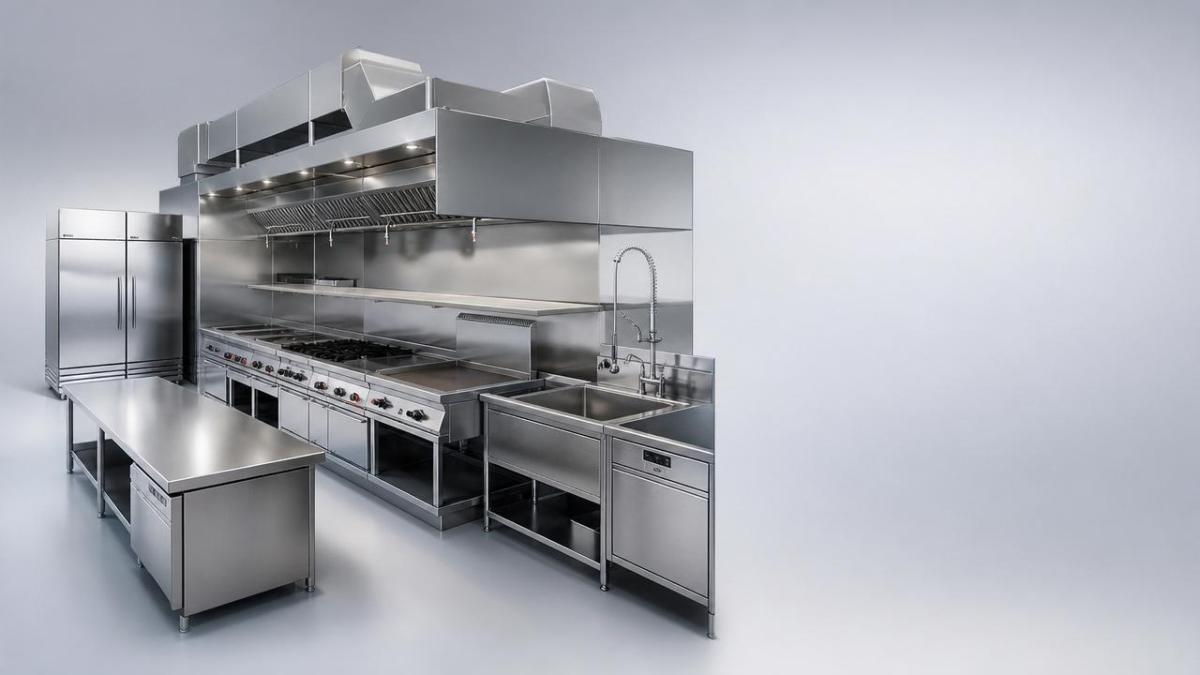
Many restaurant projects begin with menu concepts and lease negotiations, while kitchen planning is treated as a later technical step. This sequence often creates avoidable cost exposure. If a site cannot support a 600mm hood line expansion, a 3-phase power upgrade, or grease waste handling, the operator may face redesign costs within 2–6 weeks of signing or, in worse cases, a concept downgrade that weakens profitability from day one.
Restaurant kitchen equipment planning should therefore begin at the same time as financial modeling and site review. A lease may look attractive based on rent alone, but the hidden cost of utility retrofits, ventilation works, fire suppression integration, and drainage correction can materially change the total project budget. In many commercial fit-outs, kitchen-related infrastructure can account for 25%–40% of the total opening investment.
Key risks of planning too late
- Insufficient electrical capacity for combi ovens, induction ranges, refrigeration, and dishwashing equipment.
- Inadequate gas supply pressure or routing for high-output cooking lines.
- Ventilation and make-up air limitations that affect heat removal and compliance.
- Floor drain placement that disrupts warewashing, prep, or cleaning procedures.
- Poor receiving-to-storage-to-prep-to-service flow that increases labor steps by 15%–30%.
- Unexpected local code requirements related to fire safety, food handling, and grease management.
What decision-makers should verify before signing
The first review should match the intended business model with the physical capacity of the property. A quick-service unit, a full-service restaurant, and a central production kitchen have very different requirements for cold storage volume, hot line output, and washing capacity. Even a 80–120 seat dining format can need a very different kitchen footprint depending on whether the menu depends on batch cooking, à la minute service, bakery production, or delivery-heavy operations.
Decision-makers should ask four early questions: What menu volume is expected at peak hour? What core equipment is non-negotiable? What utilities are already available on site? What modifications will require landlord approval? These questions create a realistic foundation for restaurant kitchen equipment planning and prevent later disputes with contractors, landlords, and inspectors.
Pre-lease planning checklist
- Define service model and daily meal volume target.
- List mandatory cooking, refrigeration, prep, and cleaning equipment.
- Check gas, water, drainage, HVAC, and electrical capacity.
- Review grease extraction and exhaust discharge feasibility.
- Assess code compliance, access, delivery routes, and installation constraints.
The table below helps frame the practical difference between an attractive lease and a workable restaurant site. It is useful during landlord discussions, site comparison, and internal investment approval.
The main takeaway is that lease viability depends on operational fit, not just rent and location. A site that requires 20% more capital expenditure than expected can erase projected returns, while a site with the right utility backbone can shorten launch preparation by 3–8 weeks.
How to build a practical equipment plan around menu, volume, and workflow
Effective restaurant kitchen equipment planning starts with production logic rather than catalog selection. The equipment list should reflect menu complexity, batch size, service tempo, holding time, and labor skill level. A compact restaurant with 40 seats and strong takeout demand may require more assembly and packaging space than a larger dining room focused on plated service.
A practical planning sequence usually includes 3 stages: define the menu and output targets, map the operational flow, and then choose equipment capacities. This approach helps avoid overbuying low-use machines and under-specifying critical line equipment such as refrigeration, ventilation, and dishwashing.
Menu engineering and equipment matching
If the menu depends on grilled proteins, fried items, and sautéed dishes, the cooking line needs adequate hood coverage, grease control, and heat recovery planning. If the concept focuses on bakery, commissary preparation, or high-volume lunch service, cold storage, proofing, blast chilling, or rack movement may become more important than front-line cooking power. In each case, restaurant kitchen equipment planning should translate menu promises into measurable production requirements.
For example, peak-hour estimates can be used to size stations. If a concept expects 60–90 covers per hour, the prep table capacity, refrigerated undercounter storage, and pass line holding area must support that rhythm without repeated restocking every 10 minutes. Similarly, if dish return reaches 80–120 racks over a service window, warewashing throughput becomes a business continuity issue rather than a support function.
Workflow zones that reduce labor waste
- Receiving and dry/cold storage should sit close enough to reduce repeated lifting and transport.
- Prep zones should separate raw and ready-to-eat handling where required.
- Cooking lines should minimize staff crossover during 2 main rush periods.
- Plating, dispatch, and pickup should match dine-in, delivery, or hybrid service models.
- Warewashing should not interfere with clean prep traffic or hot food movement.
Capacity planning points to review
Decision-makers should verify at least 6 categories of equipment: cooking, refrigeration, preparation, ventilation, warewashing, and holding or transport. Each category should be checked against output, energy use, cleaning demand, and installation constraints. Typical planning errors include choosing oversized cooking equipment for a short menu, underestimating refrigerated storage by 15%–25%, and ignoring future menu additions such as bakery, beverage, or delivery packaging stations.
The following table shows a practical framework for aligning restaurant format with core kitchen equipment planning priorities before lease signing and fit-out approval.
This comparison shows why restaurant kitchen equipment planning must be concept-specific. A generic equipment package rarely performs well across different formats. The right plan supports service speed, food consistency, labor efficiency, and future adaptation without forcing costly replacement within the first 12–24 months.
Utility, compliance, and cost control decisions that shape lease viability
Even the best kitchen layout can fail if the site lacks the utility infrastructure to support it. Before lease signing, operators should request available drawings, landlord technical specifications, and local authority requirements. Restaurant kitchen equipment planning should test each critical system: power, gas, ventilation, water supply, hot water recovery, wastewater discharge, grease management, and fire safety interfaces.
A common problem is underestimating upgrade cost. A site may have basic restaurant use approval, but that does not mean it can support your target production load. For instance, an all-electric kitchen with induction, combi ovens, refrigeration, and dishwashing may need significantly more power distribution capacity than a lighter café model. Utility rework can add 10%–25% to fit-out cost depending on building condition and access complexity.
Infrastructure checks that should happen early
- Confirm incoming electrical supply, panel space, and upgrade pathway.
- Check gas line size, pressure consistency, and meter location if gas is required.
- Review exhaust route length, shaft access, and discharge restrictions.
- Verify floor drain positions, slope conditions, and grease interceptor feasibility.
- Assess potable water pressure and hot water availability during peak wash demand.
- Check local requirements for fire suppression, food hygiene zoning, and handwash points.
Budget planning beyond equipment purchase price
Restaurant kitchen equipment planning should separate capital cost into at least 4 buckets: equipment purchase, delivery and installation, utility connection and adaptation, and commissioning or staff training. Focusing only on unit price can mislead investment decisions. A lower-cost piece of equipment may increase cleaning time, consume more energy, or require more frequent service visits over a 3–5 year period.
Business decision-makers should also evaluate lifecycle factors such as spare parts availability, preventive maintenance intervals, service response time, and compatibility with digital kitchen management tools. In modern foodservice operations, smart kitchen technologies and connected monitoring can improve temperature control, maintenance scheduling, and energy visibility. These functions are especially relevant for multi-site operators and growing brands.
Common cost-control principles
- Reserve 8%–12% contingency for site-specific utility adaptation.
- Prioritize high-utilization equipment over low-frequency specialty machines.
- Standardize core equipment across sites where menu consistency matters.
- Choose energy-efficient solutions where operating hours exceed 10–12 hours per day.
- Plan maintenance access clearances early to reduce later relocation costs.
This stage is where operational reality meets financial discipline. If the lease terms are fixed but the site requires major infrastructure corrections, leaders should compare total occupancy cost against alternative properties. A stronger location on paper is not always the best operational asset if the kitchen backbone is weak.
Implementation, supplier coordination, and common pre-lease mistakes
Once the preliminary site passes technical review, restaurant kitchen equipment planning should move into coordinated implementation. This usually involves the operator, equipment supplier, kitchen designer, contractor, mechanical and electrical teams, and sometimes landlord-appointed consultants. Early coordination can reduce drawing revisions and shorten the installation cycle by 1–3 weeks in many projects.
A disciplined implementation path normally includes concept validation, site survey, equipment scheduling, utility coordination, installation sequencing, testing, and handover. The exact duration depends on project scale, but a focused small-to-medium restaurant fit-out often needs 4–10 weeks from final technical approval to commissioning. Delays usually come from missing dimensions, late landlord approvals, or utility mismatches discovered after equipment delivery.
What to expect from a capable supplier or planning partner
For B2B buyers, supplier value should be measured beyond quoting speed. A strong partner in restaurant kitchen equipment planning should be able to interpret menu needs, suggest capacity ranges, flag installation risks, coordinate with building conditions, and support after-sales service. This is increasingly important as kitchen equipment evolves toward automation, energy efficiency, and integrated control systems.
Useful supplier support may include site-based recommendations, equipment layout feedback, phased procurement options, preventive maintenance planning, and guidance on energy-saving choices. For operators managing multiple outlets, standardization can also reduce staff training time and simplify spare parts management.
Frequent mistakes that increase risk
Mistake 1: Leasing first and engineering later
This is the most expensive pattern. It often results in compromised kitchen layouts, reduced menu capability, or unplanned retrofit costs after commitments are already locked in.
Mistake 2: Buying equipment without production assumptions
If no one defines expected covers, preparation cycles, and peak load windows, the equipment package becomes guesswork. That often leads to underperformance during service and excess capital tied up in low-use assets.
Mistake 3: Ignoring maintenance and replacement access
A tightly packed kitchen may save floor area, but if key units cannot be serviced or removed without dismantling adjacent lines, long-term downtime and repair cost will rise.
Mistake 4: Overlooking future scalability
Restaurant kitchen equipment planning should allow reasonable growth. If delivery demand doubles in 12 months or the menu expands by 20%, can the cold storage, pass line, and warewashing zones absorb that change without major reconstruction?
Restaurant kitchen equipment planning before lease signing is ultimately a risk management tool and a performance strategy. It helps decision-makers compare sites more accurately, protect capex, improve workflow, and support modern goals such as energy efficiency, smart kitchen integration, and scalable operations. If you are evaluating a new location, remodeling an existing concept, or standardizing multiple outlets, early technical planning will save time and strengthen commercial outcomes. Contact us today to discuss your project, get a tailored equipment planning proposal, and explore more practical kitchen solutions for your restaurant operation.
Popular Tags
Kitchen Industry Research Team
Dedicated to analyzing emerging trends and technological shifts in the global hospitality and foodservice infrastructure sector.
Industry Insights
Join 15,000+ industry professionals. Get the latest market trends and tech news delivered weekly.
No spam. Unsubscribe anytime.
Contact With us
Contact:
Anne Yin (Ceramics Dinnerware/Glassware)
Lucky Zhai(Flatware)