
Which glass storage container works best in restaurants
Choosing the right glass storage container for restaurant use is not just about appearance or material preference. For most restaurant operators, the best option is a tempered glass container with a tight-sealing lid, stackable shape, clear labeling area, and sizes matched to prep, line service, and cold storage. In busy kitchens, the right container improves food safety, protects product quality, reduces waste, and makes daily work faster.
That said, no single glass container works best for every task. Restaurants often need different formats for mise en place, sauces, prepped vegetables, cooked proteins, desserts, and backup inventory. The real decision is how to choose glass containers that fit kitchen workflow, cleaning routines, storage limits, and breakage risk without slowing down service.
This guide explains what restaurant staff and kitchen operators should actually look for, where glass performs better than plastic, where it does not, and how to select the most practical setup for real back-of-house use.
What works best in restaurants: the short answer
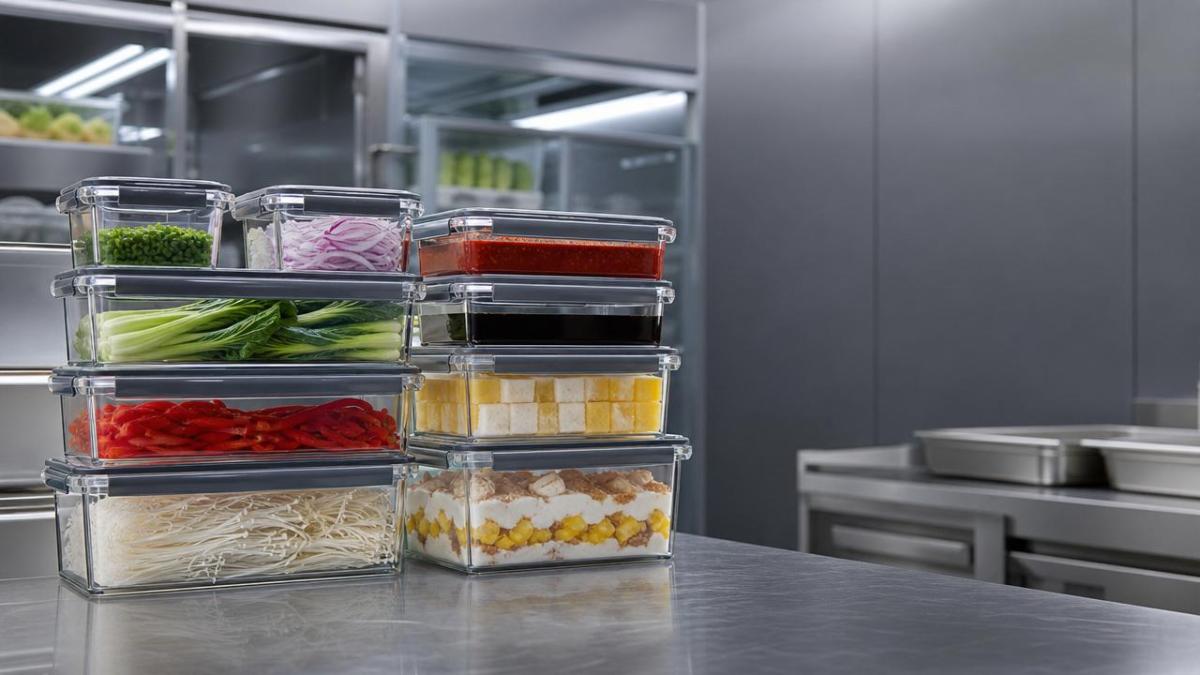
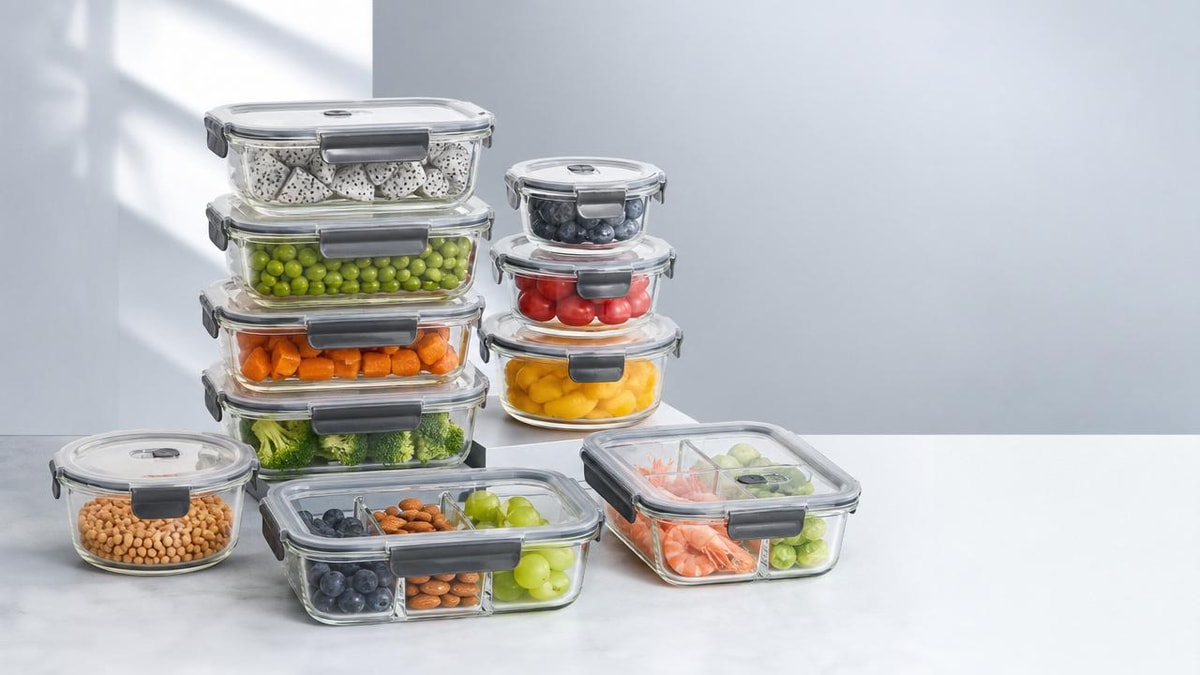
For most restaurants, the best glass storage container is a commercial-grade, tempered glass container with a locking or gasket-sealed lid, available in multiple standardized sizes. Rectangular and square formats usually work better than round ones because they use shelf space more efficiently, stack more cleanly, and make walk-in organization easier.
If your team handles frequent prep, cooling, storing, and reheating, borosilicate or tempered glass containers offer strong performance because they resist staining, do not absorb odors, and allow staff to see contents immediately. Clear visibility matters more than many kitchens realize. When ingredients are easy to identify, staff spend less time opening lids, checking labels, or searching through bins during a rush.
However, the best choice also depends on task. Small glass containers are useful for sauces, garnishes, and portioned ingredients. Medium containers fit chopped produce, dairy items, and marinated foods. Larger units can store batched prep, but they become heavy when full, which may reduce practicality for line cooks or dish staff.
So the most effective restaurant setup is usually not one container, but a system: a few standard sizes, reliable lids, clear labeling, and specific use rules for each station.
What restaurant operators and kitchen staff care about most
When staff search for the best glass storage container for restaurant use, they are usually not looking for a theoretical comparison. They want to know what survives daily kitchen pressure. Their real concerns are practical: Will it break easily? Is it easy to clean? Can it go from prep to fridge to service? Does it leak? Can staff stack it without wasting space? Will it slow down work?
Food safety is usually the top concern. Operators need containers that help separate raw and cooked items, keep lids secure, and make labeling easy. They also want surfaces that do not hold grease, smell, or color after repeated use. Glass performs well here because it is non-porous and easier to inspect visually than many worn plastic containers.
Durability is the next major issue. Even teams that prefer glass worry about breakage, especially in fast-paced kitchens with crowded prep tables, bus tubs, and dishwashing areas. This is why restaurant buyers should focus on commercial-grade glass rather than consumer food containers designed for home kitchens.
Workflow matters just as much as material. A great container on paper is not useful if lids get mixed up, stacks slide, or sizes do not fit standard shelving. The best products support movement across prep, storage, portioning, and service with minimal handling problems.
Why glass can be a smart choice in restaurant kitchens
Glass offers several advantages that make it highly attractive in foodservice environments. The first is visibility. Staff can identify ingredients instantly without opening the container, which reduces unnecessary handling and helps preserve freshness. In service periods, this saves time and lowers the chance of contamination.
Second, glass protects food quality well. It does not absorb tomato, curry, garlic, vinegar, or seafood odors the way lower-quality plastics often do. For restaurants that handle strong flavors or premium ingredients, this is a meaningful advantage. A clean container should actually smell clean after washing, not carry over yesterday’s prep.
Third, glass supports sanitation. Scratches in plastic can trap residue and bacteria over time. Glass is generally smoother and easier to inspect for cleanliness. Staff can quickly see leftover sauce, oil film, or clouding, which helps maintain better cleaning discipline.
Fourth, glass can support multiple uses across storage and reheating, depending on the lid and thermal rating. Some kitchens value being able to prep, chill, and reheat in the same base container. That reduces transfer steps, extra pans, and dish volume.
Finally, glass often presents ingredients better. In open kitchens, dessert stations, display refrigeration, and premium takeout concepts, presentation matters. A neat, transparent container can support a cleaner and more professional look.
Where glass is not always the best option
Glass is useful, but it is not the right answer for everything. In very high-volume kitchens, especially operations with heavy transport, frequent drops, or cramped line movement, breakage risk may outweigh the benefits. Fast casual units, institutional kitchens, and central production sites sometimes prefer polycarbonate or polypropylene containers for this reason.
Weight is another limitation. Large glass containers filled with soups, sauces, or bulk prep become difficult to lift safely. Staff fatigue and dropping risk increase, especially when containers move between low shelves, prep counters, and walk-ins. In these cases, smaller glass units or mixed-material systems may work better.
Thermal shock is also a real issue. Not every glass container can safely move between hot and cold environments. If a container goes from a hot line to a cold prep area too quickly, cracking can happen. Restaurant teams should not assume all glass is oven-safe, freezer-safe, or suitable for rapid temperature change.
Lid quality can also be a weak point. Some glass sets come with fragile clips, loose seals, or lids that warp faster than the glass base wears out. In restaurants, the lid system often determines the true service life of the container more than the vessel itself.
How to choose the right glass storage container for restaurant operations
The best way to choose is to evaluate containers by task, not by marketing claims. Start with your kitchen workflow. Ask where the container will be used most often: prep table, reach-in refrigerator, walk-in cooler, line station, dessert area, or grab-and-go section. A container that works in one zone may fail in another.
Next, check the glass type. Tempered glass is a common and practical option for restaurants because it offers better impact resistance than basic glass. Borosilicate glass is useful when temperature resistance matters more. If your team reheats or cools products frequently, verify the exact thermal performance instead of relying on generic product descriptions.
Then review lid performance carefully. For restaurant use, lids should seal consistently, open quickly, and survive repeated washing. A container with a strong base but poor lid retention creates daily frustration. Look for leak-resistant gasket systems for liquids, dressings, and marinated items. For dry or short-term refrigerated storage, a simpler secure-fit lid may be enough.
Shape matters more than many buyers expect. Square and rectangular containers usually outperform round ones in shelf efficiency. They stack better, waste less walk-in space, and make inventory lines look more organized. Round containers can still be useful for some liquids or whipped products, but they are rarely the most space-efficient standard.
Choose a small number of standard sizes. Too many unique dimensions slow down storage planning and cause lid confusion. A practical system often includes small containers for toppings and sauces, medium containers for daily prep, and larger containers for backup mise en place. Standardization supports training and faster station reset.
Also examine the rim and base design. Thick rims may resist chipping better, while stable flat bases help prevent tipping on stainless prep tables. Smooth corners can make washing easier, while very sharp corners may trap residue.
Best use cases for different container sizes and styles
Small glass containers, usually used for 4 to 16 ounces of product, are ideal for spice blends, garnish portions, dipping sauces, chopped herbs, and dessert components. They help with portion control and line organization, especially when staff need quick visual access during service.
Medium containers are often the most useful category in restaurants. They fit sliced vegetables, shredded cheese, cooked grains, cut fruit, sauces, and proteins for same-day or next-day use. These sizes balance capacity with manageable lifting weight and are usually the most versatile choice for prep teams.
Larger glass containers work best for lower-movement storage rather than constant line handling. They are suitable for batched prep stored in walk-ins, marinating ingredients, or holding components in pastry and cold kitchen sections. If used for heavy liquids or dense food, they should not be overfilled.
Low-profile containers can be particularly effective in undercounter refrigeration or line drawers where vertical clearance is limited. Taller narrow containers may suit sauces or layered ingredients, but they can be harder to clean and less stable when stacked.
Features that make daily restaurant use easier
The best container is one staff can use correctly without extra thought. That means clear visibility, consistent lids, easy stacking, and quick cleaning. Even a technically durable product becomes inefficient if it is awkward to handle at speed.
Measurement markings can be useful for prep accuracy, especially in pastry, sauce, and commissary work. Label-friendly surfaces also matter. Staff need enough flat space to apply date labels clearly without covering the whole container or blocking visibility.
Stackability is critical. Containers should stack securely when full and nest reasonably when empty, if the design allows. In walk-ins, unstable stacks increase breakage risk and make stock rotation harder. In dish areas, poorly stacking containers create clutter and slow turnaround.
Dishwasher compatibility is also essential. In restaurants, containers are washed frequently and sometimes aggressively. Products that are difficult to clean around seals, hinges, or corners can create sanitation problems and staff complaints. Replaceable gaskets are a plus for long-term use.
Practical buying mistakes restaurants should avoid
One common mistake is buying household storage containers for commercial kitchens. Home-use products may look attractive and inexpensive, but they often fail under repeated washing, frequent handling, and high-volume use. Commercial conditions expose weak clips, poor seals, and fragile glass quickly.
Another mistake is choosing containers that are too large. Bigger sounds more efficient, but oversized glass units become heavy, awkward, and more likely to be dropped. In many kitchens, more medium containers are safer and more practical than fewer large ones.
Some operators also overlook replacement availability. If lids, seals, or matching sizes are hard to reorder, the system breaks down fast. Before buying in volume, check whether components are sold separately and whether the product line is likely to remain available.
Ignoring workflow fit is another frequent problem. If containers do not fit shelving heights, prep wells, or refrigeration layouts, staff will work around them instead of with them. Measure real storage spaces before ordering.
Should restaurants use only glass, or a mixed system?
For many operations, a mixed system is the most practical solution. Glass works especially well for ingredients that benefit from visibility, odor resistance, sanitation confidence, and presentation. Plastic or polycarbonate may still be better for bulk transport, outdoor service, high-drop environments, or very large-volume prep.
Restaurants do not need to choose one material for every task. A smart approach is to use glass where it creates the most value: sauces, dairy, desserts, premium ingredients, prepped vegetables, and refrigerated mise en place. Use more impact-resistant alternatives for large transport bins, mobile production, or heavy back stock.
This balanced strategy protects workflow while still delivering the hygiene and freshness benefits that make glass attractive in the first place.
Final verdict: which glass storage container works best in restaurants?
The best glass storage container for restaurant use is usually a commercial-grade tempered or borosilicate glass model with a reliable sealing lid, stackable rectangular shape, and standardized size system. It should be easy to clean, easy to label, comfortable to handle, and strong enough for repeated back-of-house use.
For most restaurant operators, the goal is not simply to buy glass containers. It is to build a storage system that supports food safety, speed, freshness, and consistent organization. Containers that look good but fail in workflow are not the best choice. Containers that help staff prep faster, store safer, and waste less are.
If you are selecting containers for a working kitchen, prioritize durability, lid quality, size standardization, and shelf efficiency over style. That is what makes glass storage truly practical in restaurant operations.
Popular Tags
Kitchen Industry Research Team
Dedicated to analyzing emerging trends and technological shifts in the global hospitality and foodservice infrastructure sector.
Industry Insights
Join 15,000+ industry professionals. Get the latest market trends and tech news delivered weekly.
No spam. Unsubscribe anytime.
Contact With us
Contact:
Anne Yin (Ceramics Dinnerware/Glassware)
Lucky Zhai(Flatware)