
Airtight glass storage containers and the seal issue
An airtight glass storage container should protect food quality, prevent leaks, and support daily kitchen efficiency, but seal problems can quickly lead to customer complaints and maintenance challenges. For after-sales service teams, understanding why sealing fails is essential to accurate troubleshooting, product improvement, and long-term user satisfaction in both commercial and household kitchen environments.
In most cases, the seal issue is not caused by the glass body itself. The real problem usually comes from the lid structure, gasket material, locking pressure, manufacturing tolerance, user cleaning habits, or heat-related deformation. For after-sales maintenance staff, this means the right response is not simply replacing the whole airtight glass storage container, but identifying the exact failure point and deciding whether the issue is repairable, preventable, or design-related.
This article focuses on the practical questions that service teams actually face: why airtight performance declines, how to inspect containers correctly, which faults appear most often in real use, and how to guide customers while feeding useful information back to product and quality teams. If your work involves warranty handling, maintenance support, or complaint analysis, these are the details that matter.
Why does an airtight glass storage container lose its seal in the first place?
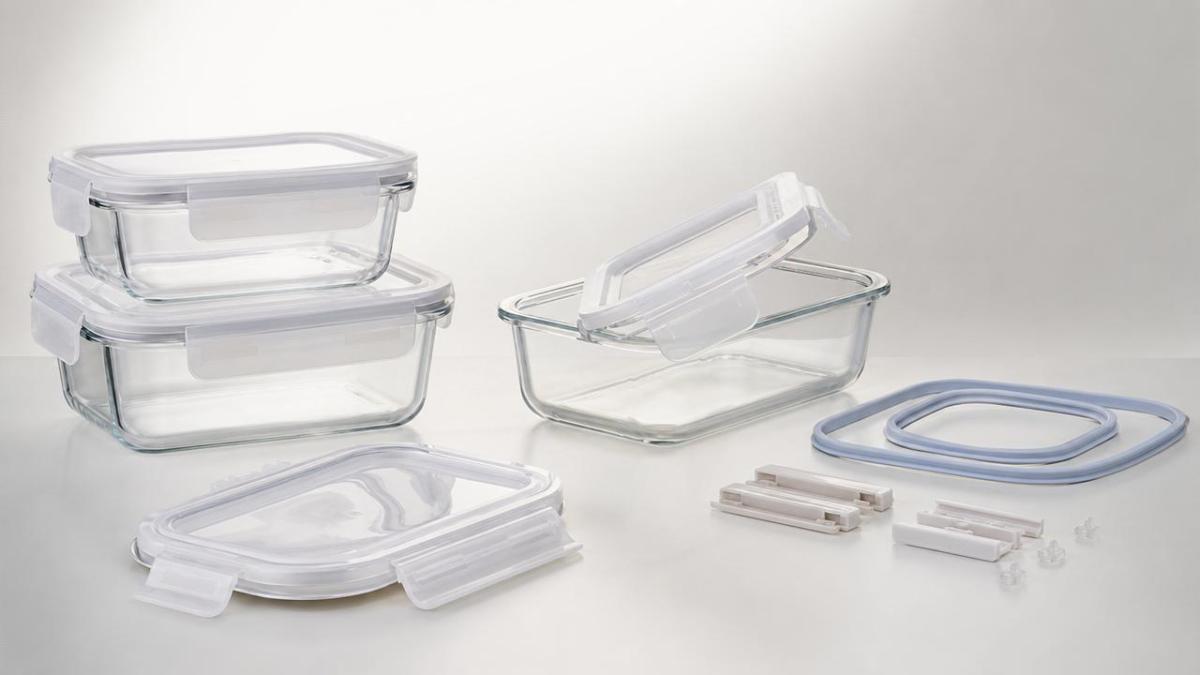
When customers report that an airtight glass storage container is leaking, failing to keep food fresh, or no longer closing properly, the first assumption is often that the lid is “broken.” In reality, seal failure usually develops through small changes in several connected parts. A container can look normal from the outside and still fail under pressure, tilt, temperature variation, or repeated opening cycles.
The most common root cause is gasket degradation. Silicone or rubber seals can harden, stretch, absorb oil, trap detergent residue, or become slightly twisted after repeated cleaning. Once the gasket no longer sits evenly in its channel, the lid may close but fail to maintain uniform compression around the rim.
The second major cause is lid warping or hinge misalignment. This is especially common in plastic lids exposed to hot dishwashers, microwaving misuse, or heavy stacking. Even slight distortion can reduce contact pressure between the lid and the container edge, creating a weak point where air or liquid escapes.
Another frequent issue is rim contamination. Fine food particles, dried sauce, cooking oil, or mineral deposits can prevent full sealing even when the product itself is technically intact. For after-sales teams, this is important because some complaints are not product failures but maintenance or cleaning failures.
There are also tolerance-related issues from production. If the lid dimensions, latch geometry, or gasket groove depth vary too much, the seal may be inconsistent from the beginning. In these cases, multiple customer complaints from the same batch often appear, and individual replacement may not fully solve the problem.
What are the most common seal failure symptoms reported by end users?
After-sales staff should classify complaints by symptom, not just by the general phrase “it does not seal.” Different symptoms usually point to different failure mechanisms. Clear symptom categorization improves diagnosis speed and reduces unnecessary replacements.
One common symptom is liquid leakage during transport. This often indicates uneven latch pressure, a displaced gasket, or a cracked lid edge rather than poor glass quality. If the container only leaks when tilted or shaken, dynamic seal performance should be checked rather than static closure appearance.
Another typical complaint is reduced freshness. Customers may say food dries out, odors spread in the refrigerator, or moisture builds up unexpectedly. These signs often suggest a partial seal failure. The container may still appear closed, but air exchange is happening through a small gap.
Some users report that the lid has become hard to close. This can mean the gasket has swollen, been incorrectly reinstalled after cleaning, or the latch mechanism is no longer aligned. In other situations, a lid that becomes too easy to close may indicate loss of sealing pressure, which is often more serious than stiffness.
A fourth symptom is visible gasket movement. If the seal slips out during washing or comes loose during opening, the retention design may be weak, or the gasket may have aged enough to lose elasticity. Repeated complaints of this type should trigger a review of both material and groove structure.
How should after-sales maintenance teams inspect an airtight glass storage container?
A consistent inspection process is one of the best ways to reduce misjudgment. Rather than relying on visual inspection alone, service teams should use a simple step-by-step method that checks contamination, deformation, fit, and functional sealing behavior.
Start with the glass body. Check the rim carefully for chips, uneven edges, or impact damage. Even a very small defect on the contact surface can break the seal. Glass cracks outside the sealing area may not cause immediate leakage, but rim damage almost always affects airtight performance.
Next, inspect the lid from multiple angles on a flat surface. Look for rocking, twisting, hinge stress, latch looseness, or a slight upward bend at the corners. Some lid deformation is hard to see when the lid is attached, so it should be examined separately.
Remove the gasket and inspect it for stretching, tearing, hardening, discoloration, oil absorption, or flattening. Also check whether the seal channel contains residue. In many cases, the gasket itself is usable, but trapped dirt prevents proper seating. If the seal cannot return to its original shape after light handling, replacement is usually the safest decision.
Then perform a closure test. Reassemble the airtight glass storage container and confirm whether all locking points engage evenly. Uneven closing force often indicates hinge or latch imbalance. If available, a simple water inversion test can help identify obvious leakage, though it should be done only when the product design is meant to resist liquid movement.
For recurring cases, compare the suspect unit with a confirmed-good sample from the same product line. Side-by-side comparison often reveals subtle differences in latch force, lid geometry, or gasket fit that are easy to miss in isolated inspection.
Which problems can be fixed, and which ones usually require replacement?
Not every seal complaint requires a full product exchange. A good after-sales decision balances customer satisfaction, cost control, and long-term reliability. The key is knowing which faults are serviceable and which are likely to return if only partially addressed.
Cleaning-related problems are the easiest to fix. If residue on the rim or in the gasket groove is the main issue, proper cleaning and reinstallation may restore normal performance. In such cases, customer education can prevent repeated service requests.
Gasket displacement or minor wear is often repairable if replacement seals are available. This is one of the most efficient maintenance solutions because the gasket is a relatively low-cost part and a common source of failure. However, replacing the gasket only makes sense if the lid and latch geometry remain stable.
Lid deformation is more difficult. Slight warping in plastic components may not be recoverable, especially if caused by heat exposure. Even if the lid can still be forced closed, long-term airtight performance is unlikely to remain consistent. In most cases, lid replacement is the better option.
If the glass rim is chipped, the container should usually be replaced rather than repaired. Rim damage directly affects sealing and may also create a safety risk during handling. Similarly, if multiple locking tabs are cracked or loose, replacing individual small parts may not deliver a durable result unless the product was designed for modular repair.
Batch-level tolerance issues require a broader response. If service teams notice the same complaint pattern across many units, the problem should be escalated to quality control and product engineering. Repeated one-by-one replacements may only increase cost without solving the underlying issue.
How do user habits contribute to seal problems?
Many airtight glass storage container failures are accelerated by use conditions rather than basic material defects. After-sales teams need to recognize this, not to blame the customer, but to provide more accurate guidance and reduce avoidable repeat complaints.
Dishwasher heat is a major factor. While many containers are marketed as dishwasher-safe, repeated high-temperature cycles can still affect certain lid plastics, soft-close structures, or gasket elasticity over time. Customers often assume “dishwasher-safe” means “no performance change under any washing pattern,” which is not always realistic.
Another common issue is improper gasket removal. Some users pull seals aggressively during every wash, stretching them or reinstalling them unevenly. Others never remove them, allowing residue and mold to collect in the groove. Both habits can reduce sealing reliability.
Overfilling also causes trouble. When food contacts the lid with force, especially oily, acidic, or hot contents, the gasket may shift and sealing pressure may become inconsistent. This is especially relevant in commercial kitchens, where speed often leads to rougher handling and tighter stacking.
Misuse in heating environments is another source of damage. If users microwave a product not designed for full-lid heating or expose the lid to boiling conditions, distortion may occur gradually. The customer may not connect this behavior to later seal failure, so service staff should ask use-condition questions during diagnosis.
What should after-sales teams document for quality improvement?
Seal complaints are not just service cases; they are valuable product data. A well-documented failure report helps quality, purchasing, and engineering teams identify whether the issue comes from materials, design, molding accuracy, assembly, packaging, or user instruction gaps.
Every case record should include the product model, production batch if available, complaint type, service age, use frequency, cleaning method, food application, and storage environment. It is also useful to record whether the failure appeared suddenly or gradually.
Photographs should capture the rim, lid underside, latch zones, gasket condition, and any visible deformation. If leakage is reported, note whether it happens during inversion, side tilt, transport vibration, or simple refrigerated storage. Different test conditions reveal different weak points.
It is also important to track part replacement effectiveness. If replacing the gasket solves most cases, stocking seal kits makes sense. If gasket replacement has a low success rate, the real issue may lie in lid geometry or manufacturing consistency instead.
Over time, trend analysis can reveal whether a certain airtight glass storage container model has a design weakness, whether a supplier material change affected durability, or whether customer instructions are unclear. For growing kitchen equipment brands, this feedback loop is essential for reducing returns and protecting reputation.
How can service teams communicate with customers more effectively about sealing issues?
Technical accuracy matters, but customer communication matters just as much. When a user says a container is “not airtight,” they are usually expressing frustration about leakage, food waste, inconvenience, or distrust in the product. Good communication helps resolve the case faster and preserves confidence in the brand.
Start by narrowing the issue with simple questions: Does it leak liquid or only lose freshness? Did the problem begin after washing, heating, or dropping the container? Is the lid hard to close, or does it close too loosely? These questions quickly move the conversation from vague complaint to useful diagnosis.
Where appropriate, guide the customer through a basic inspection: check the rim, remove and reseat the gasket, clean the groove, and test closure on an empty container. This can resolve simple cases without a return while making the user feel supported rather than dismissed.
At the same time, avoid oversimplifying genuine product faults as user error. If there is visible deformation, recurring leakage under normal use, or a known batch problem, prompt replacement is better than prolonged troubleshooting. Trust is especially important when the product is used in foodservice settings where reliability affects workflow.
For professional buyers such as restaurants, central kitchens, or catering operations, the message should also address operational continuity. A failed airtight glass storage container is not just an inconvenience; it can affect food handling consistency, storage efficiency, and compliance expectations. Service teams should respond with that business context in mind.
How to reduce future seal complaints through better service and product strategy
Reducing seal problems requires more than reactive warranty handling. The best after-sales teams help prevent future complaints by feeding practical field evidence into training, spare parts planning, and product improvement decisions.
First, build a standard troubleshooting checklist for all seal-related complaints. This improves consistency across technicians and service channels. It should include visual checks, gasket inspection, lid flatness review, cleaning assessment, and usage-condition questions.
Second, maintain replacement part availability for common wear items, especially gaskets and lids. If the product architecture supports modular service, repair becomes faster, cheaper, and more sustainable than full replacement. This is increasingly important in a kitchen equipment industry moving toward efficiency and resource-conscious operations.
Third, work with product teams to improve instruction materials. Clear guidance on lid heat limits, dishwasher impact, proper gasket cleaning, and closure technique can prevent many failures. Short visual instructions are often more effective than long manuals, especially for mixed household and commercial user groups.
Finally, use complaint data strategically. If a specific latch design repeatedly causes uneven compression, or if a certain seal material hardens too quickly in oily food environments, those findings should influence future sourcing and design decisions. After-sales service is often the earliest place where real-world durability problems become visible.
Conclusion
The seal issue in an airtight glass storage container is rarely a mystery once the problem is analyzed systematically. Most failures come from the interaction between gasket condition, lid shape, latch pressure, contamination, and user handling rather than from the glass body alone.
For after-sales maintenance personnel, the most valuable approach is practical and structured: identify the symptom clearly, inspect the sealing system step by step, separate repairable faults from replacement cases, and document trends for product improvement. This not only resolves complaints more accurately but also helps brands deliver more reliable kitchen equipment in both home and commercial environments.
In short, better diagnosis leads to better service, and better service creates better products. When teams understand how an airtight glass storage container actually fails, they can turn a common complaint into a meaningful opportunity for quality control, customer trust, and long-term performance improvement.
Popular Tags
Kitchen Industry Research Team
Dedicated to analyzing emerging trends and technological shifts in the global hospitality and foodservice infrastructure sector.
Industry Insights
Join 15,000+ industry professionals. Get the latest market trends and tech news delivered weekly.
No spam. Unsubscribe anytime.


Contact With us
Contact:
Anne Yin (Ceramics Dinnerware/Glassware)
Lucky Zhai(Flatware)