
How to choose kitchen tools for schools that last
Choosing kitchen tools for schools that last is about more than price—it means balancing safety, durability, hygiene, and daily efficiency. For procurement teams, the right tools can reduce replacement costs, support smooth meal preparation, and meet the demands of busy school kitchens. This guide outlines the key factors to help buyers select reliable, long-lasting solutions for educational foodservice environments.
Why the buying standard for kitchen tools for schools is changing
School foodservice has changed significantly in recent years. Kitchens are expected to serve more meals, comply with tighter hygiene rules, handle staff shortages, and support healthier menus with less waste. As a result, procurement teams are no longer choosing tools based only on unit price or basic availability. The focus has shifted toward lifecycle value, safety performance, and how well a product fits high-volume school operations.
This shift matters because kitchen tools for schools operate in a demanding environment. Unlike occasional-use tools in small kitchens, school utensils, prep tools, storage items, and serving equipment are used repeatedly across breakfast, lunch, and sometimes after-school programs. Frequent washing, rough handling, and fast-paced preparation expose weak materials quickly. A cheaper item may appear economical at purchase, but if it bends, stains, chips, loosens, or becomes difficult to sanitize, total cost rises fast.
Another clear trend is stronger accountability. Procurement officers are increasingly asked to justify purchasing decisions in terms of durability, food safety, maintenance, and long-term budget control. That means the conversation around kitchen tools for schools is moving from simple buying to evidence-based selection.
The market signals procurement teams should pay attention to
Several industry signals are shaping how buyers evaluate school kitchen equipment and smallwares today. Some signals come from regulation and food safety expectations, while others come from labor realities and technology upgrades across the broader kitchen equipment industry.
These signals show that buying kitchen tools for schools is increasingly tied to broader foodservice modernization. Durable tools are not just an operational preference; they are part of risk control, sustainability planning, and workforce efficiency.
What is driving the demand for longer-lasting school kitchen tools
The first driver is volume. Many school kitchens must prepare large numbers of meals in limited time windows. Under this pressure, lightweight or poorly finished tools fail faster. Handles loosen, cutting edges dull, and surfaces degrade after repeated dishwashing. Buyers now recognize that tools designed for light domestic use rarely perform well in institutional settings.
The second driver is food safety. Procurement decisions increasingly favor tools that can maintain sanitary conditions without adding cleaning complexity. Smooth welds, sealed handles, rust resistance, and dishwasher-safe construction matter more than ever. In school environments, even a small hygiene weakness can create large operational consequences.
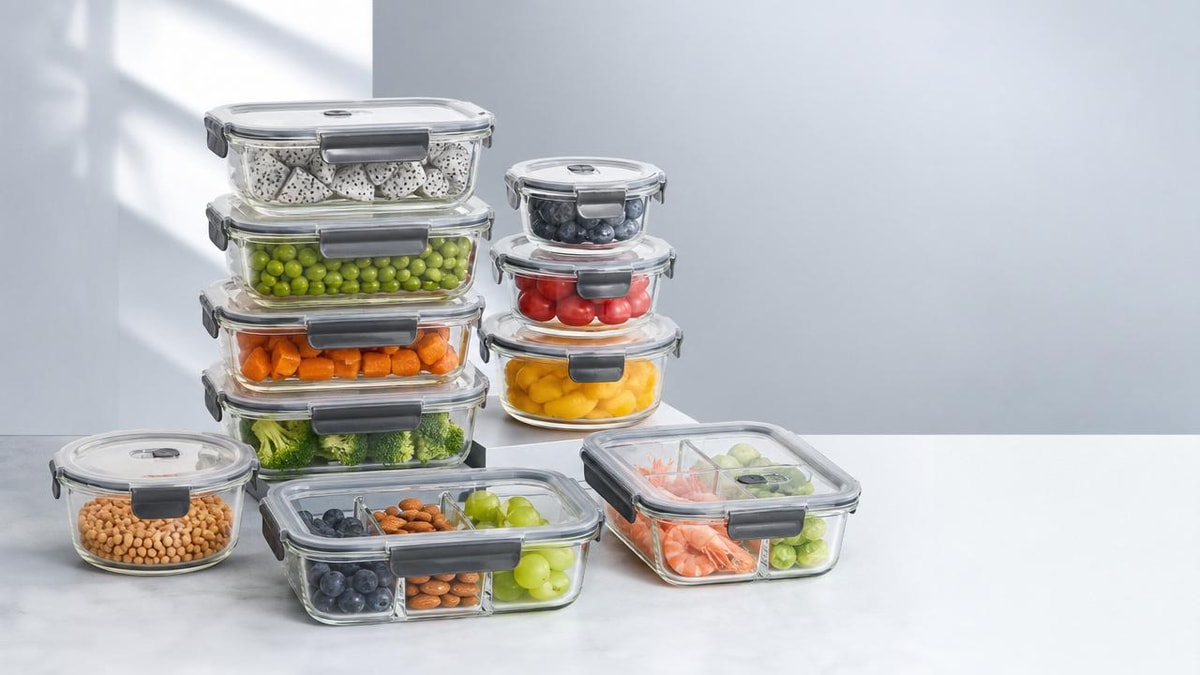
The third driver is menu diversity. School meal programs often include fresh produce, baked foods, hot holding, portion control, and allergen-sensitive preparation. This creates a need for kitchen tools for schools that perform well across different tasks while maintaining consistency. Multi-purpose spatulas, color-coded cutting tools, heavy-duty scoops, long-lasting tongs, and stackable storage containers are no longer minor details; they influence workflow and compliance.
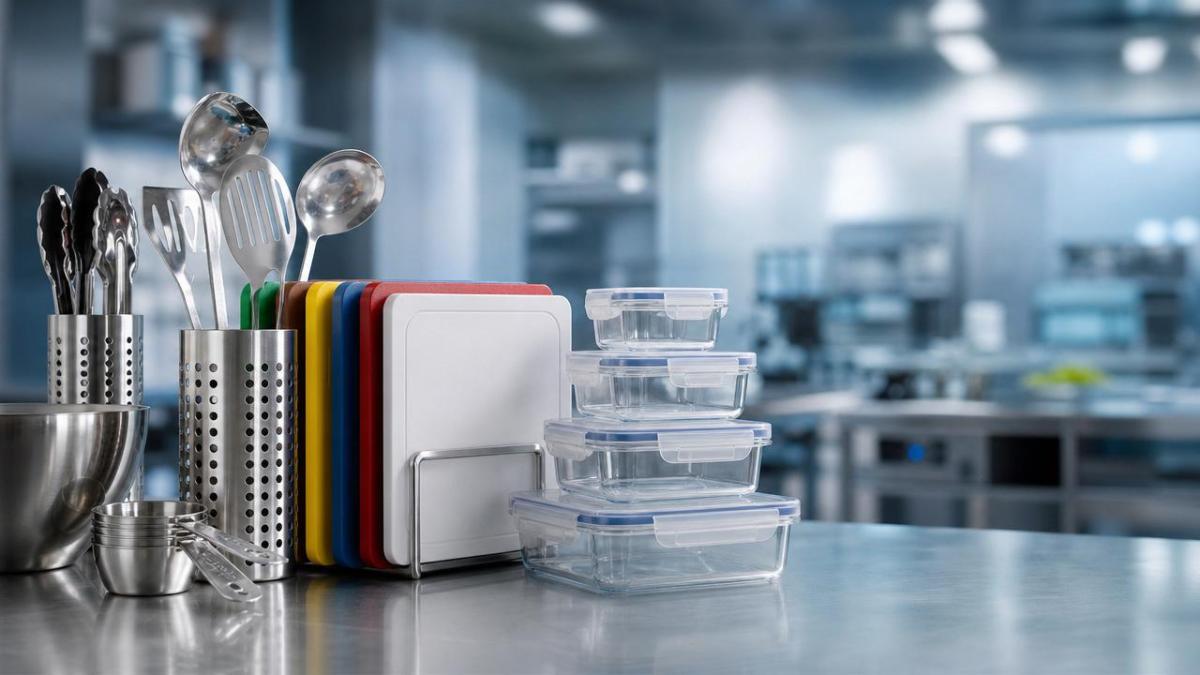
A fourth driver is procurement transparency. Schools and public institutions often require stronger documentation on specifications, sourcing, and value. That is pushing suppliers to provide clearer material data, testing information, and product consistency. For buyers, this makes technical comparison more important than brand claims alone.
How these changes affect different decision-makers
Not every stakeholder looks at kitchen tools for schools in the same way. A durable buying strategy works best when procurement teams understand how operational, financial, and compliance priorities connect.
This cross-functional view is important because the best kitchen tools for schools are not simply the toughest products on the shelf. They are the products that create stable performance across departments, reduce hidden costs, and fit the real operating model of school foodservice.
What long-lasting really means in a school kitchen
Durability should be defined in practical terms, not marketing terms. For school buyers, long-lasting tools usually share several characteristics. First, they use materials suited to repeated sanitizing and intensive use, such as high-grade stainless steel, reinforced food-safe plastics, or heat-resistant silicone. Second, they minimize weak connection points, including rivets, glued joints, or hollow handles where moisture can collect.
Third, they support predictable work. A ladle that keeps its shape, a scoop with reliable portion control, or a cutting board that resists deep scoring all contribute to smoother kitchen performance. In this sense, durability also means process stability. When tools fail less often, staff lose less time adapting, improvising, or waiting for replacements.
Fourth, long-lasting kitchen tools for schools should remain safe throughout use. A product is not durable if its edge chips, handle slips, surface peels, or structure warps under heat. Procurement teams should evaluate not only whether a tool survives, but whether it remains safe and hygienic at the end of repeated use cycles.
The new evaluation priorities: from unit price to lifecycle value
One of the clearest buying shifts is the move from initial price comparison to total value analysis. This is especially relevant for kitchen tools for schools because small differences in durability multiply across high-use kitchens and multi-site districts.
A practical evaluation model should include these questions:
- How many wash cycles and usage cycles can the tool realistically handle?
- Does the material resist corrosion, staining, cracking, or odor absorption?
- Will the tool reduce prep time, serving inconsistency, or operator fatigue?
- Can the same product be standardized across multiple schools or kitchen stations?
- Does the supplier offer documentation, replacement support, and consistent product quality?
This broader approach supports smarter budgeting. In many cases, the lower-risk choice is not the lowest-cost option but the one with fewer disruptions over the school year.
Materials, design, and standardization are becoming stronger buying signals
As the kitchen equipment industry moves toward better quality control and smarter operations, product details matter more. For example, stainless steel tools are often preferred for their corrosion resistance and easy cleaning, but grade, thickness, and finish affect performance. Silicone components can improve heat resistance and handling comfort, but only if they are food-safe and firmly integrated into the design. Plastic bins and cutting boards should be selected for impact resistance, cleanability, and replacement logic, not just color or price.
Standardization is another growing trend. When districts reduce product variety and choose consistent kitchen tools for schools across sites, they simplify training, inventory control, and replenishment. Standardization also improves spend visibility. Instead of reacting to scattered breakage and one-off purchases, procurement teams can track performance category by category and negotiate better with suppliers.
How to respond to the trend without overbuying
A common risk is assuming that every tool must be top-tier industrial grade. That can lead to unnecessary spending. A better response is to segment purchases by usage intensity. High-contact and high-frequency items deserve the strongest durability criteria, while lower-use items may be selected with more balanced specifications.
Procurement teams can use a simple three-level approach:
- Critical-use tools: knives, tongs, scoops, trays, prep containers, cutting surfaces, and serving utensils used daily in volume. These should receive the highest durability and hygiene review.
- Medium-use tools: specialty prep items and backup utensils. These should still meet commercial standards but may not require the most premium construction.
- Low-use tools: occasional items where replacement risk is lower. Here, value balancing is more flexible.
This method allows buyers to improve long-term performance without treating every line item the same.
Signals to watch over the next purchasing cycle
Looking ahead, several signals may further influence demand for kitchen tools for schools. One is the continued expansion of digital procurement and inventory systems, which makes replacement patterns easier to track. Another is stronger interest in sustainable purchasing, where long service life and reduced waste may become more formal evaluation factors. A third is the broader adoption of integrated kitchen planning, where tools are selected not as isolated items but as part of a workflow strategy.
Buyers should also watch supplier behavior. Stable quality, transparent specifications, and responsiveness to institutional needs are becoming more valuable than broad product catalogs alone. In a market shaped by efficiency and accountability, dependable supply partners matter as much as dependable products.
Practical decision points before placing the next order
Before selecting kitchen tools for schools, procurement teams should confirm a short list of decision points: which items fail most often, which categories create hygiene concerns, which tools slow staff down, and which products vary too much across locations. These questions turn a routine purchase into a performance review.
It is also wise to compare a sample set under real conditions. Testing wash resistance, grip comfort, stackability, storage efficiency, and wear after repeated use can reveal more than a catalog description. For schools, the best purchasing decisions often come from combining technical specifications with frontline feedback.
A smarter direction for school kitchen procurement
The direction is clear: the market is rewarding safer, more durable, easier-to-clean, and more standardized kitchen tools for schools. This is not a short-term trend tied only to budgets or temporary staffing pressure. It reflects a broader shift in foodservice toward operational resilience, compliance, and measurable value.
If your organization wants to judge how this trend affects its own purchasing plan, focus on a few key questions: Which tools create the highest replacement cost over a school year? Which items introduce hygiene or workflow risk? Which product categories would benefit most from standardization? And which suppliers can support long-term consistency rather than one-time transactions? Clear answers to these questions will help procurement teams choose solutions that last, support daily kitchen performance, and strengthen budget control over time.
Popular Tags
Kitchen Industry Research Team
Dedicated to analyzing emerging trends and technological shifts in the global hospitality and foodservice infrastructure sector.
Industry Insights
Join 15,000+ industry professionals. Get the latest market trends and tech news delivered weekly.
No spam. Unsubscribe anytime.
Contact With us
Contact:
Anne Yin (Ceramics Dinnerware/Glassware)
Lucky Zhai(Flatware)