Commercial Steamer capacity mistakes that slow service
Choosing the wrong Commercial Steamer capacity can quietly disrupt an entire kitchen shift. When a steamer is too small, staff wait, orders back up, and food quality becomes inconsistent during peak periods. When it is too large, operators waste energy, water, and valuable kitchen space. For users and operators, the real issue is not simply equipment size, but whether daily output matches actual service rhythm.
This article focuses on the most common capacity mistakes that slow service, how to recognize them in real kitchen operations, and how to choose or use a commercial steamer more effectively. If your team regularly deals with bottlenecks, uneven batch timing, or pressure during lunch and dinner rushes, capacity planning is likely part of the problem.
Why Commercial Steamer Capacity Mistakes Create Service Delays
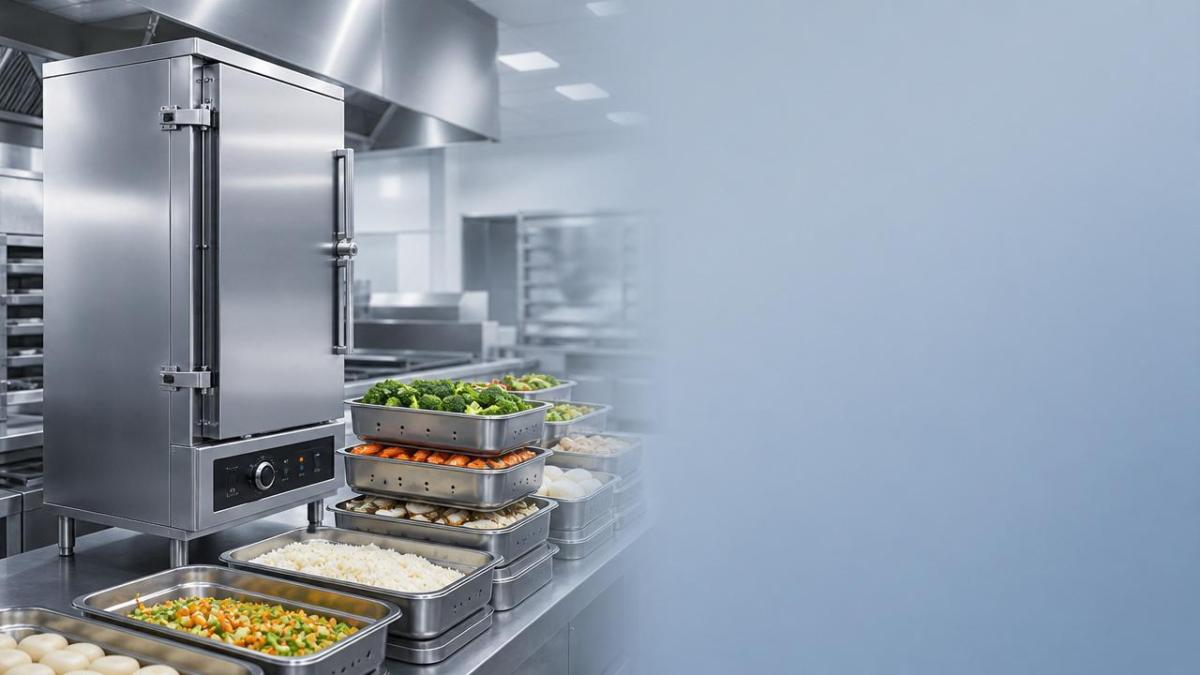
In a busy commercial kitchen, steam cooking is often expected to be fast, reliable, and consistent. But a steamer only supports speed when its capacity matches actual production needs. If capacity is wrong, the whole workflow suffers. Operators may need to split batches, hold products too long, or delay the next cooking cycle while waiting for chamber space.
These problems become more visible during peak service. A kitchen might appear well equipped on paper, yet still fall behind because the steamer cannot keep up with simultaneous demand for vegetables, seafood, rice, buns, or reheated items. In many cases, the issue is not operator skill. It is a mismatch between menu volume and usable steaming capacity.
For users, this matters because service delays do not stay isolated at one station. Once one cooking stage slows down, plating, pass timing, and table turnover are affected. Even small capacity errors can lead to larger operational pressure across the shift.
The Most Common Capacity Mistakes Operators Encounter
One frequent mistake is choosing a Commercial Steamer based only on total tray count. A unit may advertise multiple pans or shelves, but that does not automatically mean all levels can be used efficiently for every product. Some foods need more vertical space, better steam circulation, or shorter loading times. Real capacity is often lower than the listed maximum.
Another common mistake is sizing for average demand instead of peak demand. Kitchens do not fail during quiet hours. They fail during lunch rush, banquet push, or high-volume prep windows. If the steamer only handles normal traffic, staff will struggle exactly when speed matters most.
Some operators also overlook batch recovery time. Even if a steamer chamber is large enough, repeated door opening, loading, unloading, and refilling can reduce practical throughput. The machine may technically cook enough food per hour, but not in the service pattern the kitchen actually needs.
A further mistake is ignoring mixed menu use. In many kitchens, one steamer is expected to handle several tasks at once. If different items require different timing, pan depth, or loading frequency, theoretical capacity becomes difficult to use efficiently. This leads to queueing at the unit and inconsistent output.
How to Tell if Your Commercial Steamer Is Undersized
Operators usually notice an undersized steamer through repeated service friction rather than one obvious equipment failure. If trays are always waiting to go in, if prep teams must change sequence to fit available chamber space, or if one station constantly asks others to hold orders, capacity may be too low.
Another sign is that staff start building workarounds. They may underfill pans to reduce cook times, partially cook items in advance, or hold finished food longer than ideal. These habits often look like operational choices, but they are actually signs that the Commercial Steamer is not supporting demand properly.
Food quality can also reveal the problem. Vegetables may lose texture because they sit too long after cooking. Seafood may be rushed in overloaded batches. Reheated items may come out unevenly because staff try to force more product into the chamber than airflow and steam distribution can handle.
If service slows mainly during predictable high-volume periods, undersizing is a strong possibility. The problem is especially likely if delays happen even when staff are experienced and prep levels are adequate.
How Oversizing Also Causes Problems for Users
Many buyers assume that choosing a larger unit is the safest solution. In reality, oversizing can create its own operational burden. A very large Commercial Steamer may consume more water, energy, and cleaning labor than the kitchen truly needs. For operators, this means more setup, more shutdown work, and more routine maintenance.
Large units can also reduce efficiency when only partially loaded. If the kitchen rarely uses the full chamber, the equipment takes up space without delivering proportional value. In smaller work areas, oversized equipment can make loading awkward, interfere with movement, and complicate nearby workflows.
There is also a false sense of security in oversized capacity. Teams may believe they have enough output margin, but if the unit is too large for the menu mix or kitchen layout, they may still struggle with slow handling, poor batch organization, and unnecessary utility costs. Bigger is not always better; appropriate capacity is better.
What Operators Should Measure Before Judging Capacity
To understand whether a steamer is correctly sized, users should focus on practical workflow data rather than brochure specifications alone. Start with the busiest service window. How many pans, trays, or kilograms of product must be steamed within 15, 30, and 60 minutes? This is more useful than total daily volume.
Next, identify the products with the highest time sensitivity. Some items can wait briefly after cooking, while others lose quality quickly. A steamer may appear adequate for total volume but still be wrong for products that must move directly from chamber to plate or service line.
Operators should also measure loading pattern. Are all shelves used evenly? Do certain pans block circulation? Does the team frequently open the door between small batches? These details affect real throughput more than rated chamber size.
It is also important to record cycle overlap. If rice, vegetables, proteins, and reheating all compete for the same machine during one service period, capacity must be judged based on combined demand, not each item separately. This is where many kitchens underestimate their true requirement.
Practical Ways to Match Commercial Steamer Capacity to Real Service
The best capacity decision comes from matching equipment to production style. A restaurant with short, intense meal peaks needs different steaming performance than a hotel buffet, central kitchen, or cafeteria. Users should think in terms of batch flow, not just chamber volume.
For example, if your kitchen produces repeated small batches for à la carte service, fast recovery and easy access may matter more than simply adding more tray positions. If your operation runs scheduled bulk prep, a larger chamber may make sense, but only if loading and unloading can be done without slowing adjacent stations.
Another practical step is separating ideal capacity from emergency capacity. A unit may hold a maximum number of trays, but that should not become the daily standard if quality or steam circulation drops. Operators need a realistic working capacity target that preserves consistency during pressure.
It also helps to review menu engineering. If too many steamed items are scheduled for the same service minute, even a suitable machine can become a bottleneck. In some cases, better sequencing, staggered prep, or assigning one product to another cooking method can solve a perceived capacity problem.
Operational Habits That Make a Correctly Sized Steamer Feel Too Small
Not every service slowdown means the equipment itself is wrong. Poor loading habits can reduce the performance of a properly sized Commercial Steamer. Overcrowding pans, stacking product too densely, or using incorrect pan depth can block steam movement and increase cook times.
Frequent unnecessary door opening is another major issue. Each interruption reduces chamber stability and extends recovery time. During busy periods, operators should organize batches before opening the door so loading and unloading happen quickly and in one movement.
Inconsistent preheating also affects output. If staff start service before the unit reaches proper operating condition, the first cycles may take longer and create a delay that continues throughout the shift. The same is true when drainage, water supply, or scale buildup reduces steam efficiency over time.
Training matters as well. If different team members use different cook times, pan layouts, or loading logic, the steamer becomes harder to manage under pressure. Standardized operating procedures can restore lost capacity without changing the machine itself.
When Capacity Problems Point to Equipment Replacement or Upgrade
If your kitchen has already improved loading discipline, cleaned and maintained the unit properly, and adjusted workflow where possible, but service still slows during predictable peaks, it may be time to upgrade. Replacement should be considered when delays are frequent, food quality is repeatedly compromised, or labor pressure keeps increasing around one steaming station.
Users should also consider replacement when menu scope has changed. A steamer that worked for a simpler operation may no longer fit a kitchen that now handles higher volume, more delivery orders, banquets, or expanded prep responsibilities. Capacity needs often grow gradually, which makes the mismatch easy to miss.
An upgrade does not always mean choosing the largest available model. It may mean selecting a unit with better tray configuration, faster recovery, more efficient controls, or improved steam distribution. The right improvement is the one that removes the service bottleneck without adding unnecessary cost or complexity.
A Simple Capacity Checklist for Daily Operators
Before deciding that a Commercial Steamer is the source of slow service, users can ask a few direct questions. Do delays happen mainly at peak periods? Are batches regularly split because chamber space runs out? Does quality drop when the unit is fully loaded? Do staff create workarounds just to keep tickets moving?
If the answer is yes to several of these, capacity deserves closer review. Operators should also ask whether the chamber is being used efficiently. Are correct pans in use? Is loading organized? Is the steamer fully preheated? Is preventive maintenance current? These checks help separate equipment limitations from operating issues.
Finally, compare rated capacity with real usable capacity in your own menu context. A machine is only effective if its output fits your timing, product mix, and team workflow. The best equipment decision is based on kitchen reality, not maximum numbers in a specification sheet.
Conclusion
Commercial steamer capacity mistakes often look like general kitchen stress, but the root cause is usually more specific: the machine cannot support real service demand in the way the operation needs. Undersizing leads to waiting, inconsistent food quality, and operator pressure. Oversizing creates waste, extra labor, and poor space efficiency.
For users and operators, the smartest approach is to judge a Commercial Steamer by peak workflow, product mix, batch timing, and practical loading conditions. When capacity is matched correctly, service becomes smoother, food quality is easier to maintain, and the kitchen performs with less friction during its busiest hours.
If your team is constantly working around the steamer instead of working with it, capacity is no longer a minor detail. It is an operational issue worth fixing.
Popular Tags
Kitchen Industry Research Team
Dedicated to analyzing emerging trends and technological shifts in the global hospitality and foodservice infrastructure sector.
Industry Insights
Join 15,000+ industry professionals. Get the latest market trends and tech news delivered weekly.
No spam. Unsubscribe anytime.
Contact With us
Contact:
Anne Yin (Ceramics Dinnerware/Glassware)
Lucky Zhai(Flatware)