
How to Choose Kitchen Equipment Wholesale Suppliers in 2026
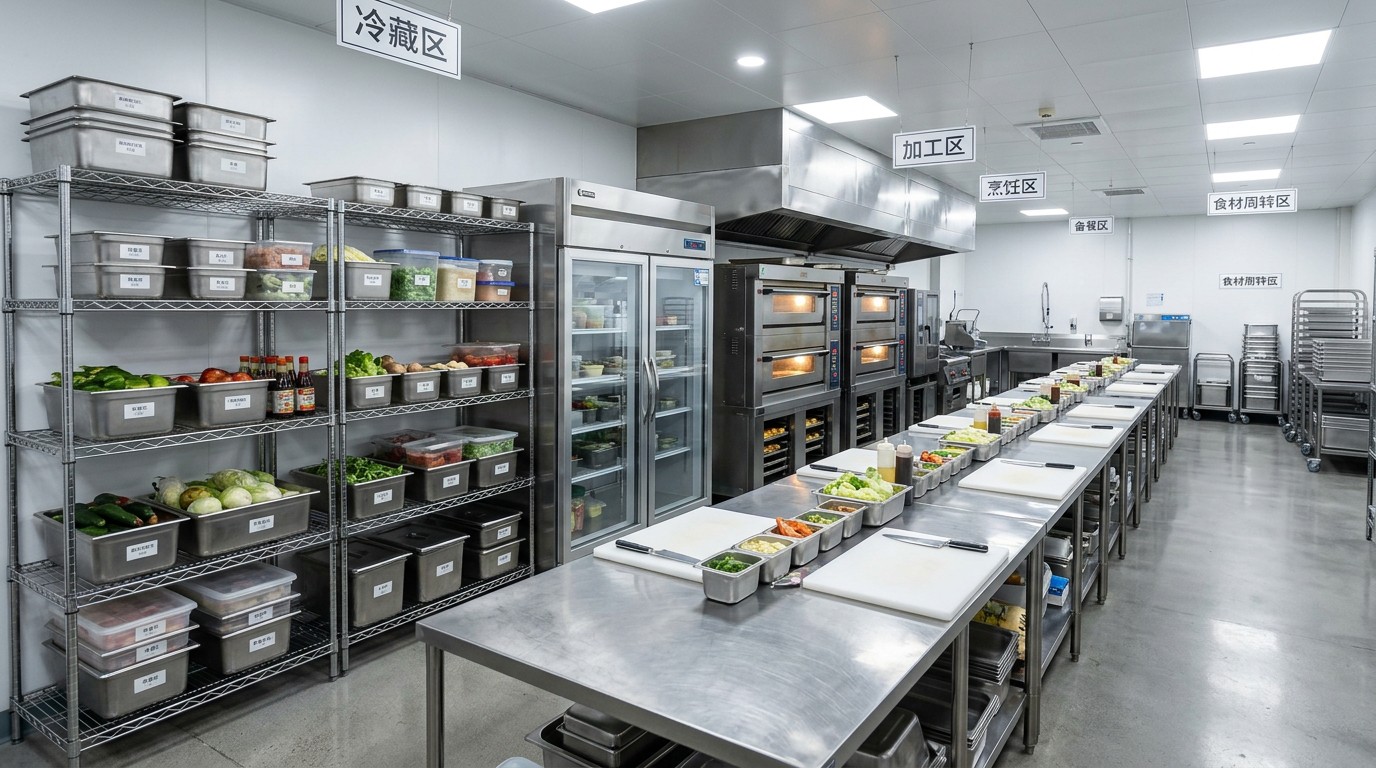
Choosing the right kitchen equipment wholesale suppliers in 2026 means balancing quality, price, compliance, and long-term service. From stainless steel kitchen equipment and restaurant kitchen supplies to a Commercial Refrigerator, Kitchen Shelf, or commercial convection oven, buyers need reliable partners that match operational goals. This guide helps researchers, operators, procurement teams, and decision-makers evaluate suppliers with greater confidence.
In 2026, supplier selection is no longer just about unit price. Foodservice operators, hotel groups, central kitchens, and food processing businesses must consider lead times, energy performance, spare parts availability, hygiene compliance, and after-sales responsiveness. A supplier that looks competitive on paper can still create costly downtime if delivery slips by 2–4 weeks or service support takes more than 72 hours.
The kitchen equipment market is also becoming more technical. Buyers now compare smart controls, modular layouts, digital monitoring, and energy-saving designs alongside core concerns such as durability and cleaning efficiency. For procurement teams, the challenge is to shortlist wholesale suppliers that can support both immediate orders and long-term operational growth across multiple sites or changing menu formats.
Understand what makes a kitchen equipment wholesale supplier reliable
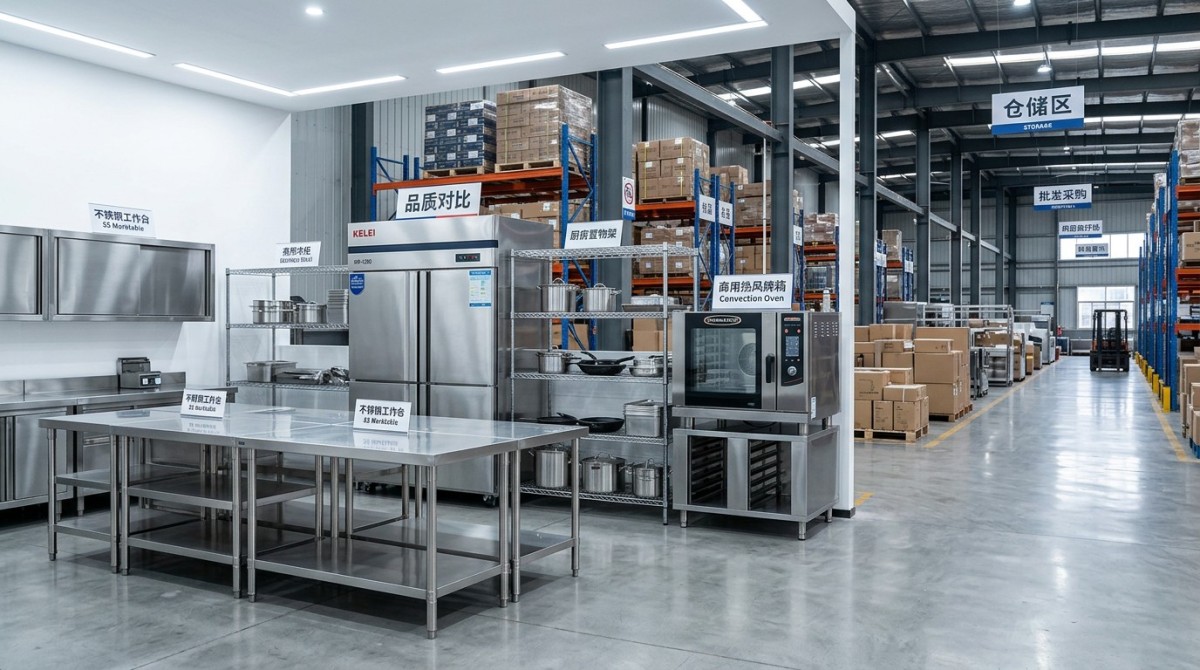
A reliable kitchen equipment wholesale supplier should perform well in 4 core areas: product consistency, compliance, delivery capability, and service support. This applies whether you are buying stainless steel kitchen equipment for a hotel project or sourcing restaurant kitchen supplies for a growing chain. A supplier with weak control in any one of these areas can increase installation delays, maintenance costs, and operating risk.
For operators, consistency matters because equipment must function under daily workloads of 8–16 hours. For procurement teams, reliability means repeatable quality across multiple batches, not just a good first shipment. For decision-makers, supplier reliability should be evaluated over a 12–36 month horizon, including parts replenishment, warranty handling, and support for expansion orders.
One common mistake is choosing a supplier based only on catalog breadth. A supplier may list 200 products online, but only maintain stable production for 20–30 key categories. Buyers should verify which items are standard production lines, which are OEM-based, and which require custom fabrication with longer lead times.
Key signals to review before shortlisting
Shortlisting should start with practical evidence rather than marketing language. Ask for specification sheets, material details, welding methods, cooling system information for refrigeration units, and packing standards for export. If a supplier cannot provide clear technical documentation within 24–48 hours, communication may become harder during production and after-sales support.
It is also useful to check whether the supplier handles project coordination. In larger orders, buyers often need 5–10 different categories shipped together, such as worktables, Kitchen Shelf units, sinks, ventilation accessories, and hot-line cooking equipment. Suppliers with organized production planning can reduce split shipments and installation conflicts.
Basic supplier review checklist
- Can they clearly state standard lead times, such as 15–25 days for stocked items and 30–45 days for custom equipment?
- Do they offer drawings, load data, voltage options, and installation requirements before order confirmation?
- Can they support spare parts supply for at least 12 months after delivery?
- Do they explain warranty scope, exclusions, and response targets such as 24-hour remote support or 48–72 hour parts dispatch?
The table below helps buyers compare supplier reliability across practical B2B dimensions rather than generic claims.
The most dependable kitchen equipment wholesale suppliers usually show balance across all 4 areas. Even if their initial price is 5%–12% higher, they may reduce hidden costs through fewer defects, better installation readiness, and faster issue resolution.
Match supplier capability to your equipment category and operating scenario
Not all suppliers are equally strong across every product type. A company that performs well in stainless steel fabrication may not be the best source for a Commercial Refrigerator or a commercial convection oven. Buyers should evaluate suppliers by category depth, engineering knowledge, and how closely their production model fits the end-use environment.
For example, restaurants with high turnover service need fast-recovery refrigeration, easy-clean workstations, and shelves with stable load capacity. Hotels and institutional kitchens may prioritize integrated lines, coordinated dimensions, and quieter operation. Food processing businesses often require stricter sanitation design, higher output consistency, and more precise control of temperature or workflow.
A category-based review helps avoid overspending on unnecessary features or underbuying for heavy-duty use. It also improves communication because suppliers can recommend suitable configurations when they understand duty cycle, daily output, kitchen footprint, and operator workflow.
Typical equipment categories and what buyers should ask
When reviewing stainless steel kitchen equipment, focus on material grade, fabrication finish, drainage design, and load-bearing performance. When sourcing refrigeration, ask about insulation thickness, compressor matching, ambient operating range, and expected temperature recovery after door opening. For heated equipment, review power rating, temperature uniformity, and control interface simplicity.
For restaurant kitchen supplies, the supplier should also show understanding of workflow planning. A Kitchen Shelf that saves 10%–15% of usable prep area or reduces operator walking by a few steps per task can deliver daily efficiency gains. In compact kitchens, layout advice is often as important as product pricing.
The following comparison table can help buyers align product categories with supplier strengths and evaluation priorities.
This comparison shows why a single sourcing rule rarely works across all kitchen categories. The best wholesale partner is often the one whose strengths match your operational profile, not the one with the largest catalog.
Scenario-based sourcing priorities
- Restaurant groups: prioritize repeat order consistency, fast lead times, and easy replacement planning.
- Hotels: prioritize coordinated design, lower operating noise, and broader installation support.
- Central kitchens: prioritize throughput, workflow integration, and preventive maintenance planning.
- Food processing sites: prioritize sanitation details, stable operating parameters, and documented technical support.
Check compliance, technical specifications, and total cost before placing orders
A lower quote does not automatically mean lower procurement cost. In kitchen equipment wholesale purchasing, the total cost includes shipping, customs documentation, installation readiness, maintenance frequency, replacement parts, and possible downtime. A 7% cheaper offer can become more expensive if temperature stability is poor, assembly tolerances are inconsistent, or service manuals are missing.
Compliance is equally important. Importers and project buyers should confirm voltage, frequency, plug or terminal format, food-contact material suitability, and market-specific labeling requirements. Even simple items such as a commercial convection oven or refrigeration cabinet can face delays if electrical details do not match the installation site or required paperwork is incomplete.
For technical review, buyers should request measurable specifications rather than broad statements. Useful examples include temperature range, tray capacity, shelf load rating, insulation thickness, stainless steel gauge, and power consumption under normal use. These details help operations teams compare products fairly and estimate running cost over 1–3 years.
Important cost and compliance checkpoints
- Confirm whether the quote includes spare parts kits, manuals, and installation accessories.
- Ask for standard packaging details, especially for export transit lasting 20–40 days.
- Check if refrigeration units are tested at realistic ambient conditions, such as 32°C–43°C for demanding kitchens.
- Review warranty duration and whether labor, parts, or remote support are covered separately.
The table below summarizes how buyers can review total cost more accurately when comparing kitchen equipment wholesale suppliers.
By reviewing total cost in this structured way, procurement teams can make decisions based on lifecycle value instead of invoice price alone. This is especially important for high-usage equipment expected to run daily for several years.
Review delivery, service, and communication processes before signing
Even technically sound equipment can become a poor purchase if the supplier lacks delivery control or post-sale support. In wholesale procurement, communication quality often predicts execution quality. Slow replies, unclear revisions, and inconsistent order confirmations usually signal future issues in packing, lead times, and warranty coordination.
A professional supplier should define its workflow from quotation to shipment in clear steps. Buyers should know when drawings are approved, when production begins, how inspections are handled, and what documents are sent before dispatch. For project orders, a delay of 5–7 days in one category can affect installation scheduling for the entire kitchen line.
Service review is equally important. Ask how troubleshooting is handled for refrigeration faults, controller settings, or damaged accessories in transit. Strong suppliers usually provide exploded diagrams, parts lists, operating instructions, and remote support channels. This is valuable for overseas buyers who cannot rely on immediate on-site service.
A practical 5-step supplier validation process
- Request a detailed quotation with technical specifications, lead times, and trade terms.
- Compare 2–3 suppliers by category fit, not price alone.
- Verify drawings, dimensions, voltage, and packaging before payment confirmation.
- Set written inspection and shipment milestones, including photo or video checks.
- Confirm after-sales contacts, spare parts lists, and warranty response steps before dispatch.
Red flags that deserve extra caution
Be careful if a supplier frequently changes lead times, cannot keep drawing revisions organized, or avoids direct answers on spare parts and warranty exclusions. Another warning sign is a quote with missing technical details, especially for refrigeration, heating equipment, or custom stainless steel assemblies. Ambiguity during the sales stage often leads to disputes later.
Buyers should also watch for unrealistic promises such as all products shipping in 7 days regardless of order size, or complete customization with no impact on cost or delivery. In real B2B sourcing, production planning, material procurement, and quality checks take time. Clear, realistic commitments are usually more valuable than aggressive promises.
FAQ: common questions when choosing kitchen equipment wholesale suppliers
Many buyers ask similar questions when comparing suppliers for restaurant kitchen supplies, stainless steel kitchen equipment, and temperature-controlled units. The answers below can help narrow options faster and reduce avoidable sourcing mistakes.
How many suppliers should I compare before making a decision?
For most B2B purchases, comparing 2–4 qualified suppliers is enough. Fewer than 2 makes it hard to benchmark pricing and service terms, while more than 4 can slow decisions without adding much value. The key is to compare suppliers using the same specification list, quantity, delivery requirement, and service expectations.
What lead time is reasonable for wholesale kitchen equipment orders?
Typical lead times vary by category. Standard stock-related items may ship in 7–15 days, fabricated stainless steel units often require 15–30 days, and custom or mixed-category project orders may take 30–45 days. International transit can add 2–6 weeks depending on route and shipping mode. Buyers should always separate production time from transport time when planning.
What should I check first for a Commercial Refrigerator supplier?
Start with temperature performance, component accessibility, insulation quality, and parts support. Ask how the unit performs under repeated door openings and high ambient temperatures, and whether replacement parts such as controllers, door seals, fans, or compressors can be supplied within a practical timeframe. Serviceability matters as much as cooling performance.
Is it better to buy from one supplier or several specialized suppliers?
It depends on the project. One supplier can simplify coordination for medium-size restaurant or hotel projects, especially when layout matching is important. Several specialized suppliers may work better when technical categories differ widely, such as combining refrigeration, heavy cooking, and custom stainless steel fabrication. The best approach balances coordination efficiency with category expertise.
Choosing kitchen equipment wholesale suppliers in 2026 requires more than a quick price comparison. Buyers need to review product fit, technical detail, compliance readiness, delivery control, and service response across the full purchasing cycle. Whether you are sourcing a Commercial Refrigerator, Kitchen Shelf systems, stainless steel kitchen equipment, or complete restaurant kitchen supplies, the best supplier is the one that supports performance over time, not just a one-time order.
If you are planning a new kitchen project, expanding procurement channels, or optimizing current sourcing, now is the right time to build a clearer supplier evaluation framework. Contact us to discuss your equipment list, request a tailored sourcing plan, or learn more about practical solutions for wholesale kitchen equipment purchasing.
Popular Tags
Kitchen Industry Research Team
Dedicated to analyzing emerging trends and technological shifts in the global hospitality and foodservice infrastructure sector.
Industry Insights
Join 15,000+ industry professionals. Get the latest market trends and tech news delivered weekly.
No spam. Unsubscribe anytime.
Contact With us
Contact:
Anne Yin (Ceramics Dinnerware/Glassware)
Lucky Zhai(Flatware)